The best rock garden plants are not chosen only for their appearance or drought tolerance. They need to fit the conditions of the specific planting pocket, including drainage, soil depth, sunlight, reflected heat, winter moisture and the amount of room available for roots and mature growth.
Alpine plants, low groundcovers, hardy succulents, small bulbs and cascading perennials can all work beautifully among rocks, but they do not necessarily need the same conditions. A plant that thrives in a shallow sunny crevice may struggle in a deeper, cooler pocket only a few feet away.
This guide explains how to choose rock garden plants for different conditions, including alpine plants, groundcovers, succulents, sun and shade, drought tolerance, cold hardiness, cascading areas and planting pockets, along with which plants and growth habits are better avoided.
What Makes a Plant Suitable for a Rock Garden?
Rock garden plants usually share one or more of these characteristics:
- They tolerate fast drainage or shallow soil.
- They remain relatively compact at maturity.
- They can handle exposure to sun, wind, or reflected heat.
- They have roots suited to narrow soil pockets.
- They tolerate the winter conditions of the site — including, for many, winter dryness rather than winter wet.
- They provide foliage, flowers, or structure without overwhelming the surrounding rocks.
Not every rock garden plant needs to be drought-tolerant. Some rock gardens contain cool, moist crevices or receive regular rain. The more important question is whether the plant can handle the moisture pattern of its specific pocket — a plant in a deep, north-facing crevice lives very differently than one in a shallow, south-facing ledge five feet away.
Before buying, check mature size, soil preference, sun exposure, USDA Hardiness Zone, bloom time, and susceptibility to winter wet. A plant can be zone-hardy and still fail because its crown sits in saturated soil through February.
Alpine Plants
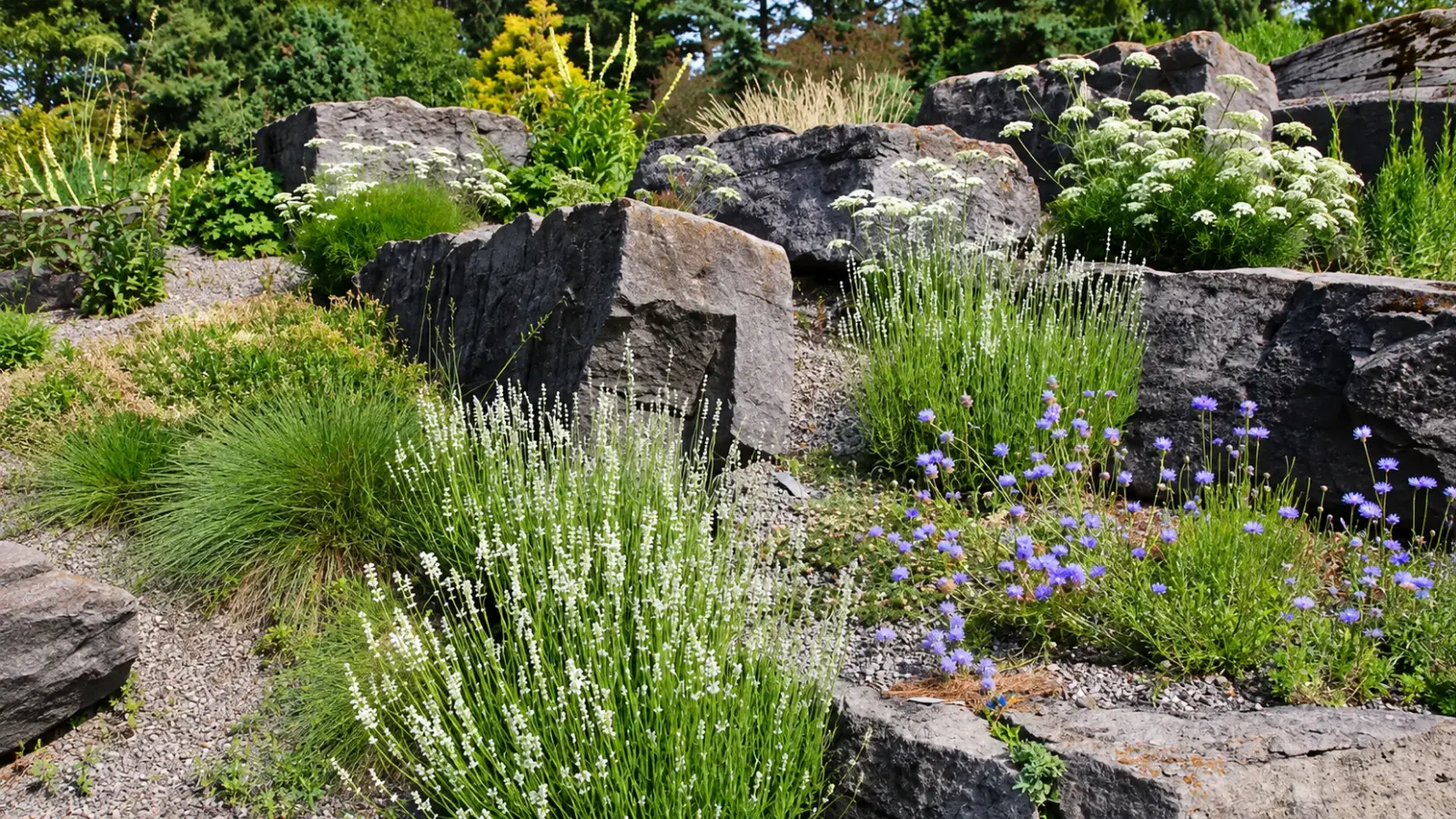
Alpine plants come from mountain environments where drainage, wind, temperature swings, and short growing seasons shape how plants grow. Most remain compact and form cushions, mats, or low clumps that look natural among stones.
Reliable choices for American rock gardens include selected saxifrages, moss phlox or rock phlox (Phlox subulata, zones 3–9), pasque flower (Pulsatilla vulgaris, generally zones 4–8), creeping thyme, dwarf columbines, and compact dianthus. Hardiness, light requirements, and heat tolerance vary considerably among saxifrage species, so choose them individually rather than treating the genus as having one universal zone range. Note that pasque flower is toxic if ingested, so site it away from areas frequented by young children or pets.
Some alpine plants dislike hot, humid summers or wet winter soil. Many saxifrages perform best in cool conditions and sharply drained soil, but heat and humidity tolerance varies by species and cultivar rather than following a universal zone cutoff. In warmer regions, use plants native to similar local rocky habitats, or site sensitive alpines where they receive appropriate shade and the very best drainage the garden can offer.
Don’t crowd alpine plants with aggressive groundcovers. Their slow growth and compact root systems can be overwhelmed quickly by faster-spreading plants that colonize the same crevice — a garden problem that’s much harder to fix than it is to prevent.
Groundcovers
Groundcovers connect rocks and planting pockets, reduce exposed soil, and soften hard edges. The best choices stay low, spread at a manageable rate, and don’t need the rich, moisture-retentive soil that most groundcovers prefer.
Creeping thyme, woolly thyme, moss phlox (Phlox subulata), low sedums, and some native creeping plants work well in sunny rock gardens. For partial shade, low ferns, small native woodland plants, and selected shade-tolerant groundcovers may be more appropriate — provided the drainage is still adequate.
Check spreading behavior before you plant. A groundcover that forms a controlled mat is useful; one that runs aggressively may cover slower alpine plants, block drainage crevices, or migrate beyond the garden into surrounding beds within a season or two. Look up the plant’s mature width, not just its height.
Groundcovers are not a substitute for adequate soil. Even a mat-forming plant needs enough root space and moisture to establish, and a thin layer of grit over bare subsoil won’t support it.
Succulents and Cacti
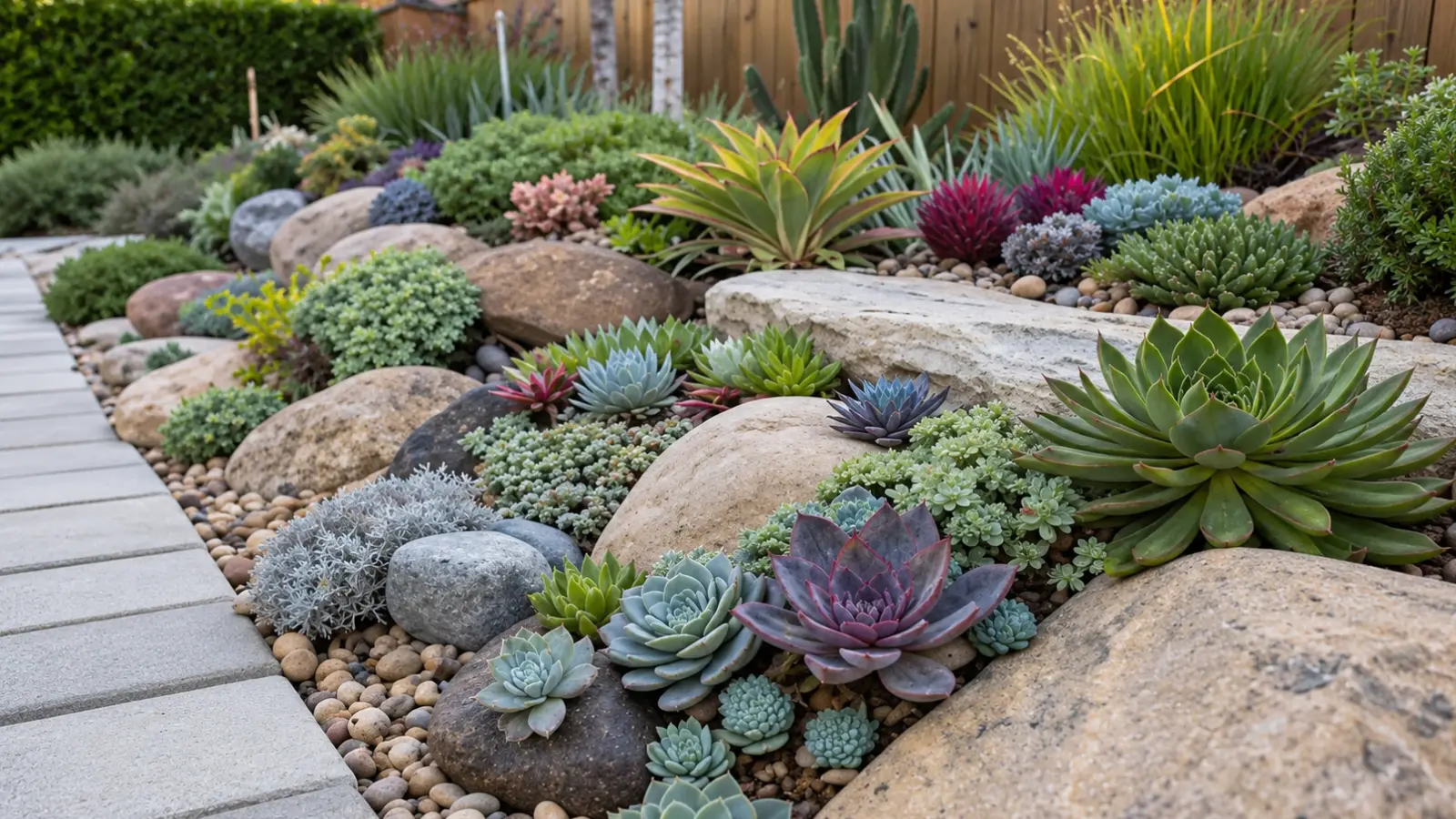
Succulent rock gardens use plants that store water in leaves, stems, or roots. Many fit rocky spaces naturally because they prefer fast drainage and stay compact, but cold and moisture tolerance varies considerably between genera — and even between species within the same genus.
For cold-climate gardens, reliable hardy succulents include many sedums, sempervivums — hens-and-chicks — and selected hardy ice plants in the Delosperma genus. Hardiness varies substantially by species and cultivar, so check the exact plant rather than relying on one zone range for the entire genus. Eastern prickly pear (Opuntia humifusa) is surprisingly cold-hardy for a cactus and stays low enough to work in rock gardens where many cacti would be out of scale. In warmer climates, appropriately hardy agaves, yuccas, and hesperaloes can add bold structural form to dry-climate rock plantings.
Tender succulents that are commonly sold — many echeverias, for example — are only hardy to zone 9 or 10 and will not survive a typical American winter in the ground. Treat them as seasonal container plants or bring them in when temperatures drop, rather than planting them as permanent residents in a cold-climate rock garden.
Don’t water succulents on the same schedule as plants that prefer average moisture. During extended rainy periods, even a drought-adapted plant can suffer crown rot if the soil doesn’t drain freely. And for cacti, provide excellent drainage and enough air circulation around the crown — and place thorny species away from paths, seating, and anywhere children play.
Drought Tolerance
Drought tolerance means a plant can survive limited water once it’s established in the garden. It doesn’t mean the plant needs no water at all, or that it will thrive in any soil as long as the sun is bright enough.
New rock garden plants need regular care during establishment, regardless of the species. Small soil pockets dry out quickly — especially when surrounded by heat-absorbing stone or exposed to wind — so check frequently and water deeply enough to reach the roots. Then allow the soil to drain according to what each plant actually needs, not according to a fixed weekly schedule.
A drought-tolerant label should also come with a cold-hardiness check. A plant from a dry Mediterranean climate may survive summer heat and low water but fail in a cold, wet Northern winter. And a plant from a dry mountain slope may need protection from the humid summer conditions of the Southeast even if it’s technically zone-appropriate. Drought tolerance is always regional.
Native drought-tolerant plants can be particularly useful because they’re already adapted to local weather patterns and wildlife. But “native” labels are often applied loosely — verify the plant’s specific native range and local status rather than assuming any plant sold as native will thrive on your site.
Sun and Shade
Most rock garden plants prefer full sun, particularly in gardens designed for alpine or dry-climate species. Full sun typically means at least six hours of direct light per day, though the exact threshold varies by species and how intense that sun is — six hours of coastal California sun is a different experience than six hours in the high desert.
Stone creates microclimates within the garden. A south-facing rock wall can be significantly hotter and drier than a north-facing crevice a few feet away, even on the same afternoon. Use that variation intentionally: place sun-lovers at warm exposures and tuck moisture-sensitive plants into pockets that stay cooler.
For partially shaded spots, look for plants that tolerate both lower light and the specific drainage conditions of the site. Shade doesn’t always mean moist soil — dry shade created by tree roots, overhanging walls, or roof overhangs is one of the harder planting situations in any garden, and only certain plants handle it well.
Watch the garden through the day and across seasons. A pocket that gets full sun in early spring may be shaded for most of the day once nearby trees leaf out in May — an important consideration if you’re planning a spring-blooming alpine that needs sun to flower well.
Cold Hardiness and Winter Wet
USDA Hardiness Zone is a useful starting point, but it tells you only the average annual minimum temperature — not everything that determines whether a plant survives winter. Wind exposure, snow cover (or its absence), freeze-thaw frequency, winter rain, and drainage all affect what actually makes it through to spring.
For many alpine and succulent plants, winter wet is a bigger threat than cold temperatures. A plant rated to zone 4 can rot in zone 6 if its crown stays saturated from November through March. This is especially common in regions that get mild but consistently wet winters — parts of the Pacific Northwest, the Mid-Atlantic coast, and much of the Southeast. In those climates, excellent drainage isn’t just recommended; it’s what makes the difference between a plant that thrives and one that dies.
Container-grown plants face an additional challenge: roots in a pot experience colder temperatures than roots in the ground, because the soil mass is smaller and more exposed. Dark-colored stone containers can also create rapid temperature swings on sunny winter days — warming during daylight hours, then freezing hard after dark. If a plant is marginally hardy for your zone, a raised bed or in-ground planting usually gives it a better chance than a container.
Don’t assume that a plant labeled as a perennial will return reliably in every climate. Confirm how it behaves specifically in your region, and whether it needs winter drainage, mulching, or some protection to survive.
Match Plants to the Scale
Plant scale should relate to the rocks and the overall size of the garden. Small plants can disappear entirely beside a large boulder; vigorous shrubs can overwhelm a narrow bed in two or three seasons.
In a miniature or container rock garden, stick to compact cushions, low mats, and small clumps — plants that stay under 6 inches tall and spread slowly. Larger rock gardens can accommodate taller perennials and small shrubs, but the plants should still leave the main stone composition visible and legible, not buried under foliage.
Check mature width as carefully as mature height. A plant that stays 4 inches tall but spreads 24 inches in a season can cover an entire pocket and crowd out smaller neighbors before you realize it’s happening. Width is the detail most plant tags underemphasize.
Repeat two or three plants throughout the garden to create visual continuity, then add smaller accents in the spaces between. Filling every pocket with a different species creates a busy, unfocused look — one of the most common mistakes in rock garden planting.
Cascading Plants
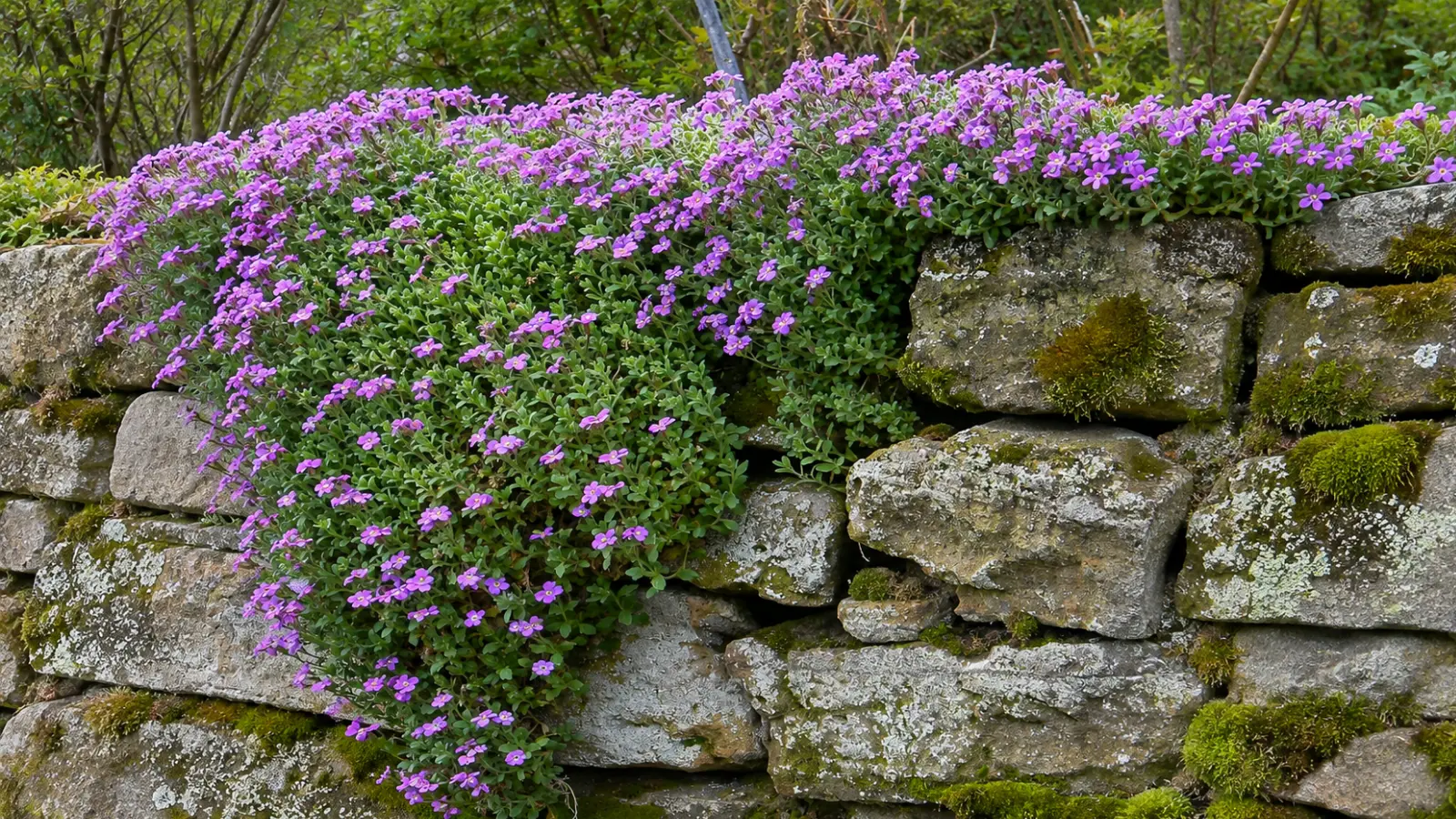
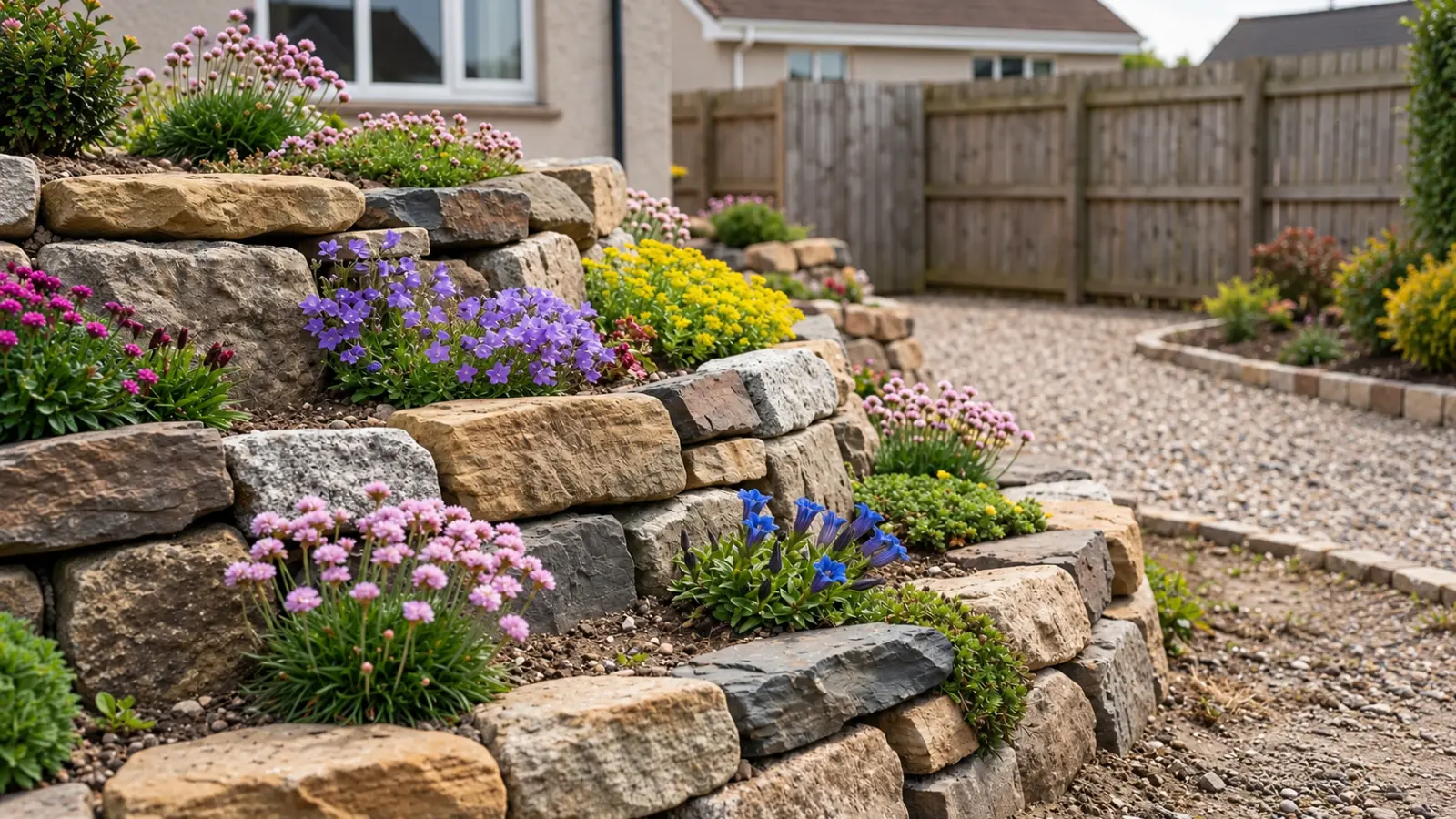
Cascading plants soften retaining walls, raised edges, troughs, and large boulders. On a sloped rock garden, they help visually connect the upper and lower levels and add movement to an otherwise static composition.
Creeping thyme, trailing sedums, moss phlox, and selected native or alpine groundcovers can all spill over an edge in a controlled way. In warmer climates, some trailing succulents create an effective dry-climate look cascading down a sunny wall or embankment.
Place cascading plants where their stems won’t block drainage, cover intended overflow routes, or shade sun-dependent neighbors growing just below. Leave enough space between the crown and the edge so the roots stay anchored in the soil pocket — a plant that looks beautiful cascading over a wall can fail quickly if most of its root system has nothing to grow into.
Cascading doesn’t always mean well-behaved. Know the plant’s mature spread before positioning it, and trim back stems that move into paths or unwanted areas — don’t wait until they’ve established there.
Planting Pockets
Planting pockets are the areas of soil created between, beside, or above rocks. Their depth, moisture, and sun exposure determine which plants can grow there — and matching plant to pocket is the most important decision you make at planting time.
Deep Pockets
Deep pockets support plants with larger or more developed root systems, including some perennials, small native plants, and small bulbs like species crocus, grape hyacinth, or dwarf iris. They tend to retain slightly more moisture than shallow crevices, which opens up plant options but also requires more attention to drainage in the lower soil layers.
Shallow Crevices
Shallow crevices suit compact alpines, low sedums, sempervivums, and other plants adapted to minimal soil. Keep plant crowns above the surrounding soil level, and protect the growing medium from washing out during heavy rain — a top-dressing of fine grit helps here.
Dry Upper Pockets
Pockets near exposed stone on the upper or south-facing areas of a rock garden often dry out fastest. These suit succulents, cacti, and highly drought-tolerant plants. Even these pockets need extra water during establishment — “drought-tolerant once established” is the key phrase, and getting to that point requires consistent care in the first season.
Partially Shaded Pockets
North-facing crevices and pockets shaded by larger stones can support plants that prefer cooler, slightly more moisture-retentive conditions. Mossy saxifrages, some small ferns, and moisture-tolerant native plants may do well here — but check drainage first. Shade and moisture are not the same, and a shaded pocket in sandy soil will still dry out quickly.
Rock Garden Plants at a Glance
These examples represent common and reliable choices for American rock gardens. Confirm USDA Hardiness Zone, mature size, and regional behavior before planting — common names can refer to more than one species, and behavior varies.
| Plant or Group | Light | Moisture | Zones | Rock Garden Role | Notes |
|---|---|---|---|---|---|
| Saxifrages | Part sun to shade | Well-drained, moderate | 2–7 (varies by species) | Alpine cushions, crevice filler | Mossy types prefer cool summers; rot in zone 8+. |
| Moss Phlox (Phlox subulata) | Full sun | Moderate, well-drained | 3–9 | Spring groundcover, slopes, edges | Shear lightly after bloom to keep tidy. |
| Creeping Thyme | Full sun | Dry to moderate | 4–9 | Mat and cascade, path edges | Spreads; can crowd smaller alpines over time. |
| Low Sedums | Full sun | Dry, sharply drained | 3–9 (varies by species) | Succulent groundcover, filler | Hardiness varies widely by species — verify. |
| Hens-and-Chicks (Sempervivum) | Full sun | Dry, sharply drained | 3–8 | Succulent accent, crevice planting | Extremely cold-hardy; protect crowns from standing water in winter. |
| Hardy Ice Plant (Delosperma spp.) | Full sun | Dry, well-drained | Varies by species and cultivar | Cascading groundcover, slopes | Hardiness varies widely; choose a species or cultivar suited to your local winter conditions and provide excellent drainage. |
| Hardy Prickly Pear (Opuntia humifusa) | Full sun | Very dry, excellent drainage | 4–9 | Dry-climate structure | Plant away from paths; spines are unforgiving. |
| Pasque Flower (Pulsatilla vulgaris) | Full sun | Moderate, very well-drained | 4–8 | Early-season bloom, alpine accent | All parts toxic; resents disturbance once established. |
| Dwarf Blazing Star (Liatris microcephala) | Full sun | Dry to moderate, well-drained | 6–9 | Vertical late-summer flower | Native to the southeastern United States; well suited to rocky, well-drained sites. Standard L. spicata grows substantially taller and generally prefers more moisture. |
| Small Grasses (e.g., blue fescue) | Sun to part shade | Varies by species | Varies by species | Texture, year-round structure | Blue fescue is a compact ornamental grass native to Europe; when native planting is a priority, choose a small grass native to your own region. |
| Dwarf Columbines | Sun to part shade | Moderate, well-drained | 3–9 (varies) | Seasonal flowers, crevice planting | Regional native species tend to establish more reliably. |
| Small Bulbs (crocus, grape hyacinth, dwarf iris) | Full sun (most) | Well-drained | 3–8 (varies) | Seasonal accent, spring color | Plant where summer groundcovers won’t crowd or shade them out. |
The most useful column in that table isn’t the one listing flowers or colors — it’s the zone and notes column. A plant that looks right but isn’t matched to your conditions won’t last past the first hard winter or wet spring.
Plants to Avoid
Some plants create problems in a rock garden even when they look attractive at planting time. A few to steer clear of:
- Large shrubs or trees that hide the stones and overwhelm the scale within a few seasons
- Plants that need rich, moisture-retentive soil in a sharply drained pocket — they’ll struggle and create a weeding problem as they decline
- Plants that can’t tolerate winter wet in an exposed crevice, particularly in humid or rainy climates
- Aggressive groundcovers that spread fast enough to smother slower alpine plants nearby
- Invasive species that escape the garden and establish in natural areas — check your state’s invasive species list before planting anything unfamiliar
- Thorny plants beside paths or seating areas
- Tender succulents treated as hardy perennials in climates where they won’t survive winter without protection
- Standard blazing star (Liatris spicata) — it grows 30–36 inches tall and prefers consistently moist soil, making it a poor fit for most rock garden pockets despite being commonly sold for this use; use dwarf species instead
- Species that require more soil depth than the available pockets can provide
Always verify the botanical name and local invasive status before purchasing. Common names routinely refer to multiple different plants with very different behavior — “creeping phlox” and “creeping Jenny,” for example, have almost nothing in common beyond the name pattern.
Match Every Plant to Its Pocket
The best rock garden planting comes from matching each plant to the conditions immediately around it. Soil depth, drainage, sunlight, winter moisture and available space can change dramatically between one crevice and the next, even within the same garden.
Start with compact plants that suit your climate and the structure already created by the rocks, then add groundcovers, succulents, alpine accents and cascading forms where they genuinely fit. When every plant has enough room and the right growing conditions, the garden becomes more coherent, durable and easier to maintain.
COMMON QUESTIONS
Before you begin.
What are the best plants for a rock garden?
The best rock garden plants are compact species that tolerate the site’s drainage, soil depth, sunlight and seasonal conditions. Depending on the climate, good options may include moss phlox, creeping thyme, hardy sedums, hens-and-chicks, saxifrages, dwarf columbines, small bulbs and compact grasses. Choose plants for the specific pocket where they will grow rather than relying on one universal rock garden plant list.
What plants are best for a sunny rock garden?
Sunny rock gardens are well suited to plants that tolerate heat, exposure and fast-draining soil. Hardy sedums, sempervivums, creeping thyme, moss phlox, pasque flower, dwarf blazing star and some hardy cacti can work well when climate and winter conditions are appropriate. Even drought-tolerant plants need regular watering while their roots establish.
What plants can grow in a partially shaded rock garden?
Certain saxifrages, dwarf columbines, small ferns and shade-tolerant native plants can grow in cooler or partially shaded rock garden pockets. However, shade tolerance alone is not enough; the plant must also suit the soil depth and drainage of the crevice. North-facing or stone-shaded pockets often create cooler microclimates that support plants unsuited to the hottest parts of the garden.
Are rock garden plants drought-tolerant?
Many are, particularly species from alpine, rocky or arid habitats, but not every rock garden plant prefers dry soil. Drought tolerance usually applies after establishment, and shallow planting pockets can dry rapidly around sun-heated stone. Match watering to each plant’s actual needs instead of treating the entire rock garden as uniformly dry.
Can rock garden plants survive cold winters?
Yes, when the plants are hardy for the local climate and the soil drains properly. For many alpine plants and hardy succulents, prolonged winter wetness can be more damaging than low temperatures because saturated crowns and roots may rot. USDA Hardiness Zone is therefore only part of the decision; drainage, winter rainfall, wind exposure and snow cover also matter.
How do you plant plants between rocks?
Choose a pocket with enough soil depth for the plant’s root system, position the crown at or slightly above the surrounding soil level and firm the growing medium gently around the roots. Water consistently during establishment, then adjust irrigation to the species. A thin top-dressing of fine grit or pea gravel around the crown can improve surface drainage, reduce soil splash and discourage weed seedlings.