A xeriscape garden is designed to use water efficiently without sacrificing plants, shade, color or everyday function. Rather than following one particular aesthetic, xeriscaping combines thoughtful site planning, appropriate plants, efficient irrigation and water-conscious maintenance to reduce unnecessary outdoor water use.
The strongest designs begin by understanding where water is actually needed. Sun exposure, reflected heat, drainage, soil, mature trees and plant water requirements can vary across the same property, making hydrozoning and site-specific plant selection more important than simply filling the yard with drought-tolerant species.
This guide explains how to design a xeriscape garden, including the main xeriscaping principles, water zones, soil and plant selection, efficient irrigation, mulch, turf reduction, seasonal design and maintenance, along with why xeriscape should not be confused with a gravel-covered “zero-scape.”
What Is a Xeriscape Garden?
Xeriscaping is a water-conscious approach to landscape planning. The term was coined in 1981 by Denver Water—combining “landscape” with the Greek word “xeros,” meaning dry—as part of a program to help residents reduce water use during dry seasons. It has since spread well beyond Colorado, because the underlying approach applies to any region where water is limited or expensive.
A xeriscape does not require a desert climate or a completely dry garden. It can be adapted to many regions by choosing plants and irrigation practices that match local conditions rather than fighting them.
Successful xeriscaping brings several decisions together: how the property is arranged, where water naturally moves, which plants are grouped by need, how soil is prepared, how mulch is applied, and how irrigation is set up and maintained. Replacing lawn with gravel alone is not enough to create a well-functioning xeriscape—and often creates its own set of problems.
A water-efficient landscape should also account for shade, habitat, comfort, and how the space is actually used. Trees may provide valuable cooling that reduces the demand for outdoor air conditioning. Paths should remain practical and safe. Plants should be placed where they can mature without constant correction.
The Main Principles of Xeriscaping
Although local recommendations vary, most xeriscape planning rests on a consistent set of principles that work together rather than independently:
- Plan and design first: map sun exposure, slope, drainage, existing trees, utilities, and how the space will be used before buying a single plant.
- Group plants by water need: keep plants with similar irrigation requirements in the same zone so one schedule works for all of them.
- Choose appropriate plants: prioritize drought-tolerant species that genuinely fit the climate, soil, and exposure of the site.
- Use lawn selectively: keep turf where it serves a real function and reduce areas that are difficult to water efficiently or that receive little use.
- Improve soil strategically: correct compaction or drainage problems where they exist, without amending every area the same way.
- Apply mulch: reduce soil moisture loss, moderate temperature, and limit weed competition.
- Irrigate efficiently: direct water to the root zone and maintain the system so it does not overspray, mist into the air, or leak.
- Maintain with intention: adjust watering as plants establish, manage weeds, and prune based on plant needs rather than habit.
These principles work together. A drought-tolerant plant can still waste water if it is placed in the wrong zone or watered with a poorly adjusted spray head. Getting all of them reasonably right is what makes a xeriscape function well over time.
Create Water Zones
Water zoning—also called hydrozoning—means grouping plants according to how much supplemental irrigation they actually need. Without it, a single irrigation schedule tends to overwater low-water plants while struggling to keep thirstier ones alive in the same zone.
| Water Zone | Typical Location | Planting Approach |
|---|---|---|
| Low water | Open, well-drained areas away from downspouts or low points | Established drought-tolerant plants with little or no supplemental irrigation once settled in |
| Moderate water | Average garden beds, partially shaded spots, or areas near buildings | Plants with moderate moisture needs and seasonal irrigation that can be reduced as they mature |
| Higher water | Entry areas, containers, focal plantings, or naturally moist sections | A limited selection of plants that need more consistent moisture, kept intentionally small in area |
Water zones are not rigid categories that never change. A plant’s needs may shift with age, season, and microclimate. Observe the garden through the year and adjust irrigation accordingly rather than locking in one schedule at installation and leaving it unchanged.
Study the Site Before Planting
Start by mapping the conditions that actually determine water demand. Note full-sun areas, spots with reflected heat from pavement or walls, afternoon western exposure, prevailing wind, slopes, compacted areas, and places where water collects or drains away quickly after rain.
Existing trees deserve particular attention. Converting a lawn to a xeriscape can significantly change how much water reaches established tree roots, especially when turf irrigation is removed or rerouted. Before reducing irrigation in those areas, have a plan for how mature trees will continue to receive the water they need. Drought-stressing a large established tree is a serious and often slow-developing problem.
Hard surfaces matter too. Roofs, driveways, and patios increase reflected heat and concentrate runoff. A planting near a downspout may receive considerably more water than one just a few feet away. Plant selection should follow the actual microclimate of each area, not a generalized picture of the yard as a whole.
Improve Soil Where It Helps
Soil preparation depends on the plants being grown and the specific conditions of the site. Start with a soil test when compaction, poor plant performance, extreme pH, or a nutrient imbalance is suspected. Many drought-tolerant plants adapted to lean, well-drained conditions do not need—and may actively dislike—rich, heavily amended soil.
Compacted urban soil may benefit from improvement before planting, but amending organic matter across an entire property is rarely the right approach. Plants from dry, rocky, or nutrient-poor habitats can perform poorly in heavily amended beds that stay too moist. They may also become more weed-friendly than intended.
Drainage requires its own care. Improving drainage in one area may make an adjacent zone too dry, or redirect water in ways that weren’t anticipated. Design the soil profile around each water zone and plant community rather than applying one universal amendment recipe to everything.
Choose Drought-Tolerant and Native Plants
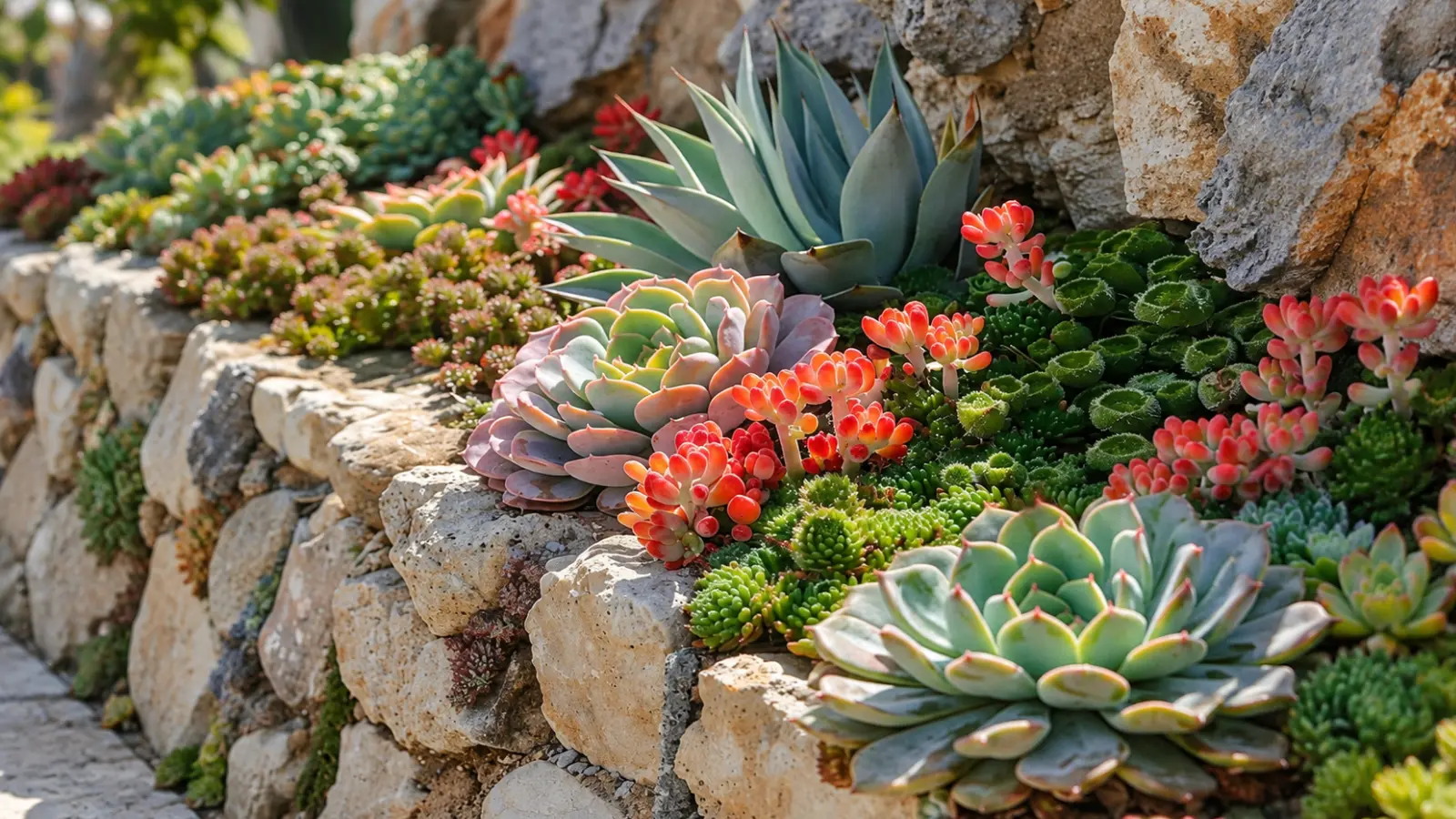
Drought-tolerant plants can survive periods of limited water once established, but that label does not mean the plant needs no water at all. New trees, shrubs, and perennials need consistent irrigation while their roots grow into the surrounding soil—often for the first one to two full growing seasons, depending on plant size and conditions.
Native plants can be excellent choices, but only when they are native to the region and specific habitat where they will be planted. A native plant from a wet lowland is not automatically a good choice for a hot, dry slope. Evaluate regional origin, soil type, sun exposure, mature size, and water requirements together rather than assuming “native” and “drought-tolerant” mean the same thing.
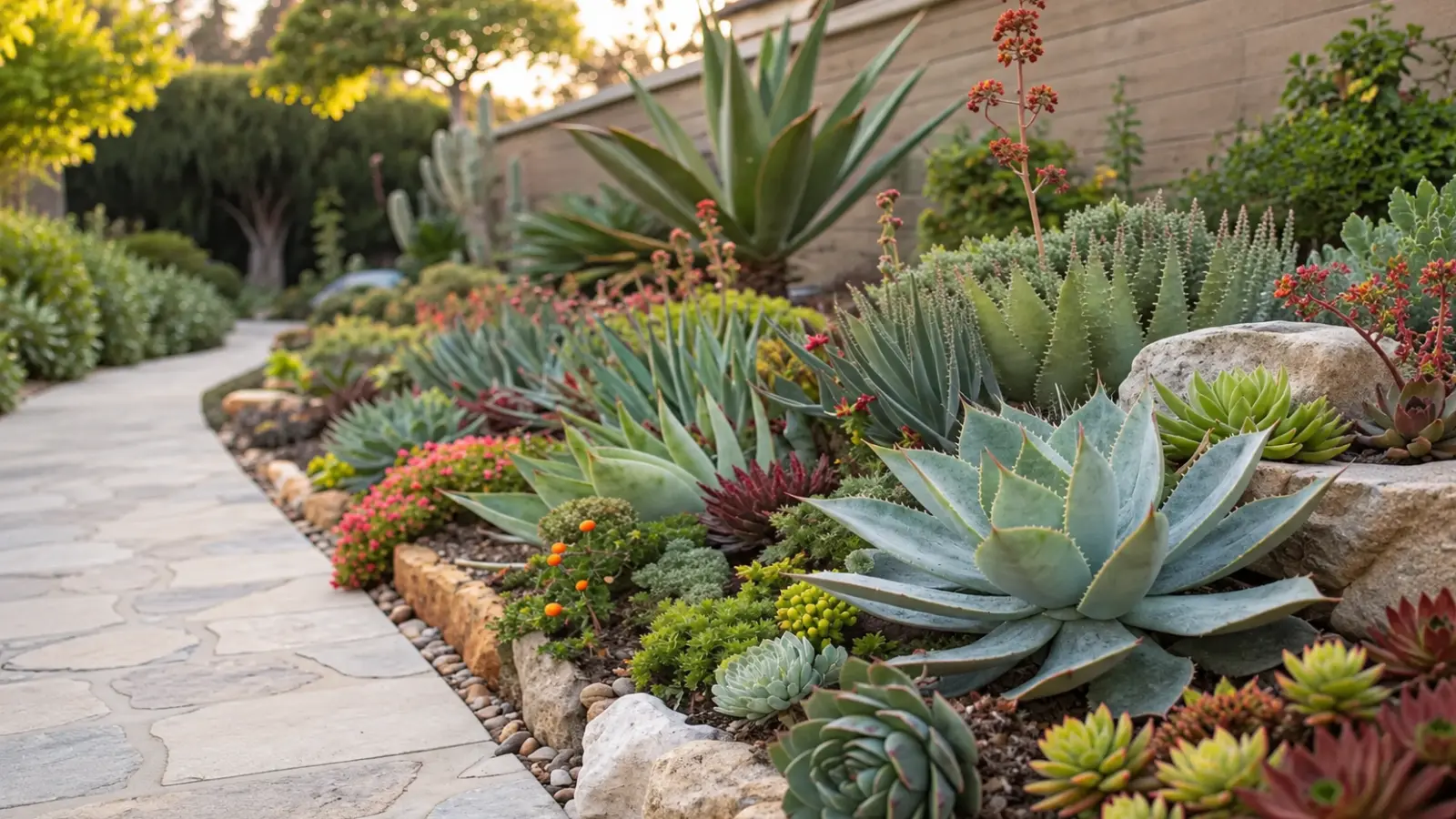
Build the planting in layers rather than sticking to one plant form. Trees provide shade and reduce surface heat, shrubs create structure and reduce the area that needs irrigating, perennials add seasonal flowers and interest, and groundcovers can soften hard surfaces and slow evaporation from bare soil. Succulents and ornamental grasses work well in some climates, but they still need appropriate drainage and the right winter conditions for the region.
Always confirm the invasive status of any unfamiliar plant before adding it. Low water use does not make a species ecologically safe for every region, and some drought-tolerant plants have become serious invasives in certain parts of the country.
Use Irrigation Efficiently
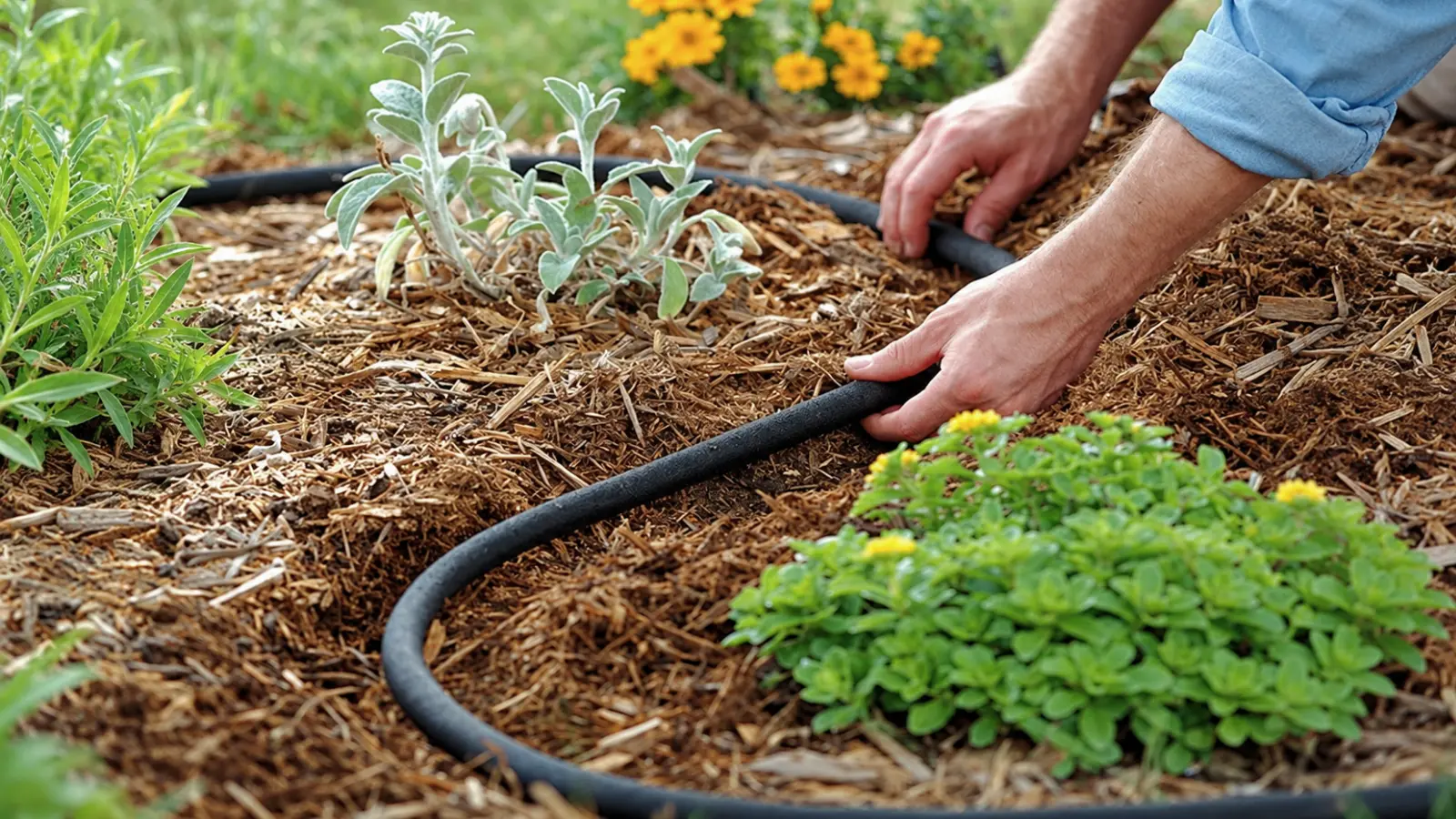
Efficient irrigation delivers water to the plants that need it, in the amount and at the frequency that supports healthy root growth. Drip systems, soaker hoses, and properly calibrated low-volume emitters reduce overspray and evaporation compared to conventional overhead sprinklers—drip typically uses 30 to 50 percent less water than spray irrigation for the same planting area, according to University of Georgia Extension and other sources. But no system is efficient when it is leaking, clogged, or watering empty spaces.
Water new plants deeply enough to moisten the full root zone, then gradually extend the interval between waterings as they establish. Frequent shallow watering encourages roots to stay close to the surface, making plants less resilient to drought. The correct schedule depends on soil type, plant size, season, weather, and the specific irrigation equipment in use.
Timing matters. Early morning is the preferred window—water reaches the root zone before significant evaporation, and foliage has time to dry before evening, which reduces disease pressure. Midday watering in hot weather loses a meaningful amount of water to evaporation before it reaches plant roots.
Inspect emitters and spray heads regularly. Look for clogged lines, broken fittings, runoff onto pavement, overspray into non-planted areas, and heads applying water to plants with very different needs. A xeriscape conversion often requires reconfiguring existing irrigation zones rather than simply leaving the old turf system in place. Weather-based smart controllers—which adjust watering schedules automatically based on temperature, humidity, and rainfall—can further reduce water use and are now available at most irrigation suppliers and home improvement stores, sometimes with utility rebates.
Use Mulch Correctly
Mulch helps reduce evaporation, moderate soil temperature, and suppress weeds. Organic mulch—wood chips, shredded bark, pine needles—works well in most planted beds, breaks down gradually to feed soil biology, and keeps roots cooler in summer. Apply it at 2 to 3 inches deep, keeping it pulled back from plant crowns and trunks to prevent rot. Organic mulch breaks down over time and typically needs refreshing every one to two years.
Gravel, decomposed granite, and other mineral mulches can work better around plants that need rapid drainage and dry crowns—Mediterranean herbs, cacti, and many Southwest natives, for example. Rock mulch does not feed the soil and can raise surface temperatures noticeably in full sun, which can stress adjacent plants or make paved areas and seating spots uncomfortably hot. Both types have their place; match the mulch to the plants and the site conditions rather than using one material across the entire landscape.
Avoid placing landscape fabric under planted beds as a long-term weed solution. While it can offer short-term weed suppression, weed seeds eventually germinate in the mulch sitting on top of it, and their roots push through the fabric—making removal difficult. The fabric also blocks beneficial organisms and organic matter from reaching the soil, degrades over time into the ground, and creates a complicated mess when beds need replanting. A well-chosen mulch depth, combined with regular weeding while plants are young, is a more durable approach for planted areas.
Reduce Turf Without Losing Function
Turf serves real purposes: play areas, dog runs, walking surfaces, seating zones, and visual openness. The question is not whether every lawn must disappear, but whether each section of turf is doing something that justifies its water and maintenance demand.
Replace unnecessary lawn with planted beds, shade trees, paths, patios, or groundcovers suited to the site. Use clear transitions so the change looks designed rather than abandoned. Keep turf shapes simple enough to mow and irrigate efficiently—narrow strips and odd angles are notoriously difficult to water without runoff and make mowing more time-consuming than the area warrants.
When converting lawn near established trees, protect the existing root zone and maintain a watering plan for the tree through the transition. A sudden loss of irrigation can stress a mature tree even when the new planting around it is entirely drought-tolerant. That stress may not show up visibly for a season or two.
Design a Xeriscape Garden
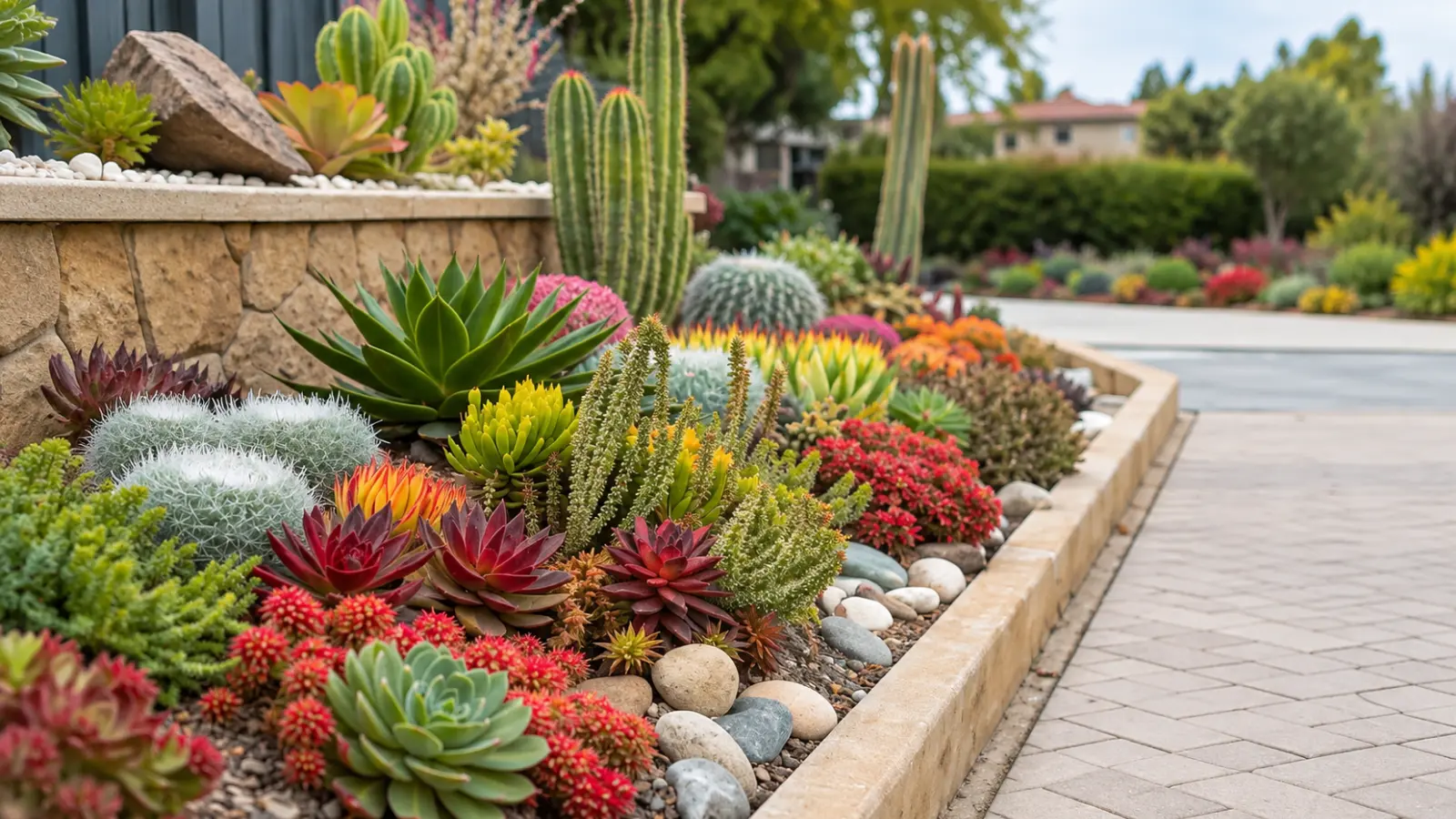
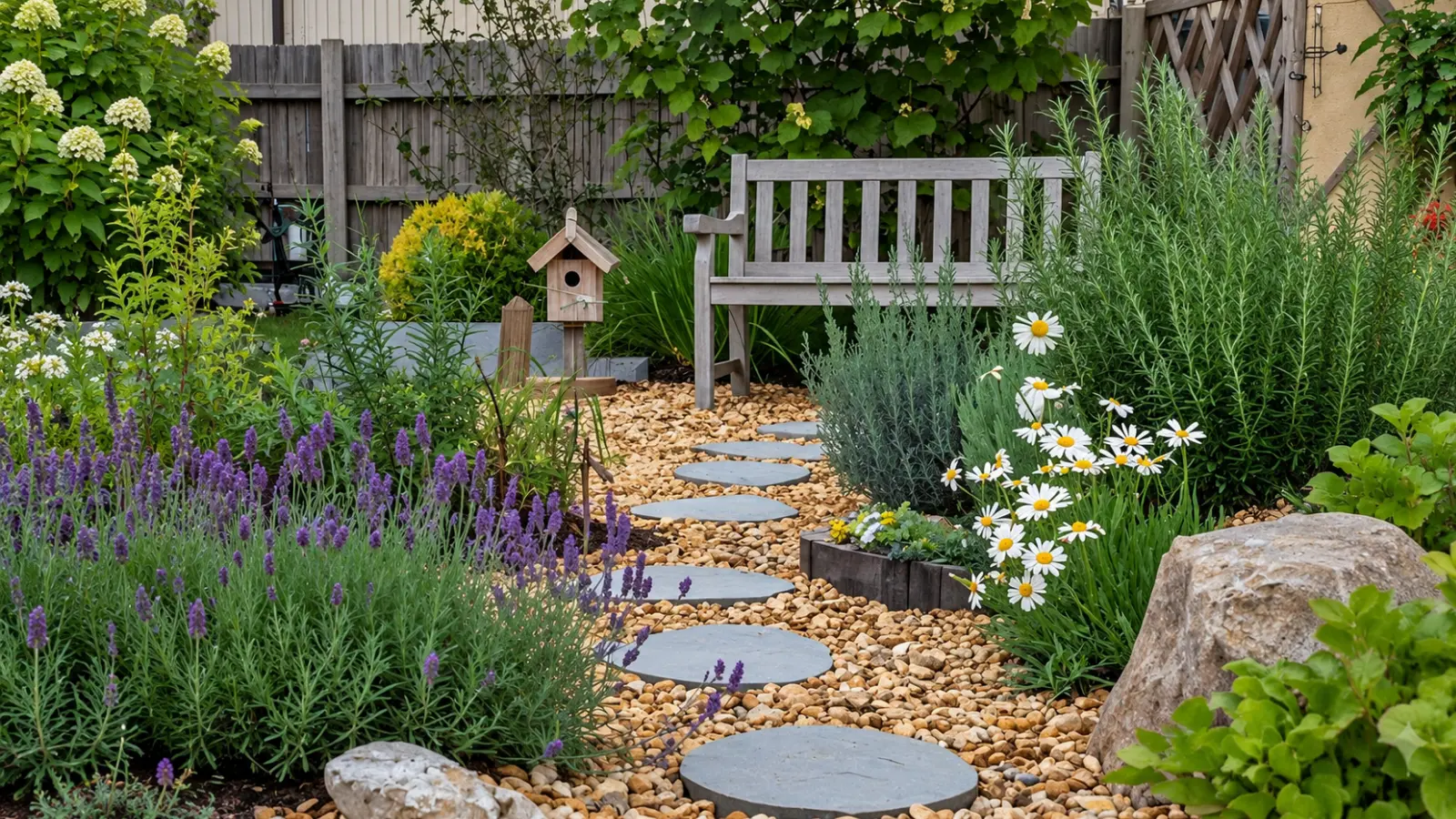
A xeriscape garden can be formal or naturalistic, contemporary or cottage-style, wildlife-friendly or minimalist. Water conservation is the performance goal; the visual direction is a separate design decision and does not have to signal “dry” or “desert” in any particular way.
Use Structure
Start with a few reliable structural elements: trees, large shrubs, paths, walls, or repeated planting groups. Structure keeps a low-water planting from becoming a flat collection of isolated specimens that goes quiet between bloom periods.
Repeat Plants in Groups
Repeating compatible plants in clusters creates visual rhythm and makes irrigation simpler because plants with similar needs stay together on the same zone. It also gives foliage and flower color enough mass to read clearly from a distance, which matters especially in larger front-yard conversions.
Design for All Seasons
Use foliage texture, bark, seedheads, evergreen forms, and flowers at different times to carry interest beyond the peak bloom period. A drought-tolerant garden can look sparse and abandoned when every plant was chosen only for a short burst of summer color.
Manage Heat and Comfort
Position trees and larger shrubs to provide shade where people gather, while keeping low-water plants in the sun-exposed spots where they thrive. A comfortable, shaded outdoor space often makes a garden far more usable than one designed only to minimize planted area or irrigation cost.
Maintain a Low-Water Landscape
Maintenance becomes more efficient when the design is well-matched to the site, but it does not go away entirely. Water consistently during establishment, inspect irrigation at the start of each season, pull weeds before they set seed, and watch plants for stress during extended heat or drought.
Prune for plant health and clearance rather than shearing drought-tolerant plants into formal shapes that require frequent correction and additional water to sustain. Remove dead or diseased material promptly, but leave useful seedheads and habitat structure where they do not create a safety or visibility concern.
Mulch will need periodic renewal, irrigation zones may need seasonal adjustment, and plants will eventually outgrow their original spacing. A low-water landscape works best when it is observed and refined over time rather than installed and forgotten.
Xeriscape vs. Zero-Scape
Xeriscape is often misheard or misspelled as “zero-scape,” which has created a persistent misconception that a xeriscape must contain no plants, no irrigation, and little more than gravel. That is not what the term means—and the confusion frustrated even the people who coined it. When Nancy Leavitt of Denver Water invented the word in 1981, colleagues immediately worried that “xeri” sounded too much like “zero” and would lead people to associate xeriscaping with bare, lifeless yards. That concern turned out to be well-founded.
A well-designed xeriscape can contain trees, flowers, shrubs, ornamental grasses, wildlife habitat, and comfortable outdoor spaces. It may use significantly less water than a conventional lawn—estimates from the EPA WaterSense program and Colorado State Extension suggest a properly designed xeriscape can reduce outdoor irrigation by 50 to 75 percent compared to a traditional landscape—but it does so through design, plant selection, and irrigation management, not through eliminating living plants.
Gravel and rock can be useful components of a xeriscape, but covering large areas with stone over plastic landscape fabric is not automatically a water-wise or sustainable choice. Rock absorbs and radiates heat, can create thermal stress for adjacent plants and seating areas, contributes to surface runoff, and creates long-term maintenance complications—especially when weeds eventually establish in the gravel layer. These trade-offs deserve consideration before replacing planted beds with hard mineral surfaces.
Make Water Efficiency Part of the Design
A successful xeriscape garden does not begin by removing plants or eliminating irrigation. It begins by understanding where water is needed, grouping plants with compatible requirements and designing each part of the landscape around the conditions already present.
Use drought-tolerant and regionally appropriate plants where they fit, preserve useful shade and functional spaces, and adjust irrigation as the landscape matures. When water efficiency is built into the structure of the garden rather than added afterward, the result can remain comfortable, layered and visually rich while using far less unnecessary water.
COMMON QUESTIONS
Before you begin.
What is a xeriscape garden?
A xeriscape garden is a landscape designed to reduce unnecessary water use through careful planning, appropriate plants, efficient irrigation, mulch, soil management and limited turf. It does not have to look like a desert or contain mostly gravel. A successful xeriscape can include trees, shrubs, grasses, groundcovers and flowering plants while using water more efficiently than a conventional high-water landscape.
How do you create a xeriscape garden?
Start by mapping sunlight, drainage, soil conditions, slopes, existing trees and how each part of the yard will be used. Group plants with similar water needs into hydrozones, choose species suited to the local climate and site, reduce unnecessary turf, use appropriate mulch and deliver irrigation directly to root zones. Plan the entire landscape before buying plants so water use, spacing and maintenance work together.
What are the main principles of xeriscaping?
The core principles include thoughtful landscape planning, grouping plants by water needs, choosing climate-appropriate plants, improving soil only where necessary, reducing high-water turf, using mulch, irrigating efficiently and maintaining the landscape appropriately. These principles are most effective when used together rather than treating drought-tolerant plants alone as the solution.
What plants are best for xeriscaping?
The best xeriscape plants are species that match the local climate, soil, sunlight, drainage and water zone. Regionally appropriate native plants and other proven drought-tolerant trees, shrubs, perennials, grasses and groundcovers can all work well. Native does not automatically mean drought-tolerant, so each plant’s natural habitat and moisture requirements should still be checked.
Does a xeriscape garden need irrigation?
Yes, especially during establishment. Newly planted trees, shrubs and perennials generally need consistent watering while their root systems develop, often through one or two growing seasons. Once established, many drought-tolerant plants can be watered much less frequently, but irrigation should still be adjusted for weather, soil, plant type and extended drought.
Is xeriscaping the same as covering a yard with gravel?
No. Gravel can be useful in selected areas, particularly around plants that prefer fast drainage, but xeriscaping is a complete water-efficient landscape strategy rather than a rock-covered yard. Large expanses of gravel can increase surface temperatures, contribute to runoff and create their own maintenance problems, so living plants, shade, soil health and efficient water use remain important parts of good xeriscape design.