Rain garden plants need to tolerate changing moisture rather than just wet soil. The lowest part of the basin may hold water for hours after a storm, while the upper edge can dry quickly between rain events, so plant selection has to match the actual wet-to-dry pattern of each zone.
The strongest planting plans also account for sunlight, soil, mature size, root structure, regional climate, and local nativity. Native plants are often an excellent foundation because they support local wildlife and are adapted to regional conditions, but they still need to be placed where their moisture and light requirements are met.
This guide explains how to choose rain garden plants for the basin, middle, and upper edge zones, with practical options for grasses, sedges, flowering perennials, shrubs, and small trees, plus guidance on which plants to avoid.
Understand Rain Garden Zones
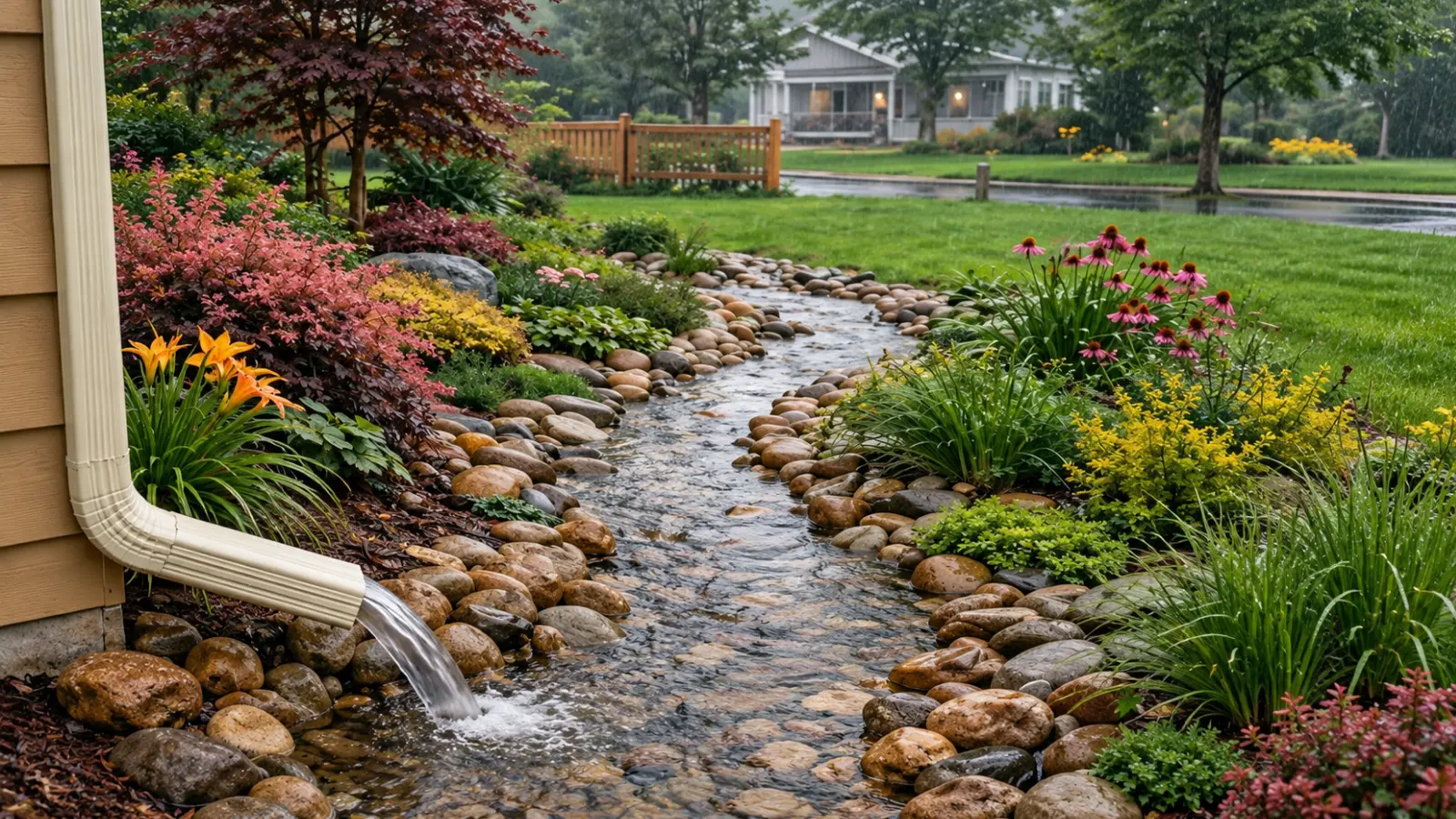
A rain garden contains several distinct moisture zones rather than one uniform planting area. Water enters the basin, pools briefly, and then drains away — ideally within 24 to 48 hours of a storm. That drainage window is what separates a rain garden from a bog or a pond, and it’s what makes matching plants to zones so important.
Basin Zone
The basin is the lowest area and receives the most runoff. Plants here must tolerate temporary flooding, reduced oxygen around their roots during wet periods, and genuine dryness between storms. The basin is wetter than most garden beds but drier than a wetland — choose plants that can handle both extremes.
Middle Zone
The middle zone experiences the most variation. It may be damp after rain and fairly dry during a summer stretch without precipitation. Plants here need broad tolerance rather than a preference for only wet or only dry conditions. This zone offers the widest selection of native perennials and is often where the garden looks its most garden-like.
Upper Edge
The upper edge usually drains first and may receive little direct runoff. It is often the driest part of the rain garden, particularly on a sunny slope or in sandy soil. During heavy rain, water can still move across the edge when the basin fills, so plants here need some resilience — but they won’t tolerate extended wet feet.
Observe how long water actually remains in each part of your garden before finalizing the plant list. The real moisture pattern is more useful than any zone description.
Start With Native Plants
Native rain garden plants offer nectar, pollen, seeds, shelter, and host-plant value while fitting into the regional food web. Native grasses, sedges, shrubs, and perennials also build a more layered, ecologically functional planting than a bed of a few ornamental cultivars — and once established, most natives need far less supplemental water than non-native alternatives.
Choose plants native to your state or ecoregion rather than copying a list from another part of the country. A wetland plant from the Northeast may not tolerate the heat of the Southeast. A species suited to a coastal plain may fail in dry inland clay. Native range matters, and so does local provenance — a plant grown from locally collected seed tends to be better adapted than one grown from seed collected several states away.
Check regional recommendations from your state’s Cooperative Extension Service, a native plant society, a botanical garden, or a conservation organization. Confirm whether a plant is actually native to your county or ecoregion, how large it gets at maturity, and which moisture zone it genuinely tolerates.
Nursery labels can be incomplete or misleading. Ask whether the plant was grown from regional seed, whether you’re buying a cultivar that differs significantly from the straight species, and whether the plant has a history of spreading aggressively in your area. Some cultivars bred for compact garden form have reduced wildlife value compared to the species.
Consider Roots and Soil
Roots in a rain garden face more than just wet soil. They encounter alternating saturation and drying, sediment deposits from incoming runoff, periodic compaction, and fluctuating oxygen levels. Deep, fibrous root systems handle this cycle better than shallow-rooted plants — and they also improve the garden’s ability to infiltrate water over time.
Native prairie grasses and many native perennials develop roots that reach several feet deep, which is one reason they perform so well in rain gardens. That root depth improves drainage, reduces erosion, and allows plants to access moisture during dry stretches without supplemental irrigation. It also makes them difficult to move once established, so take time to place them correctly the first time.
Avoid planting large trees where roots could interfere with foundations, pipes, utilities, septic systems, or the basin’s engineered soil layers. A small tree that looks manageable at planting can become a maintenance and structural problem within a decade.
Plants should not be used to compensate for a failed drainage design. If the basin remains saturated for more than 48 hours after a typical storm, the problem is hydrological — inadequate infiltration, poor grading, or compacted soil — not a plant selection issue. Replacing plants won’t solve it. Recheck infiltration, inflow, grading, and overflow first.
Group plants with similar moisture requirements within each zone. This reduces replacement work and makes it easier to water new plants during establishment without overwatering species that prefer a drier edge.
Match Plants to Sun and Shade
Many rain gardens are built in open lawn areas and receive full sun, but shade can come from trees, fences, buildings, or the changing angle of the sun through the seasons.
Full-sun plants generally need at least six hours of direct light per day, though the exact requirement varies by species. Partial-shade plants may tolerate morning sun and afternoon shade, dappled light under a canopy, or a few fewer hours of direct exposure than a full-sun species needs to thrive.
Do not select a plant for a shady rain garden simply because the basin is wet. Moisture tolerance and light requirement are separate conditions. A plant may handle saturated soil perfectly well but still need full sun to grow and bloom. Matching both factors to each species is what determines whether it thrives or just survives.
Plants for the Basin Zone
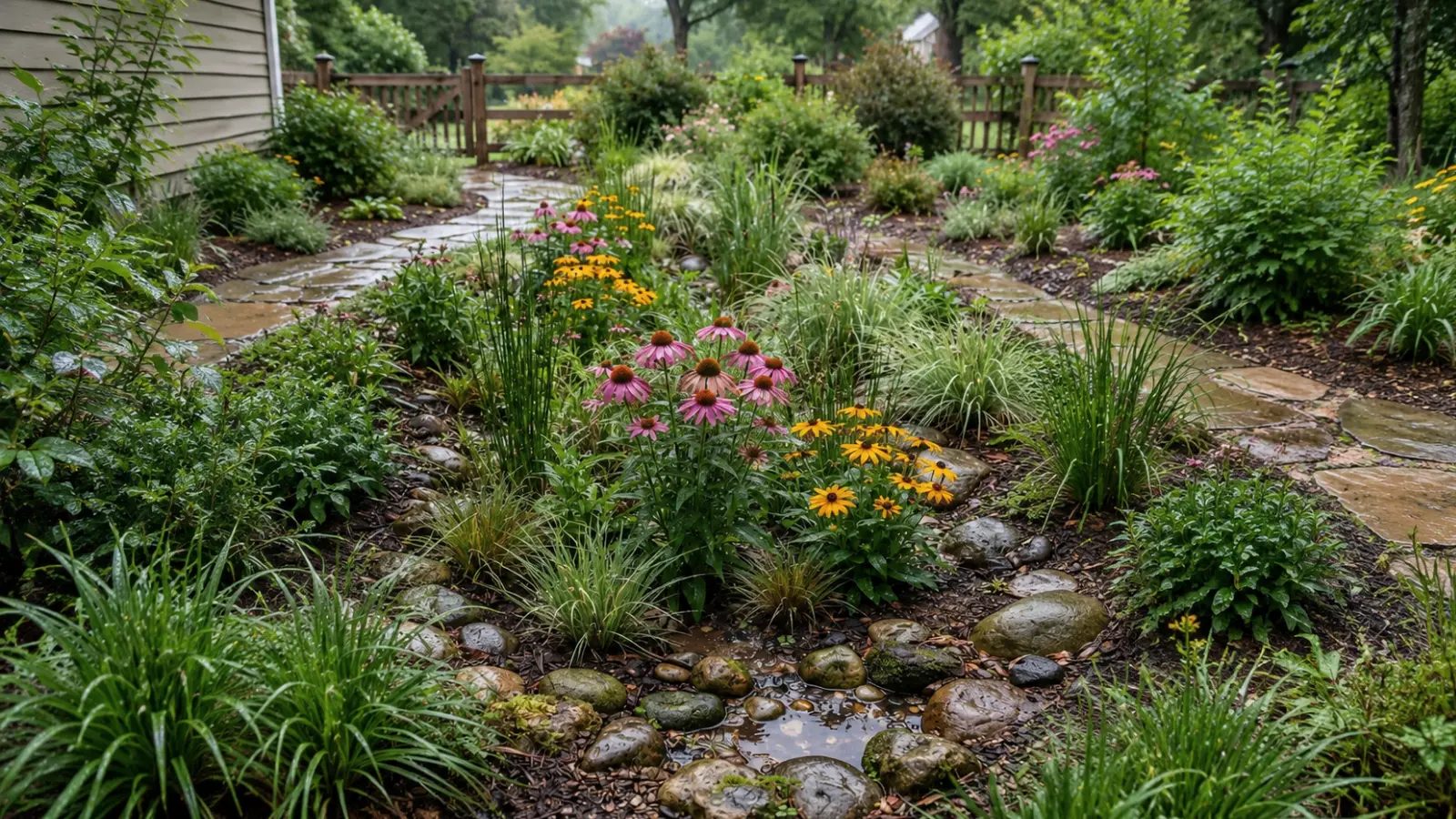
The basin needs plants that can tolerate short periods of standing water — sometimes up to 24 to 48 hours after a heavy storm — and then recover completely as the water drains. This rules out most ornamental garden perennials and points clearly toward wetland-edge natives.
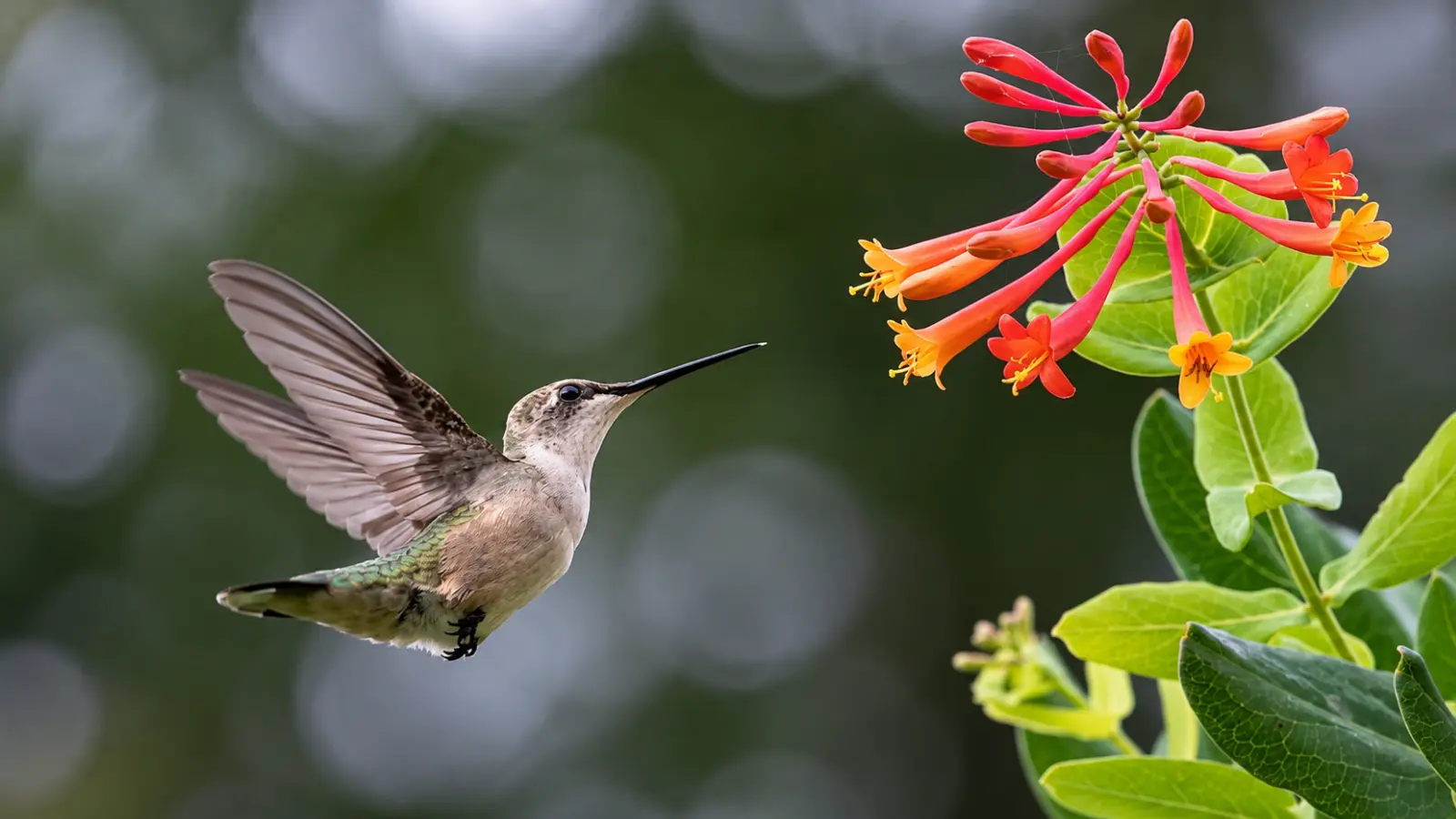
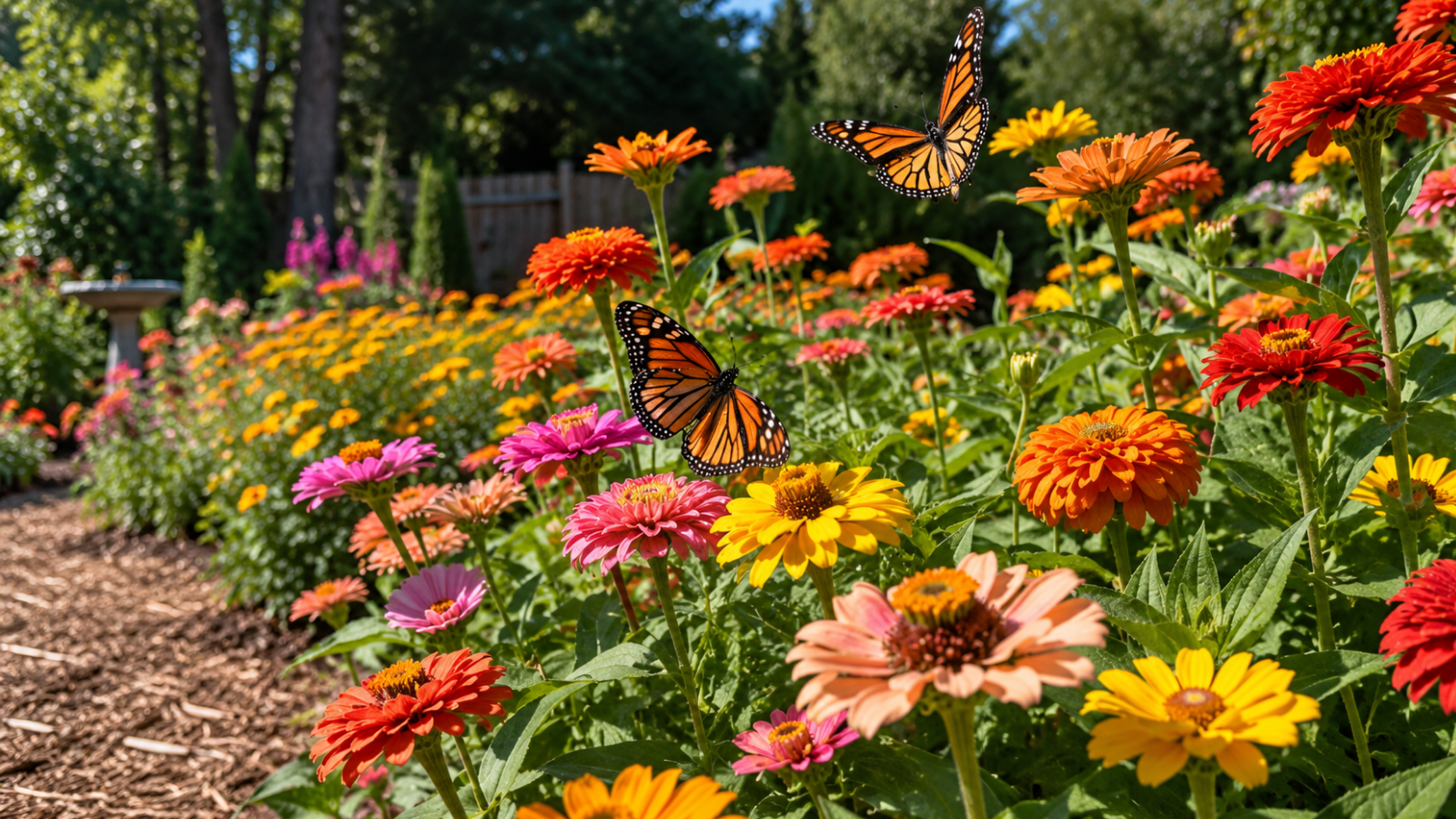
Blue flag iris (Iris versicolor) is one of the most reliable basin plants across much of the eastern US — its sword-like foliage anchors the space and it handles the wet-dry cycle readily. Cardinal flower (Lobelia cardinalis) brings striking late-summer red to the wettest spots and attracts hummingbirds. Swamp milkweed (Asclepias incarnata) suits the wetter half of the basin in full sun and serves as a monarch butterfly host plant. Tussock sedge (Carex stricta), soft rush (Juncus effusus), and blue joint grass (Calamagrostis canadensis) are excellent structural plants for the lowest positions in regions where they’re native.
Joe-Pye weed (Eutrochium purpureum or related species) can suit the basin-to-middle transition with its tall structure and late-summer nectar value. Check the specific species for your region, as Joe-Pye weed is a group of closely related plants with somewhat different regional ranges and habitat preferences.
Look for plants described as tolerant of wet soil or seasonal flooding — and check the full growing conditions. A plant adapted to permanently wet wetland conditions may struggle if the basin dries deeply during summer. Place the most water-tolerant species closest to the main inflow point, but keep in mind that the inlet may also receive sediment and stronger water movement than the rest of the basin.
Plants for the Middle Zone
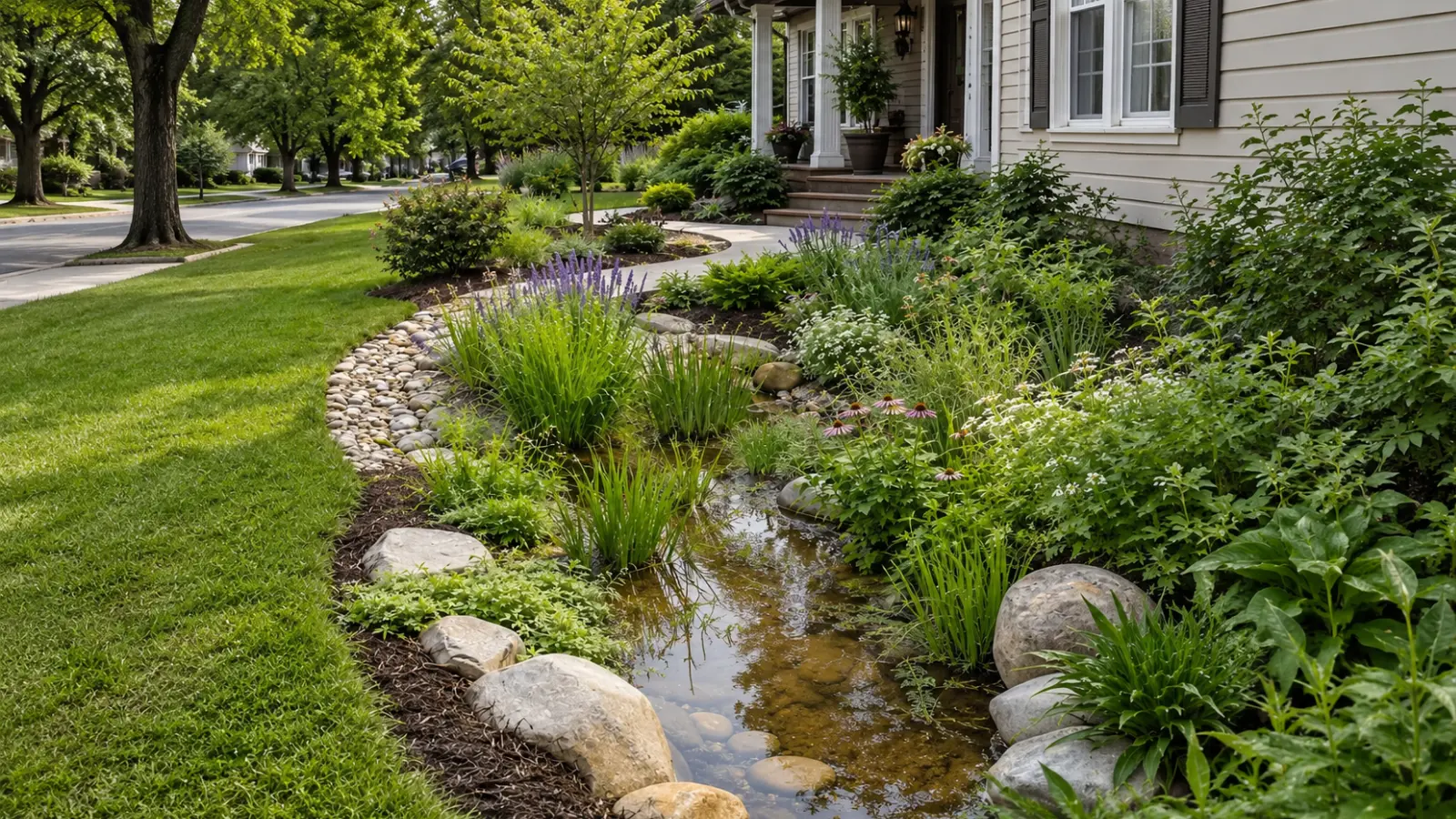
The middle zone often offers the broadest planting possibilities because it alternates between moist and moderately dry — conditions that suit a large number of native perennials and grasses.
Native coneflowers (Echinacea spp.), black-eyed Susans (Rudbeckia hirta), bee balm (Monarda spp.), mountain mint (Pycnanthemum spp.), goldenrod (Solidago spp.), and native asters are strong candidates in appropriate regions. Switchgrass (Panicum virgatum) handles the middle zone’s variable moisture well and provides structure, winter seed heads for birds, and excellent erosion control through the growing season.
Great blue lobelia (Lobelia siphilitica) works beautifully in the moist middle zone, especially in partial shade where it fills a gap that many full-sun perennials can’t. Some gardeners pair it with cardinal flower — the red and blue combination across late summer is one of the classic native plantings for rain gardens.
Use the middle zone to create visual continuity between the wetter basin and the drier edge. Repeating a few plants throughout rather than placing every species only once makes the garden feel cohesive rather than patchwork.
Watch plants closely during the first full growing season. Wilting during dry weather, yellowing foliage, weak stems, or repeated winter loss may indicate that a species belongs in a different zone or isn’t adapted to the site’s specific conditions.
Plants for the Upper Edge
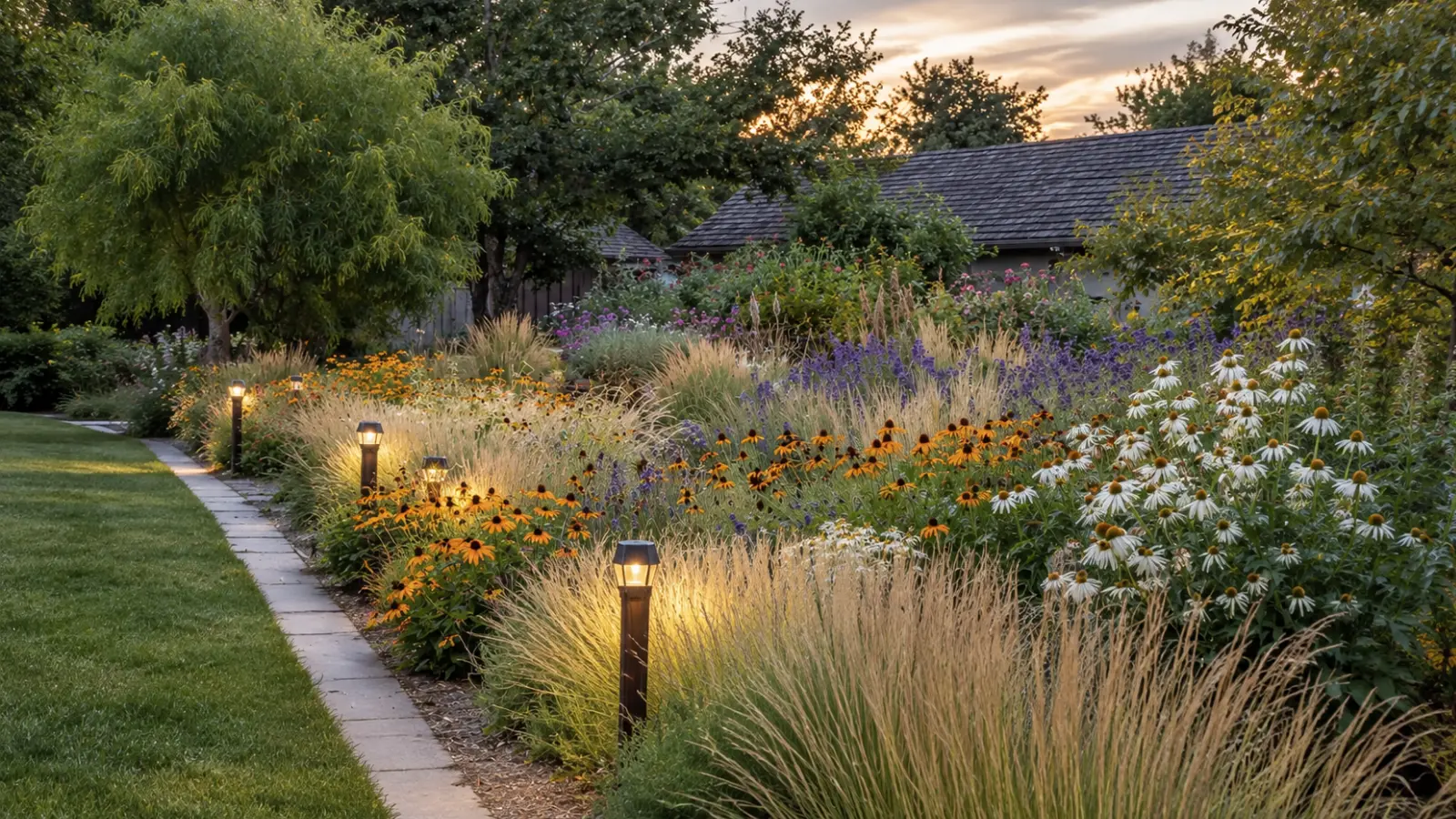
The upper edge is typically the driest part of a rain garden. It loses moisture quickly, receives less direct runoff than the basin, and may see only brief wetness during the largest storms. This is the right place for native prairie plants that need good drainage and can handle occasional saturation without rotting at the roots.
Little bluestem (Schizachyrium scoparium) is one of the best choices for the upper edge — it grows in a tidy clump, provides excellent fall and winter interest as its stems turn copper to red, and tolerates drought, poor soil, and occasional wet periods. Black-eyed Susan (Rudbeckia hirta) is equally reliable along the edge: drought-tolerant once established, reliably floriferous from summer into fall, and forgiving enough for beginners. Blazing star (Liatris spp.) works well here in full sun with the caveat that it does not tolerate permanently wet soil. Prairie dropseed (Sporobolus heterolepis) is a fine-textured, low-growing grass with fragrant fall seed heads that performs beautifully at the berm and upper edge.
Do not use the edge as a place for plants that cannot handle any wetness at all. During heavy rain or when the basin is full, water may still move across the upper zone, especially on a slope. Mediterranean herbs and succulents that require sharp drainage year-round do not belong here.
Grasses and Sedges
Native grasses and sedges are the structural backbone of most successful rain gardens. They add root mass that improves infiltration, stabilize soil against erosion from incoming runoff, provide cover and nesting material for wildlife, and maintain visual structure through the winter when most perennials are dormant.
Sedges
Sedges in the genus Carex include species suited to nearly every moisture level — wet basin, partial shade, full sun, and changing conditions. Tussock sedge (Carex stricta) handles the wettest zones in the Northeast and upper Midwest. Pennsylvania sedge (Carex pensylvanica) works beautifully as a low groundcover in partial shade at the edge. Choose by species and regional habitat rather than assuming every sedge tolerates the same conditions — they don’t.
Rushes
Rushes can suit the wetter basin areas and provide strong vertical structure. Soft rush (Juncus effusus) is widely adapted and tolerant of periodic flooding. Some rush species spread more readily than expected, so confirm mature size and spreading habit before planting near paths or property lines.
Native Grasses
Switchgrass (Panicum virgatum) tolerates the widest moisture range of the common native grasses and performs well from the middle zone to the basin edge. Little bluestem (Schizachyrium scoparium) suits the drier upper zone with outstanding drought tolerance and four-season visual interest. Prairie dropseed (Sporobolus heterolepis) is a refined, lower-growing option for edges and berms.
Leave selected grasses and sedges standing through winter when practical. Their stems provide overwintering habitat for native insects, and their seed heads support birds through the lean months. Cut back in late winter just before new growth begins, not in fall.
Flowering Perennials
Flowering perennials bring seasonal color, nectar, and pollen to the rain garden — but a plant must genuinely tolerate the moisture cycle of its assigned zone, not just survive it. Choose a sequence of bloom times that creates continuity from spring through fall rather than placing every flowering species in the same season.
Some reliable options that work across much of the country, given the right zone placement: cardinal flower and great blue lobelia for late summer in the wetter zones; swamp milkweed and Joe-Pye weed for mid-season height and nectar; coneflower, bee balm, and mountain mint for the middle zone; black-eyed Susan, blazing star, goldenrod, and native asters for the middle-to-edge transition. Blue flag iris extends the season into late spring in the basin. Native phlox adds spring color in the middle zone in appropriate regions.
Check mature height before placing tall species near the inlet or overflow. Stems that bend across the inlet after a storm can trap sediment, obstruct flow, or become a maintenance headache. Save the tallest plants for positions where runoff doesn’t move fast enough to knock them over.
Resist the pull of the most colorful flowers. Foliage texture, root structure, winter form, and tolerance of the actual moisture cycle often matter more to the long-term performance of a rain garden than bloom color.
Shrubs and Small Trees
Shrubs and small trees provide structure, wildlife habitat, and root stability at a scale that herbaceous plants can’t match. They also require more planning — mature size, moisture preference, root spread, and proximity to infrastructure all matter.
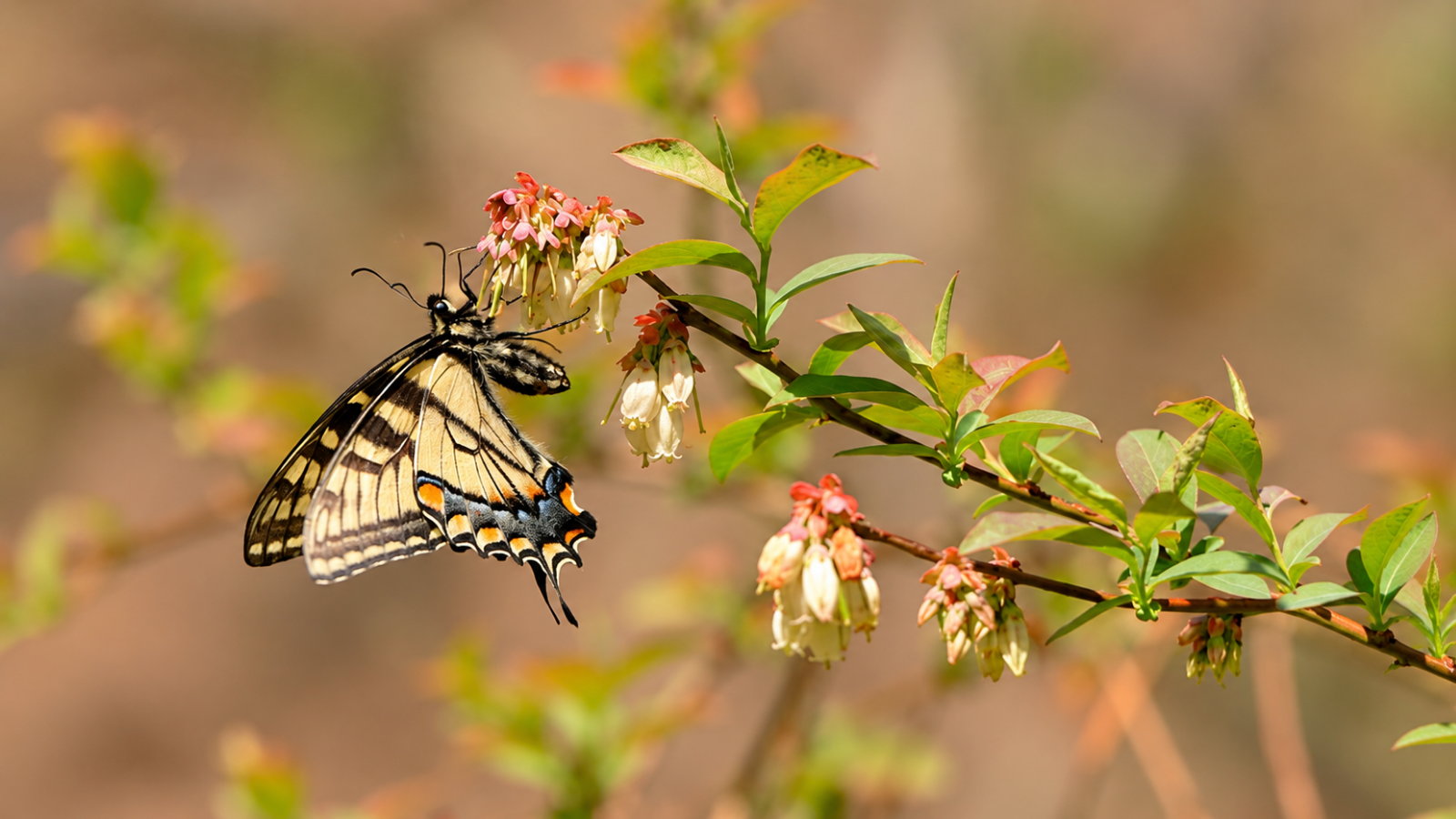
Buttonbush (Cephalanthus occidentalis) is one of the most flood-tolerant native shrubs in the eastern US and a standout for wildlife — its spherical white flowers in midsummer are magnets for bees, and its seeds attract waterfowl. It suits the wet basin in regions where it’s native, but it can grow large; allow it at least 6 to 12 feet of spread. Winterberry (Ilex verticillata) and red-osier dogwood (Cornus sericea) handle moist to wet conditions and offer winter berry color that birds use heavily. Ninebark (Physocarpus opulifolius) and serviceberry (Amelanchier spp.) tolerate changing moisture and work well in the middle zone, though they need adequate room for mature growth. Spicebush (Lindera benzoin) is a good choice for the moist middle zone in partial shade — it’s a host plant for the spicebush swallowtail butterfly and has good fall color.
Use caution with trees. A young tree can look appropriately sized at planting but eventually develop a root system, branch spread, and shade pattern that change the entire rain garden. Keep large-maturing species well away from foundations, utilities, septic systems, and engineered drainage layers. Small trees like serviceberry or native willows may work in larger rain gardens but need the same planning attention.
Plants to Avoid
Some plants are poor choices for a rain garden because they can’t handle the moisture pattern, spread aggressively beyond the garden, or create maintenance and safety problems over time.
- Plants that require permanently dry, sharply drained soil — Mediterranean herbs, lavender, most sedums — will struggle or die in the basin and middle zone
- Plants that require constant saturation when the garden dries between storms — true aquatic species belong in a water garden, not a rain garden
- Species listed as invasive in your state or region, including many ornamental plants still sold at garden centers
- Large trees placed too close to foundations, utilities, or drainage structures
- Plants with brittle stems at a fast-moving inlet or overflow — they’ll be flattened by incoming runoff
- Highly aggressive spreaders that can escape into adjacent natural areas
- Plants purchased pre-treated with systemic pesticides, particularly neonicotinoids, which can harm the pollinators a rain garden is meant to support
- Species with significant toxicity hazards in areas used by children or pets
Do not rely on a plant’s common name alone. Verify the botanical name, regional status, mature size, and moisture tolerance before buying — and cross-reference with your state’s invasive species list before purchasing any ornamental that you haven’t grown in a rain garden before.
Rain Garden Plants at a Glance
These examples show how plant roles may fit different zones across much of the US. Final choices should always be based on regional recommendations and the actual conditions of your garden — moisture tolerance can differ significantly between species, cultivars, and sites.
| Plant | Best-Fit Zone | Moisture Tolerance | Sun | Typical Role | Notes |
|---|---|---|---|---|---|
| Native Sedges (Carex spp.) | Basin to middle | Varies by species; often high | Sun to shade | Structure and soil cover | Choose by species and regional habitat. |
| Soft Rush (Juncus effusus) | Basin | High; tolerates flooding | Sun to partial shade | Wet-zone structure and bird seed | Check spreading habit before planting. |
| Blue Flag Iris (Iris versicolor) | Basin | High; handles temporary ponding | Sun to partial shade | Late-spring flowers, edge stability | Best in eastern US; confirm regional nativity. |
| Cardinal Flower (Lobelia cardinalis) | Basin to middle | Moist to wet | Sun to partial shade | Late-summer flowers, hummingbird nectar | Best where moisture remains available. |
| Swamp Milkweed (Asclepias incarnata) | Basin to middle | Moist to seasonally wet | Full sun | Monarch host plant, nectar | Use a regionally appropriate species. |
| Joe-Pye Weed (Eutrochium spp.) | Basin to middle | Moist to seasonally wet | Full sun | Late-summer nectar, height | Confirm species for your region; allow room. |
| Bee Balm (Monarda spp.) | Middle | Average to moist | Sun to partial shade | Nectar and seasonal color | Needs airflow; avoid constant saturation. |
| Great Blue Lobelia (Lobelia siphilitica) | Middle | Moist, not waterlogged | Partial shade to sun | Late-summer color in shadier spots | Good shade-tolerant alternative to cardinal flower. |
| Switchgrass (Panicum virgatum) | Middle to edge | Average to moist | Full sun | Roots, structure, winter cover | Choose a cultivar that fits the space. |
| Black-Eyed Susan (Rudbeckia hirta) | Middle to edge | Average to moderately dry | Full sun | Nectar, summer-to-fall color | Drought-tolerant once established; needs drainage between storms. |
| Blazing Star (Liatris spp.) | Middle to edge | Average to dry | Full sun | Nectar and vertical form | Not suited to permanently wet soil. |
| Little Bluestem (Schizachyrium scoparium) | Edge and berm | Average to dry; handles occasional wet | Full sun | Structure, fall color, bird habitat | Excellent four-season interest; avoid overwatering. |
| Goldenrod (Solidago spp.) | Middle to edge | Varies by species | Sun to partial shade | Late-season nectar | Choose a well-behaved, non-spreading species. |
| Asters (Symphyotrichum spp.) | Middle to edge | Varies by species | Sun to partial shade | Late-season nectar | Confirm species for moisture zone. |
| Buttonbush (Cephalanthus occidentalis) | Basin to middle | Moist to wet; flood-tolerant | Full sun to partial shade | Shrub structure, wildlife flowers and seeds | Use only where locally native; allow room to spread. |
| Spicebush (Lindera benzoin) | Moist middle to edge | Moist, not permanently flooded | Partial shade | Shelter, butterfly host plant | Good for shaded rain gardens in eastern US. |
The table is a planning reference, not a substitute for local research. Verify regional nativity and site suitability before buying.
Match Every Plant to Its Zone
The best rain garden planting plan starts with the moisture pattern already present in the basin. Watch where water remains longest, where the soil dries first, and how sunlight changes across the site before deciding where individual species belong.
Once those conditions are clear, combine regionally appropriate grasses, sedges, perennials, and shrubs that can handle the wet-to-dry cycle of their assigned zones. When plants are matched to both moisture and light, the rain garden becomes easier to maintain, more resilient, and more useful as part of the landscape.
COMMON QUESTIONS
Before you begin.
What are the best plants for a rain garden?
The best rain garden plants are species that tolerate changing moisture conditions, from temporary flooding after storms to drier periods between rainfall. Regionally appropriate native sedges, grasses, flowering perennials and shrubs often provide a strong foundation. Examples include cardinal flower, swamp milkweed, native sedges, switchgrass, black-eyed Susan and buttonbush, but final choices should match your region, sunlight, soil and position within the rain garden.
What plants should go in each rain garden zone?
Place the most flood-tolerant plants in the lowest basin, where water may temporarily pond after storms. The middle zone suits plants that tolerate alternating moist and moderately dry conditions, while the upper edge needs species that prefer better drainage and can handle occasional wetness. Matching plants to these wet, transitional and drier zones is more important than using one plant list across the entire garden.
What plants are best for the bottom of a rain garden?
The bottom zone needs plants that can tolerate temporary standing water for up to 24 to 48 hours and then withstand drier conditions as the basin drains. Depending on the region, native sedges, soft rush, blue flag iris, cardinal flower and swamp milkweed can be suitable choices. If water routinely remains longer than 48 hours, the drainage problem should be corrected rather than solved by changing plants.
Should rain garden plants be native?
Native plants are often an excellent foundation because they can support regional wildlife and may be well adapted to local rainfall and climate patterns. However, a plant being native does not automatically make it suitable for every rain garden or moisture zone. Choose species native to your region that also match the garden’s soil, light and wet-to-dry conditions.
Do rain garden plants need full sun?
Not all of them. Many flowering rain garden plants perform best in full sun, while some sedges, shrubs and perennials can grow in partial shade. Moisture tolerance and sunlight requirements are separate factors, so each plant should be matched to both the light level and the moisture zone where it will grow.
Why are my rain garden plants dying?
Common causes include water remaining in the basin too long, poor soil infiltration, drought during the establishment period, planting a species in the wrong moisture zone or choosing plants poorly suited to the local climate or light conditions. Check drainage and actual site conditions before replacing plants, because new plants may fail again if the underlying problem remains.