A water garden is a permanent or semi-permanent water feature built around aquatic plants. It can range from a small watertight container on a patio to an in-ground pond with planting shelves, moving water, filtration, wildlife, or fish.
Planning one successfully means looking beyond appearance. Sunlight, water depth, circulation, plant zones, water quality, maintenance, seasonal conditions, and safety all affect how well the feature functions over time, and the right setup depends heavily on its size and purpose.
This guide explains how to plan a water garden, compare ponds and container gardens, choose aquatic plants, manage oxygen and algae, decide whether pumps or fish belong in the system, prepare for winter, support wildlife, and avoid common safety and invasive-plant problems.
What Is a Water Garden?
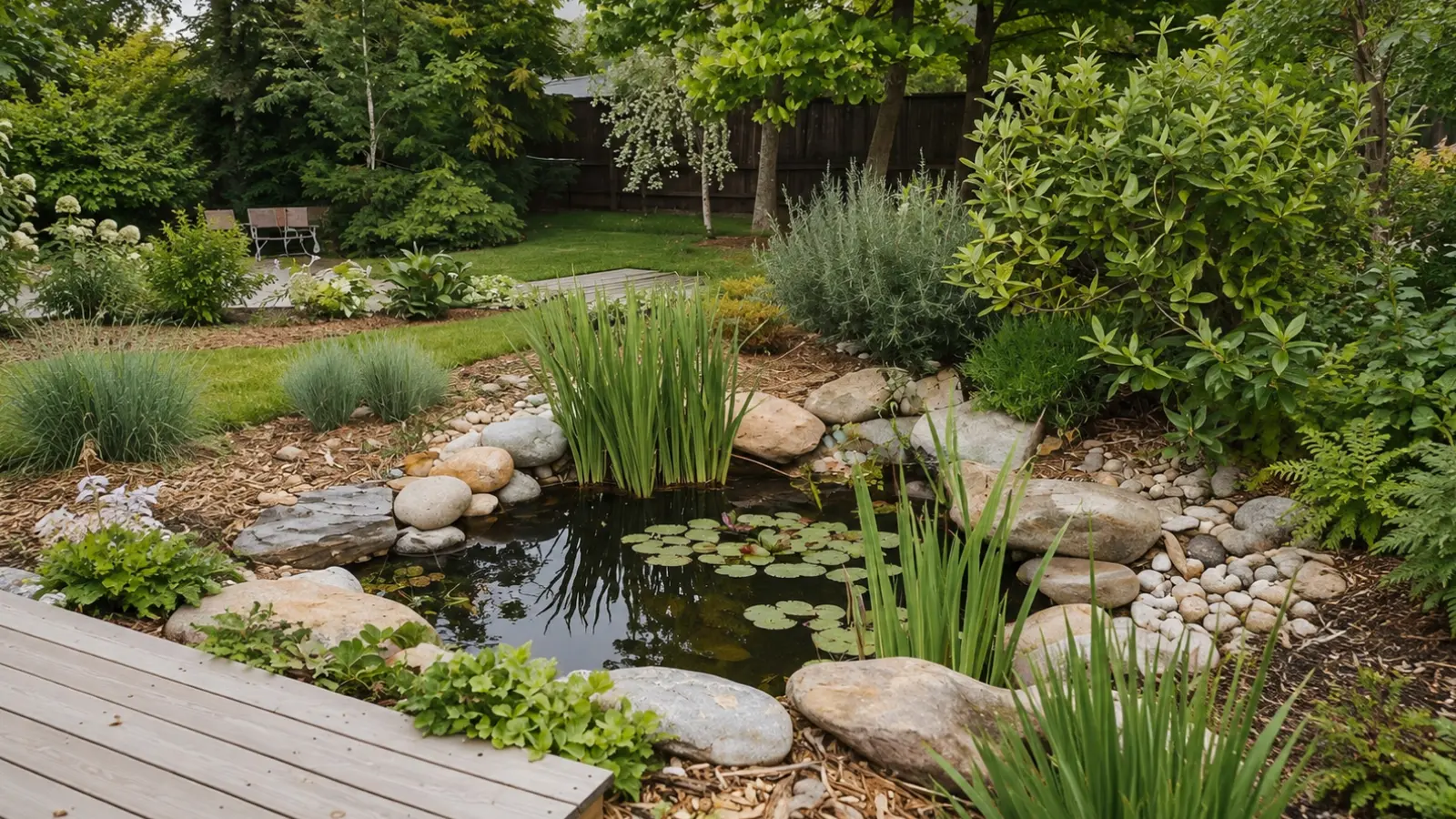
A water garden is a permanent or semi-permanent water feature designed to support aquatic plants and create a distinct garden environment. The water may be still, gently circulating, or moved through a fountain, stream, or waterfall.
Some water gardens are primarily ornamental. Others are designed to support aquatic insects, birds, amphibians, or fish. The intended use shapes nearly every decision — depth, water quality, planting zones, circulation, and maintenance routine all follow from what you want the garden to do.
A water garden is sometimes called an aquatic garden or pond garden. These terms often describe different scales, but they belong to the same broad subject.
Pond vs. Container Water Garden
Pond Water Garden
A pond water garden is built into the landscape or installed as a larger prefabricated feature. It offers room for deeper water, multiple plant zones, larger aquatic plants, and — in some cases — fish.
Ponds require more planning upfront. Excavation, liner or construction material, water loss, overflow management, pumps, filtration, winter conditions, nearby tree roots, and safety all need to be thought through before you dig. A pond is not simply a large container placed in the ground, and the planning stage is where most problems are either prevented or created.
For a water garden with goldfish, a minimum depth of 18 to 24 inches is generally recommended. If you want koi, expect to go at least 3 feet deep to give the fish room and protection in colder months.
Container Water Garden
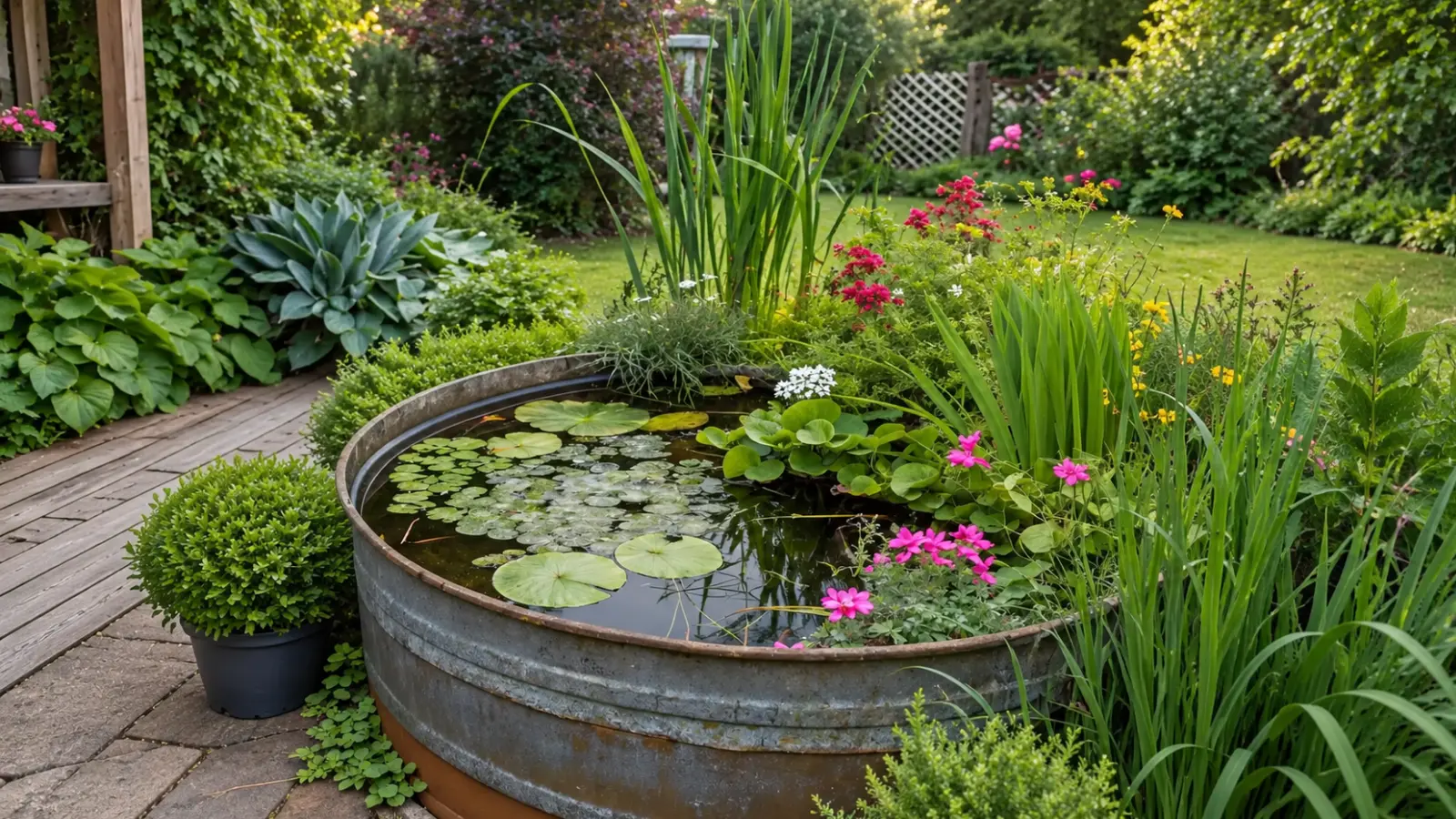
A container water garden uses a half whiskey barrel, ceramic vessel, galvanized stock tank, or any other watertight container large enough to support a plant or two. It’s a practical starting point for patios, balconies, small yards, and gardeners who want aquatic plants without excavating a pond.
Containers are easier to install and move, but they heat up and cool down faster than in-ground ponds. Water chemistry is less stable in a small volume, and there’s limited room for fish or spreading plants. Choose a container without toxic coatings or drainage holes you can’t plug. Darker-colored interiors reflect less light back into the water, which can help limit algae growth and make algae less noticeable, but dark containers can also absorb more heat and raise water temperatures in direct sun, especially during hot weather.
Choose the Right Site
Where you put a water garden matters as much as how you build it. A poor site creates problems that no amount of maintenance can fully fix.
Sunlight is one of the most critical factors. Most aquatic plants — especially water lilies and lotus — need at least 5 to 6 hours of direct sun daily to bloom and grow well. At the same time, intense afternoon sun raises water temperature and encourages algae. In hot climates, a spot that gets morning sun with some afternoon shade tends to work better than one in unbroken full sun all day. Four to six hours of direct sunlight is a solid target for most water gardens.
Place the garden where it can be viewed and maintained without a lot of effort. Leave clear access around the edge for cleaning, trimming, and inspecting pumps or filters. Avoid locations directly beneath large deciduous trees — fallen leaves decompose and feed algae, and roots can damage liners over time.
Check for buried utilities before any excavation. Think about slope, drainage, seasonal runoff, frost heave, and how close the feature sits to your house foundation. Water escaping toward a basement or neighboring property is a serious problem. Also verify electrical access if you plan to run a pump or lighting.
One important clarification: a water garden should not be used to fix a persistently waterlogged area caused by drainage failure. A pond and a soggy foundation are entirely different problems, and building one in the wrong place compounds both.
Understand Depth Zones
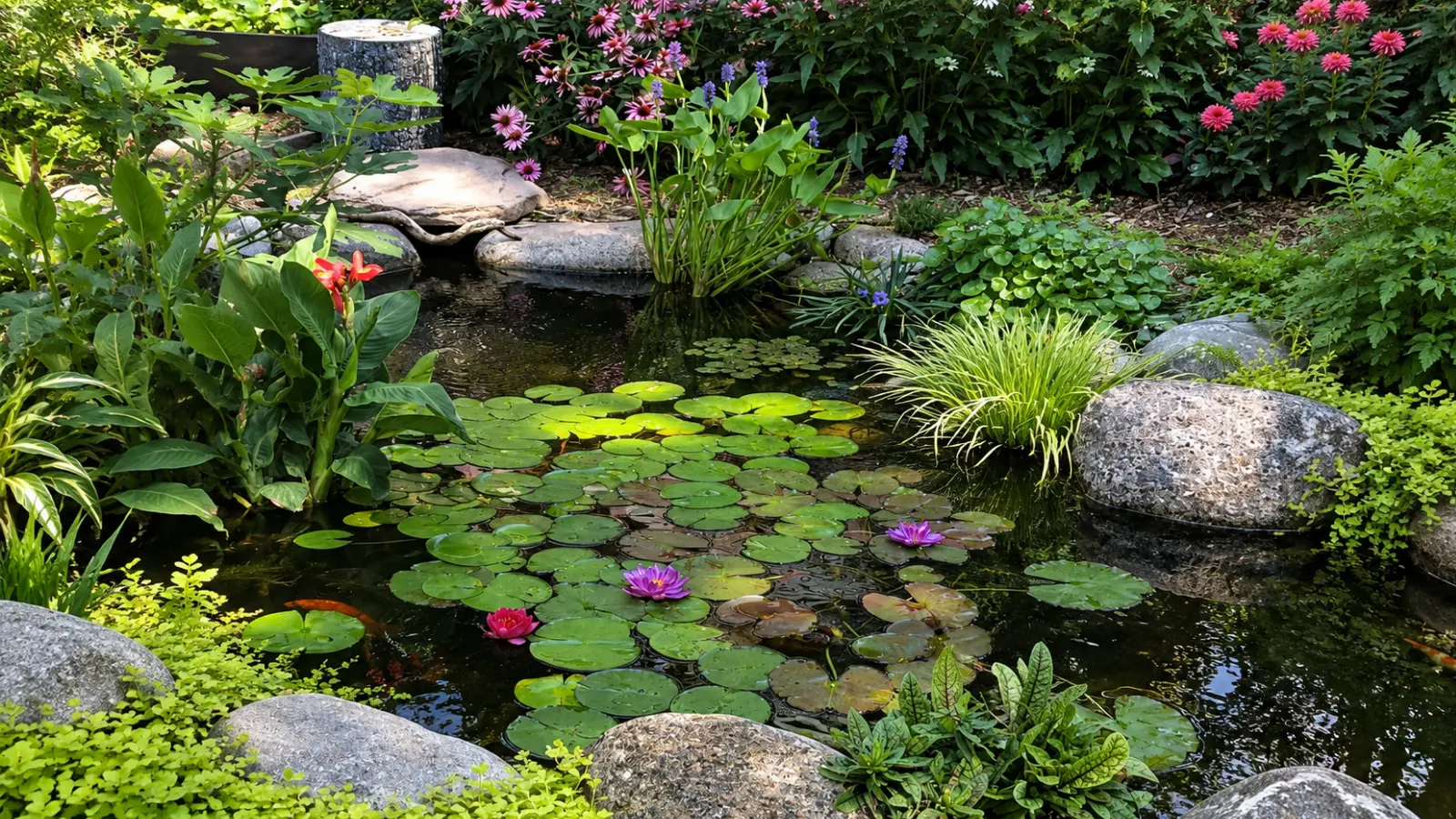
Aquatic plants grow in specific depth ranges, and designing a pond with distinct zones makes planting far more straightforward. Most successful water gardens include shelves or gradual slopes that create at least two or three distinct areas. Here’s how the main zones break down:
Marginal Zone
Marginal plants grow in shallow water, typically from the water’s edge to about 6 inches deep. Their roots stay submerged while leaves and flowers rise above the surface. Common examples include iris, pickerelweed, and marsh marigold. These plants soften the transition between water and land and help filter runoff at the pond’s edge.
Submerged Zone
Submerged plants grow fully below the surface, either anchored in containers or weighted in sediment. They can provide shelter for small aquatic animals and produce oxygen during daylight hours — an important contribution to water balance. Common submerged oxygenators include hornwort (Ceratophyllum), anacharis (Elodea canadensis), and cabomba. Their performance depends on available light, water depth, temperature, and nutrient levels. They help, but they don’t replace mechanical aeration in larger or heavily stocked ponds.
Deep-Water Zone
Deep-water plants, most notably water lilies (Nymphaea) and lotus (Nelumbo), are grown in containers placed at depth. Hardy water lilies typically do best with 12 to 18 inches of water above the pot; tropical varieties prefer 6 to 12 inches. Their floating leaves shade the water surface, which helps control algae — though excessive coverage can reduce light and oxygen exchange in the water below.
Emergent and Floating Zones
Emergent plants are rooted in saturated soil or shallow water while most of their stems and foliage extend above the surface. They can soften the pond edge, provide wildlife cover, and create a natural transition between water and dry land.
Floating plants rest on the surface without anchoring below. They shade the water and absorb nutrients directly, which can help limit algae. The tradeoff is that fast-spreading species can cover the entire surface if you’re not watching them. A general rule of thumb: aim for floating and surface coverage over 50 to 70 percent of the water to help control algae without blocking too much oxygen exchange.
Still Water vs. Moving Water
The choice between still and moving water is partly aesthetic and partly practical — both approaches can work, but they suit different plants and goals.
Still water suits floating plants, water lilies, and quiet wildlife observation. It also warms more quickly and can develop algae faster if nutrients, sunlight, and plant coverage aren’t well balanced. Water lilies, in particular, prefer still or very slow-moving water; direct fountain spray can damage their leaves and reduce blooming.
Moving water from a pump, fountain, or waterfall adds sound, improves circulation, and increases gas exchange at the surface. It does not automatically solve every water quality problem, and the pump must be correctly sized for the water volume of the feature — an undersized pump does little, while an oversized one may disturb plants that prefer calm conditions.
A small, lightly planted container garden may not need a pump at all, provided it’s maintained carefully and not overstocked. A larger pond with fish or a heavy organic load generally needs more attention to circulation, filtration, and dissolved oxygen levels.
Types of Aquatic Plants
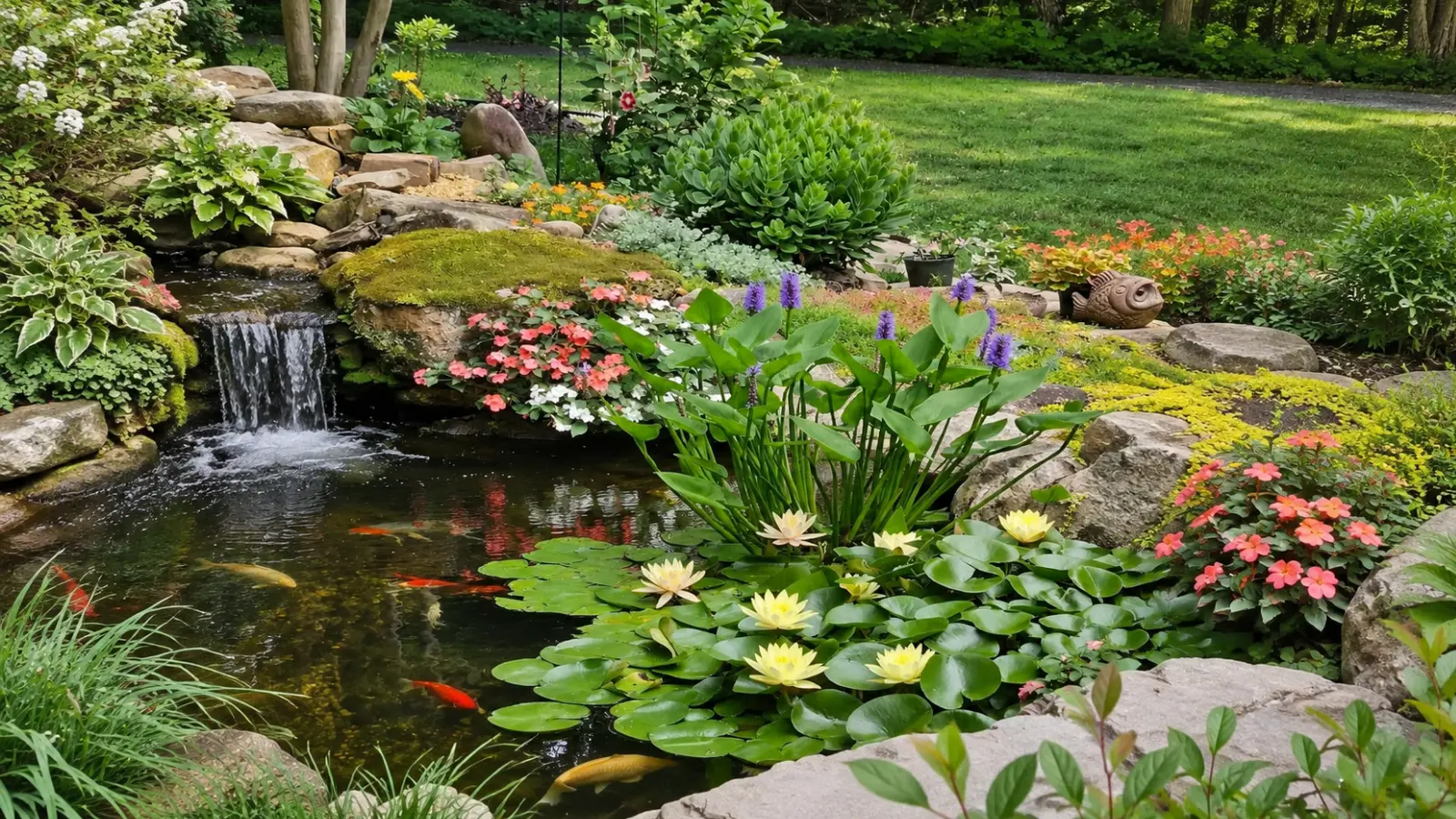
Aquatic plants are grouped by how they relate to the water surface. Understanding the categories helps you place plants at the right depth and avoid expecting one type to do a job it isn’t suited for.
Floating Plants
Floating plants rest on the water surface and absorb nutrients through roots that hang freely below. Water hyacinth (Eichhornia crassipes) and water lettuce (Pistia stratiotes) are familiar examples — both are effective at shading and nutrient uptake, but both are also invasive in warm-climate states and regulated or banned in parts of the South and California. Check your state’s rules before buying either one.
Duckweed (Lemna minor) is another common floater — useful in small amounts as fish food and surface cover, but capable of blanketing a pond quickly if left unchecked.
Submerged Plants
Submerged plants grow beneath the surface and provide shelter for fish, tadpoles, and aquatic insects. The group commonly called “oxygenators” — hornwort, anacharis, cabomba — release oxygen into the water during photosynthesis and compete with algae for nutrients. At night, they consume oxygen through respiration, so a heavily planted pond on a hot, still summer night can experience low dissolved oxygen levels by morning. Pairing submerged plants with surface coverage and adequate aeration helps prevent this.
Marginal and Emergent Plants
Marginals and emergents occupy shallow water or saturated pond edges. They add height and texture, help filter runoff, and make the pond feel connected to the surrounding landscape. Good native options for American gardens include blue flag iris (Iris versicolor), pickerelweed (Pontederia cordata), and native cattail (Typha latifolia, managed carefully — it spreads). Using native species wherever possible supports local insects and wildlife better than ornamental exotics.
Deep-Water Plants
Water lilies are the signature plants of most pond water gardens, and for good reason — their floating pads shade the water while their flowers reward the summer garden. Hardy varieties (Nymphaea hybrids) overwinter in the pond in most US climates; tropical varieties need to be brought in or replaced annually in zones below 9 or 10. Lotus (Nelumbo) is a striking alternative that needs full sun and warm water to perform well — it’s impressive but less forgiving than most water lilies.
Plant selection should account for mature spread, winter hardiness, water depth, sun exposure, and local invasive-plant rules. A separate page can address aquatic plant choices in greater detail.
A general caution: avoid adding aquatic fertilizers directly to the water. Use slow-release tablet fertilizers pressed into the soil of individual planting baskets, which feeds the plant without enriching the open water and feeding algae.
Oxygenation and Water Balance
Water quality in a pond depends on the balance between oxygen, nutrients, temperature, organic material, plants, animals, and circulation. A new water garden may look perfectly clear at first, then shift as plants establish, organic matter builds up, and the system settles into its actual equilibrium.
Plants contribute to oxygen, but not uniformly. Submerged plants produce oxygen through photosynthesis during daylight hours, but they also consume it at night through respiration. Floating-leaf plants like water lilies release most of their photosynthetic oxygen into the air, not the water. Neither type is a substitute for mechanical aeration in a pond that carries fish or a heavy organic load.
The practical goal is a balanced system: enough plant coverage to shade the water and compete with algae, enough circulation to prevent stagnant pockets, and enough filtration to handle the biological load. Avoid stocking more fish or plants than the water volume can support — a common mistake that creates water quality problems that are difficult to reverse without starting over.
Managing Algae
Some algae are a normal part of an aquatic ecosystem. The problem is excessive growth — the kind that creates odor, coats every surface, blocks pump intakes, or turns the water an opaque green.
Algae tend to proliferate when water contains too many nutrients, receives intense sunlight with little shade, becomes stagnant, or accumulates decomposing organic material. Nearby fertilizer runoff, animal waste, and fallen leaves are common contributors. String algae (filamentous algae) often appears in new ponds before plants establish and compete for nutrients — it usually improves with time and planting density.
The most effective approach is to address the cause rather than treating the symptom. Remove excess organic material regularly. Improve circulation if stagnant zones exist. Reduce nutrient inputs. Thin overgrown plants. Add more submerged oxygenators to compete for nutrients. Physically removing nuisance algae by hand or with a brush is often safer and more sustainable than reaching for a chemical treatment.
If you do consider a chemical treatment, never apply anything to a pond without first identifying the specific problem, checking state and local regulations, and understanding the potential effects on fish, amphibians, wildlife, and any downstream water. Some treatments are restricted or prohibited in certain states, and the wrong product can do significant harm to the ecosystem you’re trying to maintain.
Water Gardens and Wildlife
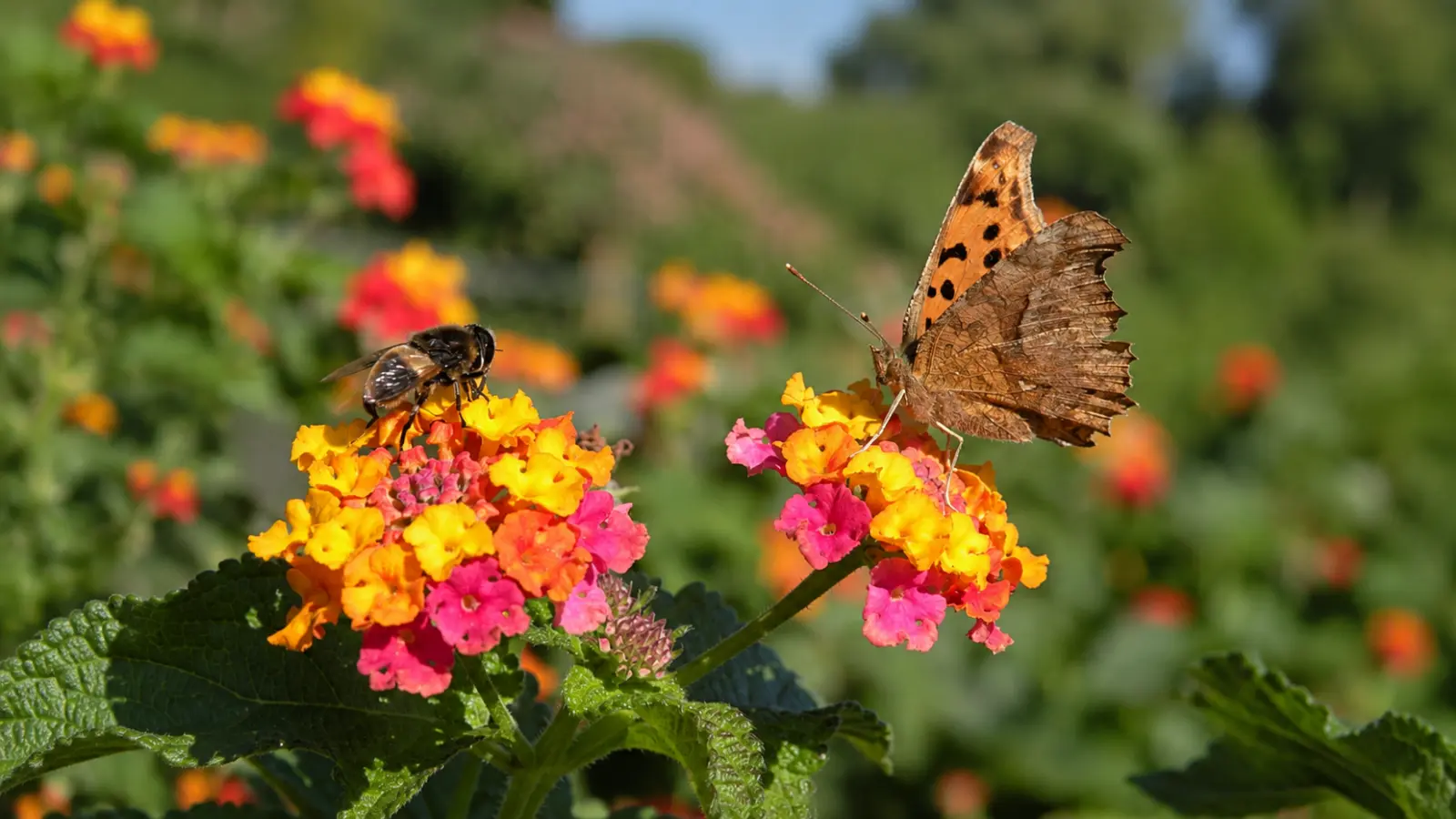
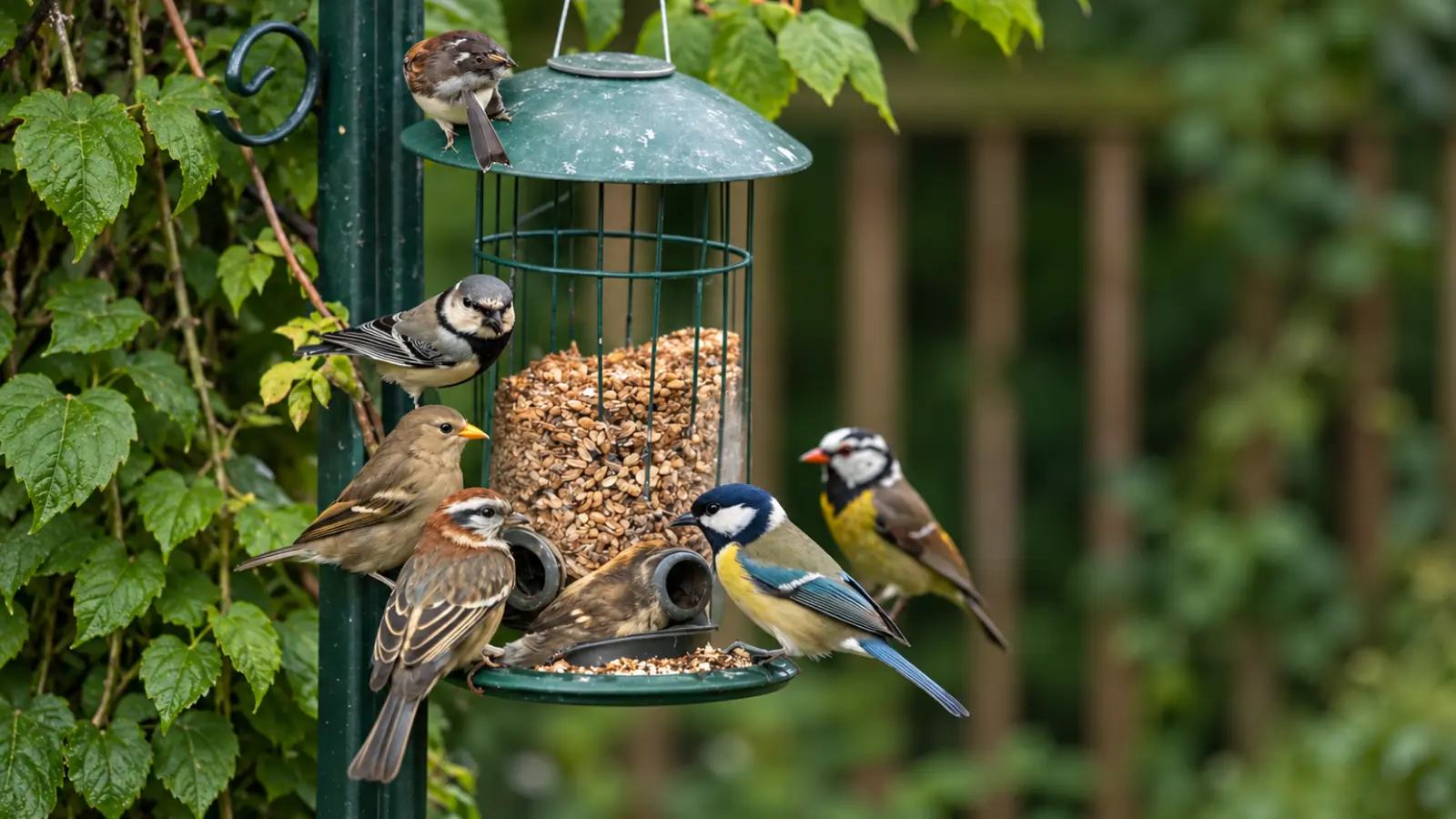
A water garden can provide drinking water, bathing habitat, and shelter for birds, aquatic insects, amphibians, and other backyard wildlife. The design details that matter most for wildlife aren’t always the ones that look best in photos.
Shallow areas, stable rocks at the water’s edge, and gentle slopes or escape ledges are more valuable to wildlife than deep open water. A steep-sided container looks clean but can trap small frogs, insects, or mammals that fall in and can’t climb out. If wildlife is part of your goal, at least one edge should offer an easy way out.
Let wildlife find the garden on its own. Do not move frogs, turtles, fish, or aquatic plants from one natural water body to another. Doing so can spread disease and invasive species — and in many states, it’s illegal. Native wildlife will typically discover a well-established water garden within a season.
A wildlife-focused water garden should also be separated from pesticide runoff and kept away from heavy nighttime lighting, which can disrupt amphibian behavior. The broader wildlife garden can provide the land-based shelter and food sources that water alone can’t supply.
Pumps and Filtration
For any water garden beyond a small, lightly planted container, a pump and some form of filtration are usually necessary — especially once fish are involved.
Pumps move water through fountains, waterfalls, streams, and filters. The key spec to match is the pump’s flow rate (measured in gallons per hour) to the total water volume of your pond. Most manufacturers recommend turning over the full pond volume at least once per hour; ponds with heavy fish loads or waterfalls may need more. Choosing the smallest pump available to save money is a common mistake — an undersized pump won’t keep the water healthy.
Mechanical filters catch solid debris. Biological filters provide surfaces where beneficial bacteria can process ammonia and nitrites from fish waste. Many systems use both, and some designs include UV clarifiers to control single-celled algae. Whatever system you choose, regular cleaning is essential — leaves, algae, and sediment can reduce flow or overheat equipment.
All electrical components must be rated for outdoor use and installed with appropriate weatherproofing and ground-fault circuit interrupter (GFCI) protection. Inspect pump intakes, tubing, and filter media on a regular schedule, more often in fall when leaf drop peaks.
Adding Fish
Fish change the maintenance requirements of a water garden significantly. They produce waste, consume oxygen, may eat aquatic plants, and disturb sediment. A pond that works beautifully without fish may need a pump, a biological filter, greater depth, and more frequent water testing once fish are added.
Goldfish are a reasonable choice for most water gardens — they’re hardy, adaptable, and less destructive to plants than koi. Koi are striking but grow large (up to 3 feet in some cases), need more water volume and depth, and will eat or uproot most aquatic plants. A pond designed around koi and one designed around water lilies are, in practice, two different types of feature.
Before stocking any fish, consider adult size, winter temperature requirements, predator access (herons, raccoons, and neighborhood cats are common problems), oxygen levels, and local regulations around fish species. Never release unwanted fish into natural waterways, storm drains, or local ponds — it’s harmful to native ecosystems and illegal in most states.
Fish also shift the wildlife balance. They eat aquatic insects, amphibian eggs, and tadpoles, so a pond designed to attract frogs or dragonflies is not always compatible with a significant fish population. Decide which you want the pond to primarily serve.
Winter Care
How much winter preparation a water garden needs depends on your climate, the pond’s depth, your plants’ hardiness, and whether fish stay in the water year-round.
In cold regions, move tender container plants — tropical water lilies, water hyacinth, water lettuce — indoors before the first hard frost. Hardy water lilies can remain in the pond if the water depth is sufficient to keep roots below the freeze line. Remove as many fallen leaves as practical before they sink and decompose; an excessive leaf load over winter can release nutrients and stress fish in spring. That said, don’t strip the pond completely bare if it provides wildlife habitat.
Protect pumps and plumbing from freezing according to the manufacturer’s instructions — this usually means removing and storing submersible pumps indoors for the season. If you keep fish through winter, never break surface ice by striking it; the shock wave can harm or kill fish. Use a pond de-icer or a small aerator designed to maintain an opening in the ice and allow gas exchange.
In mild climates (roughly USDA Zones 8 and warmer), plants may remain active year-round, but the pond still benefits from thinning overgrown plants and inspecting equipment going into the cooler season. Regional conditions should always determine the winter routine — there’s no universal schedule.
Child and Pet Safety
Any permanent water feature creates a safety responsibility that deserves direct attention. Young children can drown in just a few inches of water, and a curious toddler can reach a pond edge faster than most adults expect.
If young children are present — in your household or as frequent visitors — a fence around the pond is the most reliable protective barrier. The fence should be at least 4 feet high with a self-closing, self-latching gate. A rigid metal grille or heavy-gauge mesh placed over the water surface provides a second layer of protection. Chicken wire is not adequate; it won’t support the weight of a child. Check any barriers regularly to make sure they remain secure.
Keep electrical connections weatherproofed and protected with GFCI outlets. Ensure that stones, steps, and coping are stable and cannot shift underfoot — wet edges are slippery and a fall into even a shallow pond is a real hazard.
Consider escape routes for pets and visiting wildlife. Sloped edges, submerged shelves, or securely placed ramps help animals leave the water if they fall in. A steep-sided container or sharply edged liner offers no way out for a small dog, a cat, or a curious raccoon.
Avoid Invasive Aquatic Plants
Aquatic plants can spread far beyond a garden pond through waterways, wind-carried seeds, water movement, or discarded plant material. A plant that stays contained in one garden can become a serious ecological problem if a fragment reaches a nearby stream, drainage ditch, or natural water body.
Some of the most commonly sold water garden plants are also some of the most problematic invasives in the US. Water hyacinth (Eichhornia crassipes) is prohibited or restricted in many Southern and Western states because a single plant can cover several acres of water in a single growing season. Water lettuce (Pistia stratiotes) and Eurasian watermilfoil are regulated in multiple states. Yellow flag iris (Iris pseudacorus), often sold for pond edges, has naturalized invasively across much of the country. Even species that seem manageable in the Northeast or Midwest may cause serious problems in warmer climates.
Before buying any aquatic plant, check your state’s invasive species list. Resources from your state’s department of natural resources, university Extension Service, or USDA National Invasive Species Information Center can help identify which plants are permitted in your area. When common names are involved, verify the botanical name — nurseries sometimes sell related species under the same common name, not all of which have the same invasive status.
Never dump aquarium or water garden plants into natural water, compost piles that drain to waterways, or storm drains. Dispose of unwanted aquatic plants by sealing them in a bag and placing them in the trash, or drying them completely on dry land where fragments cannot reach water. Clean pots, nets, pumps, and other equipment before moving them between water bodies — even small wet fragments can transport plants or organisms.
Build the Water Garden You Can Maintain
The best water garden is not necessarily the largest or most elaborate one. Start with the purpose of the feature, the space available, the aquatic plants you want to grow, and the amount of maintenance you are realistically willing to manage throughout the year.
Once those decisions are clear, depth, circulation, plant zones, filtration, wildlife features, and seasonal care become much easier to plan. Whether the result is a simple container or a larger pond, treating it as a complete aquatic system from the beginning will make it healthier, safer, and easier to enjoy over time.
COMMON QUESTIONS
Before you begin.
What is a water garden?
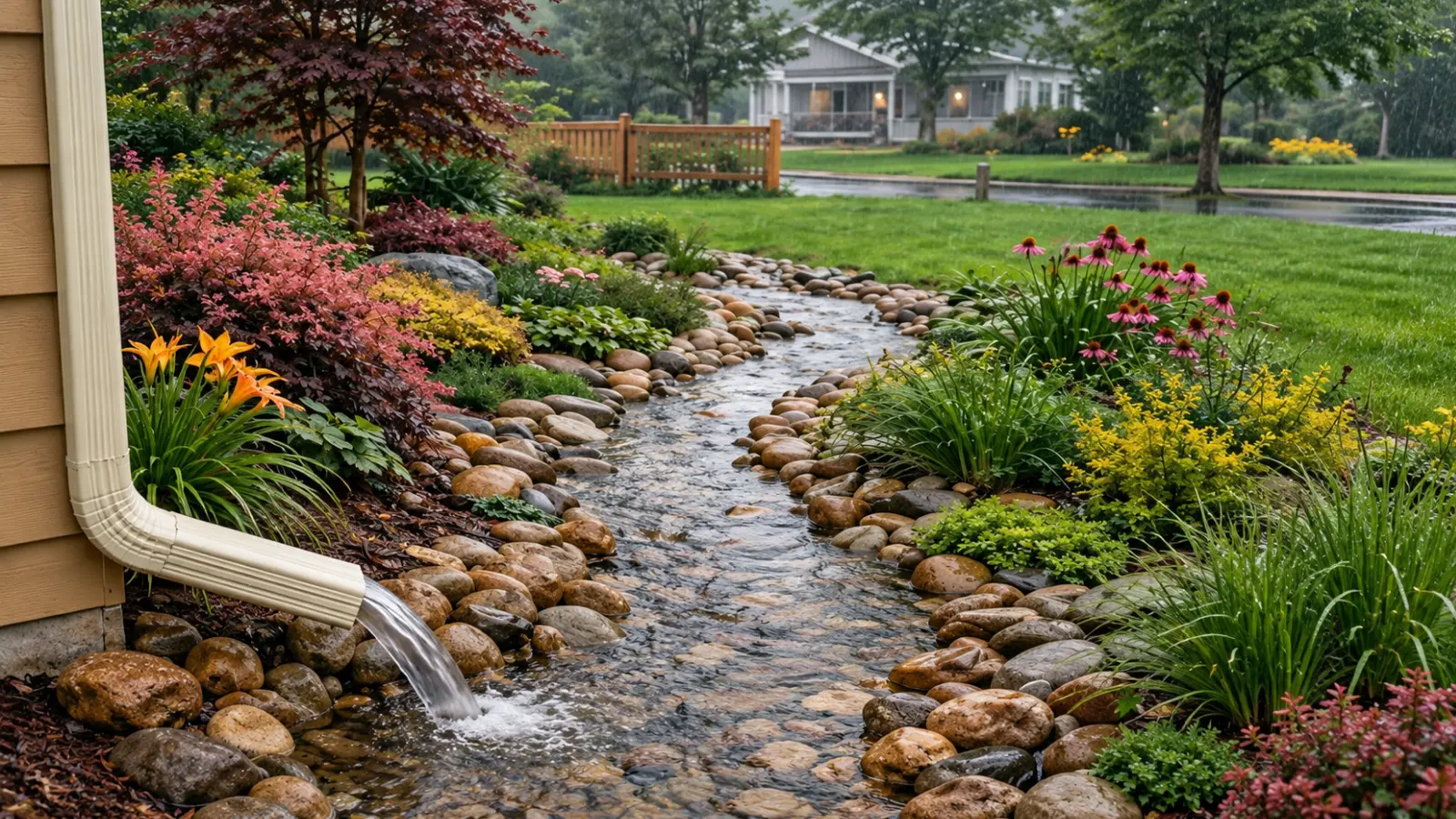
A water garden is a permanent or semi-permanent water feature designed around aquatic plants. It can be an in-ground pond, lined basin or watertight container, with still or circulating water. Unlike a rain garden, which temporarily collects stormwater and then drains, a water garden is intended to hold water as an ongoing part of the landscape.
What plants are best for a water garden?
The best plants depend on water depth, sunlight, climate and the role each plant will play. Water lilies and lotus suit deeper water, marginal plants such as blue flag iris and pickerelweed grow near shallow edges, while submerged and floating plants can provide habitat, shade or nutrient uptake. Always check regional suitability and invasive-species restrictions before adding aquatic plants.
Can you make a small water garden in a container?
Yes. A watertight barrel, ceramic vessel, stock tank or similar container can create a water garden on a patio, porch or other small space. Choose plants suited to the container’s depth and sunlight, monitor water temperature and quality closely, and avoid overcrowding. Small containers experience faster temperature and water-quality changes than larger ponds.
Does a water garden need a pump?
Not always. A small, lightly planted container without fish may function without a pump if debris is removed and water conditions remain healthy. Larger ponds, water features with fountains or waterfalls, and ponds containing fish generally benefit from circulation and filtration to maintain oxygen levels and manage waste.
How much sunlight does a water garden need?
Most water gardens perform well with about four to six hours of direct sunlight per day. Flowering aquatic plants such as water lilies and lotus often need at least five to six hours to bloom reliably. In very hot climates, morning sun combined with some afternoon shade can help limit excessive water heating and algae growth.
How do you control algae in a water garden?
Start by correcting the conditions that encourage excessive algae. Remove decomposing leaves and other organic material, limit excess nutrients, improve circulation when needed and use appropriate plant coverage to shade the water and compete for nutrients. Some algae are normal in an aquatic ecosystem, so treatment should focus on persistent excessive growth rather than trying to eliminate all algae.