A shade garden works best when it is designed around the light and moisture conditions that already exist. Partial shade, full shade, open shade and filtered shade can behave very differently, and a dry area beneath mature trees requires a completely different planting approach from a cool, moist bed beside a building.
Instead of trying to make a shaded space behave like a sunny flower border, use foliage, texture, layering, subtle color and structure to create interest. Trees, shrubs, groundcovers, paths and containers can all contribute when they are matched to the actual conditions of the site.
This guide explains how to design a shade garden, including how to assess light, distinguish dry shade from moist shade, plant safely beneath trees, improve soil carefully, build foliage layers, use texture and color, add paths and containers and maintain the garden as conditions change.
What Kind of Shade Do You Have?
“Shade” describes a range of light conditions rather than one fixed environment. A plant that thrives in bright, open shade may struggle beneath dense evergreen branches, and a plant that tolerates dry tree-root competition may not suit a moist north-facing bed. Getting specific about what you have is the first step toward choosing plants that will actually work.
Partial Shade
Partial shade typically means an area receives roughly 2 to 4 hours of direct sun per day — usually in the cooler morning hours, with protection from the more intense afternoon sun. Morning sun is gentler and allows many shade plants to photosynthesize without heat stress, while filtered light beneath a high tree canopy can shift throughout the season as leaves emerge and drop.
Full Shade
Full shade generally describes a location receiving fewer than 2 hours of direct sun daily. It does not mean complete darkness — most full-shade plants still need bright ambient light to grow well. A site beside a building or beneath a dense canopy can qualify. Few plants survive in true deep shade, where almost no light penetrates.
Open Shade
Open shade occurs when the sky is visible but direct sunlight is limited — think the north side of a building or a space beside a tall wall. These spots often receive bright, indirect light throughout the day, which is actually enough for a wider range of plants than most people expect.
Filtered or Dappled Shade
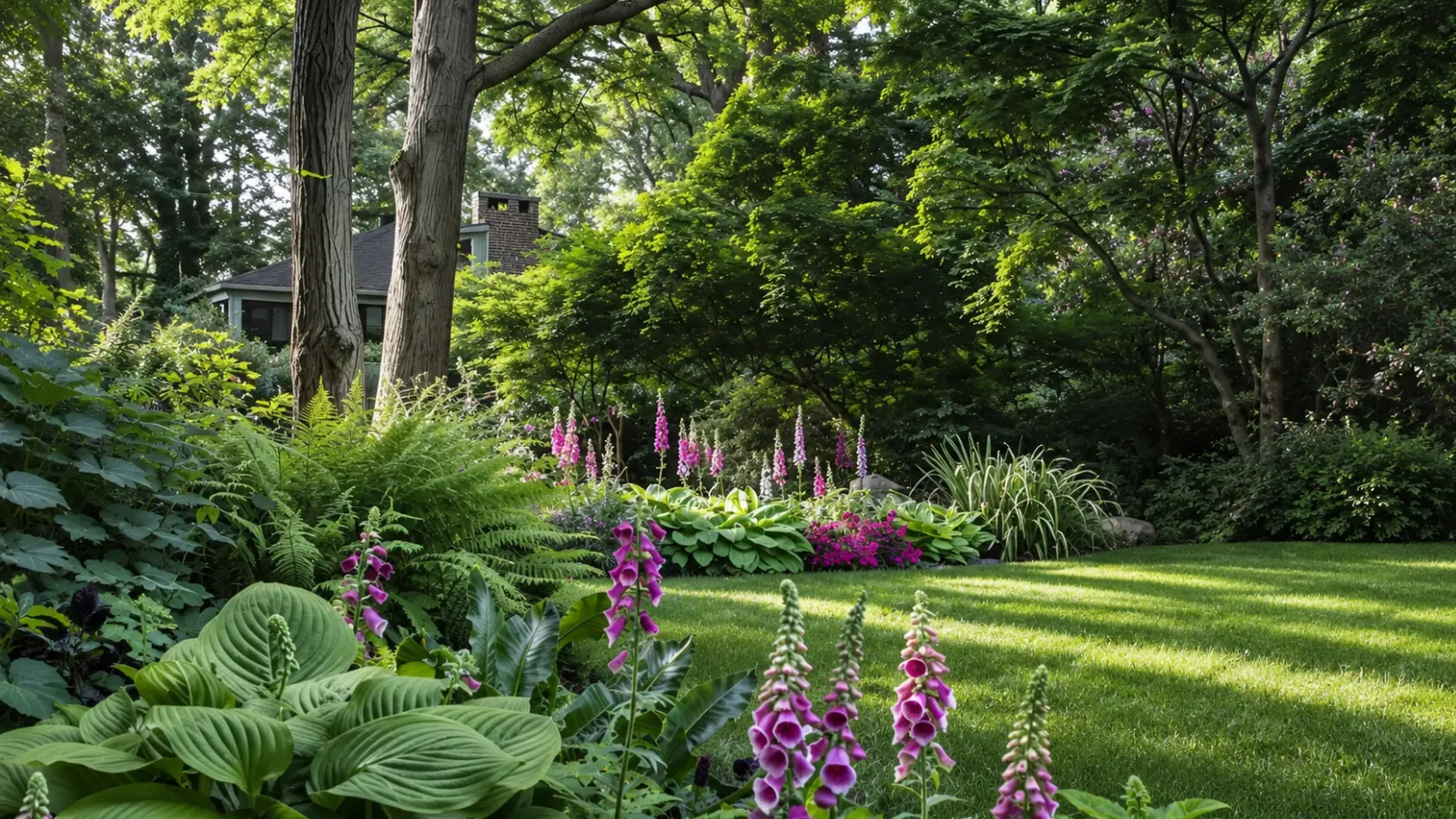
Filtered shade is created when sunlight passes through branches or foliage. It’s particularly attractive for woodland-style planting and can support a rich mix of spring ephemerals, ferns, and perennials. Keep in mind that the amount of light changes considerably when deciduous trees leaf out in spring and again when they drop their leaves in fall — a spot that looks sunny in March may be quite dark by June.
How to Measure Light
Spend at least one full day observing the site before buying plants. Note when direct sunlight hits the space in the morning, at midday, and in the afternoon, and estimate how many hours of direct sun the ground receives. Repeat the observation at a different time of year if possible — spring light and summer light under deciduous trees can be dramatically different.
Record whether the light is direct, filtered, reflected, or indirect. A pale-painted wall can increase brightness noticeably, while a dense evergreen canopy creates deep shade year-round regardless of season. South-facing walls also collect and radiate heat, which affects plant choice even in shade.
Don’t measure light only from eye level. Check the light at the height where plant foliage will actually grow. A young tree may allow plenty of light reaching the ground today but create significantly deeper shade in five years as its canopy fills in.
Always pair your light reading with soil moisture. A shaded area beneath a roof overhang or dense tree canopy may receive almost no rainfall, making it effectively dry shade even when the surrounding garden stays moist. The two variables — light and moisture — together determine what will grow, not either one alone.
Dry Shade vs. Moist Shade
Dry Shade
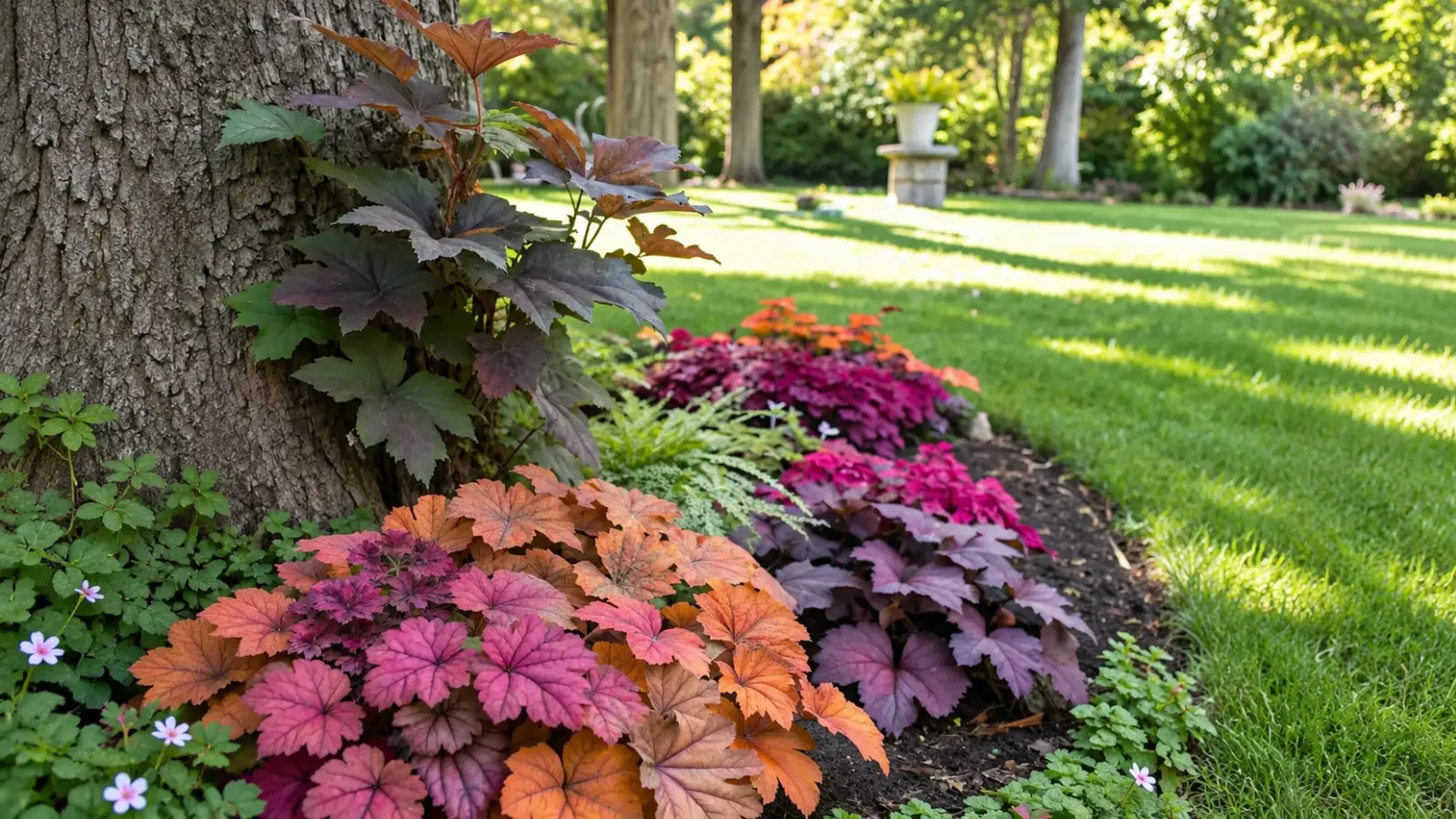
Dry shade is one of the toughest planting situations in any garden. It’s common beneath mature trees, where surface roots compete aggressively for available water, and beside buildings or under roof overhangs that block rainfall. Dense evergreen canopies can also create dry shade year-round by intercepting precipitation before it reaches the soil.
Choose plants specifically known to tolerate both low light and limited moisture — epimedium, bigroot geranium, and certain native ferns and groundcovers are reliable starting points. Water new plants consistently while they establish; even drought-tolerant shade plants need regular attention in their first season. But don’t try to create a permanently wet bed simply to compensate for root competition — that creates a different problem without solving the original one.
Moist Shade
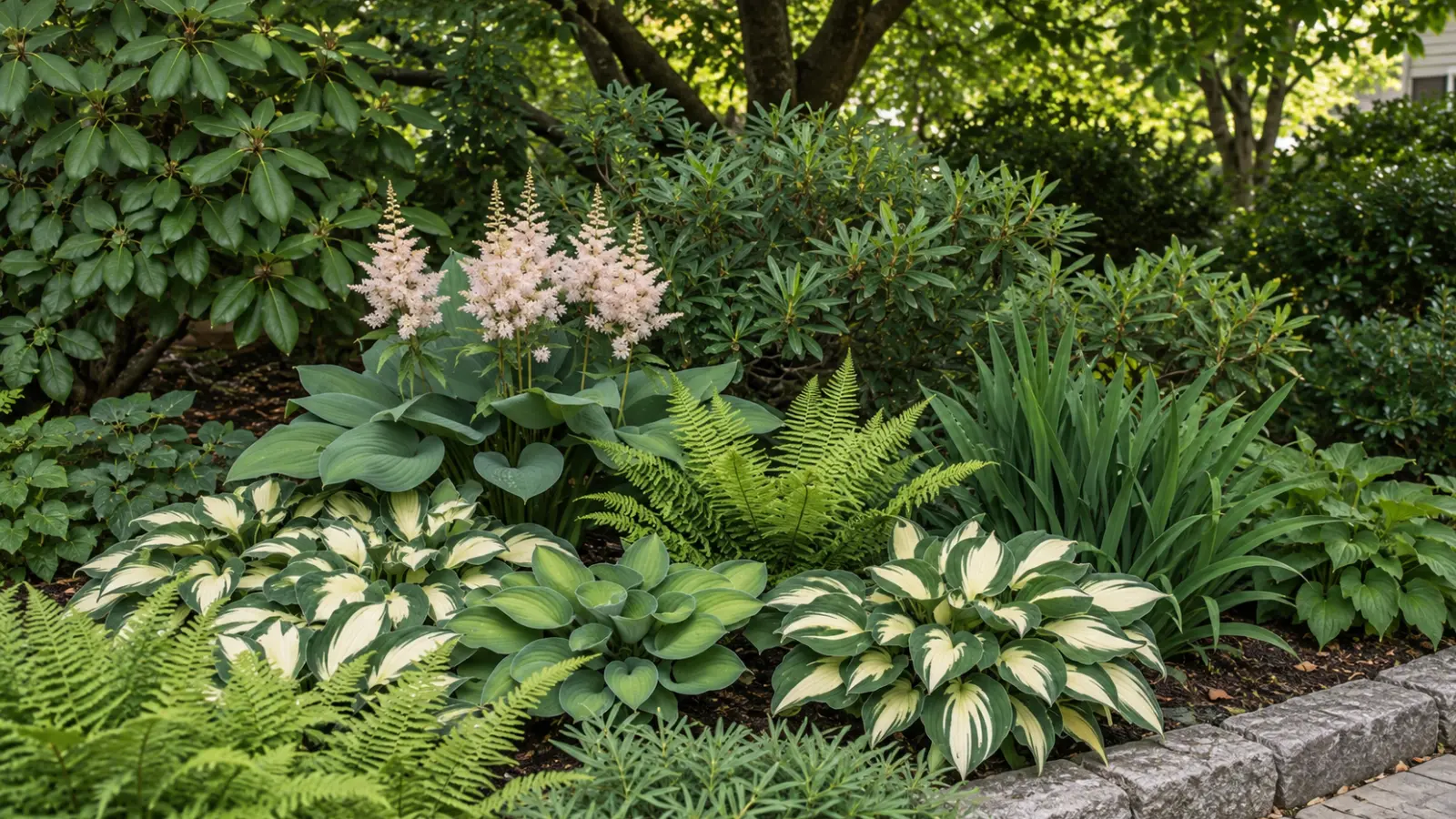
Moist shade can occur in low areas, beside water features, or where soil naturally retains moisture. It opens up a richer plant palette, including many ferns, sedges, astilbes, and moisture-loving perennials that would suffer in drier spots.
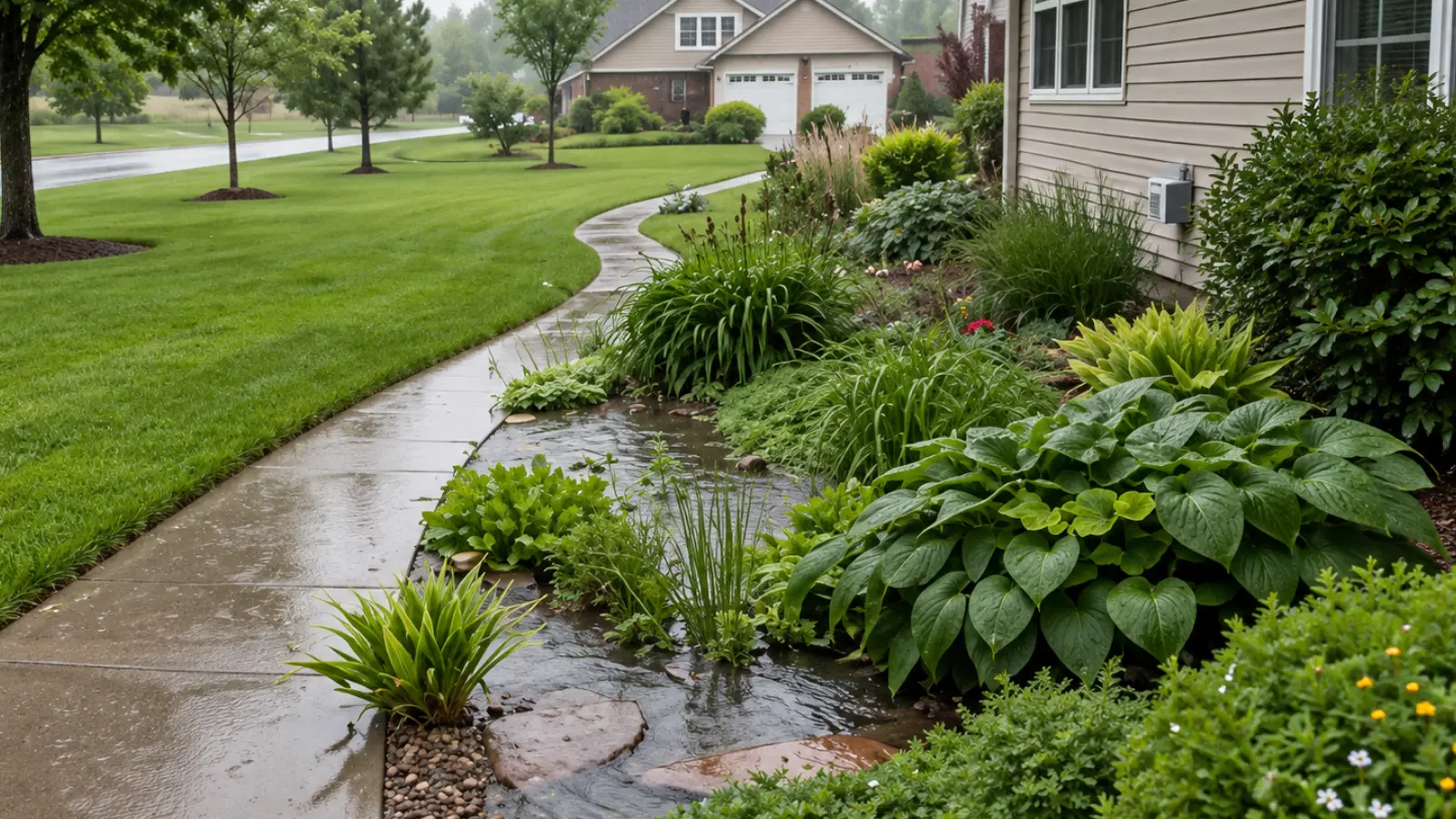
Moist shade should still drain. Roots need access to oxygen as well as water, and soil that stays fully saturated will eventually suffocate most plants regardless of how shade-tolerant the species is. If a moist-shade site stays soggy for days after rain, drainage — not planting — is the first problem to address.
When a garden contains both dry and moist shade, treat them as separate planting areas with different plant lists. A single plant selection rarely performs equally well across both conditions, and the failure of plants in the wrong zone is one of the most common frustrations in shade gardening.
Planting a Shade Garden Under Trees
Planting beneath a tree requires protecting the tree while still creating a garden that can thrive. Tree roots anchor the tree, absorb water and nutrients, and need air in the soil around them. Anything that compresses, smothers, or deeply disrupts that root zone can cause long-term decline in the tree — even if the new planting looks fine for a season or two.
Remove grass and weeds by hand. Avoid cutting large roots, scraping the trunk, or digging deeply into the root zone. Don’t build a raised bed around the trunk or pile soil against the root flare — covering the flare consistently leads to bark decay and, over time, structural tree failure. When adding soil or compost is necessary, keep the layer thin: 1 to 2 inches is reasonable; more than that can reduce air exchange in the root zone.
Plant small specimens in pockets between the major surface roots rather than forcing oversized root balls into the ground. Water new plants directly and consistently during establishment — established tree roots outcompete young transplants quickly, especially in summer, and new plantings often need more water than they would in an open bed.
Some trees also affect what will grow nearby through chemistry, not just competition and shade. Black walnut (Juglans nigra) produces a compound called juglone that is toxic to certain plants — notably tomatoes, azaleas, and white pines — though many shade plants, including hostas, ferns, and epimediums, grow near it without problems. Black walnut is the most significant example, but other trees including hickory, pecan, and black cherry produce related compounds in smaller amounts. If you’re planting under an unfamiliar tree, look up its specific characteristics rather than assuming any shaded spot will accept the same plant palette.
Improve the Soil Carefully
Healthy soil helps shade plants establish, but improvement should target the actual problem. Test the soil when fertility or pH is uncertain. Check drainage before adding any organic material — compost in a poorly draining bed makes drainage worse, not better.
In dry shade, a moderate amount of organic matter worked into the planting pockets — not laid on top as a thick layer — can improve moisture retention slightly. A 2-inch mulch layer over the entire bed helps more consistently. Keep mulch away from trunks and crowns; volcano-piling mulch against bark is one of the most widespread tree-damaging mistakes in American landscaping. The total mulch depth under trees should not exceed 2 to 3 inches, and the mulch should never touch the bark.
In moist shade, focus on plant selection and drainage rather than adding amendments that hold even more water. Organic material can improve structure over time, but it can’t convert a permanently saturated site into a healthy bed on its own.
Refresh mulch when it thins out rather than adding a new thick layer every spring on top of existing material. Mulch does decompose — that’s part of its value — but compacted, old mulch layers that accumulate year after year create their own problems, including fungal issues and water repellency.
Build Layers With Foliage
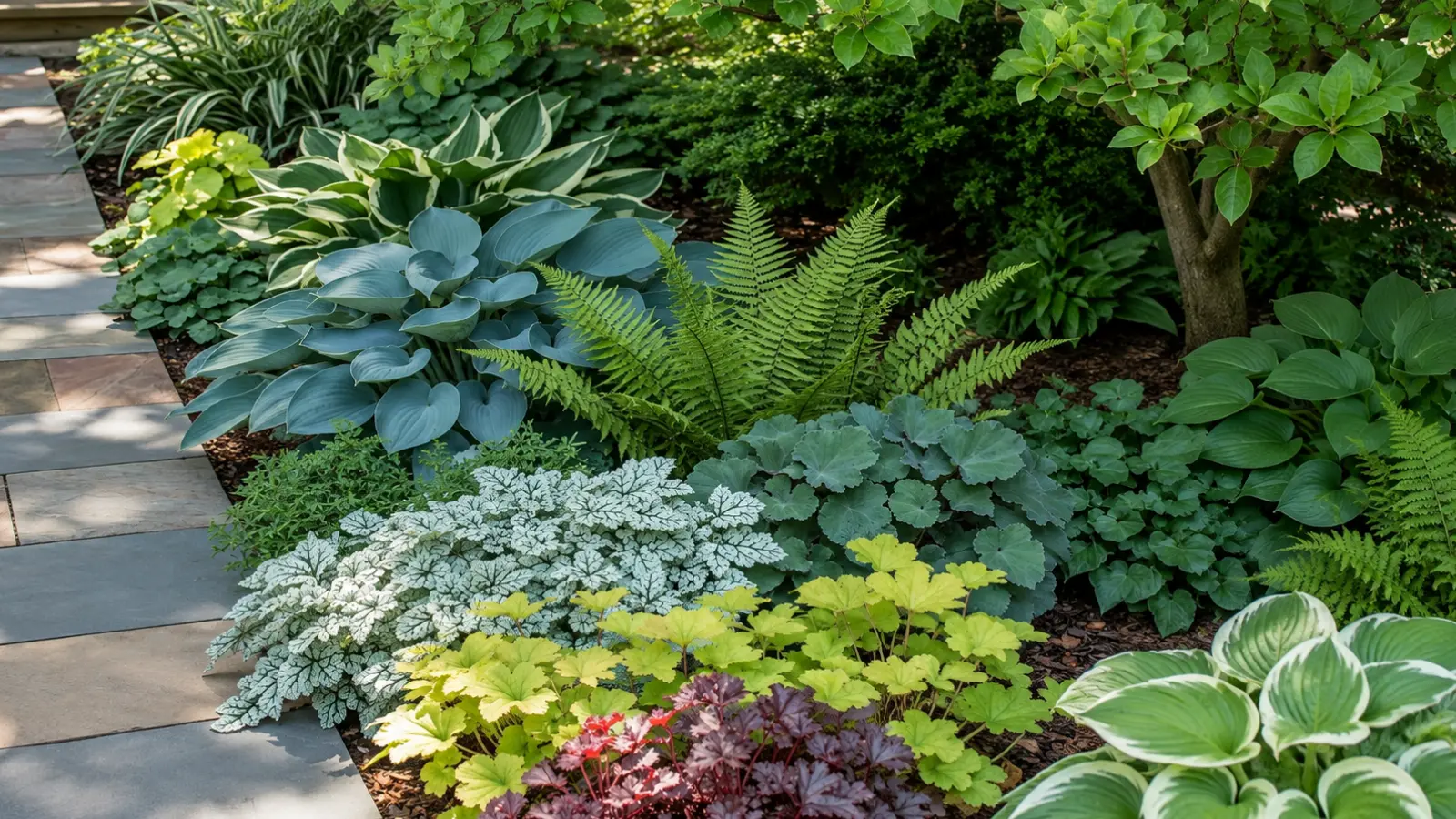
Shade gardens depend on foliage more than flowers do. Layering different heights and forms creates depth and keeps the space interesting through the whole growing season — not just during the few weeks when something is in bloom.
Upper Layer
Existing trees or tall shrubs form the upper layer. Their trunks and canopies provide the structure that defines the whole space. Their mature size, root systems, and — with some species — chemical interactions should inform every planting decision below.
Middle Layer
Medium shrubs, larger ferns, ornamental grasses, and tall perennials provide volume and visual transition. Use this layer to frame paths, screen utility areas, or create a backdrop for lower plants. Shade-tolerant shrubs like hydrangeas, rhododendrons, and native azaleas can carry a lot of the design work here, and many offer seasonal flowering interest on top of their foliage value.
Lower Layer
Groundcovers, small perennials, and low foliage fill the foreground. Repeat a few key plants in groups rather than using one of every variety — variety without repetition makes a small shade garden feel scattered and fragmented. Leave enough open space between plants for air movement and access; dense, airless planting creates the fungal conditions that shade gardens are already prone to.
Use Texture and Color
Texture does more work in a shade garden than in most other garden styles, because there’s less reliance on flower color to hold attention. Combine broad leaves with fine foliage, upright forms with arching ones, glossy surfaces with matte ones. The contrast between a bold hosta leaf and the lacy fronds of a Japanese painted fern, for example, reads clearly even in low light.
Ferns, hostas, heucheras, sedges, pulmonaria, epimediums, and shade-tolerant shrubs can create rich contrast even when their flowers are understated. Use leaf size deliberately to control visual scale: large leaves feel bold and advance toward the viewer, while fine foliage creates a lighter, more recessive effect that can make a small space feel larger.
Color matters, but restraint usually serves shade gardens better than abundance. Silver, blue-green, chartreuse, burgundy, and deep green foliage create more lasting interest than a brief flush of flowers. White and pale flowers are worth seeking out specifically for shade — they appear luminous in low light in a way that saturated colors don’t. When you do add color, repeat a few tones through the planting so the garden feels composed rather than busy.
Add Paths and Clear Edges
Paths serve a practical purpose in a shade garden: they let people move through without compacting soil over shallow roots or stepping on low-growing plants. They also make the space much easier to inspect and maintain — a garden you can’t comfortably walk through tends to get neglected.
A simple mulched path, stepping stones set into the ground, or a firm gravel surface can define the route. Choose a surface that stays stable in wet conditions and doesn’t create a trip hazard — shade gardens are often in lower, damper spots where surfaces can get slippery. Irregular flagstone set on a stable base works well in most climates.
Clear edges give even a naturalistic planting a sense of intention. A low border, a repeated groundcover, or a clean transition from bed to lawn communicates that the garden was designed — not just that things grew there. That distinction matters more in shade, where the absence of bright flowers can make an unedged planting look simply neglected.
Keep paths wide enough for the people who will actually use them. A 2-foot-wide path feels comfortable for one person; 3 feet or more allows two people to walk side by side or to push a wheelbarrow for maintenance. Protect low plants along the edges from being brushed and crushed over time.
Use Containers in Shady Spaces
Containers add height, color, and flexibility to patios, porches, and areas where surface roots or hardscape make in-ground planting impractical. They also let you grow plants in a controlled medium, independent of the site’s native soil and drainage conditions.
Use containers with drainage holes and fill them with a growing medium suited to the plant — not garden soil, which compacts in pots and drains poorly. Shade does not eliminate the need for drainage; containers in low-light spots can actually stay wet longer than those in sun, because evaporation is slower. This makes overwatering a more common problem in shaded containers than people expect.
Group containers by water needs, and watch how different positions behave. A pot placed under a tree may receive almost no rainfall, while a container beside a wall in open shade may stay relatively moist. Adjust your watering accordingly rather than treating all shade containers the same.
Use containers as accents with purpose rather than filling every available surface. A single large vessel at the end of a path, or a repeated group of three matched pots flanking an entrance, reads more intentionally than a collection of mismatched containers scattered throughout the space.
Shade Garden Design Principles
Repeat Plants
Repetition creates rhythm and makes the garden feel cohesive rather than assembled. Choose a handful of reliable, well-suited plants and use them in groups of three or more, then add smaller accents for seasonal interest. This approach works especially well in shade, where the absence of continuous bloom means foliage repetition carries much of the design weight.
Design for the View
Think about how the garden is seen from the places where people spend time — a kitchen window, a back porch, a seating area, the end of a path. Place taller plants where they frame the view rather than blocking it. A shade garden seen mostly from indoors benefits from particularly strong foliage contrast and a clear visual structure that reads well at a distance.
Use Existing Structure
Tree trunks, walls, fences, and shaded steps are already part of the composition — let them be. Those elements provide height and permanence while plants soften their edges. Working with existing structure rather than against it is what makes a shade garden feel settled and intentional rather than imposed on the space.
Plan for Seasonal Change
Include spring flowers, summer foliage texture, fall color, evergreen structure, and winter stems or seedheads where each is appropriate. The garden should carry interest beyond one brief flowering window. Spring ephemerals — trilliums, Virginia bluebells, bleeding heart — can bloom before the tree canopy fills in, then disappear gracefully as summer foliage takes over.
Respect the Conditions
A sun-loving plant in deep shade will survive for a season and slowly decline. A moisture-loving plant in dry tree-root soil will limp along and never look right. The most beautiful shade gardens are the ones built around what the site actually offers — not what the gardener wishes it were. When the conditions genuinely don’t suit what you want to grow, that’s a signal to change the design, not force the plant.
Shade Garden Maintenance
Shade gardens may need less irrigation than sunny borders, but they aren’t maintenance-free. The first year in particular requires consistent attention — check new plants during every dry spell, and don’t assume shade means they won’t wilt.
Pull invasive weeds early, before their roots get tangled with tree roots or groundcovers. Hand-pulling is usually the safest approach under trees and around shallow-rooted plants, where a hoe or trowel can cause more damage than the weed. In moist shade especially, weeds can move fast — a carpet of bittercress or wood sorrel can establish between visits if the bed is open.
Thin crowded plants, clear paths, and refresh mulch when it breaks down — but don’t pile new mulch on top of old without raking out the existing layer first. Remove diseased or slug-damaged foliage before it spreads, but leave winter structure in place when stems and seedheads provide habitat value or visual interest through the cold months.
Slugs and fungal problems are the two most common maintenance challenges in moist shade. Improve plant spacing and increase air movement before reaching for a treatment — many problems resolve themselves when conditions aren’t crowded and damp. In dry shade, watch instead for wilting, leaf scorch on plants that aren’t suited to the competition, and the gradual decline that happens when tree roots claim an increasing share of available water as the tree matures.
Design for the Shade You Actually Have
A successful shade garden begins with understanding the conditions rather than fighting them. Light level, soil moisture, tree roots, drainage and seasonal changes determine which plants and design choices will continue to work after the first year.
Use foliage, texture, repetition and clear structure to build interest where flowers play a smaller role. When the planting matches the site instead of forcing unsuitable plants into difficult conditions, even a dry corner beneath trees or a narrow shaded side yard can become a cohesive and inviting garden.
COMMON QUESTIONS
Before you begin.
How do you design a shade garden?
Start by identifying how much direct and indirect light the area receives and whether the soil stays dry, evenly moist or waterlogged. Build the design around foliage, texture and layered plant heights, repeating a few reliable plants to create cohesion. Paths, defined edges and plants matched to the site’s actual light and moisture conditions help the garden feel intentional rather than simply underplanted.
What is the difference between full shade and partial shade?
Partial shade generally receives about 2 to 4 hours of direct sunlight per day, often during the cooler morning hours. Full shade typically receives fewer than 2 hours of direct sun but may still have plenty of bright indirect light. Deep shade, where very little light reaches the ground, supports a much narrower range of plants.
What plants grow well in a shade garden?
Suitable plants may include ferns, hostas, heucheras, epimediums, pulmonaria, sedges, astilbes, bleeding heart and regionally appropriate woodland perennials. Shade-tolerant shrubs such as hydrangeas, rhododendrons and native azaleas can provide additional structure. The best choices depend on whether the site has dry or moist shade, its seasonal light pattern and your local climate.
What plants are best for dry shade?
Dry shade requires plants that tolerate both limited sunlight and competition for moisture, especially beneath mature trees or roof overhangs. Epimedium, bigroot geranium and certain native ferns and groundcovers can be useful choices when suited to the region. Even drought-tolerant shade plants need regular watering while they establish.
Can you plant a shade garden under a tree?
Yes, but protect the tree’s roots and trunk while planting. Use small plants placed between major surface roots, avoid deep digging or cutting large roots, and never pile soil or mulch against the trunk or root flare. Choose species that tolerate root competition and water new plants consistently while they establish.
How do you make a shade garden look brighter?
Use foliage with silver, cream, chartreuse or light-green tones, along with white or pale flowers that remain visible in low light. Contrast broad leaves with fine-textured foliage and repeat lighter colors throughout the planting rather than scattering many unrelated accents. Pale paths, stones or nearby reflective surfaces can also increase the sense of brightness.