A children’s garden is designed around the way kids actually explore outdoors: planting, digging, watering, harvesting, observing insects and making choices of their own. The best spaces feel playful and inviting while giving adults clear sightlines and keeping plants, tools, paths and water appropriate for the children using them.
The garden does not need to be large or elaborate. A reachable raised bed, a digging patch, a few easy crops, sensory plants and a comfortable place to sit can offer more meaningful interaction than a complicated space filled with equipment children cannot use independently.
This guide explains how to create a children’s garden, including how to choose age-appropriate activities and easy plants, plan child-scaled beds and paths, add sensory and wildlife experiences, manage digging and water play safely, support children with different abilities and keep the garden manageable as they grow.
What Is a Children’s Garden?
A children’s garden is a space designed for children to interact with plants and the outdoor environment. It can be playful, productive, educational, or a genuine mixture of all three — and the best ones usually are.
Scale matters more than most adults realize. Plants, paths, tools, and seating should be understandable and physically reachable for the children using the space. A raised bed a toddler can reach across feels completely different from one built for adult convenience. A watering can sized for small hands actually gets used. Small, well-scaled choices add up to a garden children can engage with independently.
The goal isn’t to remove every natural challenge. Soil, insects, weather, and changing plants are core to the experience. The goal is to manage foreseeable risks thoughtfully while giving children meaningful choices and enough freedom to feel genuinely involved.
Start With a Child-Led Purpose
Ask children what they want to do before deciding what the garden should contain. One child may want to grow food; another may prefer flowers and pollinators; a third may be most drawn to digging, building, or watching wildlife. Starting from what kids care about — rather than what adults think they should care about — is what keeps a children’s garden from becoming a garden that adults tend alone.
A child-led purpose can be simple:
- Grow ingredients for a favorite meal or snack
- Plant flowers for color, fragrance, or bouquets
- Watch butterflies, birds, worms, or other garden visitors
- Dig, move soil, and build small natural structures
- Compare seeds, leaves, roots, and seasonal changes
- Create a quiet spot to sit, read, or observe
Let children make some decisions about color, plant names, bed decoration, or what to harvest first. Adult planning still sets the safety boundaries, but participation becomes more meaningful when children can see their own choices in the finished garden.
Choose Activities by Age
Children develop different physical and cognitive skills at different rates, so a good children’s garden offers activities across more than one level of difficulty. Age ranges below are a starting point, not a rule — the right activity depends on the individual child.
Young Children (Roughly 2–5)
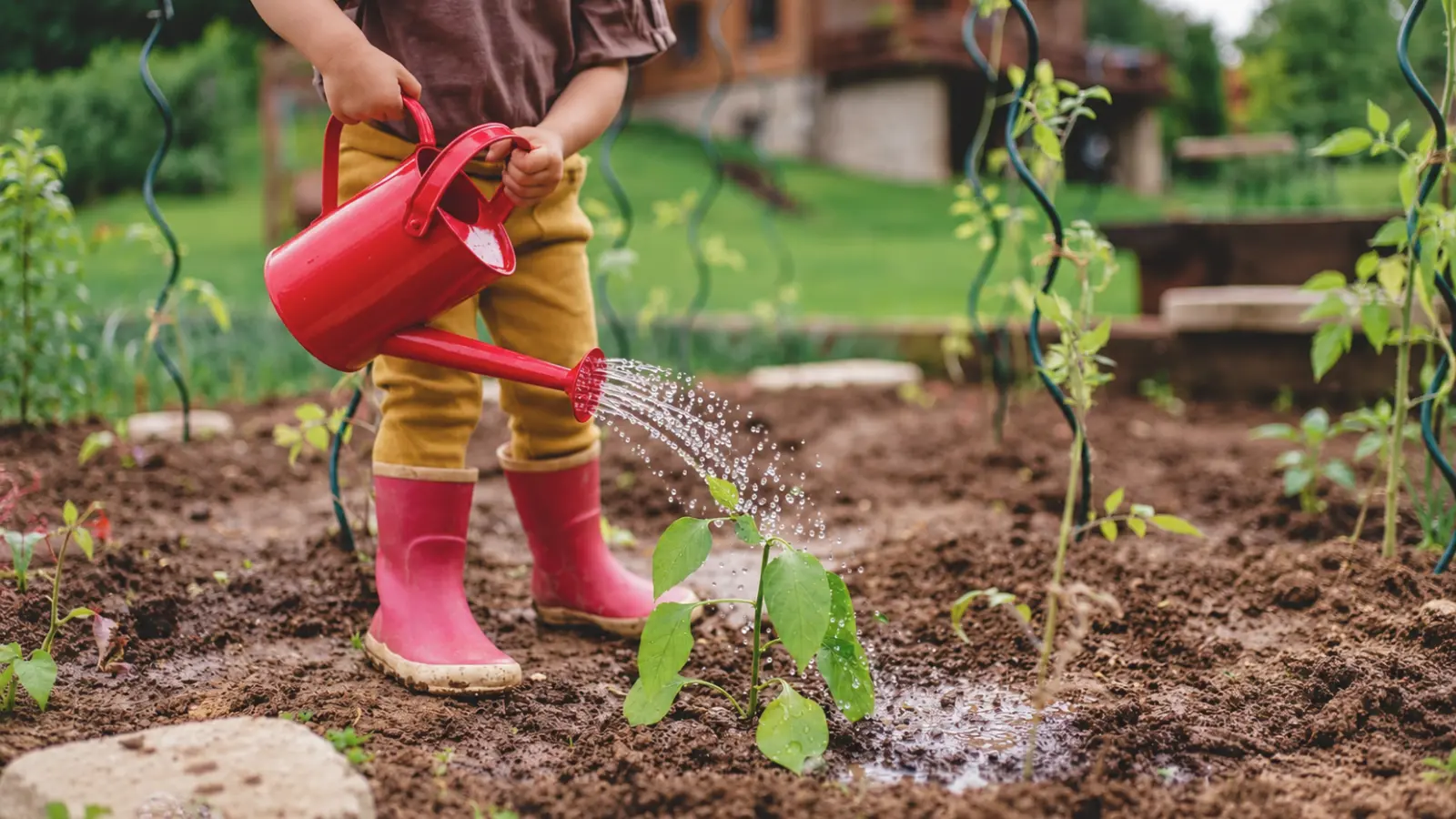
Young children often enjoy filling a small pot with soil, pressing large seeds into the ground with help, watering with a lightweight child-sized can, poking around in a designated digging patch, and looking for visible changes in leaves or flowers from one visit to the next. Keep activities brief, stay close, and aim for tasks with an immediate visible result — young kids have short attention spans and need to see something happen.
School-Age Children (Roughly 6–10)
School-age children can help plan a bed, read seed packets, measure planting spacing, label their plants, harvest vegetables, and keep simple observations in a notebook. They may also enjoy comparing which plants attract the most insects, timing how long a crop takes from seed to harvest, or deciding what to grow next season based on what worked this one.
Older Children (Roughly 11 and Up)
Older children can take on longer projects: succession planting, compost management, seed saving, garden mapping, pruning with instruction, or designing a wildlife feature. Give responsibility gradually and match tools to the child’s actual skill level rather than their age alone.
Age guidance doesn’t replace supervision. A child who handles a tool carefully one day may still need direct attention when tired, distracted, or working near younger children.
Choose Easy Crops and Flowers
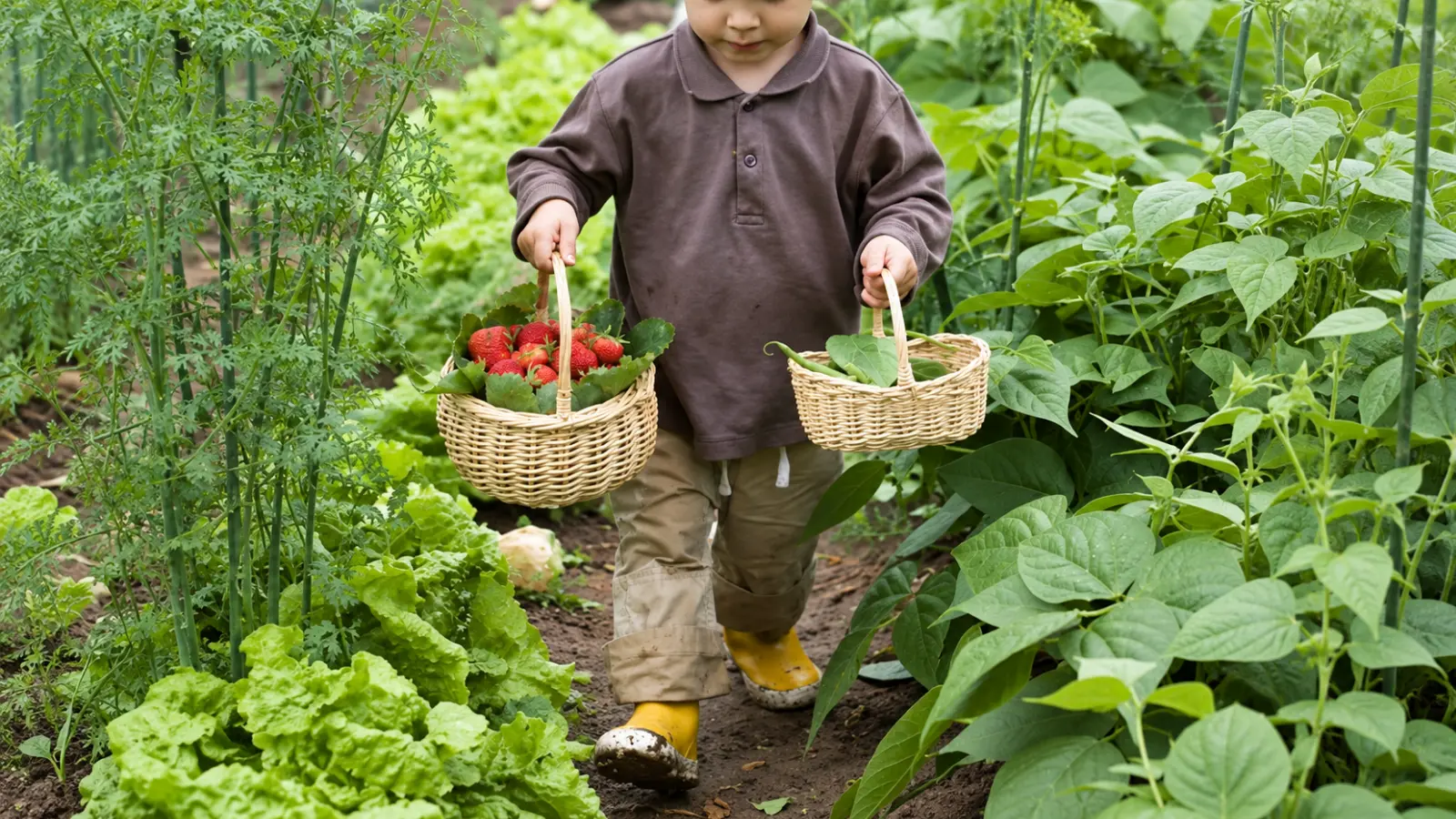
The best plants for a children’s garden show visible changes quickly, need manageable care, and produce something children can understand — something they grew, something they can pick, something they can eat. A mix of quick-sprouting crops and slower-growing plants gives kids early wins while also teaching patience.
Simple Crops
Radishes are one of the fastest edible crops available, germinating in as little as 3–5 days and ready to harvest in about 3–4 weeks — about as close to instant gratification as vegetable gardening gets. Lettuce sprouts quickly and can be harvested leaf by leaf. Snap peas, bush beans, cherry tomatoes, strawberries, cucumbers, and carrots are all reliable choices that provide satisfying, child-scale harvests. Choose crops that fit your growing season and climate, and that your household will actually eat — a child who picks their own cherry tomatoes and watches someone eat them is far more invested than one who grows something unfamiliar.
Herbs
Herbs engage smell and taste in ways vegetable crops often don’t. Mint, basil, chives, lemon balm, and lemon thyme are all approachable for children, tolerate some rough handling, and release their scent when brushed. Keep edible plants clearly labeled, and teach children early to ask before tasting anything in the garden — a habit that transfers well beyond the herb bed.
Flowers
Sunflowers, zinnias, nasturtiums, marigolds, and calendula are reliably easy, grow quickly enough to hold a child’s interest, and deliver bold visual results. Nasturtiums are edible (both flowers and leaves), which adds an element of discovery. Zinnias and marigolds attract pollinators children can observe through the season. Sunflowers can be measured weekly and offer seeds to save or share with birds in fall. Verify the safety of any flower before including it in a tasting experience — not all flowers are edible, and some that look similar to safe species are not.
Choose plants that can tolerate occasional handling and avoid placing delicate or fragile specimens in the main activity zone. For detailed crop production guidance, see the Vegetable Gardening and Flower Gardening articles.
Add Sensory and Wildlife Experiences
A children’s garden naturally lends itself to sensory exploration — contrasting leaf textures, fragrant herbs, bold colors, rustling grasses, and plants that attract visible wildlife. Building these experiences in deliberately gives the garden life beyond just the vegetable rows.
Keep sensory interaction optional. Some children enjoy strong scents, messy soil, and close contact with insects; others prefer to observe from a step back. Offer a quieter area, some open space, and a choice between hands-on and observation-based activities so the garden works for different temperaments.
Wildlife observation can be as simple as a shallow birdbath, a pollinator plant, a small pile of logs, a patch of leaf litter, or just a good place to crouch and look for insects under leaves. Avoid encouraging children to handle wildlife, and empty or clean any water features regularly to prevent stagnant water. For a fuller treatment of sensory design — including texture, scent, sound, and inclusive access — see the Sensory Garden article.
Plan Paths, Beds, and Sightlines
The layout is where safety and usability come together. Getting paths, bed dimensions, and sightlines right from the start saves significant frustration later.
Paths should be stable, easy to follow, and free of trip hazards — no hoses stretched across routes, no low branches at head height, no loose gravel that shifts underfoot for small feet. For a child using a wheelbarrow or a parent pushing a stroller, wider is always better than narrower.
Raised beds for children should be no more than 2–3 feet wide so kids can reach the center from the side without leaning dangerously or stepping onto the soil. Standard adult raised beds at 4 feet wide are simply too wide for small arms. A height of 12–18 inches works well for young children who garden alongside adults; lower beds are easier to see into and reach without stretching. Narrow, longer beds — something like 2×6 feet — also give children a sense of personal territory and easy walking access alongside their plants.
Adult sightlines are non-negotiable. Keep the garden open enough that a supervising adult can see the entire space from the usual seating or working area. A children’s garden can still feel adventurous — paths can curve, a small “room” can be created with low plantings — but dense screens, blind corners, and tall structures that obscure where children are playing belong in a different kind of space. Place edible plants where an adult can clearly see what’s being harvested.
Keep thorny plants, any pond or deep water feature, garden sheds, and tool storage away from the main activity routes.
Make Room for Digging and Water Play
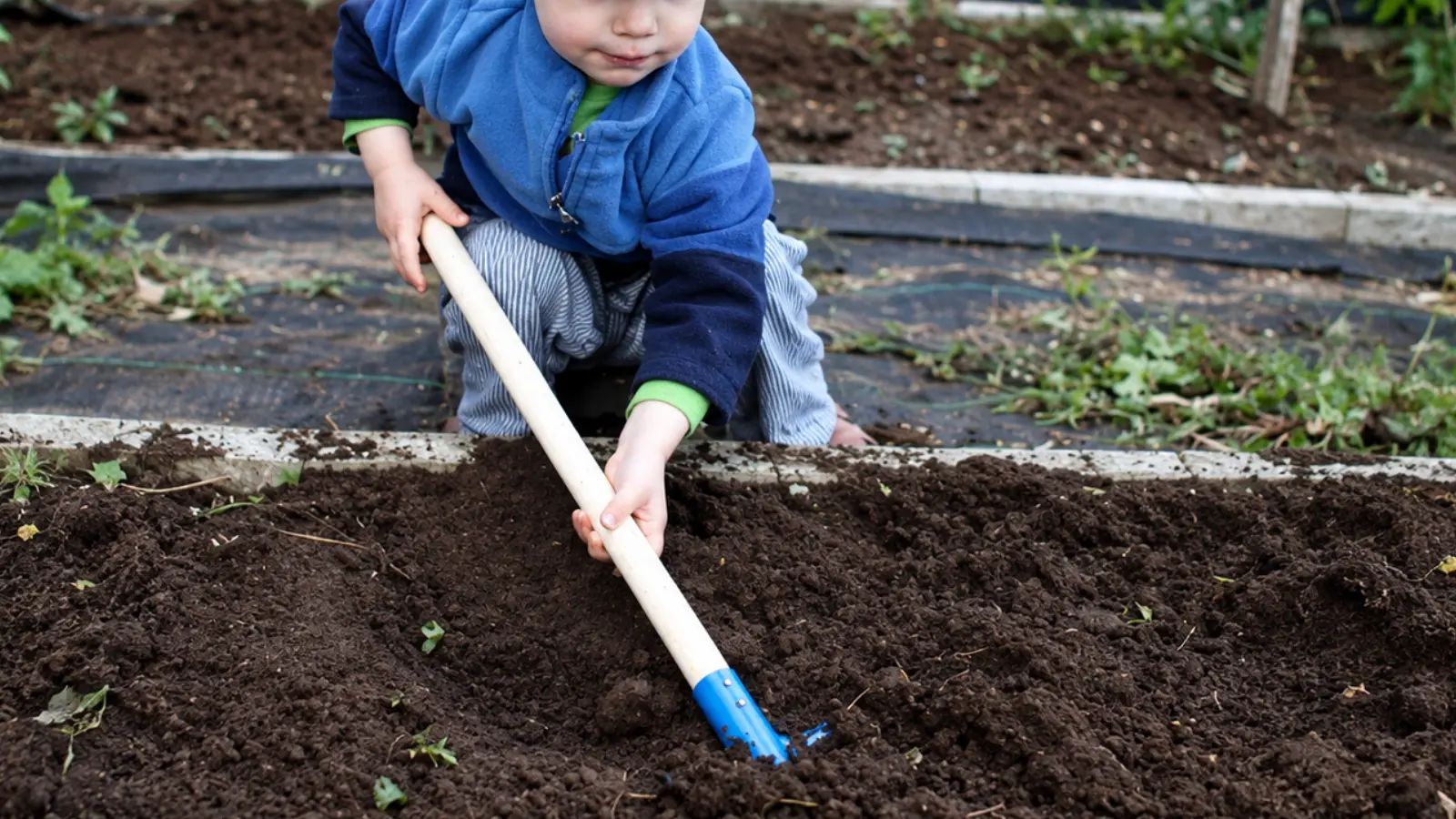
Digging is one of the most satisfying activities in any garden, and for children it’s almost irresistible. Rather than letting it happen wherever seems convenient, create a designated digging area — a patch of loose, workable soil where children can dig freely without damaging productive beds, tree roots, or underground utilities. A dedicated spot teaches spatial awareness about the garden while keeping worms and insects concentrated somewhere children can find and observe them.
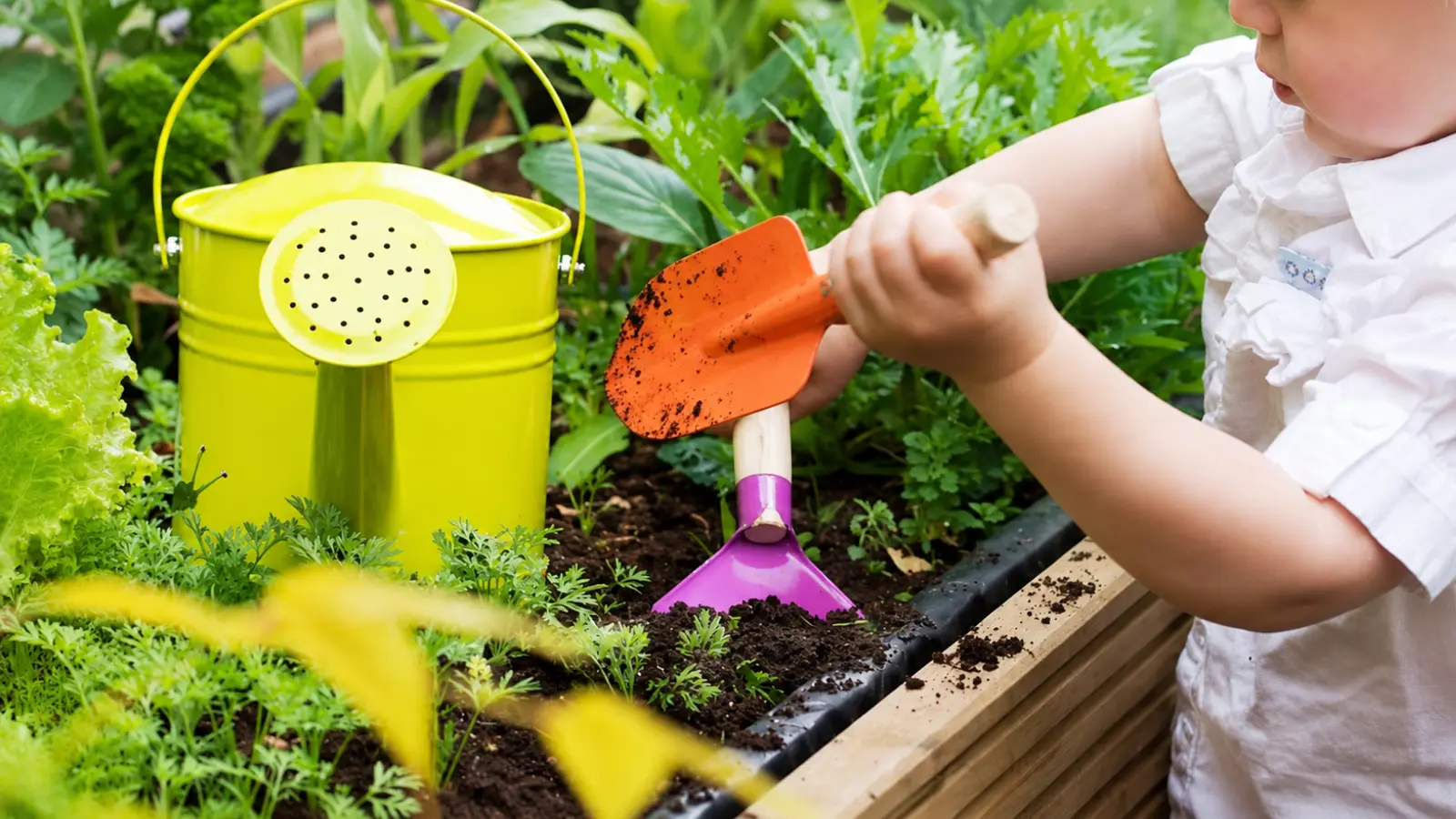
Provide child-sized hand tools: a small trowel, a scoop, and a bucket. Add loose natural materials like sticks or stones as the child and setting allow. Check tools regularly for sharp edges, splinters, or cracking handles.
Water play — filling a watering can, washing harvested vegetables, or mixing soil in a container — is genuinely engaging for young children. But water safety in a garden requires specific attention. Young children can drown in as little as 1–2 inches of standing water, and drowning can happen silently and within seconds. Empty all buckets, tubs, watering cans, and containers immediately after use, and store them upside down or out of reach. Never leave a young child near any container of water without direct, undistracted adult supervision within arm’s reach.
A permanent pond or deep water feature is a different level of commitment and risk. If one exists in the garden, it should be fully fenced with a self-closing, childproof gate — not just covered or screened. A simple supervised water station with a small container or hose is a much more practical choice for most family gardens with young children.
Include Seating and Tool Storage
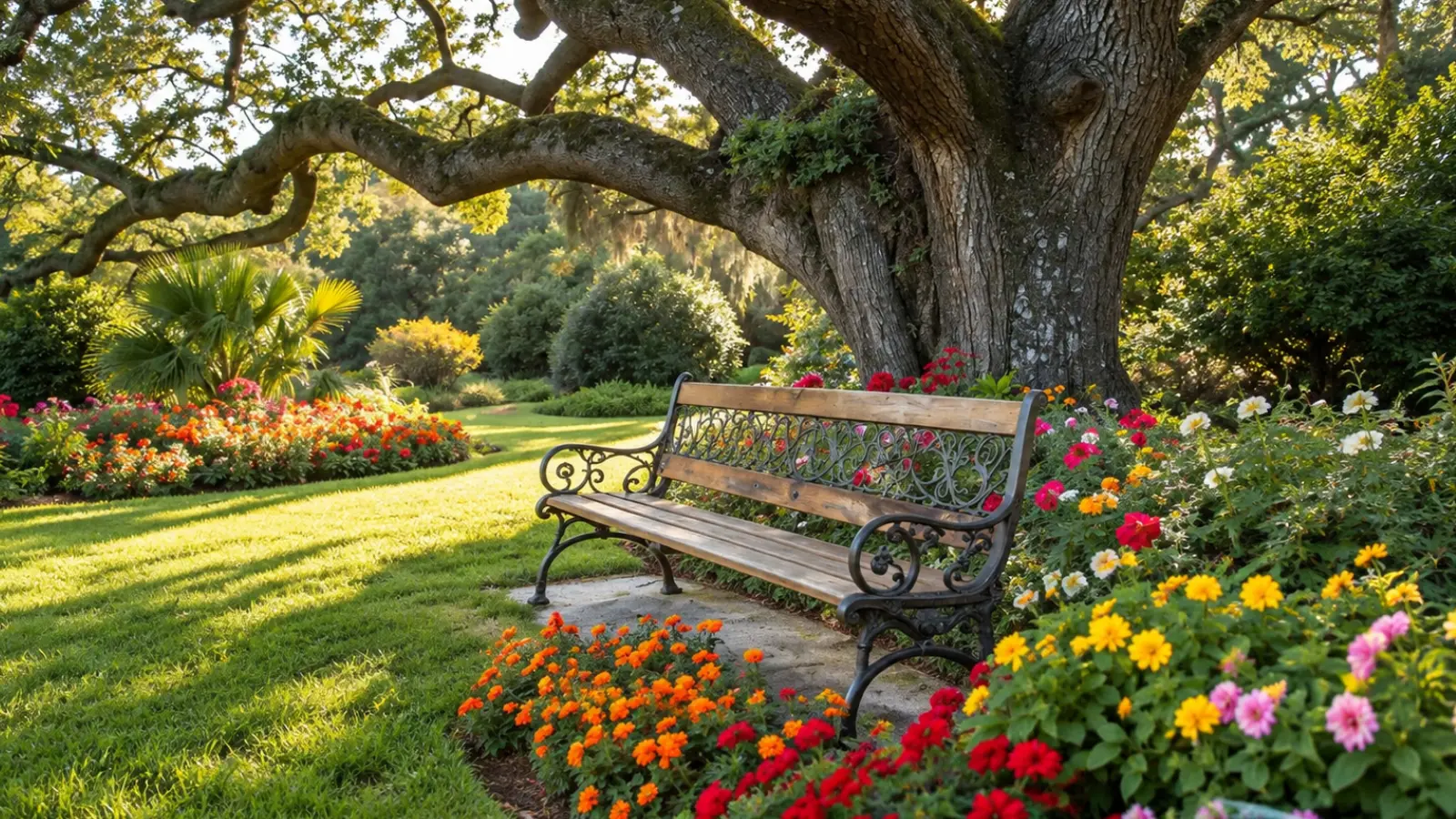
Seating gives children a place to rest, eat a snack, or observe the garden without standing — and it gives adults a comfortable spot to supervise. Place a bench, a low sturdy wall, or a stable chair where it offers a good view of the whole garden without blocking the main path or sitting under unsafe branches. A child who has somewhere to pause stays in the garden longer.
Include shade where the climate makes it worthwhile. In hot weather, full sun can cut a gardening session short in a hurry — a small tree, a pergola, or even a large market umbrella over a seating area can extend comfortable outdoor time significantly.
Store tools in a secure, weather-protected location. Sharp tools, fertilizers, pesticides, and other hazardous materials must be physically out of children’s reach — locked if possible, stored separately from child-sized tools at minimum. A low hook or shelf can hold safe child-sized tools where kids can retrieve them independently; adult tools go somewhere else entirely.
Return tools after every session. Good storage habits prevent trips and falls, protect equipment, and teach children that caring for the garden includes caring for the things used in it.
Choose Plants With Safety in Mind
Children explore with their hands and sometimes their mouths, so plant selection in a children’s garden requires a harder look than most adult gardens need. The relevant question isn’t just “is this toxic?” but “is this reachable, handleable, and in an area where a child might put their hands near their face?”
Common garden plants to keep out of any area where children will handle things include foxglove (Digitalis), monkshood (Aconitum), oleander (Nerium oleander), castor bean (Ricinus communis), and daffodil bulbs. Evaluate potentially toxic plants individually rather than excluding an entire plant family: the nightshade family (Solanaceae), for example, also includes familiar food crops such as tomatoes, peppers, eggplants and tomatillos, although toxicity can vary by species and plant part. This is far from a complete list. When in doubt, check through the ASPCA’s toxic plant database, your state’s Cooperative Extension Service, or the national Poison Control hotline (800-222-1222 in the US). A common name alone is not sufficient identification for safety purposes.
Keep thorny, spiny, and irritating plants away from paths, seating, and activity beds. Sap, pollen, seeds, and bulbs can each create risks for some children. Allergies and skin sensitivities also vary — choose less irritating plants for high-contact areas, avoid placing strongly irritating species along every route, and teach children to wash their hands after every gardening session.
Don’t use pesticides casually in a children’s garden. Identify the problem first, try prevention and hand removal before reaching for a product, and if treatment is truly necessary, follow all label instructions exactly — including the re-entry interval that tells you how long to keep children away from the treated area.
Design for Accessible Participation
Accessible participation means children with different mobility, vision, hearing, sensory, or cognitive needs can take part meaningfully — not as an accommodation, but because the garden was designed that way from the beginning. Many features that help one child help all of them.
Use smooth, stable paths with enough width for a wheelchair or adaptive stroller. Raised beds at child-appropriate heights (12–18 inches for young children) and widths (2–3 feet) let kids reach plants without unsafe stretching or stepping into the bed. Provide seated work areas, containers at varying heights, and tools with handles comfortable for smaller hands.
Labels can include large text, strong color contrast, simple pictures, or tactile markers when appropriate. Reducing sensory overload matters for some children: offer a quieter zone away from wind chimes or busy pollinator plants, predictable routes without surprising changes underfoot, and a choice between messier activities (soil, compost) and cleaner ones (watering, labeling, observing).
Build accessibility into the first layout. Retrofitting paths and beds after everything is planted is more expensive, more disruptive, and often incomplete.
Keep the Garden Manageable
A children’s garden works best when adults can maintain it without turning every visit into a correction. Choose a manageable number of beds, grow plants suited to the available time and climate, and keep paths clear as a regular habit rather than an occasional project.
Set simple routines: check soil moisture, harvest anything that’s ready, remove damaged plant material, return tools to their spot, and walk the paths for anything that needs attention. Give children tasks they can actually complete successfully — harvesting snap peas, watering a specific bed, or pulling a weed they recognize — but don’t assign responsibility for safety-critical decisions they can’t yet understand.
Review the garden as children grow. A low bed that worked perfectly for a preschooler may be too small and too easy for an eight-year-old’s projects. A water station or digging patch may need new boundaries as younger siblings appear. The garden should change with the people using it — that’s part of what makes it theirs.
Let the Garden Grow With the Child
A successful children’s garden gives kids real opportunities to plant, dig, observe, harvest and make choices while adults quietly provide the boundaries that keep those experiences safe. The space should feel like somewhere children can participate, not simply an adult garden they are allowed to visit.
Start small, keep plants and activities within reach and notice which parts of the garden hold their attention. As skills, interests and independence change, the beds, tools and activities can change too, allowing the garden to grow alongside the children who use it.
COMMON QUESTIONS
Before you begin.
How do you create a children’s garden?
Start with activities the children actually want to do, such as growing food, planting flowers, digging, watching wildlife or harvesting. Build the garden around reachable beds, stable paths, child-sized tools, clear adult sightlines and a designated space for messy activities. Keep the first version manageable and allow the design to change as the children grow and their interests develop.
What are the best plants for a children’s garden?
Choose plants that are easy to grow, show visible changes and can tolerate some handling. Radishes, lettuce, snap peas, bush beans, cherry tomatoes and strawberries offer understandable harvests, while sunflowers, zinnias, marigolds and nasturtiums provide quick visual interest. Herbs such as basil, chives and mint add scent and taste, but every plant used for touching or eating should be positively identified and appropriate for the child-accessible area.
How wide should garden beds be for children?
Children’s beds should generally stay about 2 to 3 feet wide so plants in the center can be reached without stepping into the soil or leaning dangerously across the bed. Narrow beds also make planting, watering and harvesting easier for smaller arms. The exact dimensions should reflect the age, reach and mobility of the children who will use the garden.
How do you make a children’s garden safe?
Keep toxic, thorny, spiny and irritating plants away from activity areas, paths and places where children may touch or taste plants. Maintain stable paths, store adult tools and garden chemicals securely, keep clear sightlines for supervision and teach children to ask before tasting anything. Water containers and other potential hazards should also be managed with direct adult supervision rather than relying on the garden design alone.
Can a children’s garden include a digging or water-play area?
Yes. A dedicated patch of loose soil gives children somewhere to dig without disturbing productive beds, tree roots or other plantings. Supervised activities such as filling watering cans or washing harvested vegetables can also be included, but standing water should be emptied immediately after use and young children should never be left unattended around water.
How do you make a children’s garden accessible?
Use smooth, stable paths with enough space for wheelchairs or adaptive strollers, and keep planting beds narrow and at heights that children can reach comfortably. Provide seated work areas, containers at different heights, easy-to-hold tools and clear labels that can include large text, strong contrast or simple pictures. Offering several ways to participate—such as planting, watering, observing, labeling or harvesting—allows children with different abilities and sensory preferences to engage meaningfully.