A fairy garden is a miniature landscape built with living plants, small paths, structures and carefully scaled details that suggest a tiny inhabited world. It can be created in a container, tucked into an existing garden bed or designed as a small indoor planting.
The strongest fairy gardens begin with real growing conditions rather than accessories. Light, drainage, plant size, moisture needs and available space determine what can thrive, while consistent scale and a few well-placed structures make the miniature scene feel intentional instead of crowded.
This guide explains how to create a fairy garden, including how to choose a container or in-ground site, plan the scale, select manageable plants, provide proper drainage, add miniature paths and structures, choose durable materials, create indoor versions and maintain the garden as the plants grow.
What Is a Fairy Garden?
A fairy garden is a miniature landscape designed around the idea of a tiny inhabited world. It may include living plants alongside a small house, bench, bridge, stepping stones, fence, or other details that suggest paths and destinations at a reduced scale.
The theme can be playful, naturalistic, woodland-inspired, or understated. Some adults create fairy gardens as decorative container plantings; families often use them as a way to observe plants and invent stories outdoors. The concept is flexible, but the design still needs to follow basic gardening principles.
A fairy garden is also different from a display made entirely of artificial materials. Live plants anchor the scene and change over time, which means the planting must be chosen for its real growing conditions — not just for how small it looks at the nursery.
Choose a Container or In-Ground Site
The first decision is whether the garden will go in a container or directly in the ground. That choice shapes drainage, plant size, winter protection, accessibility, and how easily the design can be changed later.
Container Fairy Gardens
Containers work well on patios, balconies, porches, and rental properties where digging isn’t an option. A broad pot, trough, wooden planter, or repurposed basin can provide enough surface area for a path and a few plants. The container needs a drainage hole or a reliable way to remove excess water.
Choose a container large enough to accommodate the plants at maturity rather than the smallest vessel that looks miniature right now. Shallow containers dry out quickly and leave little room for roots to develop. A heavier pot also tends to be more stable in windy spots, which matters especially when children or pets are moving around it.
In-Ground Fairy Gardens
An in-ground fairy garden can blend into a woodland edge, a shaded border, or an existing bed. It offers more root space and can look less like a tabletop display, but it’s harder to control. Plants may spread beyond the miniature scene, nearby tree roots can compete for moisture, and full-size weeds can quickly overwhelm small structures.
Define the area clearly — a raised edge, low border, or shift in mulch helps keep the miniature planting visually separate from the surrounding landscape and makes upkeep more manageable.
Plan Scale Before You Plant
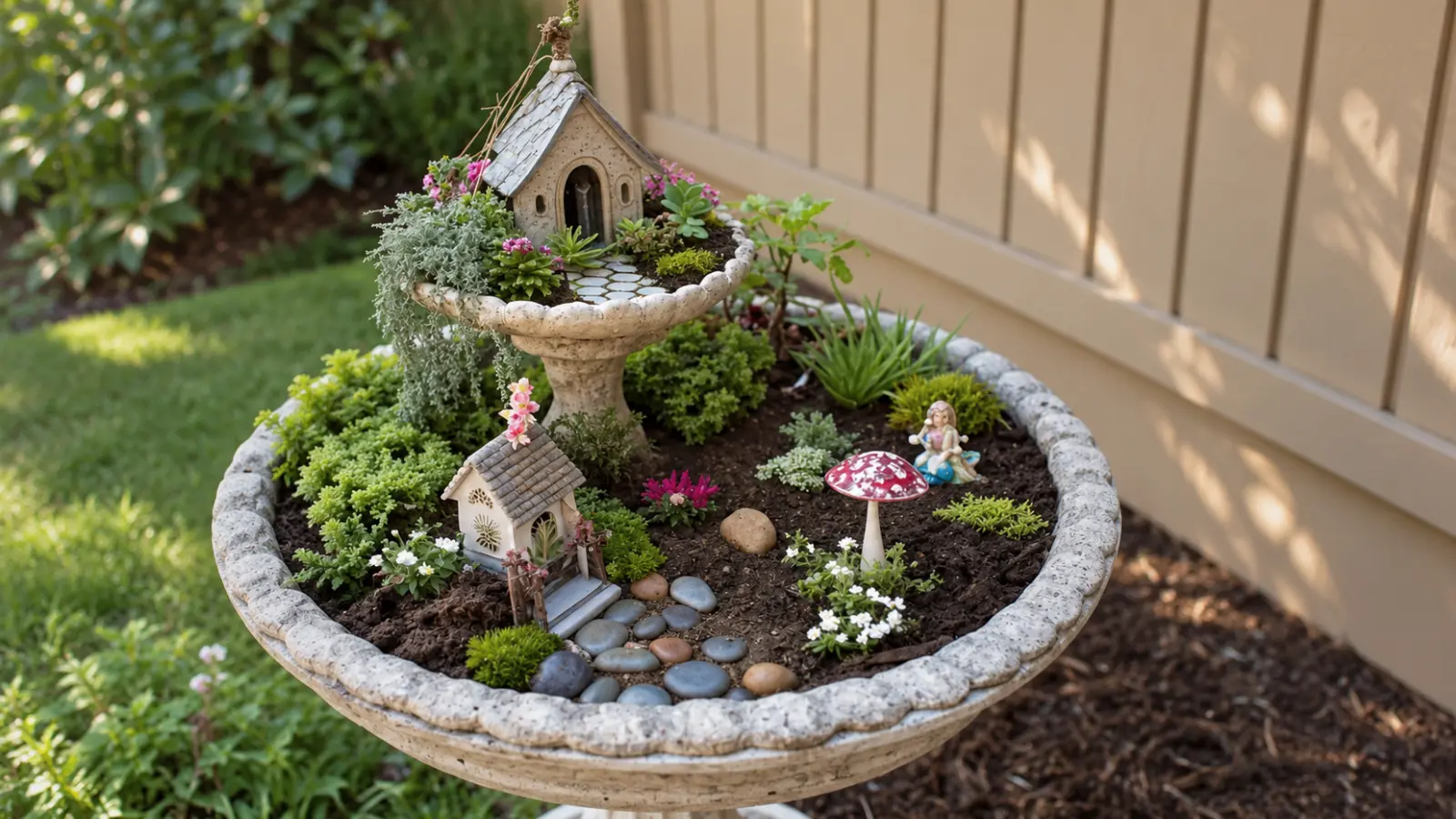
Scale is what makes a fairy garden feel like a coherent little world rather than a random arrangement of small things. A tiny house beside an oversized shrub looks accidental. A large structure surrounded by fragile, low plants tends to dominate everything else.
Choose one main scale for your structures and accessories, then select plants that support it. Not every detail needs to match precisely, but the relationship between the house, path, furniture, and plants should feel deliberate.
- Start with one focal point: A house, doorway, bridge, or arch establishes the visual scale for everything else.
- Keep paths readable: A path should be wide enough to see clearly and lead somewhere, even if it’s only a few inches long.
- Use height in layers: A taller plant at the back, medium foliage around the structure, and low groundcover near the path create depth without crowding.
- Leave open space: Filling every inch with objects makes the garden hard to water and maintain, and it hides the plants.
Sketch the arrangement before you plant. Place the container or site where you can view it from the natural viewing angle, test the structures with temporary markers, and take a photograph. That simple step often reveals whether the design is too crowded or the focal point is too small to read from a normal distance.
Choose Plants for a Fairy Garden
Look for plants with small leaves, restrained growth, interesting texture, or a naturally mounding or creeping habit. The best fairy garden plants aren’t necessarily tiny forever — they’re plants that can be kept in proportion through pruning, division, or replacement as the garden evolves.
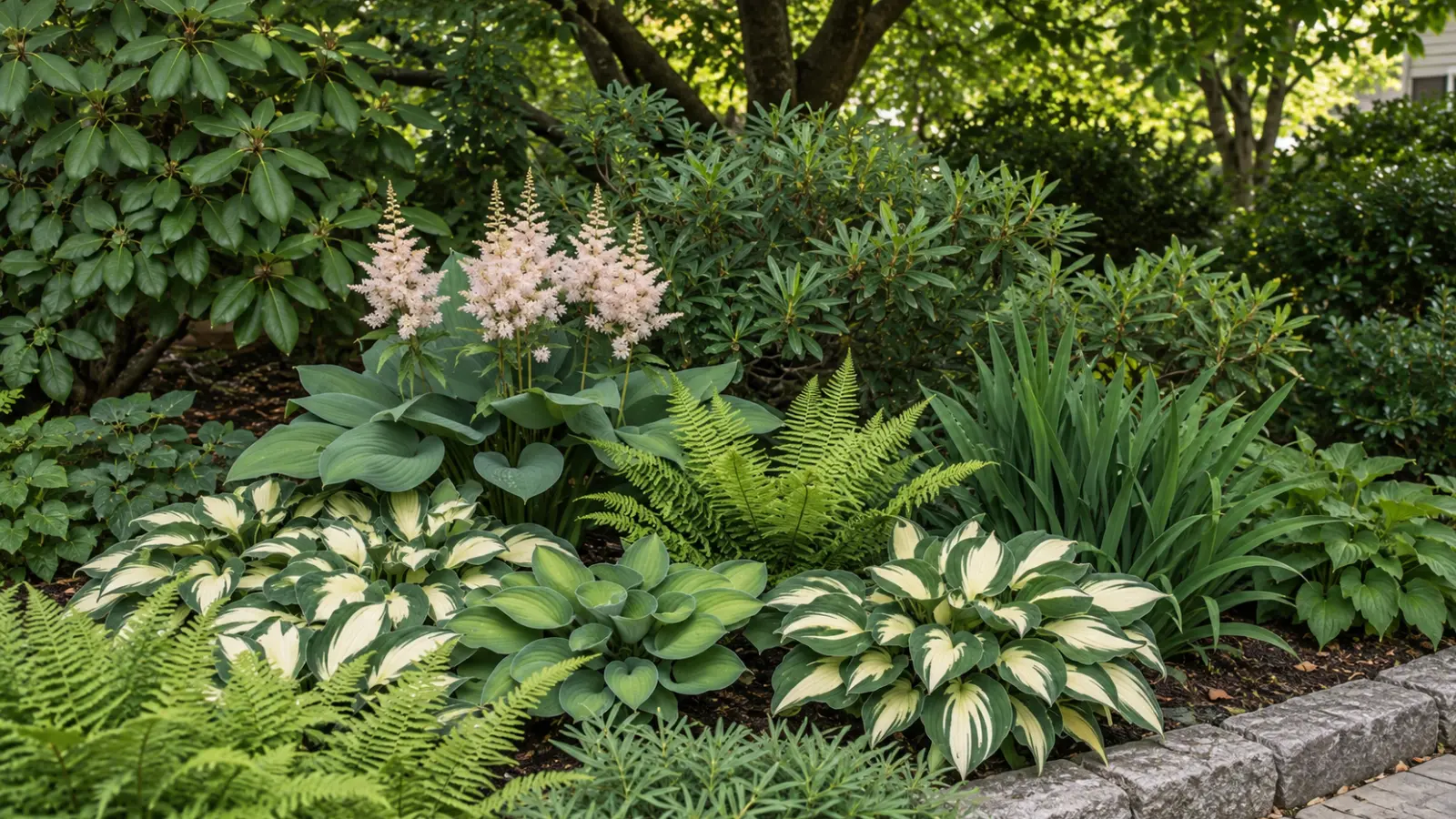
Depending on the light and climate, good candidates include mosses, Irish moss (Sagina subulata), baby’s tears (Soleirolia soleirolii), small ferns, creeping thyme (Thymus serpyllum), violets, miniature hostas, dwarf mondo grass (Ophiopogon japonicus ‘Nana’), low sedums, and compact groundcovers. Small-leaved herbs like thyme and corsican mint can add fragrance. For a permanent background in a larger outdoor planting, a true dwarf conifer — such as a dwarf Alberta spruce (Picea glauca ‘Conica’) or a miniature Hinoki cypress (Chamaecyparis obtusa) — provides year-round structure without quickly outgrowing the scene. True miniature conifers often grow as little as an inch per year, so choose cultivars specifically labeled as miniature rather than simply “dwarf,” which can still reach several feet.
Succulents can work well in a sunny, sharply drained fairy garden, especially in containers. They’re one option among many, not the definition of the style. Choose them only when the light, temperature, and watering routine genuinely suit them, and avoid combining drought-tolerant succulents with plants that need consistently moist soil — you’ll end up unable to water either one correctly.
Before buying, check mature size, hardiness zone, spread, root behavior, and moisture requirements. Avoid species known to be invasive in your region, and avoid plants that will quickly cover paths or engulf structures. For indoor designs, confirm the plant tolerates the available light and humidity rather than assuming it will stay small simply because it’s sold in a small pot.
Solve Drainage Before Decorating
Drainage problems are among the most common reasons a fairy garden declines. Small containers can hold water around roots, decorative dishes can trap moisture, and dense soil can stay wet long after the surface appears dry.
Use a potting mix appropriate for the plants. Every container needs a drainage hole — skip the old advice about placing a layer of gravel at the bottom. Research from multiple university extension programs, including Washington State University and the University of Illinois, has confirmed that a gravel layer actually raises the saturated zone in the soil rather than improving drainage, which can accelerate root problems. A small piece of mesh or a broken shard over the drainage hole is enough to keep soil from escaping while still letting water exit freely.
Place the container where excess water won’t damage wood, flooring, or a building foundation. In-ground sites should drain well enough for the selected plants. If the area stays saturated after rain, choose moisture-tolerant species, raise the planting bed, or reconsider the location entirely.
Add Paths and Miniature Structures
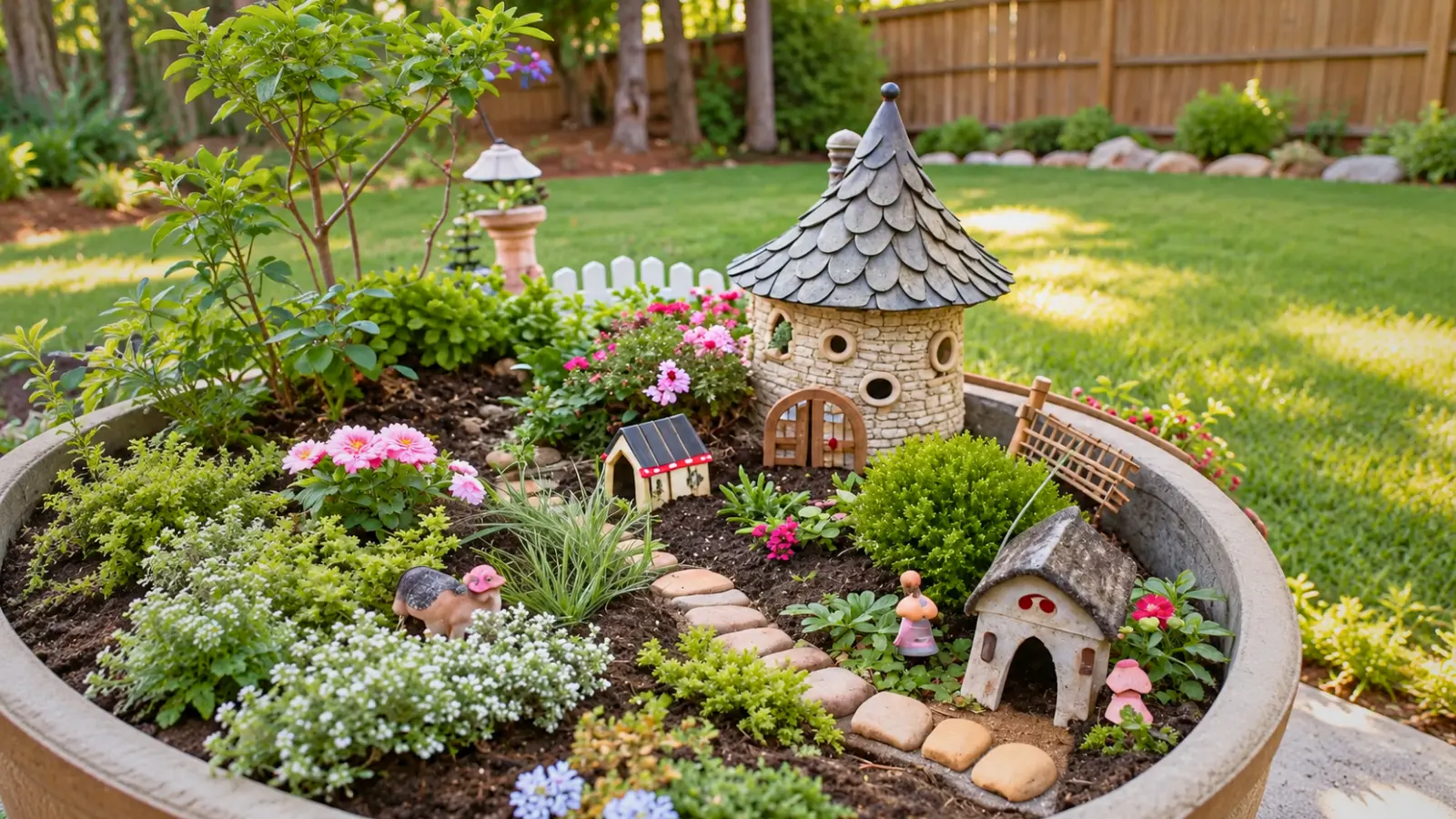
A path gives the eye a way into the miniature scene and instantly makes the space feel inhabited. It can be made from small flat stones, bark pieces, coarse sand, gravel, or living groundcover. Whatever material you use, it should be stable enough that regular watering doesn’t wash it across the planting.
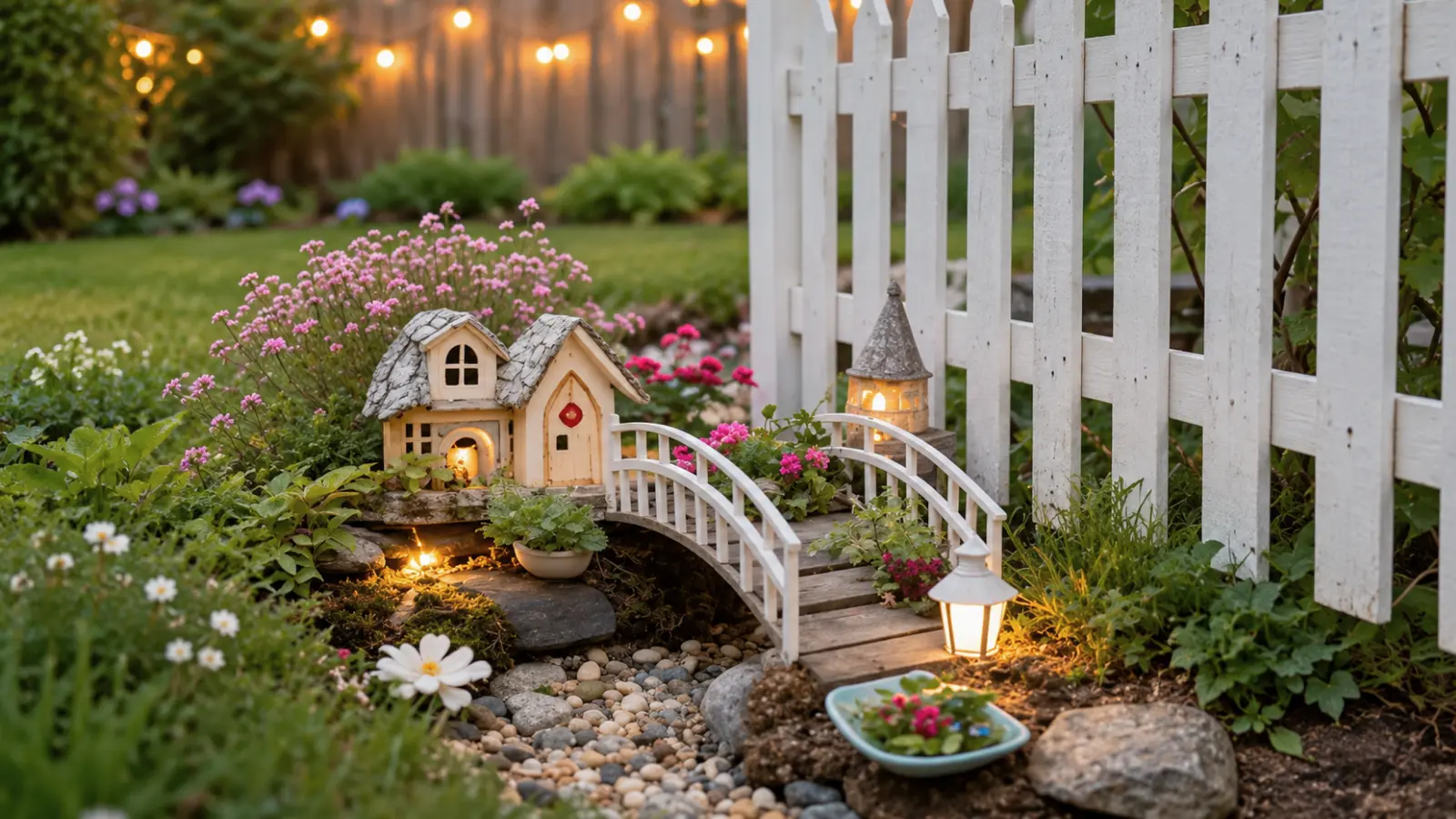
Use structures as accents rather than filling the garden with them. A small house, arch, bench, bridge, fence, or mailbox is usually enough. Place the main feature where it’s clearly visible, then add one supporting detail — a lantern near the door, a fence along the path — that suggests a destination or a moment of life in the scene.
Every structure should sit securely. Pieces that tip into the soil can damage stems, leave sharp edges exposed, or become hazards for young children and pets. Avoid placing heavy objects directly on shallow roots or delicate groundcovers.
Choose Durable Outdoor Materials
Outdoor fairy gardens face rain, sun, freezing temperatures, wind, and soil moisture through every season. Materials that look attractive indoors may fade, crack, rust, or release unwanted finishes when left outside.
Choose pieces specifically labeled for outdoor use, or made from materials you know can handle the conditions at your site — sealed resin, glazed ceramic, cast stone, and certain treated metals tend to hold up well. Inspect painted details and glued joints at the start and end of each season. Replace cracked ceramics, sharp metal edges, and unstable wood before they become a problem rather than after.
Avoid objects that can leach paint, metal coatings, or other finishes into the soil or nearby water. Don’t use real candles or open flames around dry mulch, foliage, or children. If the garden sits near a walkway, keep decorative elements low or set them well away from foot traffic.
Create an Indoor Fairy Garden
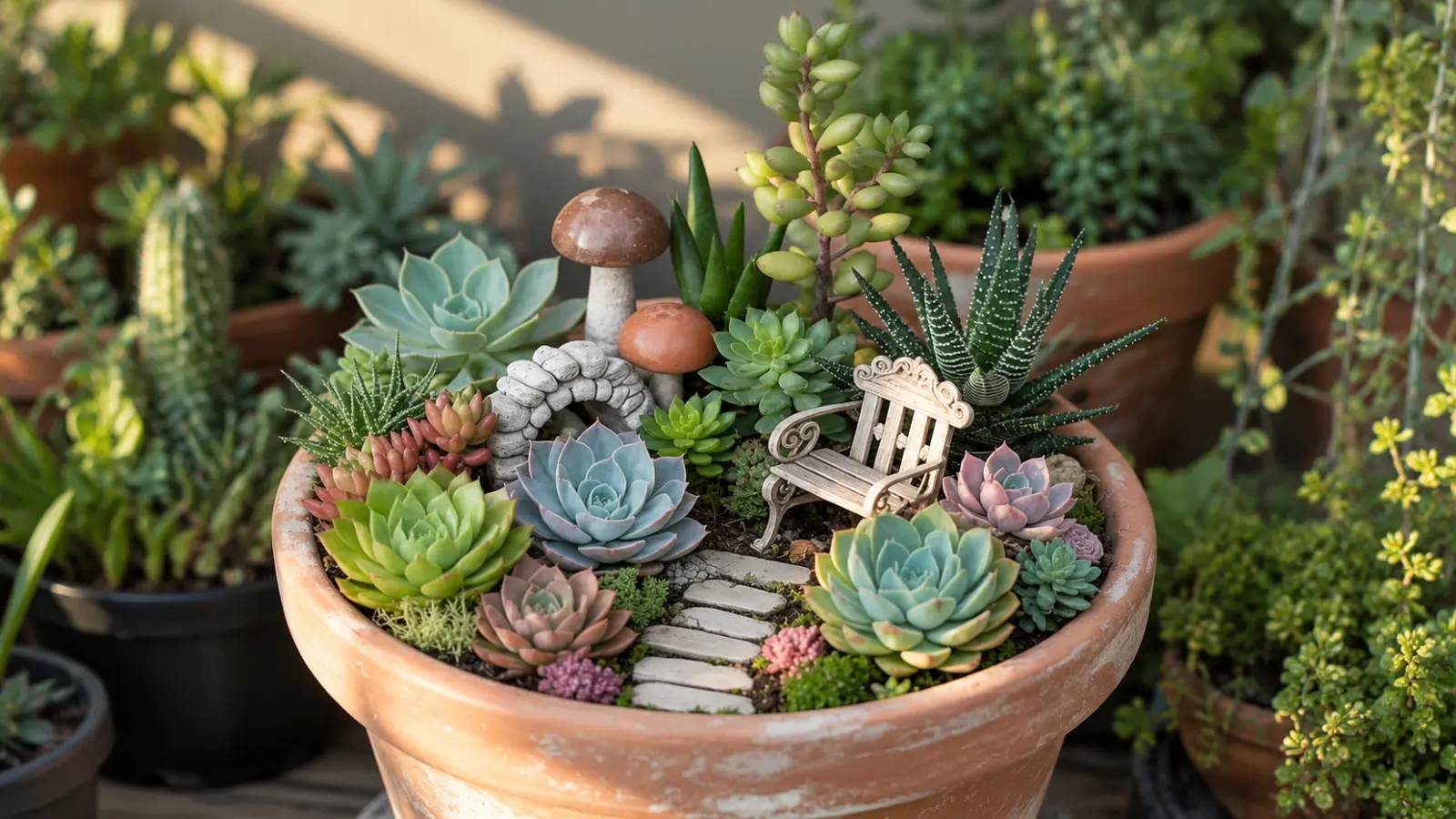
An indoor fairy garden can be made in a shallow planter, a wide terrarium-style vessel, or a tabletop container. It works best as a living planting rather than a sealed decoration. Most plants need drainage, air circulation, and a location with enough natural light to sustain them through the seasons.
Place the garden near a bright window, but watch for extreme heat buildup through glass, especially in west-facing exposures during summer. Rotate the container periodically if growth leans noticeably toward the light source. Water based on soil and plant needs rather than a fixed schedule — a small container in a warm, bright room can dry out faster than you’d expect.
Avoid sealing a container permanently unless the plants are specifically suited to a closed environment, such as certain ferns and mosses in a true terrarium setup. In standard containers, condensation, stagnant air, and excess moisture can encourage rot even when the garden looks fine from the outside. Keep loose decorative elements out of reach of pets and small children, and use only clean, plant-safe objects throughout.
Design for Children or Adults
A fairy garden designed for children benefits from sturdy features, enough open space for observation, and room to rearrange a few accessories without disturbing the plants. Use durable species, and steer clear of thorny plants and species known to be toxic if touched or ingested — foxglove, lily of the valley, and certain euphorbias are common garden plants worth avoiding in a child’s space. Keep small detachable pieces out of reach of children who might put objects in their mouths, and call your regional Poison Control center (800-222-1222 in the US) if you’re uncertain about a specific plant.
Children often enjoy a garden they can interact with, but frequent handling can damage delicate roots and stems. Use larger structures, stable paths, and a defined area for movable accessories. Place the garden where supervision is natural rather than requiring constant hovering.
An adult fairy garden can use finer details, more fragile materials, and a more restrained color palette. Even so, maintenance access matters. A beautiful arrangement that can’t be watered without moving every piece will become frustrating quickly, and frustration is usually what ends a miniature garden.
Maintain the Miniature Garden
Check the garden regularly for dry soil, standing water, weeds, fallen leaves, pests, and plants that are outgrowing the scene. Miniature spaces change fast — small plants have little room to hide stress, and a path can disappear under new growth within a single growing season.
- Water at the soil level and let each plant’s needs guide the schedule rather than watering on a fixed routine.
- Trim or divide plants before they cover paths, doorways, or structures.
- Remove damaged leaves and clear debris from drainage holes.
- Refresh loose path materials after heavy rain or watering sessions.
- Move tender container plants indoors or protect them before the first damaging frost.
- Inspect structures each season for cracks, sharp edges, fading, and instability.
Replanting is a normal part of maintaining a living miniature garden, not a sign that something went wrong. A plant that grows too large, declines in the wrong conditions, or no longer fits the design can be replaced without treating the original arrangement as permanent. The garden is meant to be tended, not preserved.
Common Fairy Garden Mistakes
Choosing Accessories Before the Site
A structure may be charming but completely wrong for rain, sun, children, or the available scale. Settle on the growing conditions and main focal feature first, then add details that support them.
Overcrowding the Container
Too many plants and accessories restrict air circulation, obscure the path, and make watering difficult. Start with fewer elements than you think you need and allow room for everything to grow into its space.
Using Plants That Grow Too Quickly
A plant that looks tiny at purchase may cover the entire scene by midsummer. Check mature spread before buying, and choose species that can be pruned or replaced without disturbing everything else in the garden.
Ignoring the Drainage Hole
Standing water can damage roots even when the garden looks fine from above. Solve drainage at the beginning — a container without a drainage hole or a site that stays saturated is a problem that decorating won’t fix.
Mixing Incompatible Plant Needs
Pairing a moisture-loving fern with a sedum that needs to dry out between waterings creates a watering problem with no good solution. Group plants with similar light and moisture requirements so you can care for the whole planting consistently.
Using Delicate Details Outdoors
Rain, frost, and direct sun can damage indoor decorations within a season. Use weather-resistant objects outside, or place fragile pieces in a protected spot where they can be brought in easily when conditions change.
Build the Garden Before Decorating the Story
A successful fairy garden begins with healthy plants, suitable growing conditions and enough room for everything to develop. Scale, paths and miniature structures become much more convincing when they are built around a planting that can actually be watered, pruned and maintained.
Start with one focal feature and a few compatible plants rather than filling every open space. As the garden grows, trim, divide or replace plants when necessary and allow the miniature scene to evolve instead of trying to preserve the original arrangement forever.
COMMON QUESTIONS
Before you begin.
What is a fairy garden?
A fairy garden is a miniature living landscape arranged with small-scale plants, paths, structures and decorative details that suggest a tiny inhabited world. It can be created in a container, raised planter or defined area of an outdoor bed. Unlike a purely decorative miniature display, a living fairy garden still needs appropriate light, drainage, plant spacing and ongoing maintenance.
How do you make a fairy garden?
Start by choosing a container or in-ground location with suitable light and drainage, then decide on a consistent scale before selecting plants or accessories. Use one main focal feature, add a simple path and choose a small number of plants with compatible light and moisture needs. Leave open space for growth, watering and pruning rather than filling every part of the miniature scene immediately.
What are the best plants for a fairy garden?
Good fairy garden plants have small leaves, restrained growth or a naturally low, creeping or mounding habit. Depending on the site, options can include mosses, Irish moss, baby’s tears, small ferns, creeping thyme, violets, miniature hostas, dwarf mondo grass and low-growing sedums. Always check mature size, hardiness, moisture needs and spreading behavior because a plant that looks miniature when purchased may eventually overwhelm the entire garden.
Can you make a fairy garden in a container?
Yes. Containers are especially useful for patios, balconies, porches and rentals because the entire garden can be moved or redesigned more easily. Choose a pot wide enough for the plants at maturity, provide a drainage hole and use a potting mix appropriate for the selected plants. Avoid containers that are so shallow that roots have little room and the soil dries excessively fast.
Can you make an indoor fairy garden?
Yes, provided the plants receive enough light and the container allows drainage and air circulation. Place the garden near a suitable bright window, monitor moisture rather than watering on a fixed schedule and avoid permanently sealing the container unless the plants are specifically suited to terrarium conditions. Indoor plants should be selected for their actual light and humidity requirements rather than simply because they are sold in small pots.
Are fairy gardens safe for children?
They can be designed with children in mind by using sturdy plants, stable structures and enough open space for supervised interaction. Avoid toxic or thorny plants, sharp or unstable decorations, open flames and small detachable pieces that could become choking hazards. Plant toxicity and accessory safety should be checked individually, especially when young children or pets can reach the garden.