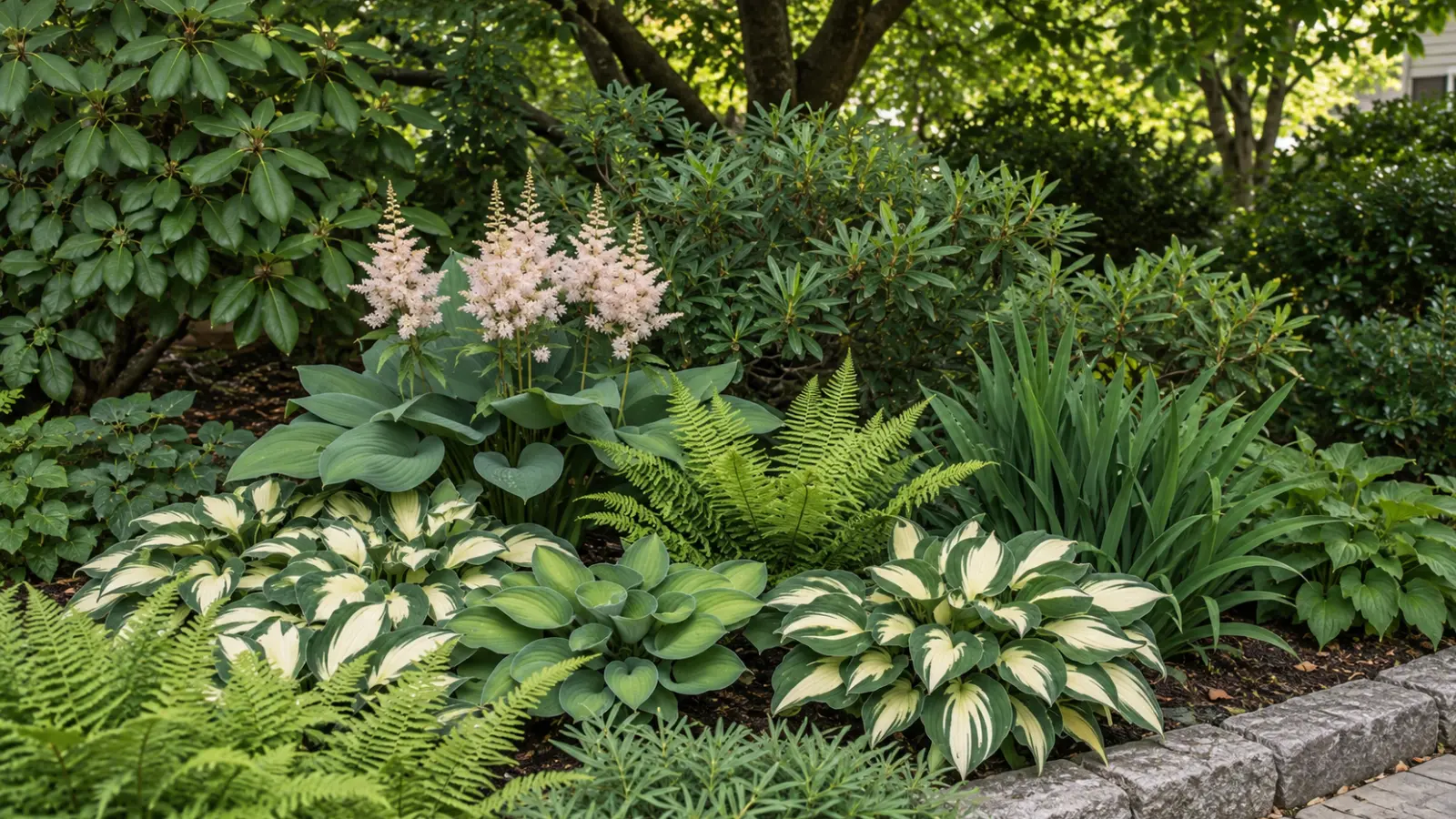
The best plants for shade depend on much more than the amount of sunlight a garden receives. Full shade, partial shade and filtered shade create different growing conditions, and soil moisture can completely change which plants will thrive in the same level of light.
A dry bed beneath mature trees, for example, requires plants that can handle both shade and root competition, while a moist woodland-style area can support ferns, sedges and moisture-loving perennials that would struggle in the drier site.
This guide explains how to choose plants for shade, including perennials, annuals, shrubs, groundcovers, ferns and foliage plants for full, partial, dry and moist shade, with guidance on hardiness, mature size, moisture and other site conditions that affect long-term performance.
Understanding Shade Levels
Light is not evenly distributed across a yard, and the difference between shade types matters more than most plant labels suggest. Before choosing plants, observe the site at different times of day and, if possible, in more than one season — the same spot can shift from bright to dense as nearby trees leaf out through spring.
Full Shade
Full shade describes an area receiving fewer than two to three hours of direct sun daily. It may be beneath a dense tree canopy, along the north side of a building or tucked against a tall fence. Full shade can still be surprisingly bright when the sky is open overhead or a light-colored wall reflects ambient light into the space.
Most full-shade garden plants still need indirect light to grow well. Very dark, enclosed spaces — a north-facing basement areaway, for instance — support a very limited plant selection, and no amount of shade-plant marketing will change that.
Partial Shade
Partial shade means the site receives two to six hours of direct sunlight during the day. Morning sun is generally gentler than afternoon sun, and plants that tolerate partial shade in the cooler North may struggle with the same light levels in the hot, humid South. Climate matters as much as the clock.
Many shade garden plants flower more reliably in partial shade than in full shade, because they get enough light for blooming while the hottest part of the day is moderated.
Filtered or Dappled Shade
Filtered shade occurs when sunlight passes through tree branches or open foliage. It shifts as trees leaf out and change through the seasons — a bed beneath a large deciduous oak might have full sun in early spring and dense shade by July. Plan for both extremes when choosing plants for these spots.
Dry Shade vs. Moist Shade
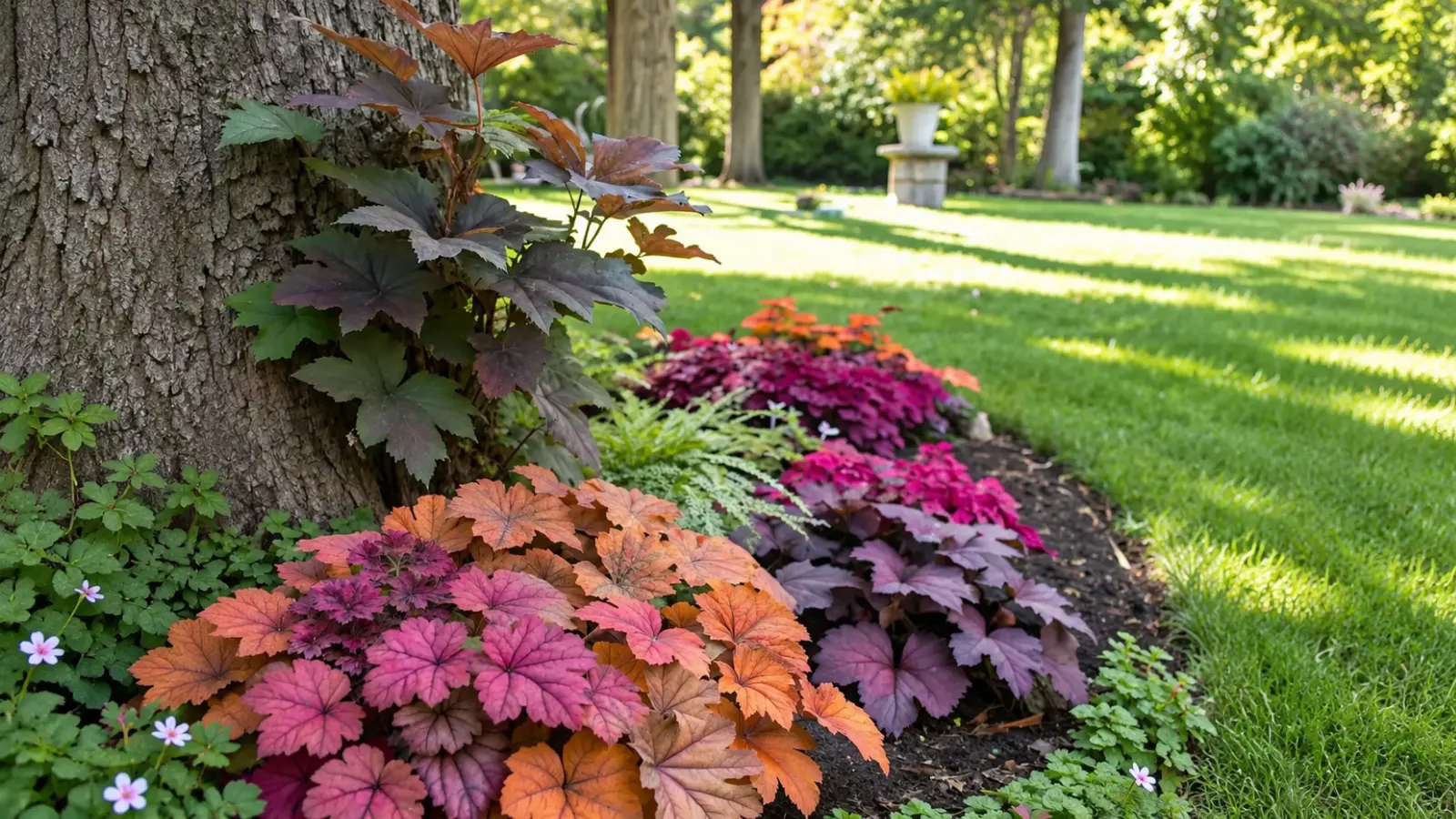
Moisture is as important as light when choosing plants for shade. Two areas receiving the same amount of shade can require entirely different plants because one gets consistent rainfall while the other sits beneath a tree canopy that intercepts most of the water before it reaches the soil — or beside a wall that blocks it entirely.
Dry Shade
Dry shade is common under mature trees and close to buildings. Dense root systems from large trees compete aggressively for available water, and roof overhangs or pavement can prevent rain from penetrating the planting zone. This is one of the most challenging conditions in any garden.
Select plants that tolerate both low light and dry periods once established. Water new plants consistently during their first growing season, but avoid adding thick layers of soil over an existing root zone or building raised beds around mature trees — both practices can damage or suffocate the tree’s roots and cover its root flare in ways that invite disease.
Moist Shade
Moist shade occurs in low areas, near water features or under trees with less aggressive root competition. Ferns, sedges and moisture-loving perennials like astilbe can thrive when the soil stays consistently damp but still drains.
Very few plants tolerate permanently saturated soil. If water stands in a planting bed for extended periods after rain, address the drainage before selecting plants — even species labeled “moisture loving” typically need soil that drains between waterings rather than staying wet indefinitely.
Perennials for Shade
Perennials return for multiple growing seasons when they’re hardy and well matched to the site. They form the lasting structure of most shady beds and are usually the best investment for areas that need consistent coverage year after year.
Hostas
Hostas are among the most reliable perennials for shade, valued for their bold foliage, wide range of sizes and tolerance of partial to full shade. Leaf color runs from blue-green and deep green to gold and variegated combinations — and cultivar selection matters: blue-leaved varieties need more shade to preserve their color (the waxy coating that creates that blue cast degrades in strong sun), while gold and chartreuse cultivars often need more light to stay vivid.
Hostas are hardy in Zones 3–9 and generally prefer consistently moist, well-drained soil rich in organic matter. Their two main adversaries are slugs and deer. Thick-leaved cultivars — ‘Halcyon,’ ‘Big Daddy,’ ‘Sum and Substance’ — tend to be less vulnerable to slug damage than thin-leaved types, though no hosta is truly deer-proof. They’re not a good fit for extremely dry shade without reliable supplemental water.
Heucheras (Coral Bells)
Heucheras offer mounded, semi-evergreen foliage in an unusually wide palette: chartreuse, silver, burgundy, chocolate, near-black and caramel, often with contrasting veining. Most are hardy in Zones 4–9, though some cultivars extend into Zone 3. They typically grow 6–16 inches tall with flower spikes reaching 1–3 feet.
Partial shade — roughly four to six hours of gentle light with protection from hot afternoon sun — brings out the best foliage color. In very hot regions, more shade and consistent moisture help prevent leaf scorch, especially on lighter-hued cultivars. Good drainage is non-negotiable: crowns sitting in wet soil will rot. When heucheras develop a woody stem base over time, mound compost around the crown or dig and replant them slightly deeper to keep them thriving.
Astilbes
Astilbes produce feathery flower plumes in shades of white, pink, red and purple above attractive, fernlike foliage. They’re hardy in Zones 3–8 and perform best in partial shade with consistently moist, organically rich soil — dry soil causes the leaf edges to brown quickly, and astilbes are genuinely unforgiving when stressed by drought. In warmer climates, deeper shade and supplemental irrigation help them through summer.
Height ranges considerably by cultivar: compact types like ‘Sprite’ stay under a foot, while taller selections like ‘Purple Candles’ can reach four feet. Plan accordingly, and don’t rely on a single bloom period — mixing early, mid and late-season cultivars extends the flower display from late spring through late summer.
Bleeding Hearts
The classic bleeding heart (Lamprocapnos spectabilis, formerly classified as Dicentra spectabilis) offers one of spring’s most distinctive flower displays: arching stems strung with heart-shaped blooms in pink or white. It blooms for roughly four to six weeks in mid-to-late spring, then goes dormant by midsummer as heat sets in — the foliage yellows and collapses by July or August in most gardens. This is normal, not a sign of trouble.
Plan for the gap it leaves. Hostas, ferns or other shade perennials planted nearby will fill the space as bleeding heart fades. If you prefer non-stop foliage and a longer bloom window, fringed bleeding heart (Dicentra eximia) and its hybrids don’t go dormant and bloom intermittently through summer in cooler climates. Hardy in Zones 3–9.
Woodland Perennials
Native woodland perennials can be among the most ecologically useful plants for shaded beds under deciduous trees. Trilliums, wild geraniums (Geranium maculatum), foamflower (Tiarella), Solomon’s seal (Polygonatum), native columbines (Aquilegia canadensis) and Virginia bluebells (Mertensia virginica) each bring seasonal interest and regional wildlife value.
Choose according to local availability and regional growing conditions — a plant native to one part of the country may not be appropriate in another. Never collect woodland plants from the wild. Many are protected and slow to recover from disturbance; source them from reputable nurseries that propagate rather than wild-collect.
Annuals for Shade
Annuals complete their life cycle in one growing season, making them useful for seasonal color, containers and filling gaps while perennials establish. They won’t build the permanent framework a shade garden needs, but they add flexibility and can carry a bed through its first year or two.
A note on impatiens: standard garden impatiens (Impatiens walleriana) were among the most popular shade annuals for decades, but downy mildew spread rapidly across the country beginning around 2011, making them a risky choice in many areas where the disease has overwintered in soil. New Guinea impatiens (Impatiens hawkeri) and newer resistant series like Beacon impatiens are much better bets. Begonias — wax, tuberous and rex — remain reliable alternatives. Caladiums provide dramatic foliage in warm climates (they need consistently warm soil and don’t tolerate frost). Coleus and torenia (wishbone flower) round out the best options for partial to full shade.
Annuals in containers may need more frequent watering than plants in the ground, even in shade. Limited sun doesn’t mean limited water loss, particularly in pots beneath a roof overhang or dense tree canopy that blocks rain. Check containers regularly rather than relying on a fixed schedule.
Use annuals to complement permanent structure rather than as the backbone of the bed. Perennials, shrubs and ferns provide the lasting form and, in the case of native species, habitat value that annuals simply can’t replicate.
Shrubs for Shady Areas
Shrubs add height, structure, privacy and year-round presence to shade gardens. Because they’re harder to move once established and occupy space for years, selecting them carefully pays off more than in any other plant category.
Inkberry (Ilex glabra)
Inkberry is a native holly that tolerates partial shade and moist to average soils, performing well in Zones 3–9. It provides year-round evergreen structure, small white flowers in spring and clusters of dark berries that persist into winter for birds. Mature size varies widely by cultivar — some selections stay compact at 3–4 feet while the straight species can reach 8 feet — so check the tag before planting.
Spicebush (Lindera benzoin)
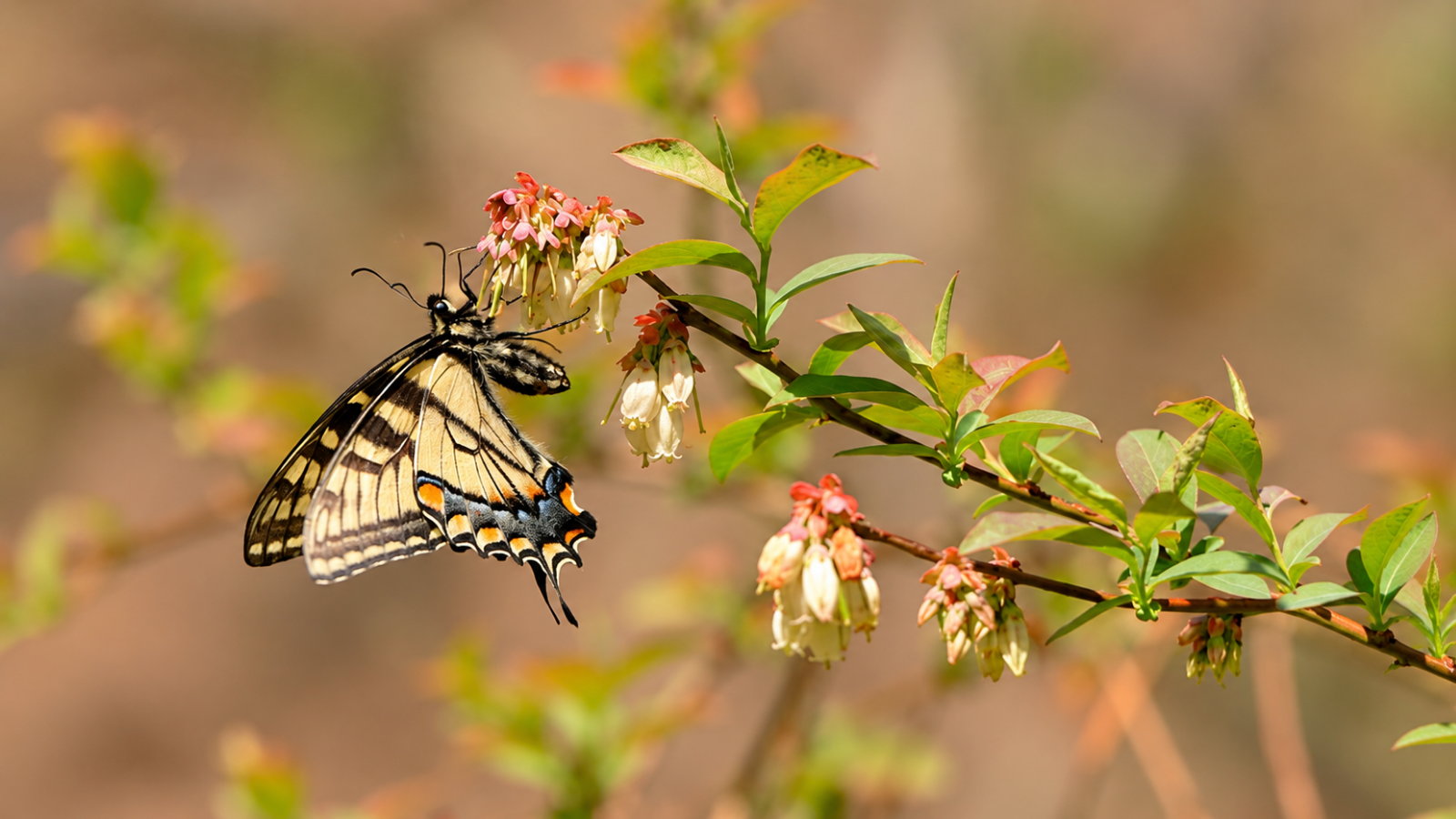
Spicebush is one of the best native shrubs for moist, partially shaded woodland conditions, hardy in Zones 4–9. Early yellow flowers appear before the leaves in late winter or early spring, providing some of the season’s first nectar. Female plants produce red berries that are an important fall food for migratory birds. It also serves as the host plant for the spicebush swallowtail butterfly. Expect 6–12 feet at maturity with a naturally arching, layered form.
Oakleaf Hydrangea (Hydrangea quercifolia)
Oakleaf hydrangea is a native shrub that handles partial shade well, hardy in Zones 5–9. Large white flower clusters in summer age to parchment tones through fall, the foliage turns burgundy and orange in autumn, and the peeling bark provides winter interest. It needs adequate moisture and well-drained soil to perform at its best. Dwarf cultivars like ‘Pee Wee’ work for smaller spaces; the straight species and larger selections like ‘Snowflake’ need room to spread — often 6–8 feet wide at maturity.
Virginia Sweetspire (Itea virginica)
Virginia sweetspire works well in moist to average soil and partial shade, with outstanding fall color that persists longer than most shrubs, often combining burgundy, orange and red on the same plant. Hardy in Zones 5–9. Its suckering habit gradually forms colonies, which can be useful for a naturalistic planting or a slope but may need management in a tighter space.
Not every shrub labeled shade-tolerant thrives in deep shade. Most shade-tolerant shrubs still need two to four hours of indirect or filtered light for healthy growth, and some need more to flower well. Always check what a specific cultivar requires before planting.
Groundcovers for Shade
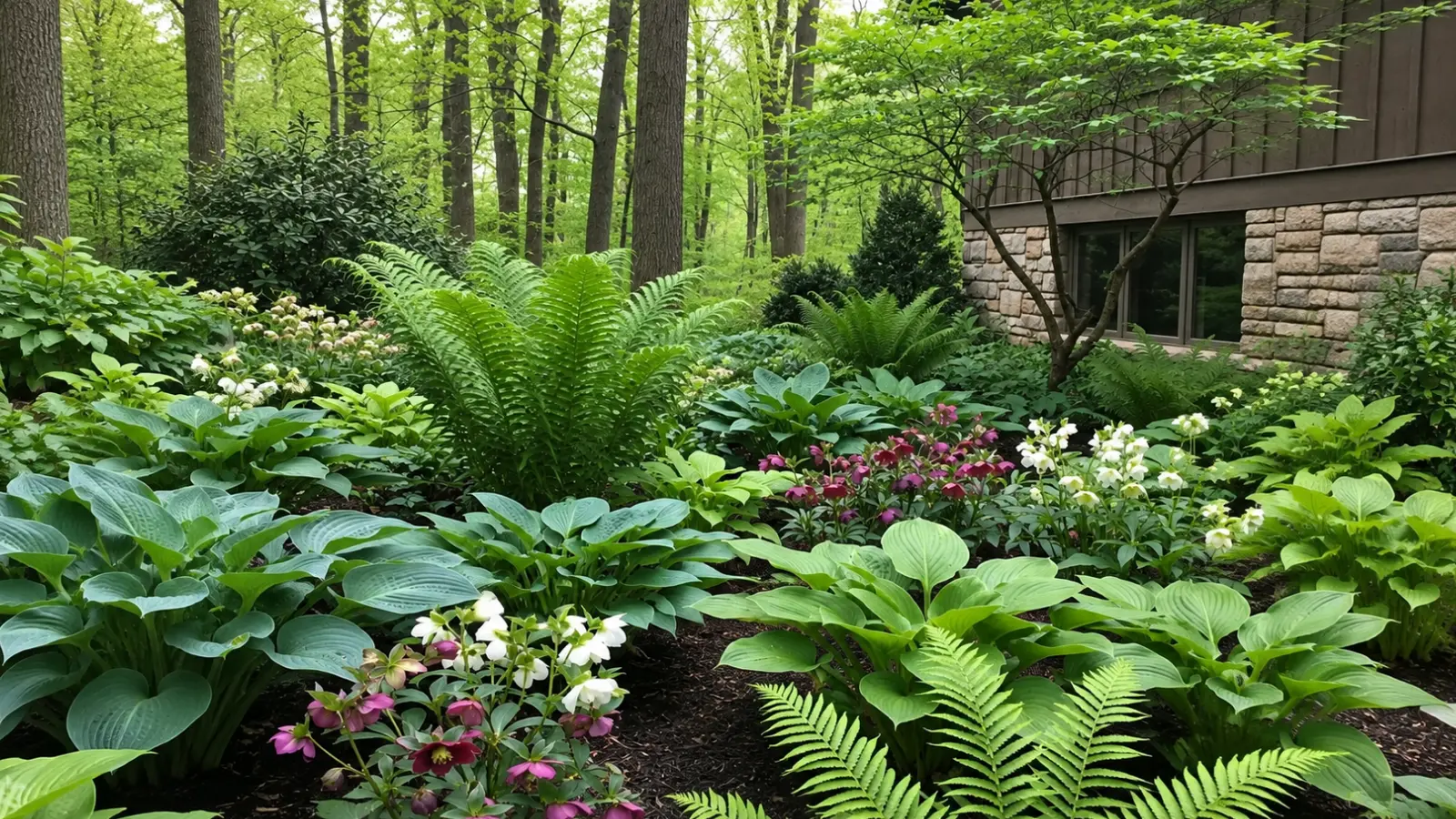
Groundcovers fill the lower layer, reduce exposed soil and connect larger plants. They can also eliminate the need to mulch or weed a shaded area once established. Choose carefully — some shade groundcovers spread much faster than their descriptions imply, and a few can become difficult to manage in the wrong setting.
Wild ginger (Asarum canadense), native foamflower (Tiarella cordifolia), barren strawberry (Waldsteinia fragarioides), native violets (Viola spp.) and selected ferns work well in different shade conditions. Sweet woodruff (Galium odoratum) is effective in partial to full shade but is a non-native that spreads vigorously by rhizomes — check whether it’s considered invasive in your region before planting, particularly near natural woodland edges. The right choice always depends on moisture, soil depth, regional status and the rate of spread you’re prepared to manage.
Don’t use groundcovers to mask poor soil or hide structural problems. Prepare the bed properly, remove established invasive weeds thoroughly before planting and give each plant enough space to develop without immediately crowding out its neighbors.
In dry shade, focus on groundcovers that tolerate root competition from trees. In moist shade, choose plants suited to consistent moisture without standing water.
Ferns for Shade
Ferns are among the most consistently useful plants for shady areas. Their fronds add fine texture and movement, and the range of species covers almost every combination of shade and moisture. They also tend to be long-lived and undemanding once established.
A few worth knowing by their differences:
- Christmas fern (Polystichum acrostichoides) is native, evergreen and one of the best choices for dry to average shade, tolerating Zone 3–9 conditions and tree-root competition better than most ferns.
- Lady fern (Athyrium filix-femina) offers finely textured, bright green fronds in moist to average shade (Zones 3–8). It can spread gradually by rhizomes in good conditions but is generally manageable.
- Cinnamon fern (Osmundastrum cinnamomeum) and royal fern (Osmunda regalis) prefer moist to wet conditions and make dramatic specimens near water features or in low areas.
- Ostrich fern (Matteuccia struthiopteris) is bold and fast-growing in moist shade, typically reaching 3–5 feet in garden conditions (occasionally taller in ideal spots). It spreads aggressively by underground rhizomes and will form large colonies over time — it’s excellent for filling a large shaded area but may overwhelm a small or carefully arranged bed. Hardy in Zones 3–7, it generally doesn’t do well in the heat and humidity of the deep South.
- Maidenhair fern (Adiantum pedatum) is more delicate in appearance and needs consistently moist, well-drained soil and moderate to deep shade.
Protect emerging fiddleheads from heavy foot traffic in spring, and avoid planting ferns where dense tree roots leave little workable soil.
Foliage Plants
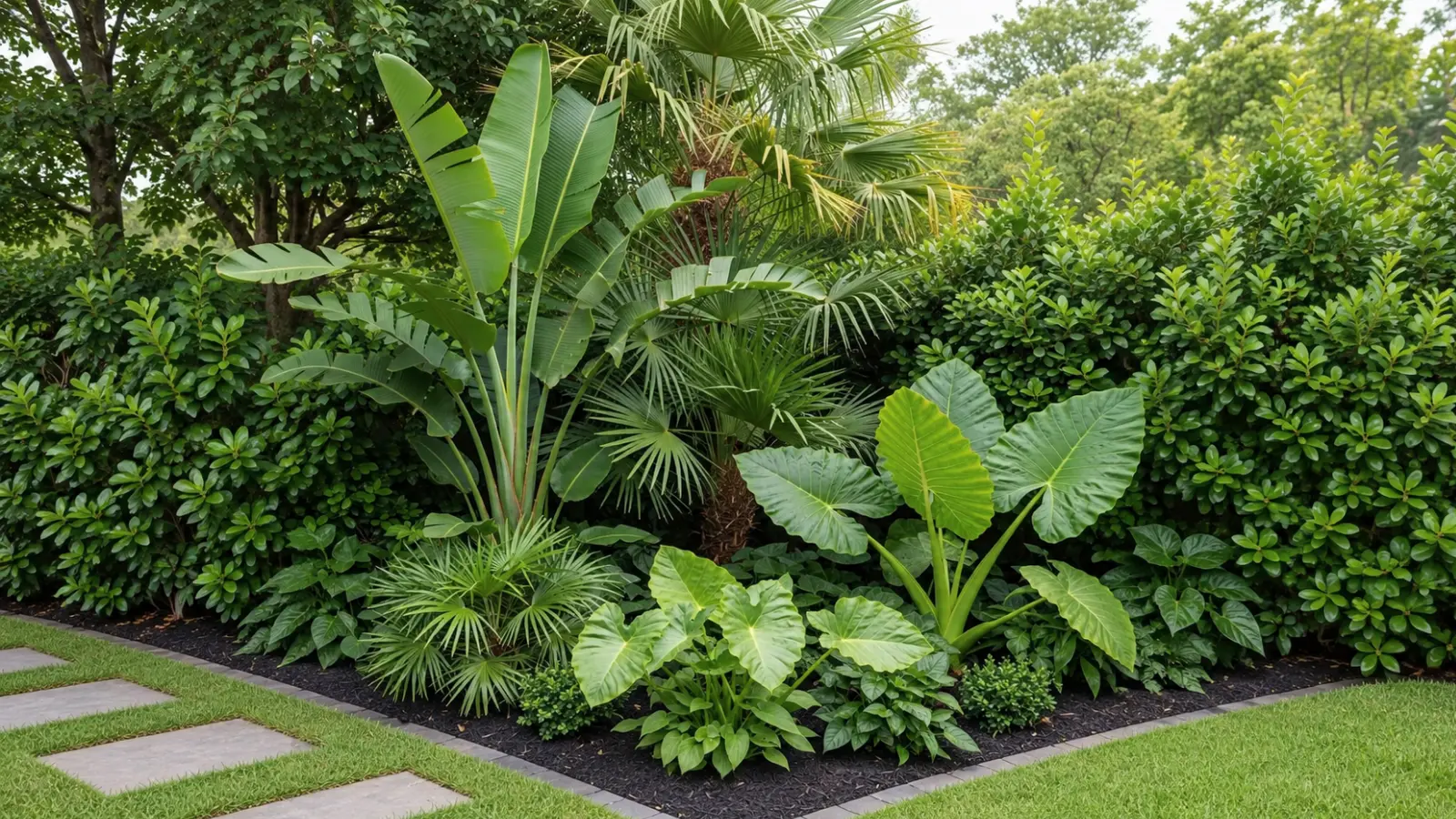
Foliage plants are especially valuable in shade because flowers are often limited or brief. A well-composed foliage planting can carry a bed through every season with leaf color, shape, texture and movement doing the work that flowers do in sunnier spots.
Hostas offer bold, broad leaves. Heucheras provide color near the ground and stay semi-evergreen in mild winters. Coleus adds vivid seasonal foliage in partial shade. Caladiums create strong tropical patterns in warm climates where the soil stays warm. Japanese forest grass (Hakonechloa macra) brings movement and a fine, cascading texture to partial shade, and Pennsylvania sedge (Carex pensylvanica) is a native option for dry shade that keeps a grass-like look with minimal maintenance.
When combining foliage, resist the urge to use every available color. Repeating two or three leaf tones typically reads as more cohesive and refined than a patchwork of everything the garden center carries. Pair contrasting textures — broad leaves against fine ones, glossy surfaces beside matte — and vary plant height so layers are visible rather than merged.
USDA Hardiness Zone Considerations
USDA Hardiness Zone is a useful starting point for evaluating perennials, shrubs and hardy foliage plants. It indicates average annual extreme minimum temperatures, which helps narrow down what can survive winter in your area. But it’s a single data point, not a complete picture of what a plant will experience.
Also consider winter wet, snow cover, wind exposure, late spring frosts, summer heat and humidity levels. A plant can be zone-hardy and still fail in compacted clay soil, a site that stays saturated through winter or a sun pocket that amplifies heat stress in July. Regional specifics — not just a zone number — should guide final choices.
Native plants should be selected for the local region rather than simply for zone compatibility. A plant native to the coastal Pacific Northwest may be zone-appropriate in the Southeast but ecologically irrelevant and potentially poorly adapted to the summer heat and humidity there. When a plant is borderline hardy, a protected microclimate or a container that can be moved are reasonable strategies — but a warm wall won’t protect every plant through an extreme cold event.
How to Choose the Right Plant
Work through these steps before purchasing a shade plant. The order matters — light and moisture define your options, and everything else narrows from there.
- Measure the actual light. Observe direct and indirect sun through different hours and seasons. Don’t estimate — shade shifts more than most gardeners expect.
- Determine soil moisture. Test whether the area is dry, average, consistently moist or prone to standing water after rain.
- Check USDA Hardiness Zone and local climate factors. Include summer heat, humidity and winter wet, not just winter cold.
- Account for tree-root competition and soil depth. Shallow, root-bound soil limits plant selection significantly.
- Review mature height, spread and spreading habit. A plant that looks small in a nursery pot can eventually overwhelm a small bed.
- Choose plants with different textures and seasonal roles. Stagger bloom times and combine foliage types for interest beyond one peak season.
- Confirm invasiveness, toxicity and wildlife value where relevant. This matters especially with groundcovers and non-native species near natural areas.
“Shade tolerant” should be read as a starting description, not a guarantee of performance. A plant may survive shade but bloom poorly, lose its leaf color or grow weakly if conditions fall below its actual preference. When possible, see the plant performing in a local public garden before committing.
Plants for Shade at a Glance
The table below gives a working reference for common shade plants across different light and moisture conditions. Zone ranges and heights reflect typical cultivated performance — individual species and cultivars vary, sometimes considerably. Confirm the specific plant’s requirements before purchasing.
| Plant | Shade Level | Moisture | Zone | Height | Best Use |
|---|---|---|---|---|---|
| Hosta | Partial to full shade | Average to moist | 3–9 | 6 in–4 ft | Bold foliage and mass planting |
| Heuchera (Coral Bells) | Partial shade | Moderate, well-drained | 4–9 | 6–16 in | Colorful foliage and edging |
| Astilbe | Partial to light shade | Consistently moist | 3–8 | 1–4 ft | Feathery summer flower plumes |
| Bleeding Heart | Partial to full shade | Average to moist | 3–9 | 1–3 ft | Spring flowers; goes dormant in summer |
| Christmas Fern | Partial to full shade | Average to dry | 3–9 | 1–2 ft | Evergreen native texture in dry shade |
| Lady Fern | Partial to full shade | Moist to average | 3–8 | 2–3 ft | Fine-textured native foliage |
| Ostrich Fern | Partial to full shade | Moist to wet | 3–7 | 3–5 ft | Bold statement; spreads to form colonies |
| Wild Ginger | Partial to full shade | Moist, well-drained | 3–8 | 6–12 in | Native groundcover |
| Foamflower | Partial to full shade | Moist to average | 3–9 | 1–2 ft | Native groundcover and spring bloom |
| Spicebush | Partial shade | Moist to average | 4–9 | 6–12 ft | Native shrub with wildlife value |
| Inkberry | Partial shade | Moist to average | 3–9 | 3–8 ft | Evergreen native structure |
| Oakleaf Hydrangea | Partial shade | Average to moist | 5–9 | 4–8 ft | Four-season native shrub |
| Caladium | Partial to full shade | Moist, well-drained | 9–11 (annual elsewhere) | 1–2 ft | Warm-season tropical foliage |
| Begonia (wax or tuberous) | Partial to full shade | Average to moist | Annual | 6 in–2 ft | Reliable seasonal color |
| Coleus | Partial shade | Average moisture | Annual or tender perennial | 1–3 ft | Bold seasonal foliage |
Use the table to narrow your choices, not finalize them. A plant’s performance in your specific combination of light, moisture, soil, climate and root competition will always be the real test.
Choose Plants for the Conditions, Not the Label
The best shade plants are the ones matched to the complete site, not simply those carrying a “shade tolerant” label. Light level, soil moisture, root competition, climate, mature size and drainage all influence whether a plant will merely survive or actually perform well.
Start by understanding the conditions of each planting area, then combine perennials, shrubs, ferns, groundcovers and foliage plants that share compatible needs. When the plant selection follows the site, a shaded garden becomes easier to maintain and much more reliable over time.
COMMON QUESTIONS
Before you begin.
What are the best garden plants for shade?
The best shade plants depend on the amount of light, soil moisture, climate and available space. Hostas, heucheras, ferns, astilbes, bleeding hearts, native woodland perennials, sedges and shade-tolerant shrubs such as spicebush and oakleaf hydrangea are strong options for many gardens. Match each plant to the specific combination of shade and moisture rather than relying only on a “shade tolerant” label.
What plants grow well in full shade?
Christmas fern, wild ginger, foamflower, many hostas and certain native woodland perennials can grow well in full shade when the soil and climate suit them. Full shade still provides indirect or ambient light; very dark spaces with almost no usable light support far fewer plants. Moisture conditions should also guide the final selection.
What plants are best for partial shade?
Partial shade supports one of the widest ranges of shade plants. Heucheras, astilbes, hostas, bleeding hearts, lady ferns, oakleaf hydrangeas, spicebush and many woodland perennials can perform well with several hours of gentle sunlight or filtered light each day. Plants receiving hot afternoon sun may need more protection than those receiving the same number of hours in the morning.
What plants grow in dry shade?
Dry shade calls for plants that tolerate both limited sunlight and periods of low soil moisture, often caused by tree-root competition or blocked rainfall. Christmas fern, Pennsylvania sedge, native violets and some woodland groundcovers are useful options where regionally appropriate. Even drought-tolerant shade plants need consistent watering while establishing.
What plants grow in moist shade?
Astilbes, lady ferns, cinnamon ferns, ostrich ferns, foamflower, native sedges and spicebush are well suited to moist shade in appropriate regions. The soil should remain damp while still draining adequately, because consistently saturated conditions can damage many plants labeled as moisture-loving. Choose species according to both moisture level and local climate.
What flowering plants grow well in shade?
Astilbes, bleeding hearts, foamflower, native columbines, Virginia bluebells, begonias, torenia and some shade-tolerant shrubs can provide flowers in shaded gardens. Most bloom more reliably in partial or filtered shade than in very deep shade because flowering requires adequate light. Combining spring-, summer- and seasonal bloomers with strong foliage plants creates interest beyond a single flowering period.