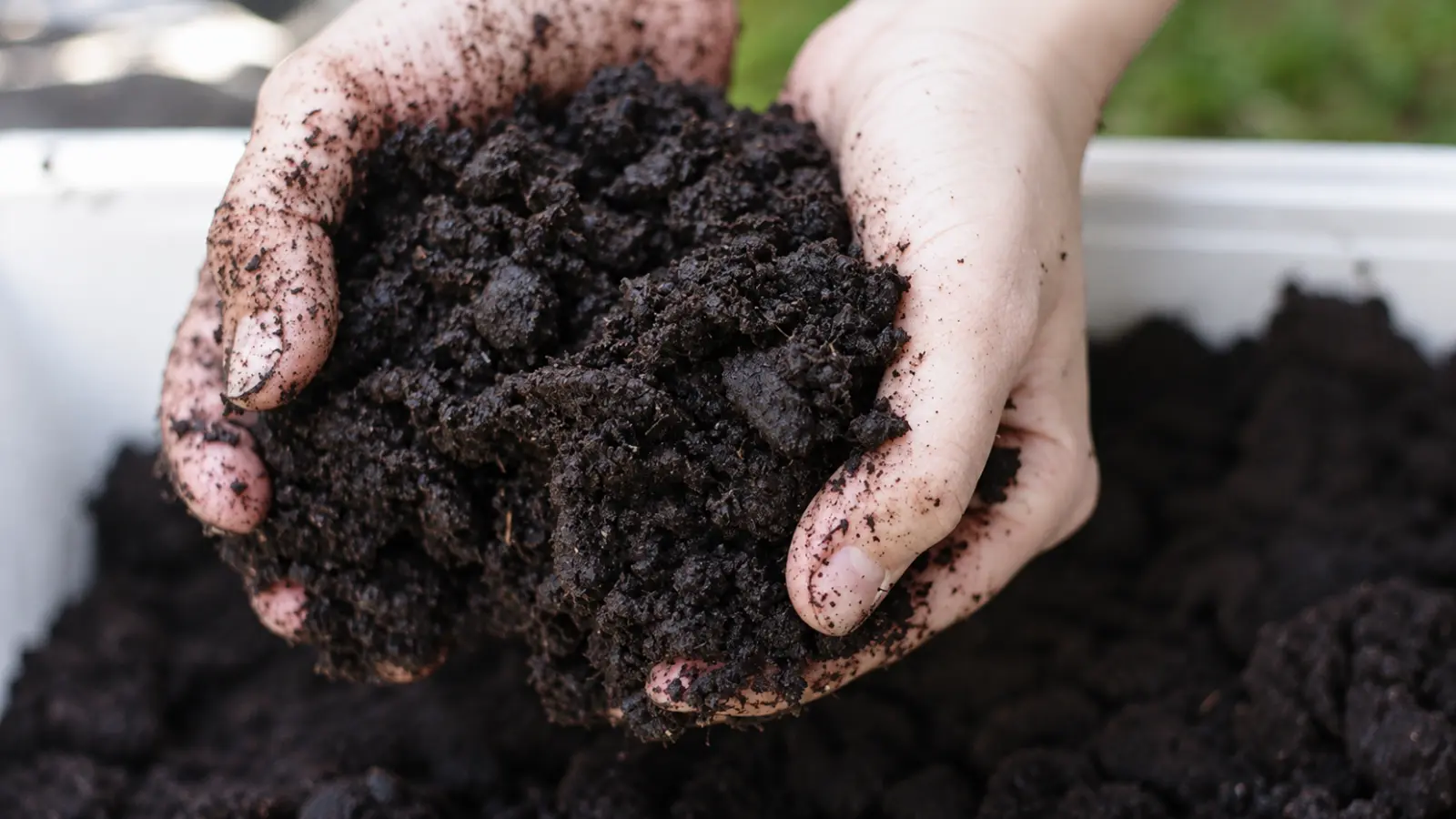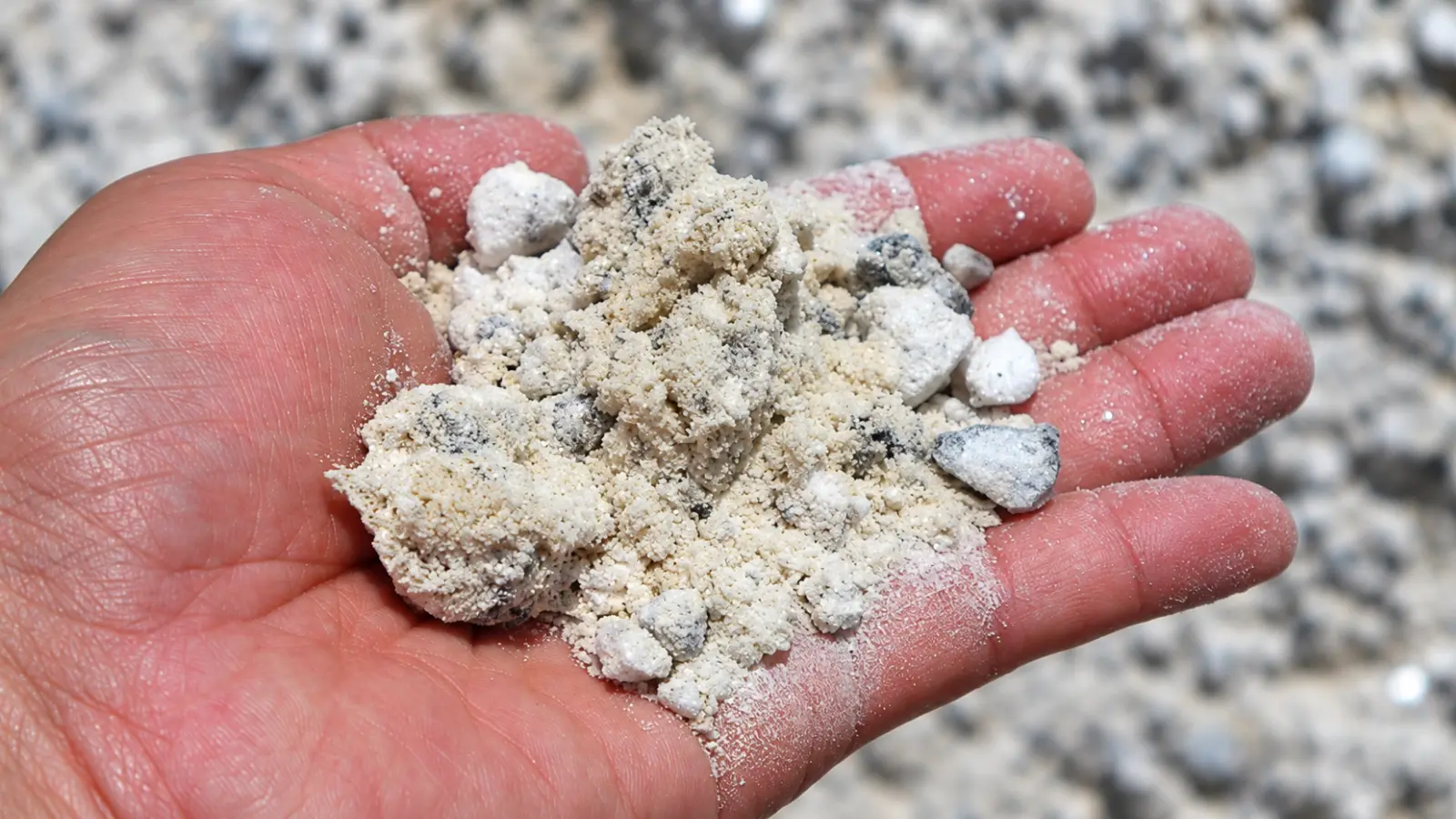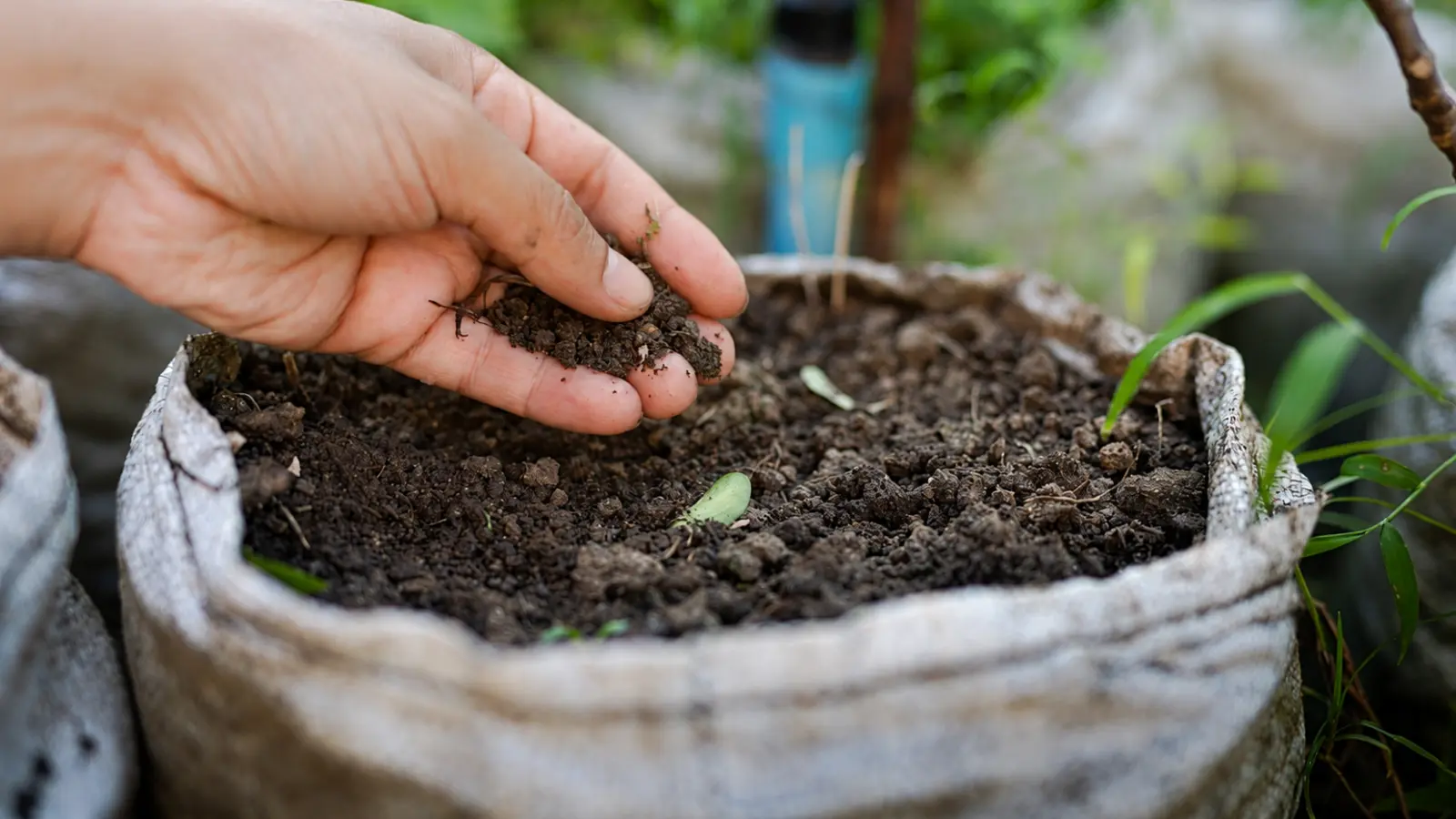
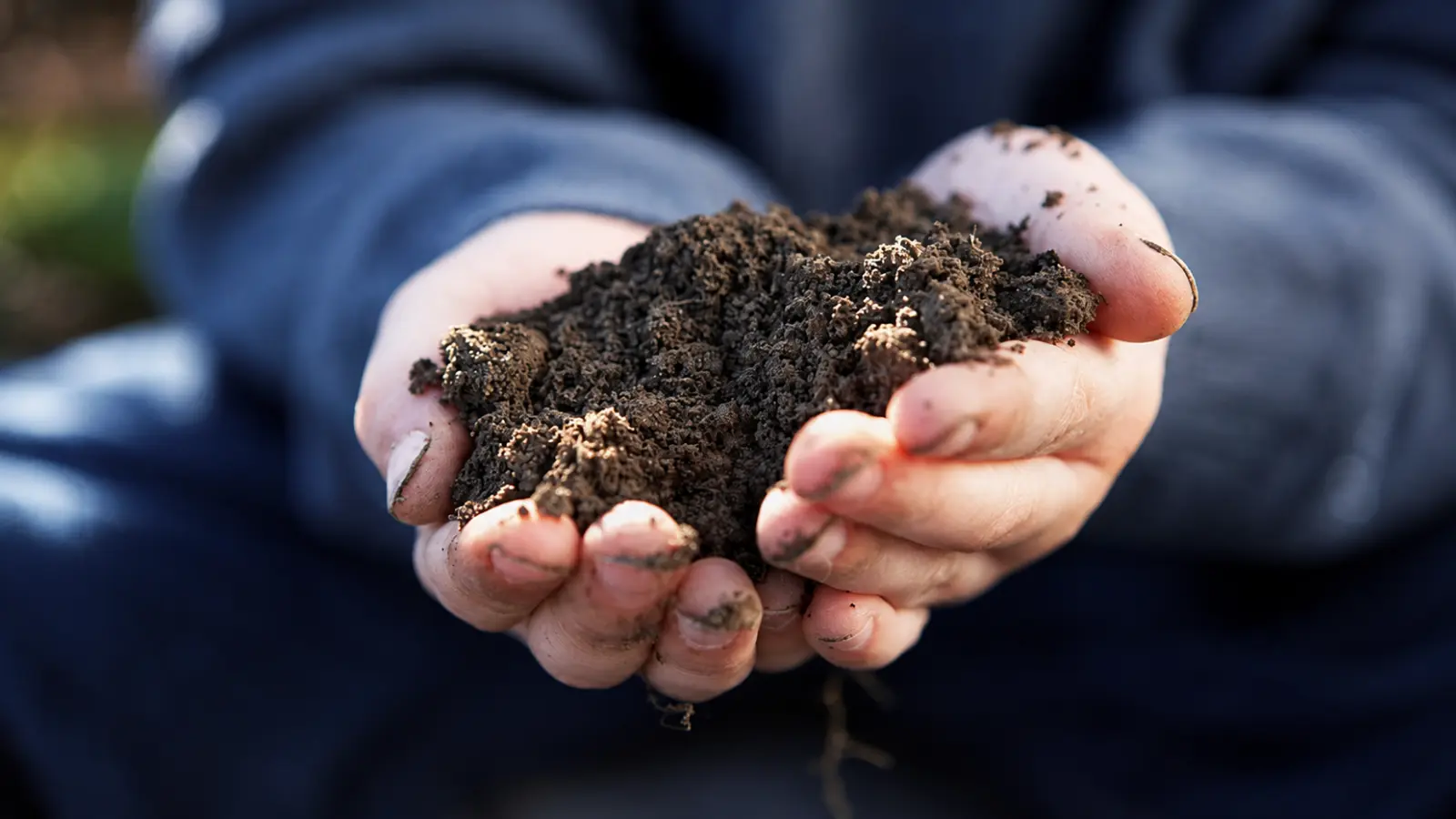
Humus in soil refers to the relatively persistent, well-decomposed portion of soil organic matter. It develops as plant residues, roots, and other organic materials are transformed through biological processes and interact with mineral particles. This organic matter contributes to nutrient retention, soil aggregation, and water management, making it an important part of a functioning garden soil.
Humus is often confused with compost, manure, or products marketed as “humus soil,” but these terms describe different materials. Compost is a managed organic amendment, while manure is an animal-derived input. Both can contribute to soil organic matter over time, but neither is automatically equivalent to humus. Modern soil science also recognizes that organic matter persists through several mechanisms, including protection within aggregates and interactions with mineral surfaces, rather than forming one universally defined, permanent substance.
This guide explains what humus is, how it develops within the soil organic matter continuum, what it contributes to garden soil, and how it differs from compost and manure. It also covers what commercial humus labels mean, practical ways to support longer-lasting soil organic matter, and the limitations gardeners should understand before choosing amendments.
The Short Answer
Humus is a stable part of soil organic matter that builds up through long-term decomposition. Compost and well-managed manure contribute organic material and nutrients that can eventually support that process, but neither one is identical to humus. The practical goal is the same either way: keep adding suitable organic inputs and protect the soil conditions that let them become part of a functioning soil system.
What Is Humus Soil?
In everyday gardening language, “humus soil” usually just means soil rich in dark organic material. In soil science, humus refers more specifically to a stable, hard-to-decompose pool within soil organic matter, material that has already moved far beyond recognizable leaves, roots, or food scraps.
Humus isn’t a precise retail grade, and it doesn’t mean a soil contains every nutrient a plant needs. It’s one valuable part of a much larger system that includes mineral particles, water, air, living roots, microorganisms, fresh residues, and everything in between.
The Organic Matter Continuum
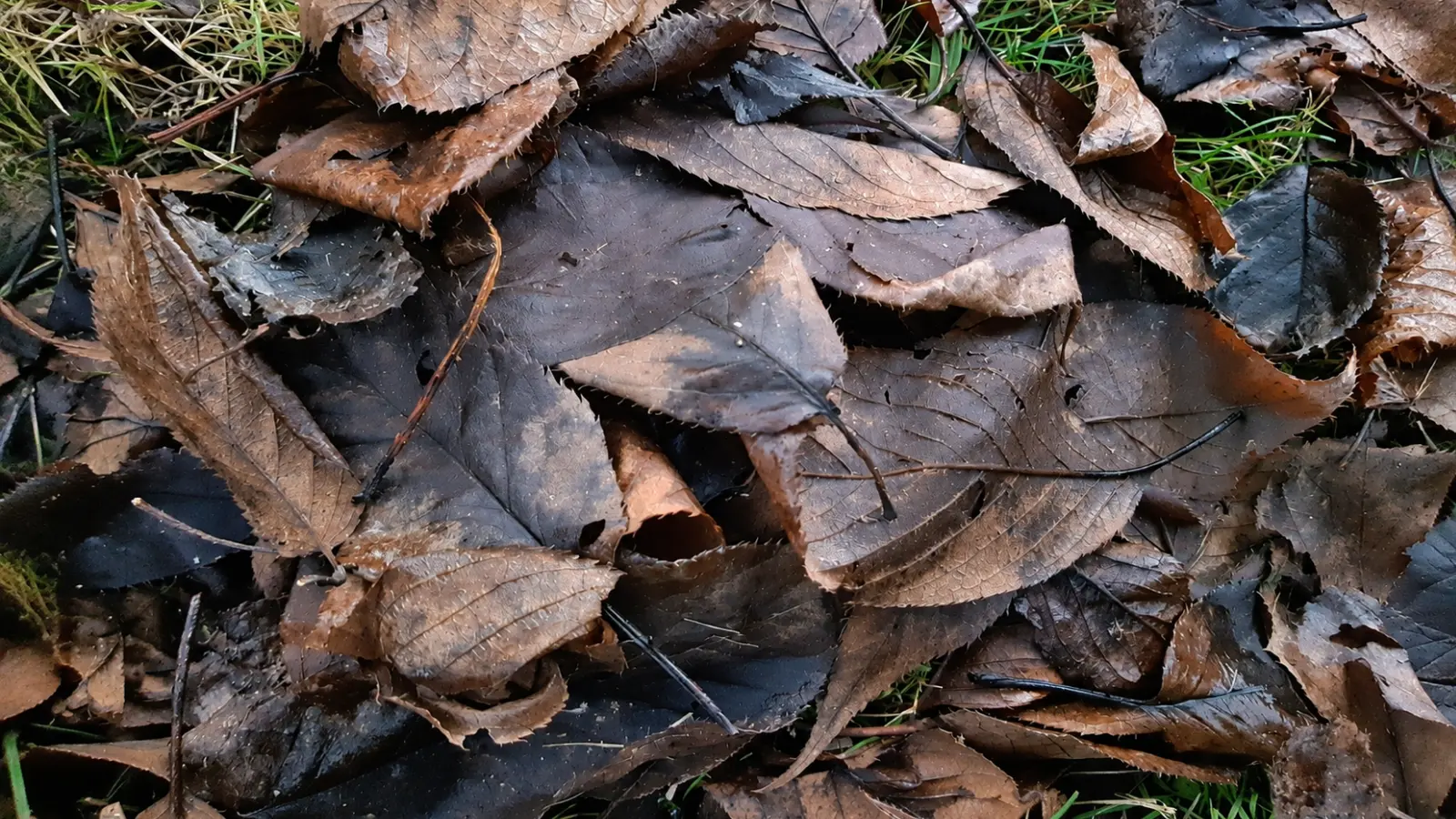
Organic matter isn’t one uniform substance. It moves through a continuum as soil organisms shred, digest, and transform plant and animal materials. Fresh mulch at the surface and stable organic matter deeper in the soil are connected, but they’re not the same stage of that process.
It’s worth knowing that soil science itself has updated its picture of this over the past couple of decades. For much of the last two centuries, humus was described as an unusually stable substance formed by a distinct chemical process, one that produced large molecules so resistant to breakdown that they could persist for centuries almost unchanged. More recent research, including an influential 2015 analysis published in the journal Nature, found little evidence that soil actually contains those large, chemically distinct “humic” molecules once assumed to make up humus. The current thinking, often called the soil continuum model, points instead to physical protection as the real reason some organic matter sticks around for decades: material bound tightly to clay and mineral surfaces, or tucked inside stable soil aggregates, simply stays out of reach of the microbes that would otherwise break it down. For a home gardener, this doesn’t change the practical advice much, but it’s a more accurate way to think about why organic matter persists, and why the word “humus” functions today more as useful shorthand than as a single, well-defined substance.
| Stage | What It Looks Like | Role in the Soil |
|---|---|---|
| Fresh residues | Leaves, roots, mulch, and plant debris | Feed decomposers and protect the surface. |
| Active decomposition | Materials becoming smaller and less recognizable | Releases nutrients and supports biological activity. |
| Finished compost | A managed, stable amendment made outside the bed | Adds organic matter and some nutrients when applied. |
| Stable organic matter (humus) | Dark, persistent material bound closely to mineral particles | Contributes to nutrient and water holding, aggregation, and soil function. |
These stages overlap rather than moving on a strict schedule. Temperature, moisture, oxygen, soil texture, and disturbance all affect how quickly materials break down and how much stable organic matter is left behind.
What Humus Does in Soil
Humus helps soil function better because stable organic matter interacts closely with both water and mineral particles. Its effect is especially noticeable where a soil drains too quickly, compacts easily, or struggles to hold onto nutrients.
- Supports water retention: organic matter helps soil hold water while still leaving room for air, though it doesn’t eliminate the need to match watering to texture and weather.
- Helps aggregation: organic compounds, fungal threads, and biological activity help bind mineral particles into aggregates, which can improve pore space and reduce crusting.
- Improves nutrient holding: stable organic matter adds charged sites that help retain certain nutrients for plant roots instead of letting them wash away quickly.
- Buffers change: soils with more organic matter often respond more gradually to shifts in moisture and nutrient supply than soils with very little.
These are system benefits, not instant transformations. A sandy soil will still be sandy, and a clay soil will still show clay-driven behavior, even after years of thoughtful organic-matter management.
Humus vs. Compost
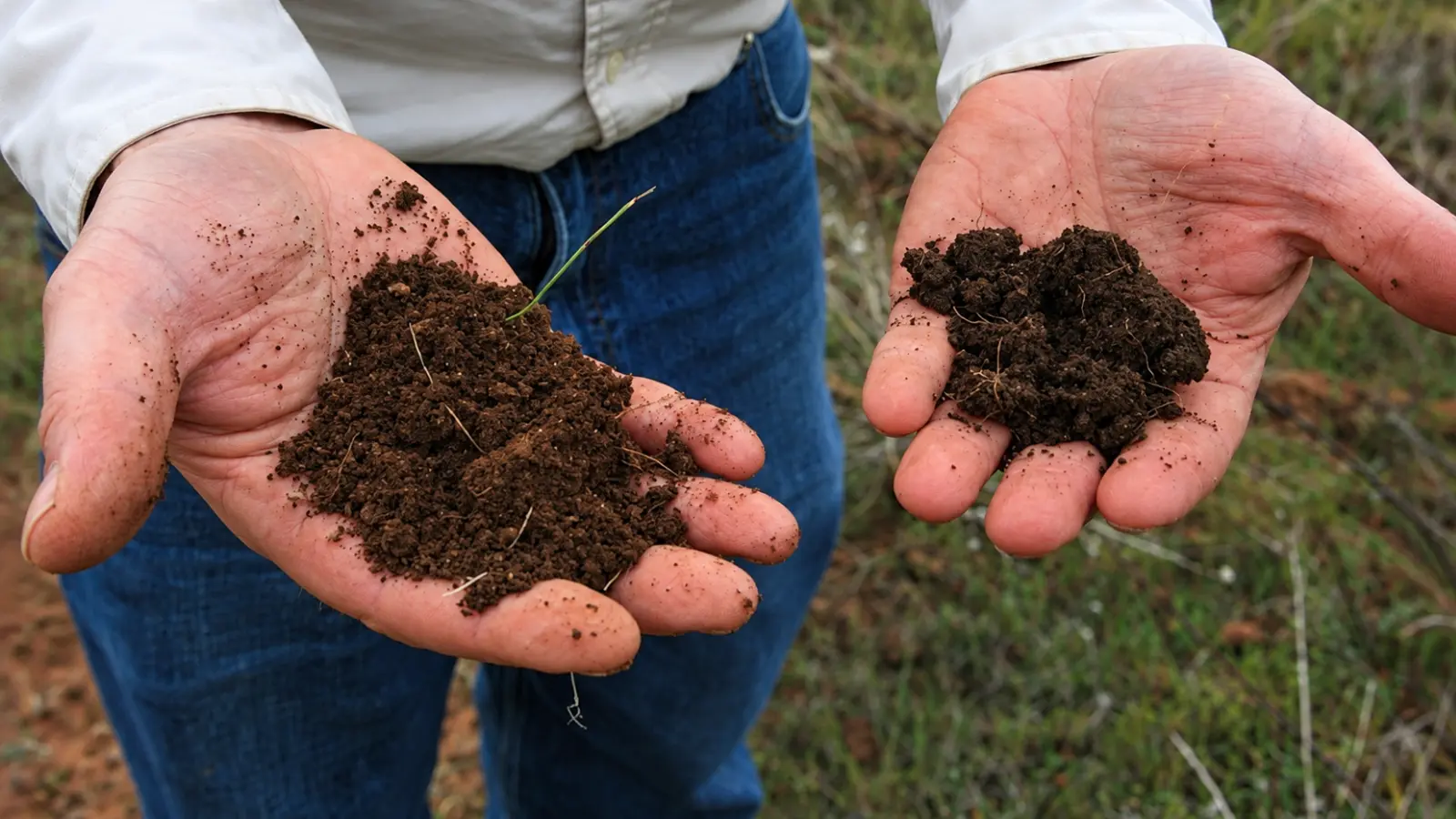
The difference between humus and compost mostly comes down to place and stage. Compost is a managed product made through the aerobic decomposition of organic materials. It can be mature and biologically stable by the time it’s applied, but it’s still an amendment you’re adding to the soil from the outside.
Humus is the more persistent material that develops within the soil after long-term transformation. Compost can help build that stable organic matter indirectly by adding carbon-rich material and feeding soil biology, but not every bit of compost ends up as stable humus. Some of it decomposes further and simply returns nutrients to the soil cycle instead.
For gardening purposes, compost stays valuable precisely because it does several jobs at once: it supplies organic matter, can add nutrients, and supports better soil conditions overall. Just don’t buy a bag of finished compost expecting it to be identical to the stable organic matter in a long-established garden soil.
Humus vs. Manure
Manure is an animal-derived nutrient source and organic input, not humus itself. Its nutrient content, moisture, salts, bedding materials, and food-safety considerations vary widely depending on the animal and how it’s been handled. Fresh manure also needs very different handling from finished compost.
Well-composted manure can add organic matter and nutrients to soil, which may support the processes that build more stable organic matter over time. That’s different from saying manure is humus, or that any manure can be applied freely to every garden bed.
What “Humus Soil” on a Bag Usually Means
Retail labels like “humus,” “humus and manure,” or “humus soil” are marketing descriptions, not a universal soil-science standard. The product inside might be a blend of composted forest products, decomposed organic materials, manure-based compost, topsoil, or some combination of all of those.
Read the ingredient list and the intended use rather than relying on the word humus on the front of the bag. Check whether the product is meant as a soil conditioner, a topsoil blend, compost, or potting mix, and remember that no bag can tell you the pH, nutrient level, texture, or drainage of the bed you’re actually working with.
How Gardeners Build Humus Indirectly
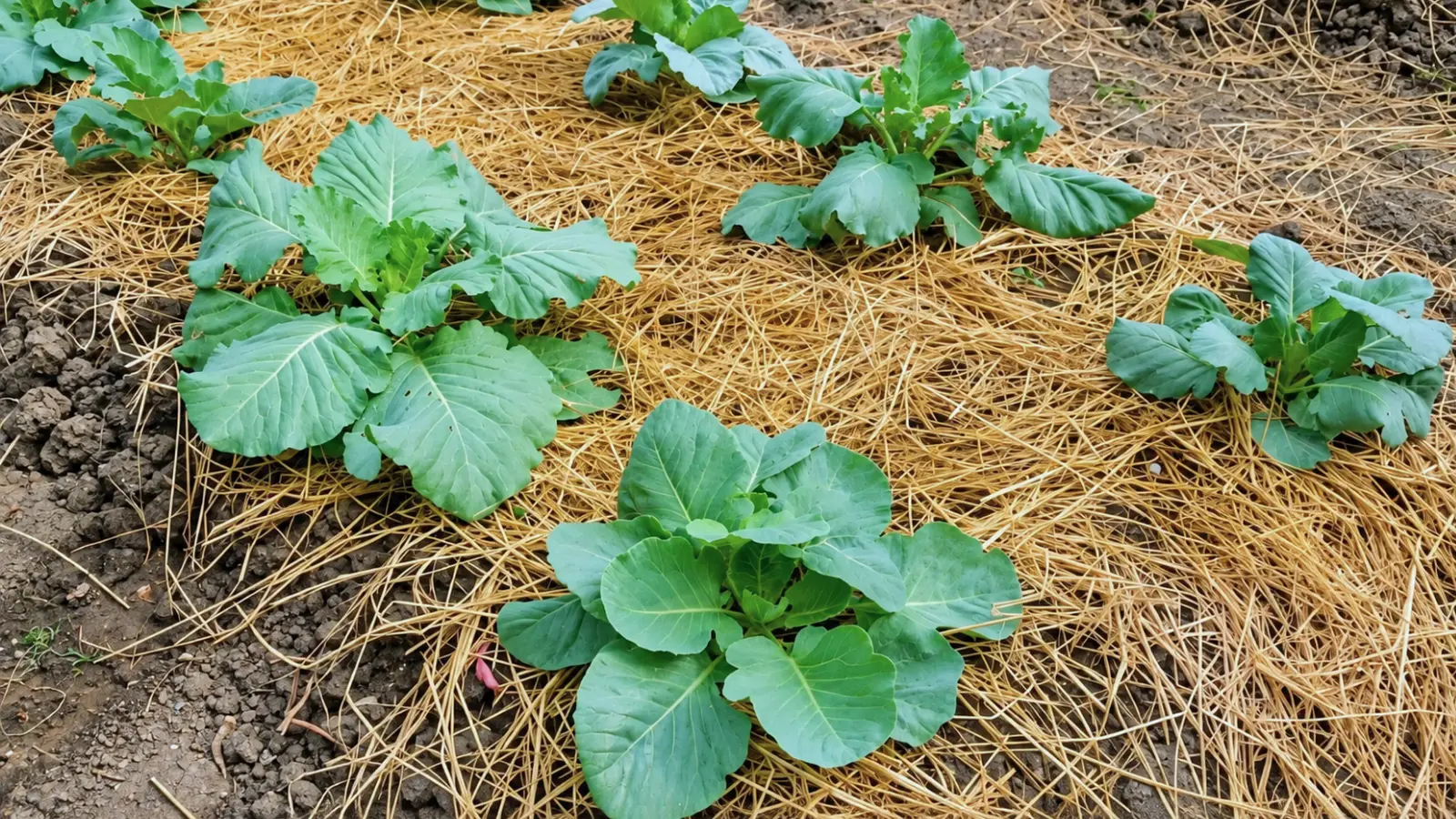
Gardeners can’t manufacture stable humus on demand, but they can create the conditions that favor it building up over time. The strategy is simple in principle: keep returning appropriate organic materials while cutting back on practices that expose soil to erosion and rapid organic-matter loss.
- Add mature compost when it fits the plan. Use a tested or trusted material and account for its nutrient contribution.
- Keep the soil covered. Mulch, retained residues, and living plants protect the surface and supply future organic inputs.
- Keep roots growing when practical. Living roots feed the active root zone and act as a steady source of soil carbon.
- Limit unnecessary disturbance. Avoid repeated tilling and heavy traffic, especially on wet soil, so aggregates and pore spaces aren’t needlessly broken down.
- Work with the soil you have. Improve water, nutrients, and structure, but don’t expect organic matter alone to rewrite native texture or fix a drainage problem caused by the way the site is graded.
Consistency matters more than one dramatic application. These practices build a healthier soil environment gradually, and the pace will vary with climate and the garden’s starting condition.
What Humus Cannot Do
Humus is valuable, but it’s not a cure-all. It can’t replace a soil test, correct a severely unsuitable pH on its own, remove compaction caused by construction equipment, or make a poorly drained low spot behave like a raised bed.
It also doesn’t mean “more is always better.” Repeated heavy applications of compost or manure can build up excess nutrients and salts over time. Use soil testing to guide what you add, then pair steady organic-matter care with whatever specific correction the garden actually needs.
Build Soil Organic Matter, Not Just Humus
Humus is a useful way to describe the more persistent portion of soil organic matter, but it is not a separate soil type or a guaranteed result of adding a particular product. Its contribution to nutrient retention, aggregation, and water management depends on the wider soil system, including mineral interactions, biological activity, moisture, and disturbance.
Rather than trying to add humus as a finished ingredient, focus on practices that support soil organic matter over time. Use suitable compost and other organic inputs when needed, maintain plant cover, protect living roots where practical, and avoid unnecessary disturbance. Combine those practices with soil testing and site-specific management to improve soil function without expecting one amendment to solve every problem.
COMMON QUESTIONS
Before you begin.
What is humus in soil?
Humus refers to the relatively stable, well-decomposed portion of soil organic matter. It develops as soil organisms transform plant and animal residues over time, with some organic material becoming protected within soil aggregates or associated with mineral particles. Humus is not a separate soil type or a single, chemically distinct substance.
What is the difference between humus and compost?
Compost is an organic amendment produced through the controlled decomposition of materials such as leaves, plant residues, and food scraps. Humus refers to more persistent organic matter that develops within the soil. Finished compost can contribute to the formation of stable soil organic matter, but not all compost becomes humus, and the two terms are not interchangeable.
What are the benefits of humus in soil?
Humus contributes to moisture retention, nutrient-holding capacity, soil aggregation, and overall soil stability. These properties help create a more favorable environment for roots and beneficial soil organisms. However, humus does not automatically correct poor drainage, unsuitable soil pH, or severe compaction.
How can you increase humus in garden soil?
You can encourage the accumulation of stable soil organic matter by adding mature compost when appropriate, maintaining organic mulch, growing cover crops, and leaving healthy plant residues in place. Minimizing unnecessary tillage and protecting soil from erosion also help preserve organic matter. Consistent management over time is more effective than relying on a single large amendment application.
Is humus the same as manure?
No. Manure is an animal-derived organic material that can supply nutrients and organic matter, while humus refers to persistent organic matter already present in soil. Properly composted manure may contribute to long-term soil organic matter, but its nutrient content, salt levels, and suitability vary. Manure should be selected and applied carefully, particularly in vegetable gardens.
Can you buy humus soil for your garden?
You can buy products labeled “humus,” “humus soil,” or “humus and manure,” but these terms do not guarantee a standardized composition. Such products may contain composted forest materials, manure-based compost, topsoil, or other organic blends. Check the ingredients, intended use, and available product information rather than assuming the label identifies a specific soil type or a guaranteed source of stable humus.