A native plant garden is built around plants that genuinely belong to the region where the garden is located and are matched to the site conditions where they will grow. Native status alone is not enough: sunlight, soil, moisture, climate, mature size and ecological relationships all influence whether a plant is actually a good fit.
Designing with native plants also does not mean giving up structure or allowing the landscape to become unmanaged. Trees, shrubs, grasses, perennials and groundcovers can be arranged in clear layers, repeated groups and defined edges to create a garden that supports wildlife while still feeling intentional and usable.
This guide explains how to design a native plant garden, including how to define what native means, choose plants for your region, evaluate the site, build planting layers, support wildlife, reduce unnecessary inputs, source plants responsibly and decide when straight species or native cultivars make the most sense.
What Does Native Mean?
A native plant is one that occurs naturally in a particular region without being introduced by modern human activity. The definition sounds simple, but the boundaries can shift depending on the source, the time period and the geographic scale being used.
For a home garden, the most useful question is whether the plant belongs to the local ecological region — not just the country or even the state. A plant native to the United States is not necessarily native to every state, county or habitat type within it. The same species can thrive in one ecoregion and be ecologically irrelevant in another a few hundred miles away.
Native plants include trees, shrubs, grasses, sedges, ferns, vines, annuals and perennials. They have different soil, light and moisture requirements, and they should never be treated as one interchangeable group.
Why Ecological Fit Matters
Plants are the foundation of food webs. Their flowers, foliage, seeds, fruit, bark and structure support insects, birds and other animals — some through broad relationships, others through highly specific ones.
Research by University of Delaware entomologist Doug Tallamy and his colleagues, published in Nature Communications, found that roughly 90 percent of the country’s caterpillar species rely on just 14 percent of native plant genera for food. Keystone plants — a small subset of all native species — do a disproportionate share of the ecological work. Oaks (Quercus spp.), for example, support more than 1,000 species of moth and butterfly caterpillars, making them among the most wildlife-productive trees you can plant in much of the country. Those caterpillars, in turn, are one of the primary protein sources that parent songbirds need to raise their young.
A native plant garden may provide nectar for adult pollinators, foliage for caterpillars, seeds for birds and shelter for small wildlife. Native trees and shrubs are especially valuable because they create multiple habitat layers and remain in the landscape for many years. Even a single well-chosen native tree can offset the ecological gaps left by a yard full of ornamental plants that contribute little to local food webs.
Ecological fit also affects how much care a plant needs. A species adapted to local rainfall, winter temperatures and soil chemistry may need less supplemental attention after establishment than a plant that requires constant correction.
That said, native doesn’t automatically mean low-maintenance. Some spread aggressively, need specific moisture conditions or grow considerably larger than a nursery tag suggests. The goal is appropriate placement, not the assumption that going native eliminates all work.
Choose Plants for Your Region
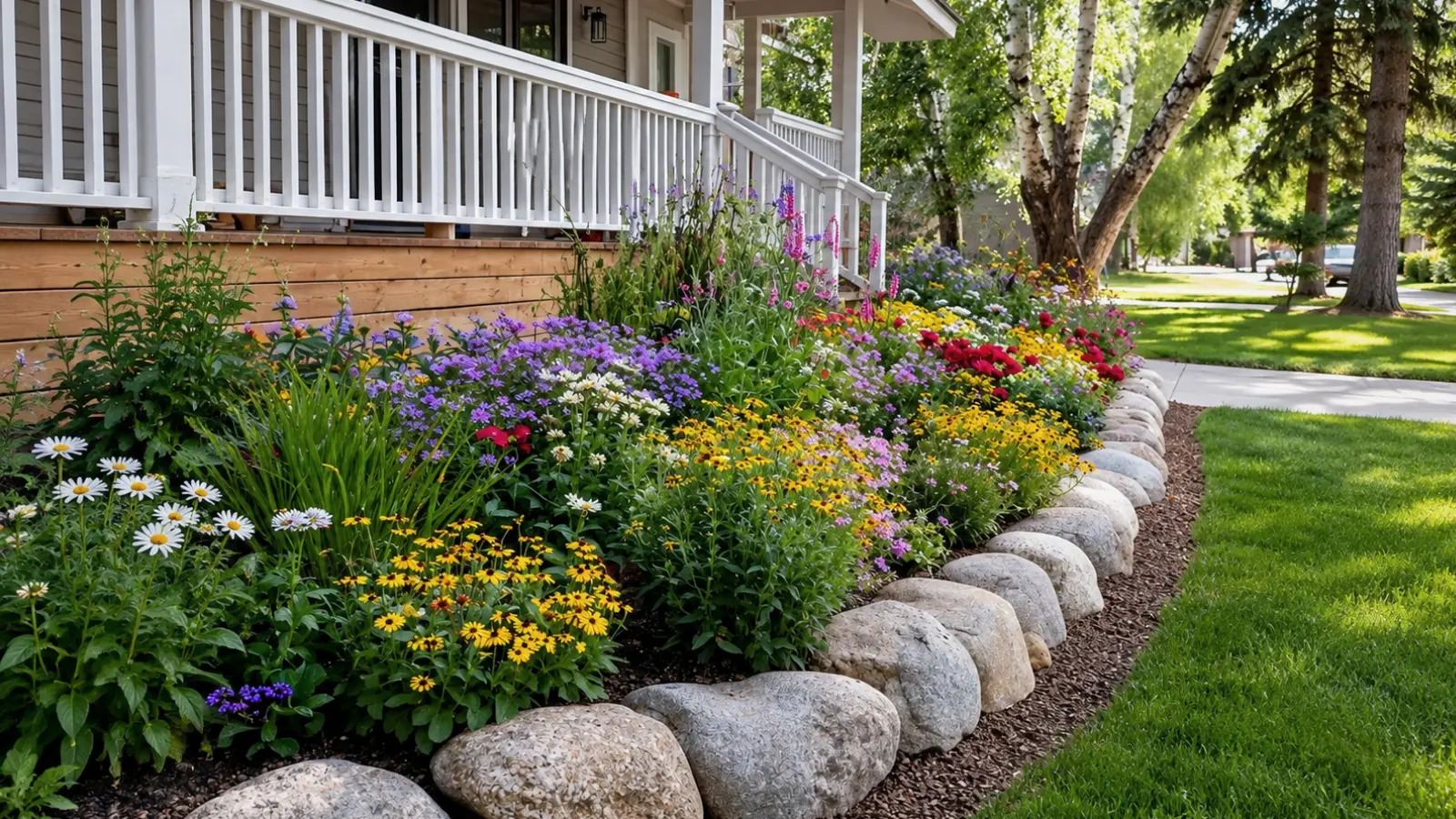
Regional specificity is one of the most important decisions in native garden planning. A plant list from the Pacific Northwest will not translate directly to the Southeast, Great Plains, Southwest or Northeast. Even within a single state, coastal, prairie, mountain, desert, wetland and urban environments support very different plant communities.
A practical starting point is your EPA Level II ecoregion, which gives more ecological precision than a state boundary or a USDA Hardiness Zone alone. The National Wildlife Federation’s Native Plant Finder lets you search by zip code and pulls plant lists grounded in Tallamy’s keystone plant research. The USDA PLANTS Database is another reliable reference for native status by region.
Other useful sources include:
- University Cooperative Extension Services (state-specific, research-based)
- State or regional native plant societies
- Botanical gardens and arboreta with regional programs
- Local conservation organizations and land trusts
- Regional seed banks and reputable native nurseries
- State natural heritage and invasive species programs
Use USDA Hardiness Zone as one filter, but don’t treat it as a complete selection system. Zone ratings describe average winter minimum temperatures and say nothing about summer heat, humidity, soil drainage, rainfall patterns or local habitat relationships. A plant can be zone-hardy and still be a poor ecological fit for the site.
Evaluate Soil, Sun and Moisture
The right native plant in the wrong place can be just as frustrating as any other mismatch. Before purchasing, take the time to evaluate what you’re actually working with on your site.
Sunlight
Observe direct, filtered and indirect light at different times of day. Note how nearby trees change the exposure once they leaf out, and whether buildings or pavement reflect extra heat into the planting area. Light levels in spring can be deceptively generous in a spot that turns to dense shade by summer.
Soil
Check texture, compaction, pH, organic matter content and drainage. A simple soil test from your local Extension service is worth doing before you plant — it costs little and prevents a lot of guesswork. Some native plants are adapted to sandy, rocky or nutrient-poor soils, while others need rich, moist ground. Knowing what you have helps you choose rather than compensate.
Moisture
Walk the property after a rain and identify areas that drain quickly, hold moisture longer or stay soggy. A low spot that stays saturated for days after a heavy storm may be an ideal home for sedges, native irises or swamp milkweed. A sunny upper slope with fast-draining soil calls for drought-tolerant species. Matching plants to existing moisture conditions is one of the most reliable ways to reduce future maintenance.
Microclimate
Wind exposure, reflected heat from walls or pavement, frost pockets, snow accumulation patterns and proximity to impervious surfaces can all create conditions meaningfully different from the broader climate. These small differences often determine whether a plant gets established or repeatedly struggles.
Resist the urge to improve every area toward a single ideal. It’s usually more sustainable — and more interesting — to choose plants that fit the conditions you already have rather than extensively altering soil, drainage and grade to suit a predetermined plant list.
Design With Plant Layers
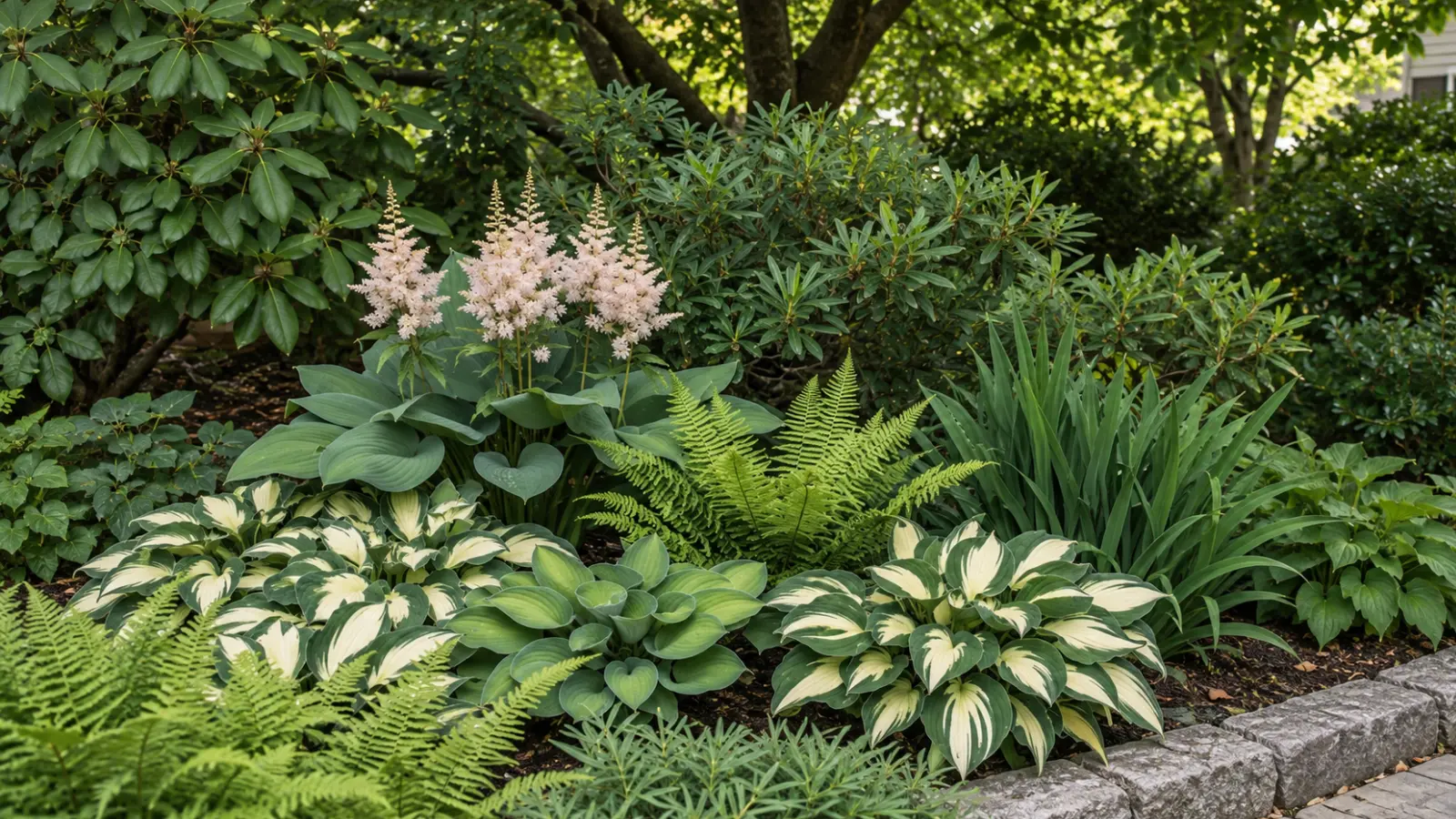
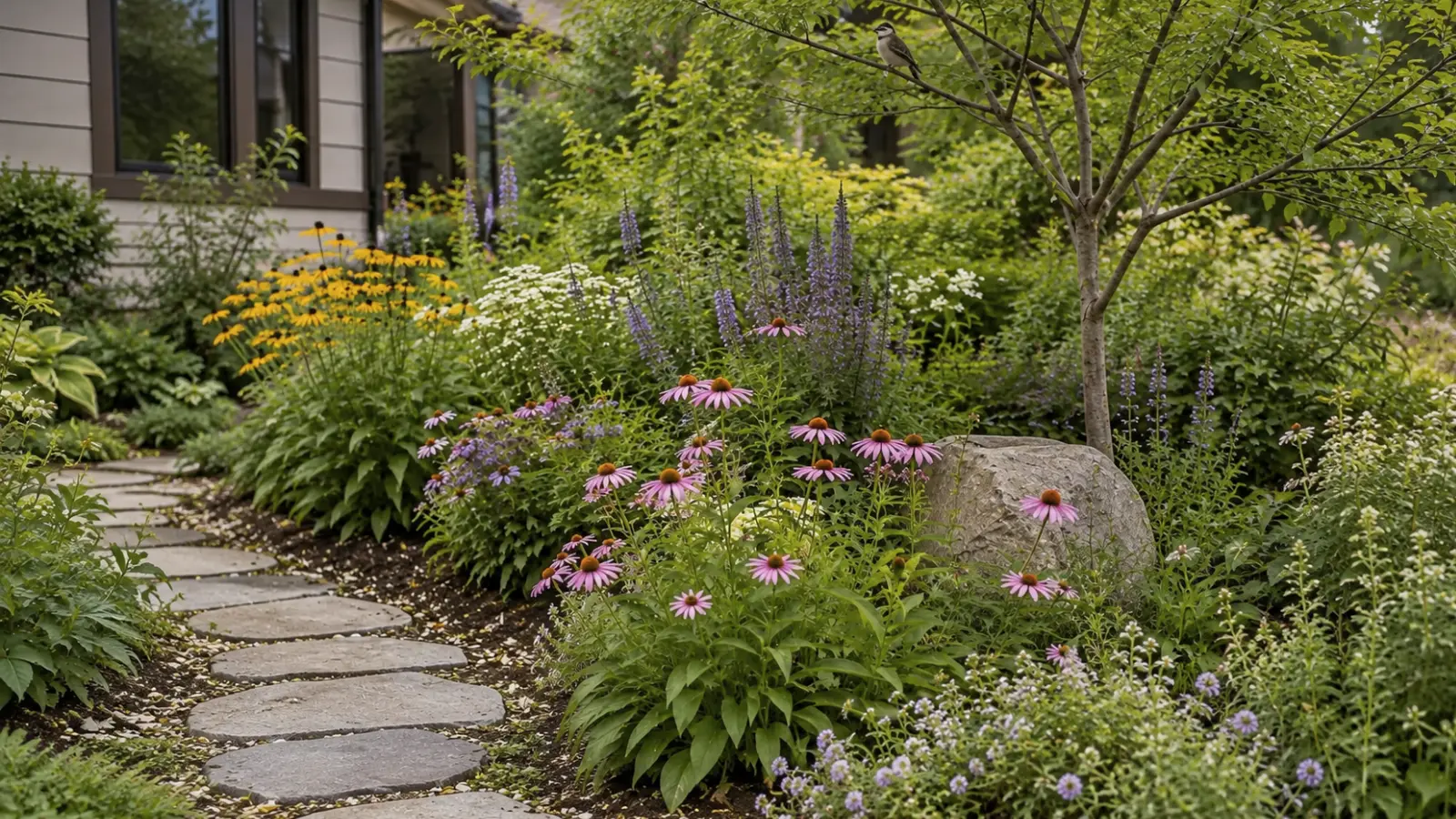
A native garden becomes more ecologically functional and more visually complete when it includes multiple vertical layers. This approach mimics the structure of natural plant communities, which is exactly what the wildlife you’re trying to support has evolved alongside.
Trees
Trees provide canopy, shade, flowers, fruit, seeds, bark and host-plant habitat for hundreds of insect species. Choose them carefully. Their mature size and root spread will shape the garden for decades, and a poorly sited tree can become a maintenance problem rather than an asset. If you have room for only one new plant, a native oak or other regional keystone tree will do more ecological work than any other single choice.
Shrubs
Shrubs create cover, nesting structure and seasonal interest at eye level and below. Fruiting and flowering shrubs — native viburnums, blueberries, native hollies, buttonbush — can support wildlife through multiple seasons while defining spaces and softening edges. They’re also faster to establish than trees, which makes them a good early addition to a new native garden.
Perennials and Grasses
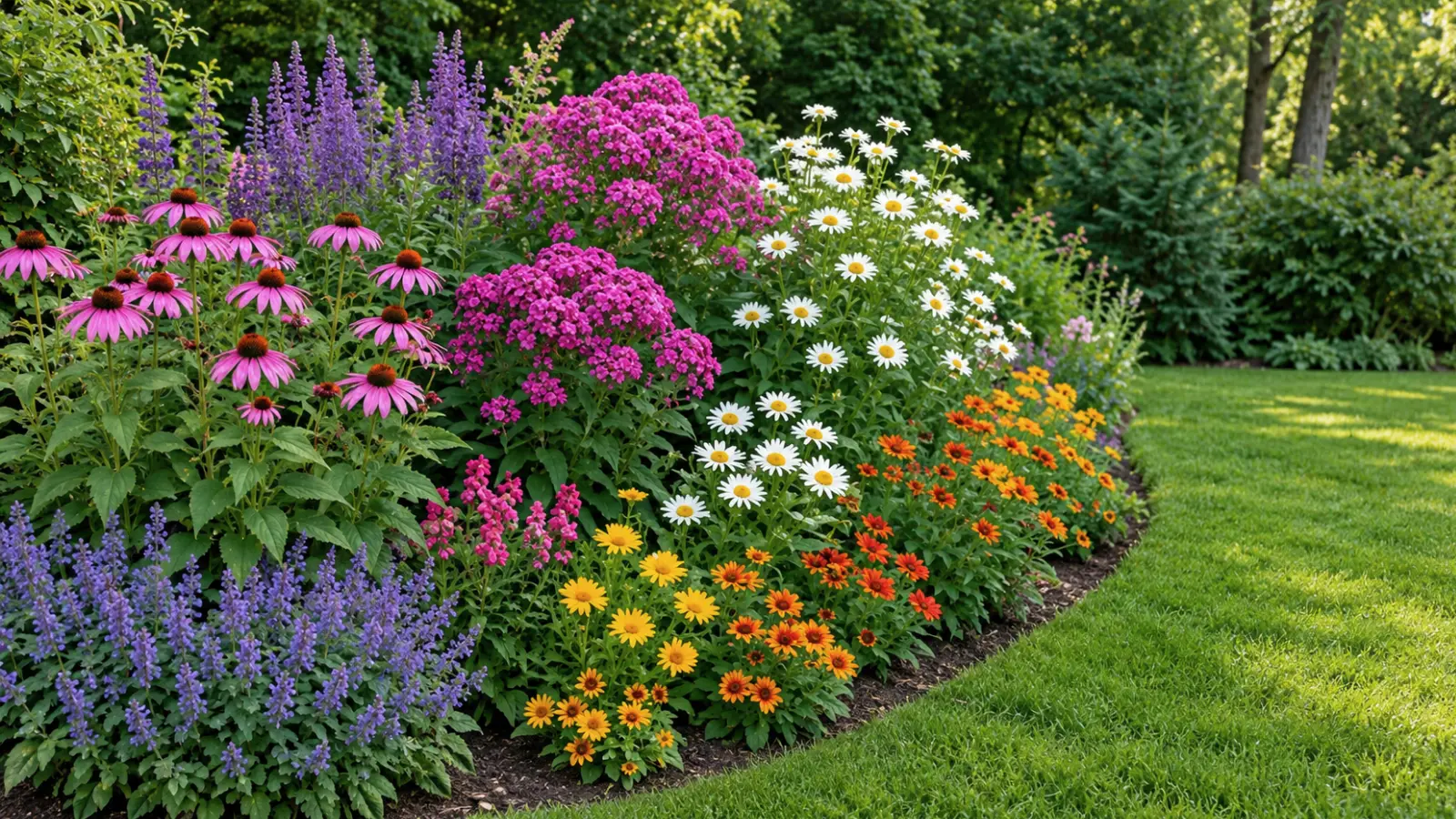
Native perennials, grasses and sedges provide flowers, foliage, seeds and movement through the growing season. Use a mix of heights and bloom times rather than planting a single flat layer of similar plants. Goldenrods and asters, for example, bloom in late summer and fall when little else is in flower and pollinators still need food before winter.
Ground Layer
Low-growing plants, leaf litter, fallen stems and groundcovers protect soil, moderate temperature and provide habitat at ground level. Overwintering insects use dry hollow stems, leaf piles and loose soil — so resist the urge to cut everything down and haul it away in fall. Leave some areas of bare or lightly mulched soil where ground-nesting bees can access the ground.
Layering doesn’t mean crowding. Leave paths, sightlines and enough room for plants to reach their mature size. A dense, unmanageable thicket usually means plants were placed too close together at the start.
Support Wildlife
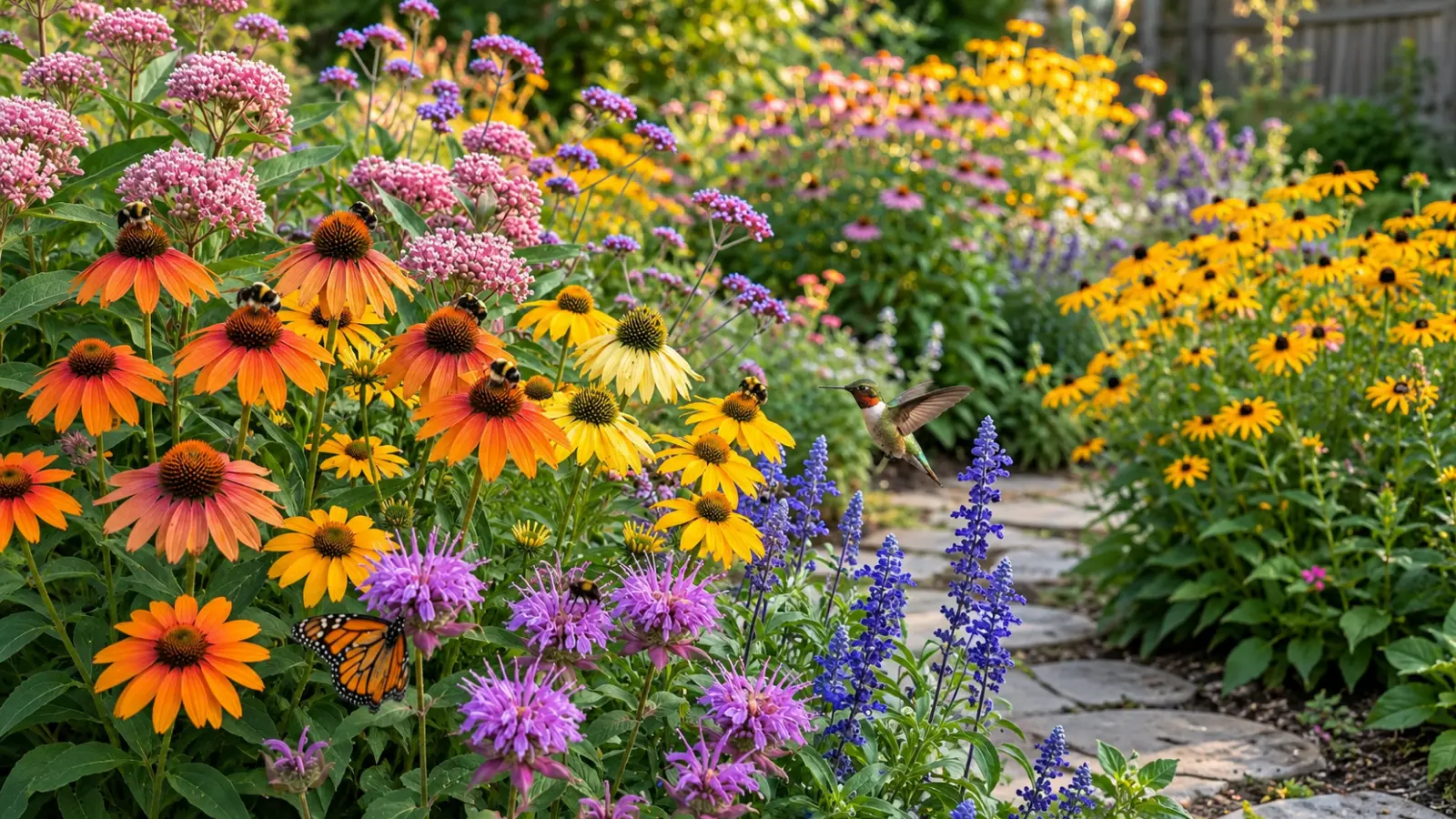
A native garden provides the most wildlife value when it offers resources across multiple seasons, not just a spectacular midsummer bloom.
Flowers provide nectar and pollen in the growing season. Foliage feeds caterpillars and other insects from spring onward. Seeds and fruit carry birds and small mammals through fall and winter. Dense branching and layered stems offer cover throughout the year, while hollow stems, seed heads and leaf litter provide overwintering habitat for insects that return as bird food the following spring.
Building a planting with early, mid and late-season value — from early spring ephemerals through fall-blooming asters and goldenrods — keeps the garden ecologically productive across the whole year, not just for a few weeks.
Don’t treat every insect on a plant as a problem to solve. Caterpillar feeding on leaves is part of the ecological function you’re trying to create. Those caterpillars feed birds. A garden that is always picture-perfect is often doing very little for the wildlife around it.
Clean, shallow water helps. Bird baths, shallow dishes, damp soil near plantings and small water features serve different visitors at different times. Change standing water regularly to prevent mosquito breeding, and avoid directing contaminated runoff into the garden.
Reduce Unnecessary Inputs
Once established, native plant gardens typically need less irrigation, fertilizer and pest control than conventional landscapes. Getting to that point, however, requires real attention during the first one to two growing seasons.
Water newly planted plants consistently until they’re established — which generally means through at least the first full growing season, and often into the second for trees and larger shrubs. Deep, infrequent watering encourages roots to grow downward and outward, which is what allows plants to eventually rely on natural rainfall. Frequent shallow watering keeps roots near the surface and can actually delay establishment.
Mulch with 2 to 3 inches of shredded wood or leaf material to conserve moisture, moderate soil temperature and suppress weeds. Keep mulch several inches away from plant crowns, stems and tree trunks — piling it against woody tissue traps moisture and invites disease and rot.
Fertilize only when a soil test or specific plant symptom calls for it. Native plants adapted to lean, local soils often don’t benefit from extra nutrients — and excess fertilizer can push weak, fast growth, encourage weeds and contribute to runoff.
Use pesticides sparingly and only after confirming there’s an actual problem that warrants treatment. Broad-spectrum insecticides harm beneficial insects, including the very pollinators and caterpillars that give a native garden its ecological value. Spot treatment of specific pests is always preferable to preventive spraying.
Source Plants Responsibly
Where a plant comes from matters. A species grown from local or regional seed may offer different ecological relationships than a plant of unknown origin produced far from its natural range. When possible, look for plants labeled with their seed source or region of origin — some reputable native nurseries provide this information.
Ask nurseries whether their plants are nursery-propagated (not wild-collected), where the seed or parent material came from and whether any species are known to spread aggressively in your area. A good native plant nursery should be able to give you clear botanical names and honest answers about provenance.
Never remove plants from protected land, public parks or natural areas without explicit permission. Wild collection can damage small plant populations and disturb the habitats a native garden is meant to support.
Be cautious with bargain mixes labeled only as “wildflower seed.” Contents may not be native to your region, may include invasive species or may simply be poorly matched to your site conditions. Check the species list before you sow.
Understand Species and Cultivars
A cultivar — sometimes called a “nativar” when derived from a native species — is a plant selected and propagated for specific traits: color, height, disease resistance, bloom form or compact growth. It may still be descended from a native species, but its value to wildlife can vary meaningfully from the original.
Research from Tallamy’s lab and others suggests that cultivars with unchanged foliage color tend to perform more similarly to straight species as larval host plants than those with dark, red or purple leaves — traits that may make the foliage less recognizable or palatable to native insects. Cultivars with double or significantly altered flower forms can block insect access to pollen and nectar. Sterile cultivars produce no seed, which eliminates that food source for birds entirely.
That said, the research is nuanced. Penn State Extension’s Bees, Bugs, and Blooms trials found that straight species were preferred by pollinators in only about half of direct comparisons with cultivars. Some cultivars performed as well as or better than their parent species in attracting certain visitors. Results depend heavily on which traits were altered and how much the cultivar diverges from the wild type.
A practical approach: prioritize straight species — especially keystone genera like oaks, cherries, willows and goldenrods — for the ecological core of the garden. Cultivars can still be useful when they solve a real problem, such as a more manageable size for a small yard or improved disease resistance in a challenging site. The important thing is making an informed choice rather than assuming any plant labeled “native” functions identically to the wild species.
Native Plant Garden Design
Define the Garden’s Purpose
Decide what the space mainly needs to do: support pollinators, attract birds, provide seasonal color, screen a view, control erosion, reduce lawn area or some combination. A clear purpose helps you select the right plant structure and set realistic expectations for maintenance. A garden primarily aimed at supporting caterpillars and birds will look and be managed differently than one focused on spring and summer flowers for a front yard.
Consider Timing
Fall is often the best time to plant native perennials, shrubs and trees in most parts of the country. Warm soil temperatures encourage root growth while cooler air reduces stress. Plants can put their energy into establishing roots before winter, which typically means better vigor and less supplemental watering the following summer. Spring planting works too, but it demands more consistent attention during the first hot season.
Use Repetition
Repeat important plants in groups of three or more rather than scattering one of every species across the property. Grouping improves wildlife value — pollinators move more efficiently between clustered plants — and gives the garden a sense of rhythm and intention that reads as designed rather than random.
Create a Managed Edge
A mown path, low border, defined edging or clear transition between the native planting and the surrounding lawn or hardscape makes a naturalistic design read as intentional rather than neglected. This matters practically too: clean edges tend to reduce neighbor concerns and make the garden easier to maintain over time.
Plan Mature Size
Research mature height, spread, root behavior and spreading habit before you plant. A shrub that looks contained in a one-gallon nursery pot may reach 10 feet in five years. A native grass that self-seeds generously in a meadow may become a management challenge in a small urban bed. Placement decisions made at planting time are much easier to get right than corrections made after the fact.
Leave Room for Change
Native gardens evolve as plants mature, reseed and respond to weather. Design with some flexibility built in. Leave space for observation and adjustment in the first few seasons rather than trying to lock in every square foot from the start.
Maintenance
The first year or two involves the most active care: establishment watering, consistent weed control and regular observation. Young native plants may look like they’re doing nothing above ground while their root systems are quietly developing — this is normal, and it’s the work that makes the garden low-maintenance later.
Weed control is especially important in the first season. Invasive and aggressive weeds can overtake newly planted natives before they have a chance to fill in. Remove weeds before they set seed, and prioritize areas where new plantings are most vulnerable. A layer of mulch helps, but it doesn’t eliminate the need for hand-weeding.
In fall and winter, resist the habit of cutting everything down at once. Leave selected stems, seed heads and leaf litter in place where they provide shelter and food. Many native bees overwinter in hollow or pithy stems; others need leaf litter for protection. Clear paths, drains and safety areas, but treat the dormant garden as habitat rather than waste.
Prune shrubs according to their growth habit and the timing of their flowering. Cutting a spring-blooming shrub in early spring removes the season’s flower buds, and pruning fruiting shrubs in summer takes away the berries that birds need in fall. When in doubt, prune just after flowering — or skip the pruning if the plant doesn’t actually need it.
Native vs. Naturalized
Native plants occur naturally in a region as part of its ecological history. Naturalized plants are non-native species that have been introduced from elsewhere and now reproduce outside cultivation — sometimes quietly, sometimes invasively.
Naturalized doesn’t mean native, and it doesn’t automatically mean ecologically beneficial. Some naturalized plants provide limited nectar or fruit, but they may also compete with native plants for space and resources, alter soil chemistry or displace the species that local insects and birds have evolved to rely on.
Evaluate naturalized species individually, especially near wetlands, woodlands, prairies and waterways where they can spread most easily. A native garden should prioritize local ecological relationships and avoid introducing plants known to spread harmfully in your region — regardless of what the nursery tag says.
Let Ecological Fit Guide the Design
A successful native plant garden begins with plants that belong to the region and conditions of the site, not with a generic list of species labeled “native.” Light, soil, moisture, climate, mature size and ecological function should guide every major planting decision.
Build the garden in layers, repeat plants with purpose and allow the planting to mature over time. When regional fit and intentional design work together, a native garden can support wildlife, reduce unnecessary inputs and still feel structured, attractive and practical for everyday use.
COMMON QUESTIONS
Before you begin.
What is a native plant garden?
A native plant garden is designed primarily with plants that naturally belong to the local region and are suited to its climate, soils and ecological relationships. It can be formal or naturalistic and may include native trees, shrubs, grasses, sedges, ferns, vines, annuals and perennials. The goal is to combine regional ecological value with plants that genuinely fit the conditions of the site.
How do you choose native plants for your garden?
Start with your region or ecoregion, then narrow the options according to sunlight, soil, moisture, drainage and available space. Use reliable regional resources such as Cooperative Extension Services, native plant societies and established native-plant databases rather than relying only on a nursery’s “native” label. Also check mature size, spreading behavior and whether the plant was responsibly propagated.
What are the benefits of planting a native plant garden?
Native plants can provide nectar, pollen, caterpillar host foliage, seeds, fruit and shelter for wildlife that has evolved alongside them. When well matched to the site, they may also require less supplemental irrigation, fertilizer and pest control after establishment. Their greatest value comes from ecological fit rather than simply from being labeled native somewhere in the United States.
How do you design a native plant garden?
Begin with the site’s existing light, moisture, soil and space, then build the planting in layers using appropriate trees, shrubs, perennials, grasses, sedges and groundcovers. Repeat key plants in groups, include resources across different seasons and leave enough room for mature growth. Defined paths or edges can keep a naturalistic planting looking intentional while preserving its habitat value.
Are native plants low maintenance?
They can become relatively low maintenance once established when they are correctly matched to the site, but they are not maintenance-free. New plants usually need consistent watering and weed control during their first growing season or two, and some native species spread vigorously or have very specific soil and moisture requirements. Good plant selection is what reduces long-term maintenance.
Are native plant cultivars as good as straight species?
It depends on which traits were changed. Cultivars with open flowers and foliage similar to the straight species may retain substantial wildlife value, while double flowers, sterile selections or dramatically altered leaf colors can reduce particular ecological functions. When supporting wildlife is the main goal, straight species are a strong default, especially for important keystone plants.