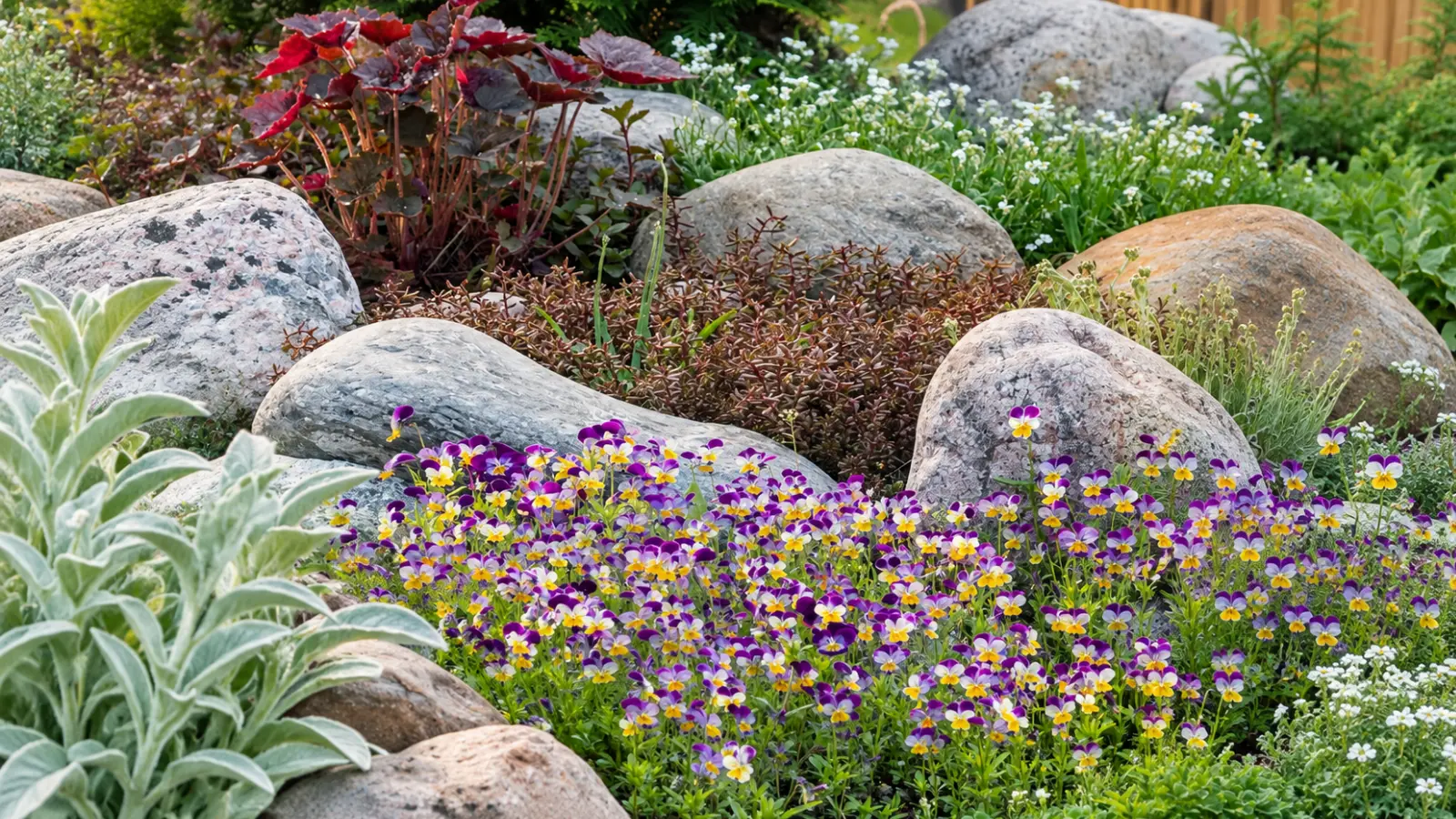
A rock garden combines stone, sharply drained growing areas and plants adapted to rocky, exposed or dry conditions. The most successful designs treat the rocks as part of the garden’s structure, shaping drainage, scale, microclimates and planting spaces rather than using them as decoration around an ordinary flower bed.
Rock gardens can take many forms, from an alpine-inspired slope or crevice garden to a dry-climate planting, raised bed, courtyard feature or small container garden. What connects them is the relationship between the stone, soil depth, drainage and plants chosen for the site.
This guide explains how to design and build a rock garden, including how to choose the site, plan drainage, arrange rocks naturally, create suitable soil pockets, work with slopes and small spaces, select an alpine or dry-climate approach and maintain the garden after planting.
What Is a Rock Garden?
A rock garden is a planted landscape that uses stone and open, well-drained growing spaces as essential design elements. The plants may include alpines, succulents, drought-tolerant perennials, small bulbs, compact shrubs, or native species adapted to rocky habitats. Common choices for American gardens include sedums, sempervivums, creeping thyme, alpine phlox, and dwarf conifers — plants that thrive with sharp drainage and don’t mind exposed conditions.
There is no single rock garden appearance. One may look like a miniature mountain slope, another like a dry-climate planting, and another like a natural outcrop along a woodland edge. What connects them is the relationship between rock, drainage, soil depth, and plant scale.
A related style worth knowing: the crevice garden, which has gained a significant following in the U.S. since Kenton Seth and Paul Spriggs published their influential guide The Crevice Garden in 2022. It focuses specifically on growing plants between closely set vertical stone slabs, mimicking the conditions of rocky outcrops and making it possible to grow fussy alpine plants that struggle in typical garden soil. A crevice garden is a specialized subset of rock gardening, not a separate category entirely.
The phrase garden rocks often refers to stone sold as a landscape material — that’s a commercial product search rather than a complete garden type. A rock garden is the designed space created with those materials, plants, and growing conditions.
Choose the Right Site
Most rock garden plants need strong light and excellent drainage, so an open, sunny spot is usually the easiest place to start. Some rock plants tolerate partial shade when the soil and moisture are right, but avoid planting directly beneath overhanging trees. Leaf drop smothers low-growing alpines, and tree roots compete aggressively for water and nutrients.
Observe the site before moving a single stone. Note the hours of direct sun, wind exposure, existing drainage, and how water moves across the ground during heavy rain. A location that stays wet after storms may require raised construction or a different plant community entirely — no amount of well-placed stone will fix a genuinely waterlogged site.
A spot beside a wall, path, or patio can work well because stone reflects heat and creates a defined edge. That same reflected heat can stress plants in hot climates, though, so choose species suited to the actual microclimate rather than assuming every sunny stone bed will stay cool and dry.
Before you start hauling stone, also check for underground utility lines, proximity to foundations, and future mowing routes. Moving large rocks after construction is hard, expensive, and occasionally dangerous.
Plan for Drainage
Drainage is the non-negotiable requirement for most rock gardens. Many alpine and dry-climate plants are damaged not by cold or drought, but by persistently wet roots — especially during winter. A plant that thrives on a rocky mountain slope can struggle quickly when planted in compacted or poorly drained soil in a humid climate.
Use a site that drains naturally, or create a raised bed, berm, or sloping planting area so excess water can move away from the root zone. Where soil is heavy or compacted, address the drainage problem throughout the rooting profile rather than placing a separate layer of rubble, broken brick, or gravel beneath finer soil. Abrupt changes in soil texture can slow water movement and cause moisture to accumulate above the coarser layer rather than improving drainage.
A simple drainage test can help you evaluate the site before construction. Dig a hole about 12 inches deep, saturate the surrounding soil by filling the hole and allowing it to drain, then refill it and observe how readily the water moves away. There is no universal one-hour cutoff for every rock garden or soil type. More important is whether the site drains steadily and avoids prolonged saturation after rain. If water remains for extended periods or the area routinely stays waterlogged after storms, improve grading, raise the planting area, address compaction, or choose plants that genuinely tolerate those conditions.
Don’t build a rock garden into a low, persistently wet pocket and expect the stone itself to solve the drainage problem.
Match the Scale
Stone sets the visual scale of a rock garden. Small alpine plants can disappear beside oversized boulders, while tiny pebbles look scattered and disconnected in a large yard. Finding the right proportion takes some thought before you start hauling material.
Choose a limited range of rock sizes — a few larger anchor stones, some medium pieces, and smaller stones that connect the planting pockets. Using rocks in odd-numbered groups (three, five, seven) tends to read more naturally than even groupings, which can look symmetrical and planted. Repetition of the same stone type and a consistent color palette creates coherence; mixing too many unrelated textures makes the garden look assembled rather than geological.
Consider how the arrangement will look once plants mature. Leave enough room for roots and spread, but avoid creating isolated gaps too narrow to maintain — they’ll fill with weeds before they fill with plants.
Place Rocks Naturally
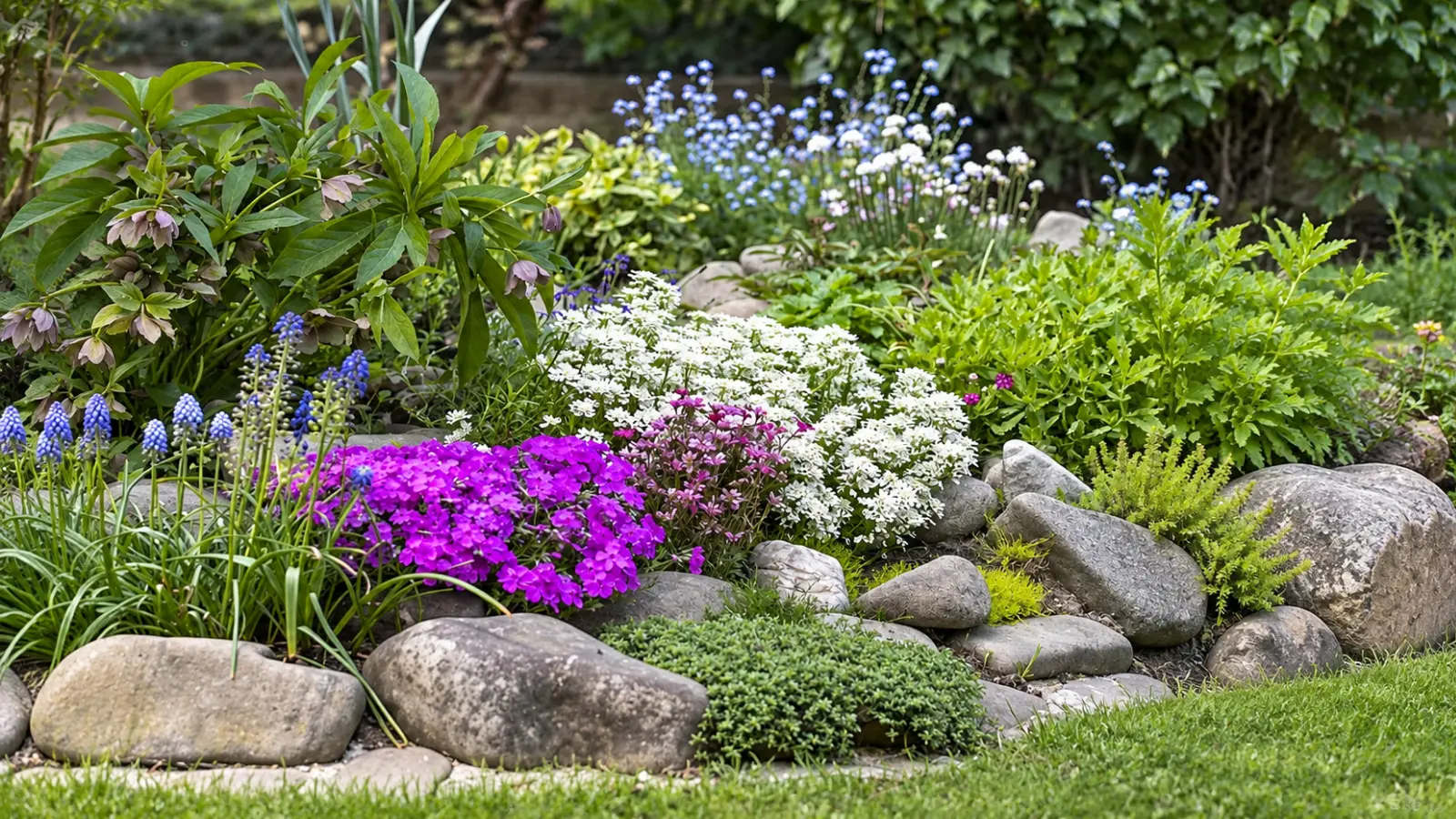
Naturalistic rock placement is based on how stone actually appears in the landscape. Rocks should feel embedded rather than set on top of the soil like ornaments on a shelf.
Set Stones Into the Ground
Bury roughly one-third of each large stone so the visible portion appears to emerge from the earth. This improves stability, reduces the chance that stones will shift after heavy rain or frost heave, and creates the illusion that the rock has been there for decades rather than a weekend.
Repeat the Same Orientation
If the stones have visible layers, seams, or long edges, orient several pieces in a related direction. Geological strata run consistently through a landscape — repeating that angle makes the grouping more believable and gives the garden a sense of underlying structure.
Vary the Spacing
Leave some narrow crevices and some broader planting pockets. Identical spacing looks artificial, while varied openings provide different microclimates — the narrow gaps stay cooler and moister, the wider pockets warm and dry faster. Different plants will find their preferred spot in that range.
Use Groups Instead of Isolated Pieces
Several related stones usually look more natural than individual rocks scattered evenly across a bed. Build one or two clear compositions with a visual center and quieter areas around them. Resist the urge to cover every inch of soil — the open planting areas, rock faces, and negative space work together as part of the design.
Create Soil Pockets
The soil pockets between and beside the stones are where the garden actually grows. Getting the mix right matters more than most rock garden guides let on, and the right mix depends on what you’re planting.
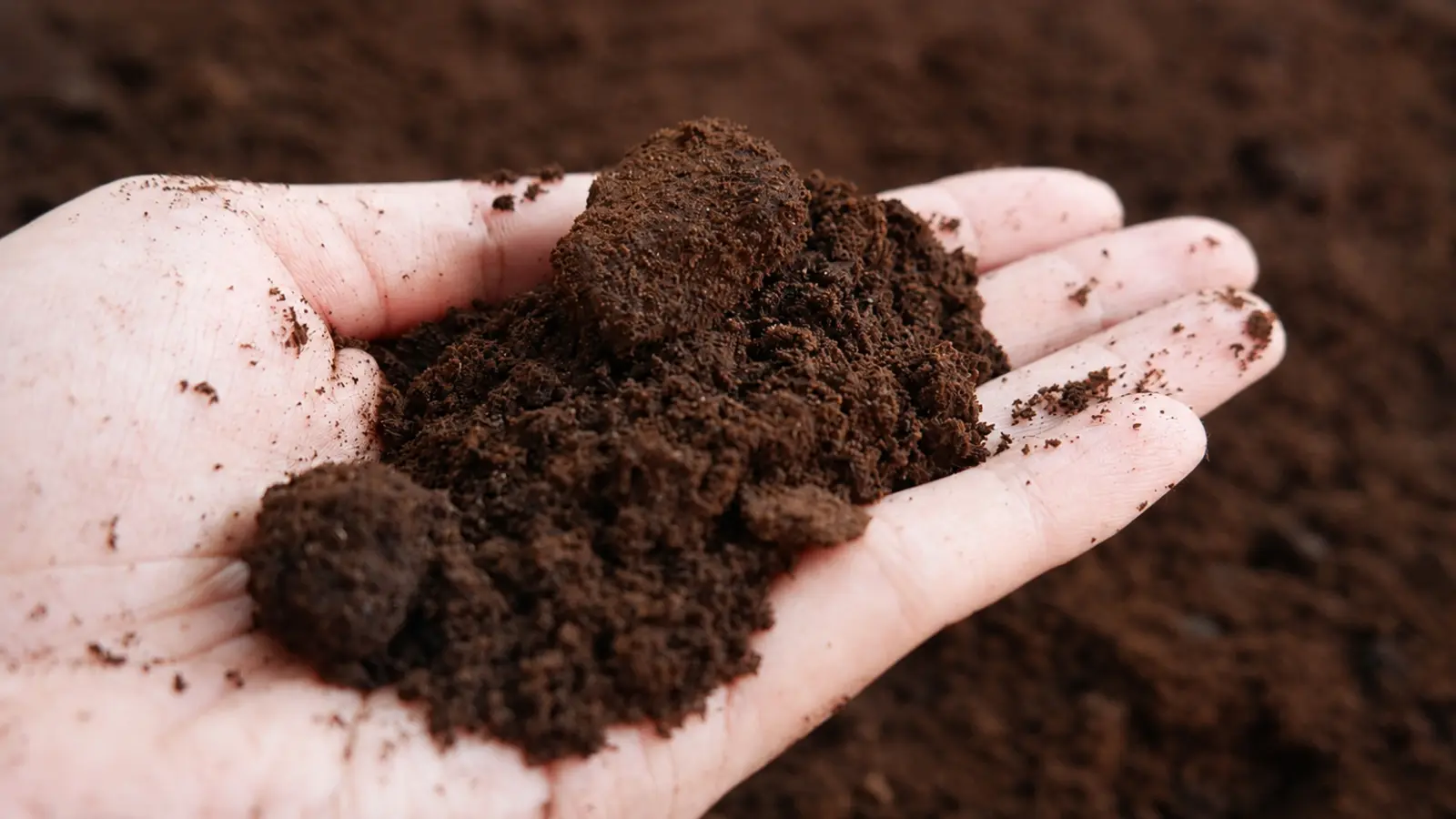
For alpine plants and other sharply drained species, a standard starting point is equal parts quality topsoil or loam, coarse horticultural grit (not fine masonry sand, which compacts), and composted bark or leaf mold. This drains freely, supports root penetration, and provides just enough organic matter without holding the moisture that kills most alpines. Richer soil — the kind you’d use for a vegetable garden — is wrong for most rock garden plants. It encourages weak, soft growth that doesn’t survive exposed conditions well.
For dry-climate plants and succulents, lean the mix further toward the mineral side, reducing organic matter and increasing the grit or coarse gravel fraction. For native plants that prefer more organic matter, adjust accordingly. There is no single formula that works for every plant in every region — the mix should follow the plants you’re actually growing.
Fill pockets as stones are placed rather than trying to push soil into tight gaps after construction. After planting, apply a 1- to 2-inch layer of fine grit or pea gravel as a top-dressing around each plant’s base. This improves drainage directly at the crown, reduces splash-back that spreads fungal disease, and suppresses small weed seedlings in the immediate planting area.
Keep the crown of each plant at the right height. Burying it in wet soil invites rot; planting too high leaves roots exposed and lets erosion undercut the base.
Rock Gardens on Slopes
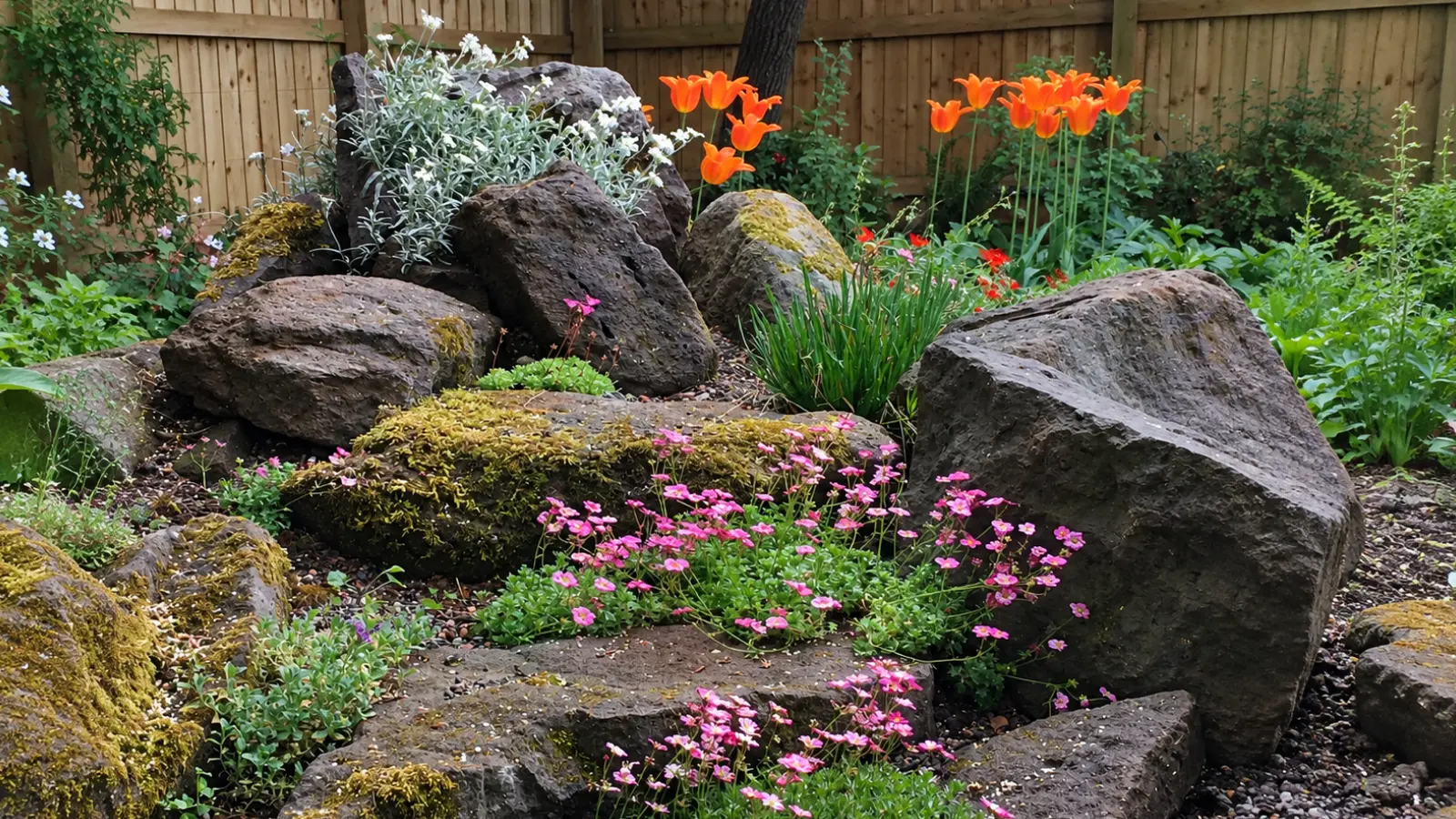
A slope can be one of the best settings for a rock garden. The grade naturally improves drainage, creates visual depth, and produces the kind of layered composition that flat ground can’t replicate. That same slope also increases the need for erosion control and stable construction.
Place larger stones across the slope — or partially into it — so they interrupt water movement and create natural planting shelves. Start at the bottom of the slope with your largest anchor stones and work upward, using the keystones to visually draw the eye up the grade. Avoid building unstable walls from loosely stacked stone; if a terrace is necessary, it should be solid enough to stand without shifting after rain.
Watch the site during heavy rain before you finalize the design. Water should move through the garden without washing away soil, mulch, or small stones. Use deep-rooted plants suited to the slope conditions, and don’t leave large areas of bare soil while the garden establishes — those gaps will fill with weeds faster than with your intended plants.
Alpine vs. Dry-Climate Looks
Alpine Rock Garden
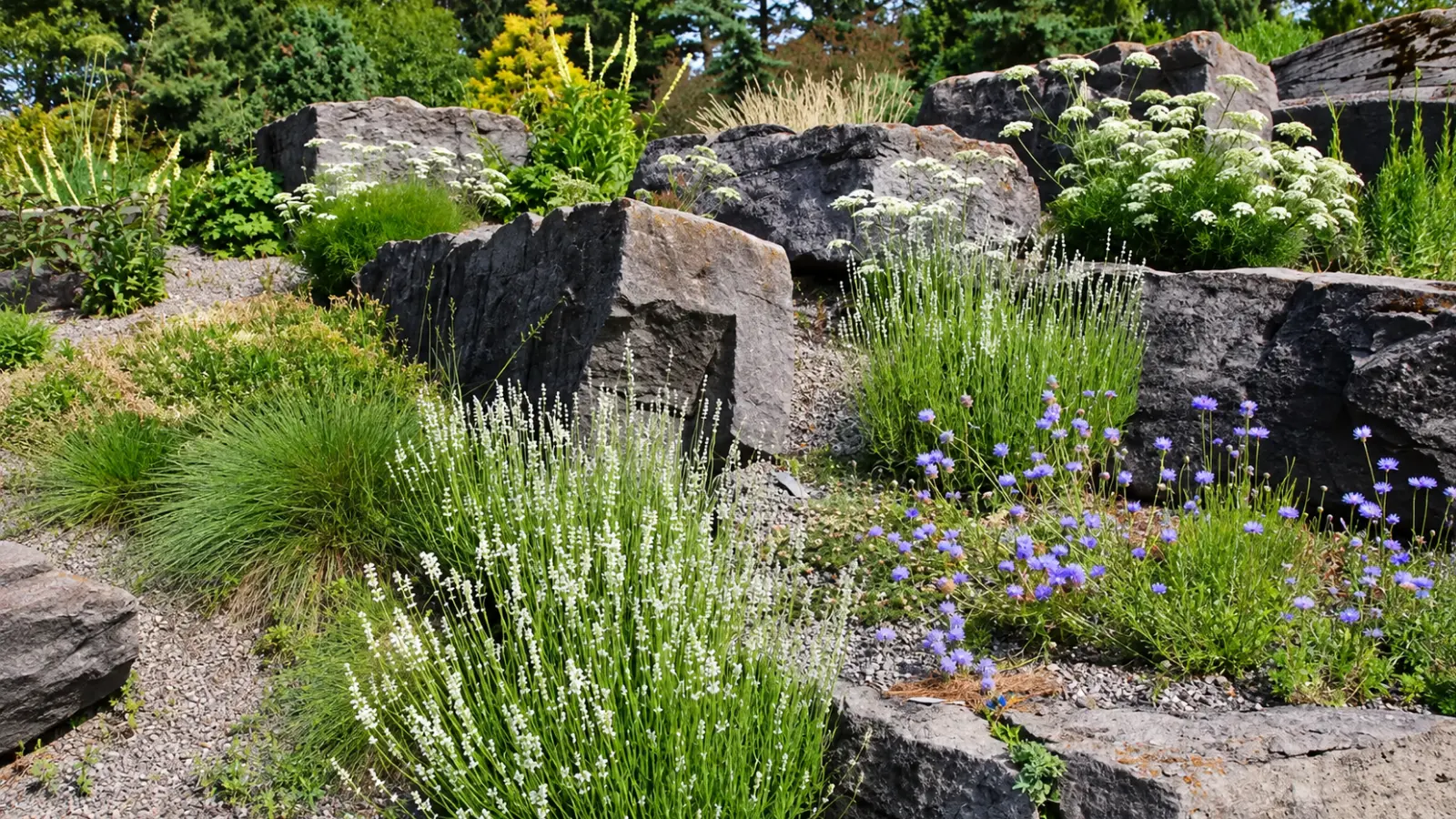
An alpine rock garden suggests mountain habitats — small, slow-growing plants tucked into crevices and mineral soil, with an overall feeling of windswept restraint. It may include cushion-forming perennials, low bulbs, saxifrages, creeping phlox, sedums, and sempervivums selected for the local climate. The aesthetic is tight, textural, and geological.
Alpine plants can have specific needs around drainage, temperature ranges, summer heat, and protection from standing water in winter. A plant described as “alpine” may perform beautifully in the Pacific Northwest and struggle in a hot, humid Mid-Atlantic summer — always verify the plant’s actual USDA hardiness zone range and heat tolerance before buying based on aesthetic alone.
Dry-Climate Rock Garden
A dry-climate rock garden uses stone, gravel, and plants that tolerate heat, sun, and limited irrigation after establishment. Depending on region, this might include native drought-tolerant perennials, ornamental grasses, agaves, yuccas, hesperaloe, cacti, or salvias — plants that look at home among stone without requiring the cool mountain conditions many true alpine species prefer. Alpine plants vary widely, but many tolerate cold while remaining highly sensitive to excessive winter moisture, making excellent drainage just as important as winter hardiness.
Don’t assume every succulent belongs outdoors in every dry-climate design. Winter temperatures, summer humidity, rainfall patterns, and drainage all determine whether a plant survives. A tender agave that thrives in Phoenix may not make it through a wet Tennessee winter, even if the summer conditions look similar.
Small Rock Gardens
A small rock garden can be created in a raised trough, hypertufa container, narrow border, courtyard, or section of a retaining wall. The principles don’t change at a smaller scale — drainage, stone proportion, soil pockets, and compatible plant choices all still apply.
Use fewer rocks and repeat them rather than filling a small container with many unrelated pieces. Choose plants that will stay proportional to the vessel over time, not just at planting. Leave enough space for airflow — small containers with tight plantings are prone to crown rot and fungal issues, especially in humid climates.
Containers dry out faster than ground beds, particularly when surrounded by stone. Check moisture more often during establishment. In cold climates, protect porous containers like hypertufa from repeated hard freezing and thawing — the freeze-thaw cycle can crack them even when the plants inside are perfectly cold-hardy.
Rock Gardens vs. Japanese Rock Gardens
A general rock garden is a horticultural planting style centered on stone, drainage, and plants adapted to rocky conditions. Its appearance may be alpine, naturalistic, contemporary, or dry-climate.
A Japanese rock garden — often associated with the karesansui tradition — is a specific cultural and design practice. It may use rocks, raked gravel patterns, empty space, and carefully controlled composition, sometimes with little or no plant material at all. The purpose is contemplative and aesthetic, rooted in principles of Zen Buddhism, not horticulture.
The two can overlap in their use of stone, but they don’t share the same purpose or visual language. A plant-filled alpine slope isn’t a Japanese rock garden simply because it contains stone, and a minimalist gravel composition with raked patterns shouldn’t be treated as an ordinary rock garden just because it doesn’t have grass. Using the terms interchangeably flattens a meaningful distinction.
How to Build a Rock Garden
A practical construction sequence keeps the project manageable and avoids the most common mistakes — particularly buying plants before the stone is placed and the available pockets are visible.
- Observe sunlight, slope, wind, and drainage at the proposed site over at least one rain event.
- Remove all perennial weeds, turf, and unwanted roots thoroughly. Bindweed or ground elder left in the soil will be nearly impossible to remove once rocks are in place.
- Test drainage and determine whether the site needs grading, raising, or a rubble base layer.
- Mark the outline and decide where the main stone groups will sit.
- Place the largest stones first, burying about one-third of their bulk for stability. Start at the base of any slope and work upward.
- Add medium stones and create varied crevices and planting pockets with intentional orientation and spacing.
- Prepare a soil mix suited to the selected plants — lean and gritty for alpines, more organic for natives that prefer richer conditions.
- Install plants while the soil and stones are accessible, firming the growing medium around each root ball.
- Apply a top-dressing of fine grit or pea gravel around plant crowns without burying them.
- Water thoroughly and inspect the garden after the first heavy rain — reposition anything that shifts and fill any eroded areas before they become bigger problems.
Build the structure before buying every plant. The final stone arrangement determines the available pockets, light conditions, and scale — the plant list should follow the garden, not precede it.
Rock Garden Maintenance
Rock gardens are often sold as low-maintenance, which is true relative to a vegetable garden but misleading as a category. They need consistent attention, particularly in the first two years and whenever the garden is open enough for weeds to establish.
Weeds are the most persistent challenge. They establish quickly in open soil pockets, and small seedlings are genuinely difficult to remove once roots grow around stones. Pull them while they’re small. Remove leaves and debris that settle into crevices before they decompose into a seedbed — that layer of organic matter is exactly what weed seeds need to germinate. A proper grit top-dressing helps, but it doesn’t eliminate the problem entirely.
Water new plants during establishment even when they are drought-tolerant species. Once established, adjust irrigation to the specific plants and local conditions rather than following a fixed schedule.
After freeze-thaw cycles and heavy rain, walk the garden and check stone stability. Reposition anything that has shifted, replace eroded soil, and repair runoff channels before small problems become structural ones. This is especially important in the first winter.
Resist heavy fertilizing. Most rock garden plants evolved in nutrient-poor soils — excess fertility encourages lush, soft growth that’s more susceptible to disease and winter damage, and it pushes compact plants to grow larger than the space allows. Remove dead foliage when it’s creating rot or disease pressure, but leave winter structure and seed heads when they provide habitat or visual interest through the cold months.
Build the Structure Before Choosing the Details
A successful rock garden begins with structure. Good drainage, correctly scaled stone, stable placement and suitable growing pockets create the conditions that allow the plants to look as though they naturally belong among the rocks.
Build that framework first and let the final plant selection respond to the spaces it creates. Whether the garden becomes alpine, dry-climate or something more naturalistic, restraint and compatibility will produce a stronger result than simply adding more rocks or more plants.
COMMON QUESTIONS
Before you begin.
What is a rock garden?
A rock garden is a planted landscape that uses stone, well-drained soil and plants adapted to rocky, exposed or dry conditions as part of one integrated design. It may resemble an alpine slope, dry-climate planting, natural outcrop or compact courtyard garden. The rocks are structural elements that influence drainage, soil depth, microclimate and plant placement rather than simply serving as decoration.
How do you make a rock garden?
Start with a sunny, well-drained site and remove perennial weeds before placing any stone. Install the largest rocks first, burying roughly one-third of each for stability, then add smaller stones to form natural-looking crevices and planting pockets. Fill those pockets with soil suited to the selected plants, plant after the rock structure is established and finish with a thin layer of grit or fine gravel around plant crowns.
What plants grow best in a rock garden?
The best plants are compact species that suit the garden’s drainage, sunlight, climate and available soil depth. Depending on the region and design, choices may include sedums, sempervivums, creeping phlox, creeping thyme, alpine perennials, small bulbs, dwarf conifers, ornamental grasses and drought-tolerant native plants. Always consider winter moisture, summer heat and humidity as well as USDA Hardiness Zone.
What soil is best for a rock garden?
Most alpine and sharply drained rock garden plants need a lean, fast-draining growing medium rather than rich garden soil. A practical starting mix is approximately equal parts loam or quality topsoil, coarse horticultural grit and composted bark or leaf mold, with an even higher mineral content for succulents and dry-climate plants. Adjust the mix to the species being grown rather than using one formula throughout every rock garden.
Does a rock garden need good drainage?
Yes. Excellent drainage is one of the most important requirements for most alpine, succulent and drought-tolerant rock garden plants, especially during wet winters. If the site stays waterlogged, correct grading or compaction problems, raise the planting area or choose plants that tolerate the existing conditions rather than assuming rocks alone will improve drainage.
Can you build a rock garden on a slope?
Yes, and slopes can be especially effective because they naturally improve drainage and create opportunities for layered planting. Set larger stones securely into the slope to form stable planting pockets and interrupt runoff, then use suitable plants to help hold soil in place. The finished design should allow water to move through without washing away soil, gravel or plants during heavy rain.