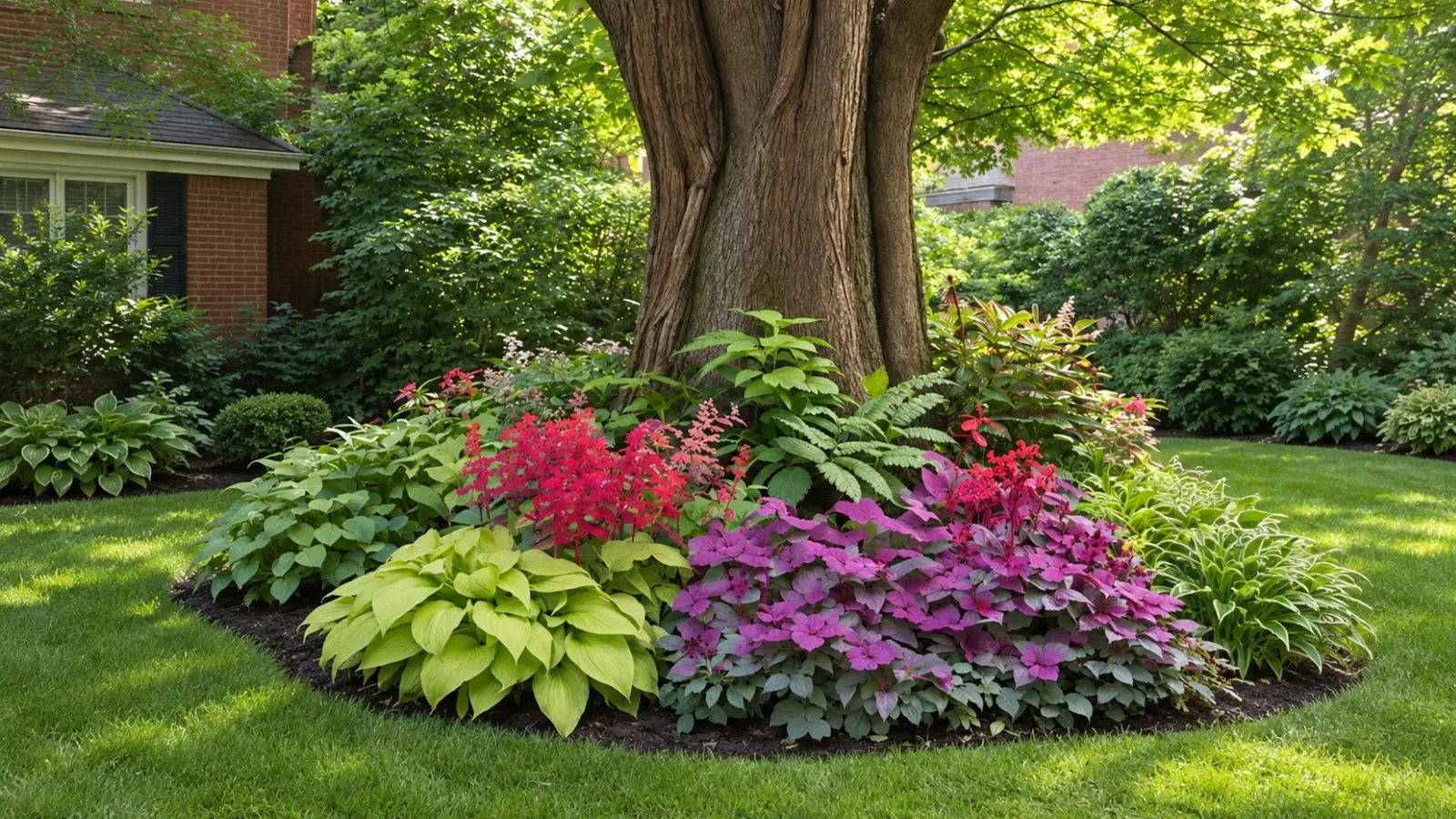
A woodland garden recreates the layered character of a forest edge or understory by combining trees, shrubs, perennials, ferns and groundcovers beneath filtered or dappled light. Its success depends less on filling a shady space with plants and more on creating relationships between canopy, understory, ground layer and the changing conditions below them.
Those conditions are not always moist. Established tree roots can create surprisingly dry soil, while other woodland sites remain cool and consistently damp. Light also changes through the seasons, especially beneath deciduous trees, making site observation essential before choosing plants.
This guide explains how to design a woodland garden, including how to read dappled light, build planting layers, work carefully around existing tree roots, choose plants for dry or moist woodland conditions, use spring ephemerals, create naturalistic groupings and paths, and maintain the garden without removing the features that give it its woodland character.
What Is a Woodland Garden?
A woodland garden is a cultivated landscape inspired by the structure of a woodland. It does not need to be a literal forest, and it does not require a large property. A small courtyard beneath a single deciduous tree can apply the same principles on a reduced scale.
The defining feature is the relationship between layers and light. Taller plants create filtered shade, mid-height shrubs provide enclosure and a sense of depth, and low plants occupy the forest-floor level. The composition typically includes natural materials, irregular groupings and plants chosen to offer something at different points in the season.
A woodland garden is not the same as a general shade garden. Shade gardens can include plants from many habitats and may be arranged in a more conventional border. A woodland garden specifically draws from forest-edge conditions: layered structure, leaf litter, understory character and plants adapted to that particular light and soil environment.
Understand Dappled Light and Shade
Light in a woodland garden is rarely fixed. It shifts with the seasons, with the angle of the sun and with the density of the canopy overhead. Understanding this before you plant can save a lot of corrective work later.
Dappled Shade
Dappled shade consists of shifting patches of sunlight passing through leaves and branches. Many woodland plants — including most spring ephemerals, native ferns and flowering understory species — are well suited to this pattern, particularly when the soil holds some moisture without remaining waterlogged.
Dry Shade
Shade beneath established trees is often surprisingly dry. Mature roots compete aggressively for available water, and a dense canopy intercepts a significant portion of rainfall before it reaches the ground. This is one of the most common mismatches in a woodland garden: people assume a shady site is moist, choose moisture-loving plants and wonder why they fail. Choose plants that genuinely tolerate dry shade, water new plantings consistently during establishment and don’t skip this check before buying.
Deep or Full Shade
Some spaces receive little direct light — under dense evergreen branches, against a north-facing wall or between buildings. Flowering may be limited there, which means foliage texture, evergreen structure and subtle variation in leaf form and color become the main design tools.
Observe the site across multiple seasons when possible. A spot that looks like full shade in March may receive several hours of direct sun before a deciduous canopy fully leafs out in late spring — valuable light that spring ephemerals, in particular, depend on.
Build the Woodland Layers
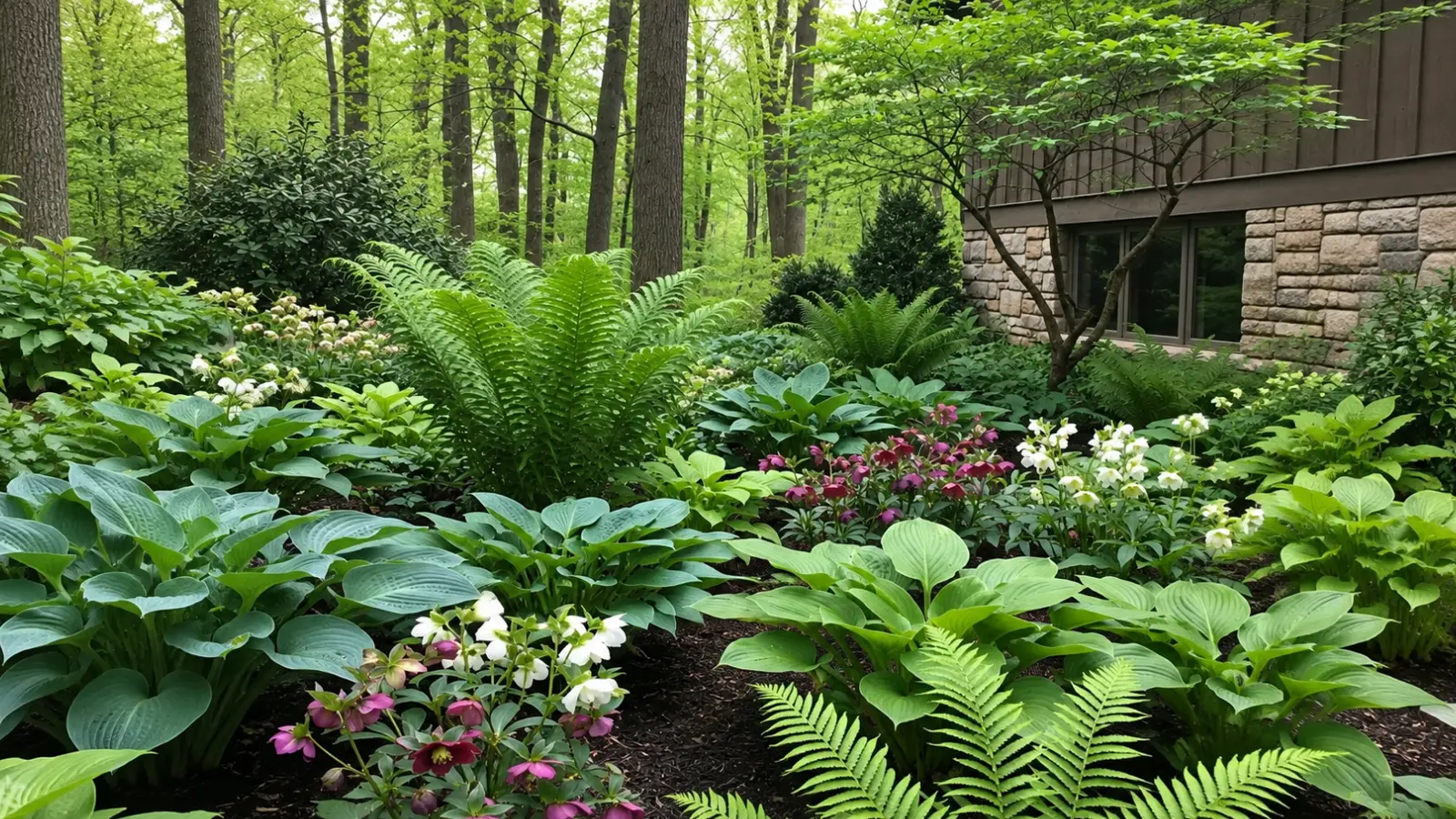
Layering gives a woodland garden its sense of depth and ecological function. Each layer contributes visual structure, but together they also create food, shelter and nesting habitat for birds, insects and other wildlife.
Canopy
The canopy is formed by mature trees or the upper branches of large trees. Existing trees are usually the most valuable starting point — they already establish the light pattern, root environment and general character of the space. Before adding any new canopy tree, think through its mature size, root spread, water demands and relationship to the house, utilities and neighboring properties.
If the site has no canopy, a woodland-edge design using smaller trees and large shrubs can be more appropriate while the structure develops over time.
Understory Trees
Small trees beneath or alongside the canopy create a middle height and add flowers, fruit, attractive bark or fall color. Native understory trees — dogwoods, serviceberries, redbuds and witch hazels, depending on the region — are especially effective because many bloom in early spring, when the canopy is still open and light reaches the lower layers. Give them enough room to develop naturally, and avoid planting too close to existing tree trunks.
Shrubs
Shrubs make the garden feel enclosed and provide structure that remains visible after herbaceous plants die back in fall. Use them to define the back of a path, frame a view or create a transition between taller trees and the lower planting. Viburnums, spicebush, native azaleas and witch hazel are all worth considering, depending on your region and moisture conditions.
Herbaceous Layer
Perennials, woodland grasses and sedges fill the middle and lower portions of the planting. Combine different leaf shapes, heights and bloom periods so the garden doesn’t depend on a single short season. Foliage texture — the contrast between broad hosta-like leaves, ferny fronds and narrow sedge blades — does as much work here as flower color.
Ground Layer
Ferns, low perennials, groundcovers, moss in suitable conditions, leaf litter and fallen stems occupy the forest-floor level. Leave some areas of open or lightly covered soil where ground-nesting bees and other beneficial insects can access bare ground — not every inch needs to be mulched or covered.
Not every woodland garden needs every layer at once. A small space can work well with one existing tree, a shrub grouping and a thoughtful ground layer. The goal is a convincing relationship between heights and textures, not a crowded inventory of plants.
Plan for Soil and Moisture
Woodland soils naturally accumulate organic matter from decomposing leaves, but the soil beneath a residential landscape is often compacted, disturbed or depleted. Test the soil before adding amendments, especially if plants are failing for reasons that may be related to drainage or pH. A basic test can also tell you whether the pH suits acid-loving woodland plants — many native ferns and wildflowers prefer moderately acidic conditions.
Improve compacted soil carefully. Digging aggressively around established trees can damage or sever the shallow feeder roots that trees depend on, sometimes with consequences that don’t show for a season or two. Where surface roots are visible, work with shallow planting pockets rather than deeper cultivation, and choose plants adapted to root competition and limited disturbance.
Group plants by their actual moisture needs rather than placing all woodland plants together simply because they share a shade label. A fern suited to consistently moist soil may fail beneath a mature Norway maple or silver maple, which are particularly aggressive water competitors, while a drought-tolerant sedge or epimedium may be far better suited to that dry root zone.
When using leaf mulch or composted wood material, apply it in a restrained, even layer — 2 to 3 inches is adequate for most purposes. Keep mulch pulled back a few inches from tree trunks and never pile it against the root flare; mulch mounded against bark can cause rot, promote fungal disease and encourage the formation of stem-girdling roots that can weaken or eventually kill a tree over years. In an established woodland planting, some fallen leaves can remain and gradually return nutrients to the soil without any additional mulch being necessary.
Choose Woodland Garden Plants
Native woodland plants are often a strong starting point because they are connected to regional habitats, local soil chemistry and seasonal conditions that can be difficult to replicate. But “native” still needs to be evaluated at the correct geographic scale. A woodland plant native to the Pacific Northwest — such as western trillium or sword fern — may not belong ecologically or practically in a Midwestern, Southern or Northeastern garden, and vice versa.
Choose plants by habitat, not by shade tolerance alone. A plant that naturally grows in a moist bottomland forest will struggle in a dry upland garden even if both sites have similar light levels. The habitat description — dry upland woods, moist woodland edge, rich forest floor — often tells you more than a generic “shade plant” label.
| Layer | What It Adds | Selection Considerations |
|---|---|---|
| Canopy trees | Shade, height and long-term habitat | Mature size, root spread, water use and regional fit |
| Understory trees | Middle height, flowers, fruit or bark | Spring bloom timing, spacing and seasonal interest |
| Shrubs | Cover, enclosure and year-round structure | Spread, moisture needs and wildlife value |
| Perennials and ferns | Flowers, texture and understory character | Dry or moist shade, mature height and bloom season |
| Ground layer | Soil cover, habitat and low visual texture | Spread rate, foot-traffic tolerance and space for leaf litter |
Confirm the mature size and regional invasive status of each plant before buying, particularly for species that spread readily by root or seed. Some plants sold as woodland groundcovers can become significant management problems in gardens that border natural areas.
Use Spring Ephemerals Wisely
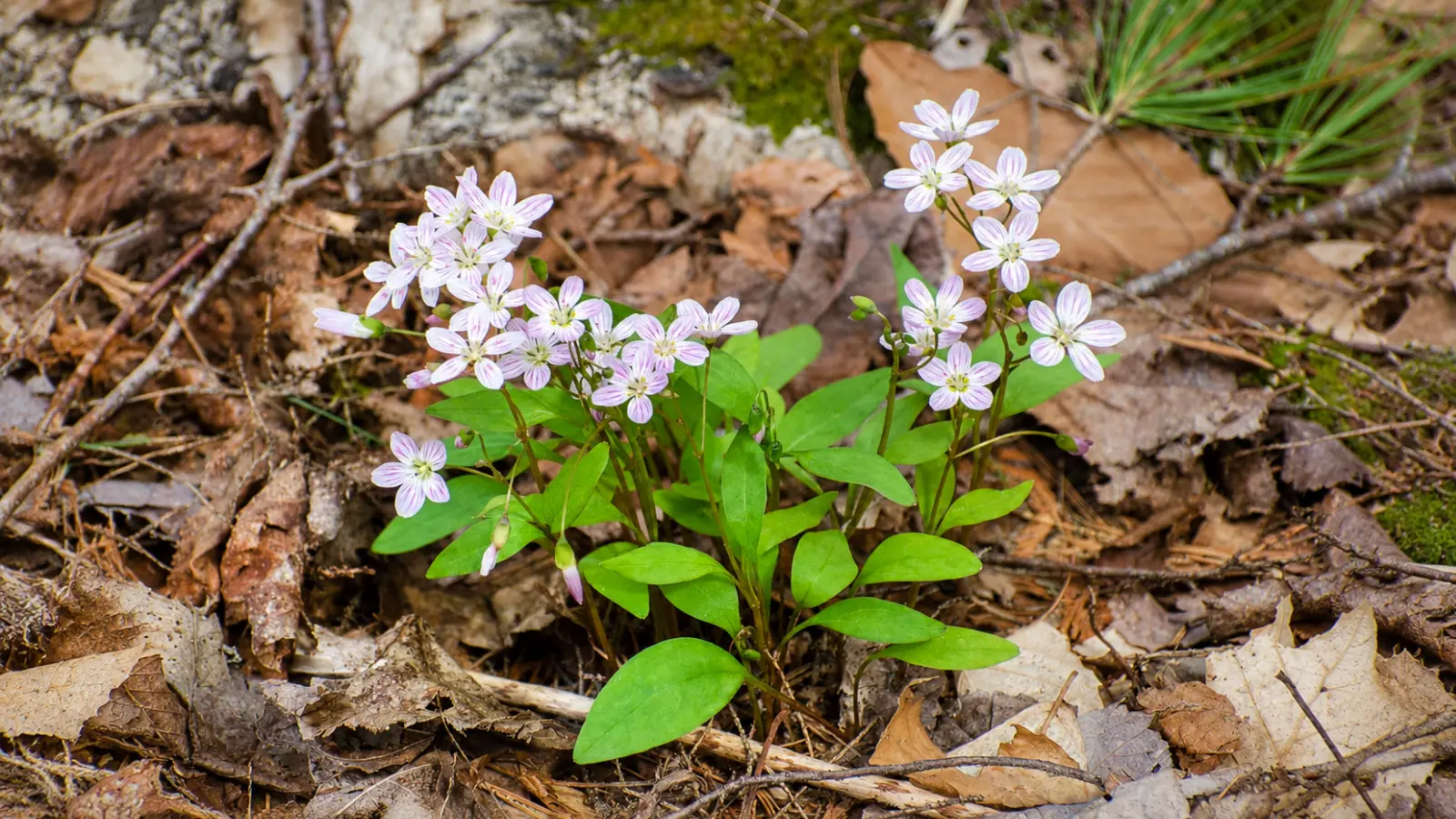
Spring ephemerals are native woodland plants that complete most of their above-ground growth in a narrow early-season window — emerging, flowering, setting seed and retreating back underground while the canopy is still opening. They take advantage of the light that reaches the forest floor in late winter and early spring, and they can be some of the most rewarding plants in a woodland garden because of how surprising they feel.
Common native spring ephemerals include bloodroot (Sanguinaria canadensis), Virginia bluebells (Mertensia virginica), trout lily (Erythronium americanum), Dutchman’s breeches (Dicentra cucullaria), hepatica (Hepatica nobilis), mayapple (Podophyllum peltatum), trillium (Trillium spp.) and wild ginger (Asarum canadense). Regional availability varies — check with your local native plant society or Extension office for species suited to your area.
These plants bring an important seasonal moment, but they need partners. Pair them with ferns, sedges and later-emerging perennials that fill the lower layer once the ephemerals go dormant, so the ground doesn’t look bare by July.
Source spring ephemerals only from nurseries that propagate their own plants. Wild-collected specimens are a serious conservation concern — some species, including trilliums, can take seven or more years to reach blooming size from seed, and collecting even small quantities can damage or eliminate wild populations. Reputable native plant nurseries, botanical garden sales and native plant society swaps are reliable sources. If a price seems unusually low or the plant looks like it was dug recently with intact soil, that’s a reason to ask questions.
Mark the location of dormant crowns before the foliage disappears in early summer. It’s easy to accidentally dig into dormant ephemerals later in the season when you can’t see them, and disturbing them at that stage can be as damaging as not planting carefully in the first place. Let their leaves complete the full growing cycle whenever possible — the foliage is still photosynthesizing long after the flowers are gone.
Create a Naturalistic Design
Naturalistic does not mean unplanned. Start by identifying the main view into the garden, the route through it and the places where the planting should feel open or enclosed. From there, let plant choices and groupings do the work — not the arrangement of individual specimens.
Group Plants in Repeated Drifts
Repeat compatible plants in loose, generous groups rather than scattering one of every species across the bed. Repetition creates rhythm and helps the garden read as a plant community instead of a collection. Even in a small garden, grouping three to five of the same plant together is more convincing than a single specimen.
Vary Height and Texture
Pair broad leaves with fine foliage, upright stems with arching forms, and evergreen texture with seasonal growth. In deeper shade especially, texture and foliage contrast carry more visual interest through most of the year than flower color does. A combination of large-leaved plants like hostas or mayapples with the delicate fronds of native ferns and the fine blades of sedge creates a planting that holds visual interest even without bloom.
Keep Transitions Soft
Allow some plants to overlap visually at the edge of a path or lawn, but define the boundary clearly enough to make the design legible from the outside. A curved mown edge, a row of stepping stones or a low restrained border signals intention and keeps the planting from reading as simply neglected — which matters for how the garden is received by neighbors and, if relevant, an HOA.
Add Paths and Open Space
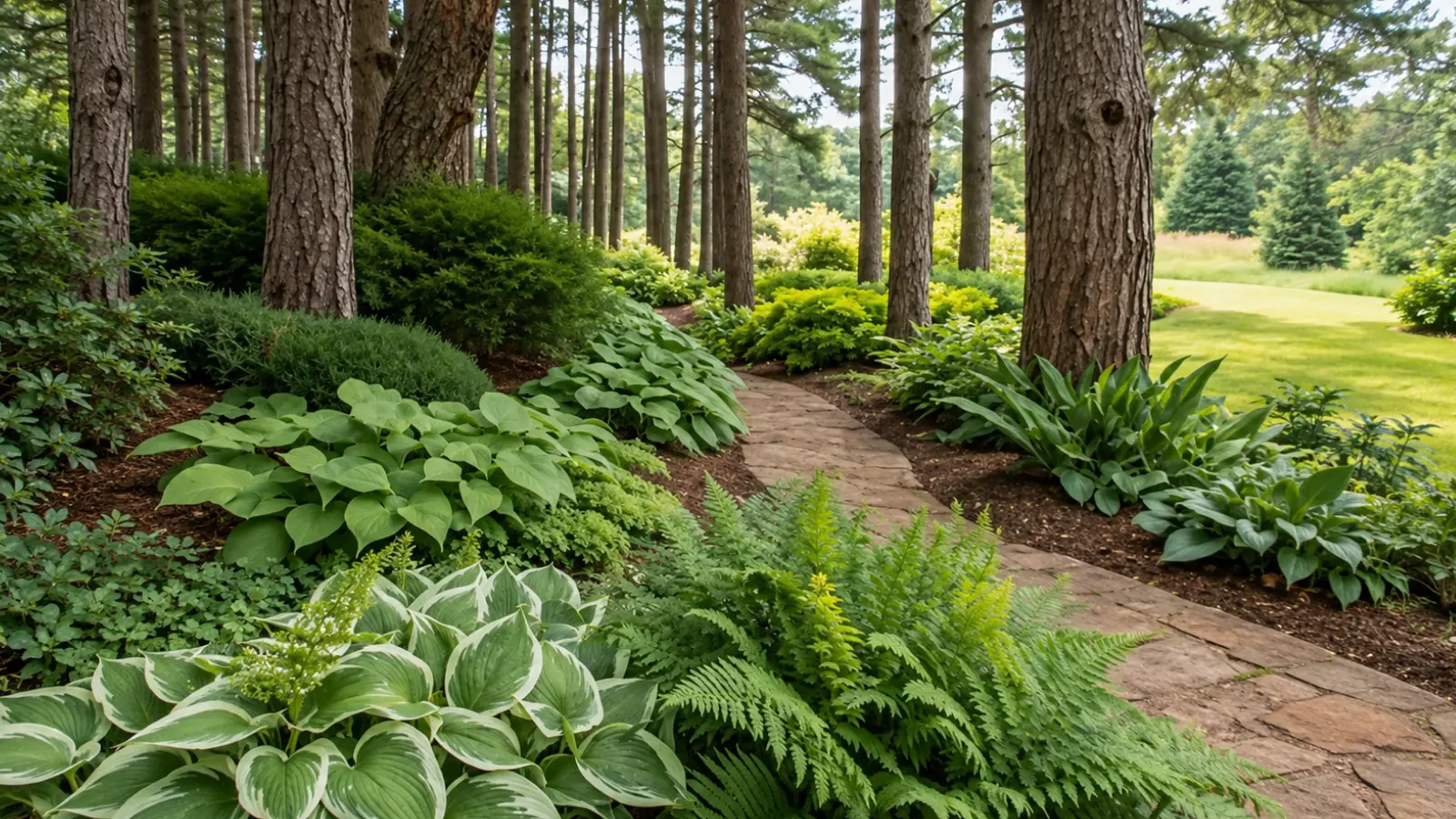
Paths are especially valuable in a woodland garden because they let people experience the changing layers without stepping into the planting and compacting the soil around roots. A well-placed route can lead past a tree trunk, through a shrub grouping, along a low fern layer and out to an open view — creating a sense of discovery that a flat bed simply can’t replicate.
Choose path materials that suit the site’s drainage and character. Shredded bark or wood chips feel natural in a woodland context and are easy on tree roots; shredded bark in particular mats together well and holds on gentle slopes better than loose wood chips. Stepping stones or flagstone set into the ground are durable and largely root-friendly. Avoid compacted gravel or pavers that require a deep base, since excavating for them can damage tree roots. Whatever the material, route paths away from major surface roots when possible, and avoid creating lines of heavy foot traffic directly over root zones.
Small open clearings also improve the composition. An open patch lets light reach the lower plants, gives pollinators a place to forage in the sun and provides a moment to pause and take in the layers around you. A garden that is all closed canopy and dense planting can feel oppressive rather than enclosed in a good way.
Maintain a Woodland Garden
A woodland garden generally asks for less maintenance than a conventional border, but it still has seasonal tasks — and the timing of those tasks matters more than many gardeners expect.
Water new plants consistently during establishment, particularly beneath mature trees where a dense canopy intercepts rain and roots compete for whatever moisture does reach the soil. Even drought-tolerant woodland plants need regular water in their first growing season, and sometimes into the second. After plants are established, continue monitoring during unusually dry periods; woodland conditions are not automatically moist.
Leave healthy leaf litter where it does not smother small plants or block paths. Fallen leaves insulate soil, feed soil organisms and provide critical habitat for overwintering butterfly eggs, moth pupae and beneficial insects. If a thick layer accumulates over delicate crowns or low-growing plants, move some material gently to the sides rather than removing it from the garden entirely.
Cut back herbaceous plants selectively based on their function and the season. Standing stems and seedheads provide winter structure, food for birds and shelter for overwintering insects. Selective removal around paths or new spring growth is usually enough without clearing the whole planting at once.
Invasive plants are a particular concern in woodland gardens, especially those that border natural areas. Species like garlic mustard (Alliaria petiolata), bush honeysuckle (Lonicera spp.) and lesser celandine can spread rapidly in disturbed woodland soil and are difficult to eliminate once established. Learn to identify them early — garlic mustard in particular can produce hundreds to thousands of seeds per plant — and remove them before they set seed. Contact your local Extension office if you’re unsure which invasives are most problematic in your region.
Limit pesticide use and identify any problem before treating it. Many insects present in a woodland garden are part of its ecological function; broad applications often cause more harm to the planting than the pest does.
Common Woodland Garden Mistakes
Most woodland garden setbacks trace back to a small set of recurring errors. Catching them early — or better, before planting — makes the difference between a garden that settles in well and one that requires constant correction.
- Assuming all shade is the same: dry shade beneath established trees and moist shade near a drainage area need different plants. This single mismatch accounts for more woodland garden failures than any other.
- Planting too densely: mature size and spread matter even in a naturalistic design. Plants that look well-spaced at purchase can crowd each other out within a few seasons.
- Disturbing tree roots: deep digging and raised soil levels can harm established trees — sometimes with consequences that don’t appear for a year or two. Work shallowly and carefully within the root zone.
- Using only spring flowers: the garden needs later foliage, summer structure and fall interest to remain engaging through the whole growing season.
- Volcano-mulching trees: piling mulch against tree trunks traps moisture against the bark, promotes rot and can cause stem-girdling roots over time. Keep mulch a few inches away from the trunk and limit depth to 2 to 3 inches.
- Removing all leaf litter: a bare forest floor is not necessary for a healthy garden. Leaf litter is part of the woodland’s ecological function, not something to clean away.
- Choosing plants by label alone: “shade tolerant” tells you nothing about moisture needs, mature size, regional origin or invasive potential. Read further before buying.
- Leaving no access: paths and open spaces make observation, weeding and general maintenance much easier — and they make the planting more enjoyable to spend time in.
A woodland garden becomes more convincing as it matures. Give the layers time to settle, observe how light and moisture shift through the seasons and adjust plants that clearly don’t fit the site. Patience and honest observation are more useful here than any single planting technique.
Build the Garden Around the Woodland Structure
A successful woodland garden comes from the relationship between its layers. Canopy, understory trees, shrubs, herbaceous plants and the ground layer should respond to the light, moisture, roots and seasonal changes already present on the site.
Protect the existing trees, leave useful natural material in place and add plants gradually rather than filling every space at once. As the layers mature and begin to overlap, the garden can develop the depth and quiet naturalism of a woodland while remaining intentional, accessible and manageable.
COMMON QUESTIONS
Before you begin.
What is a woodland garden?
A woodland garden is a cultivated landscape inspired by the layered structure of a forest or woodland edge. It typically combines canopy or understory trees, shrubs, perennials, ferns, groundcovers and natural materials such as leaf litter. The defining features are layered planting, filtered or dappled light and plants matched to the site’s actual soil and moisture conditions.
How do you create a woodland garden?
Start with the existing trees and observe how sunlight and soil moisture change throughout the seasons. Build the planting in layers with appropriately sized understory trees, shrubs, perennials, ferns and groundcovers, while protecting established tree roots from deep digging or added soil. Use repeated plant groups, retain useful leaf litter and include paths or open areas so the garden remains accessible and intentional.
What plants are best for a woodland garden?
The best woodland garden plants are species suited to your region and to the site’s specific combination of shade, soil and moisture. Depending on location, options may include native dogwoods, serviceberries, redbuds, spicebush, viburnums, ferns, sedges, woodland perennials and spring ephemerals such as trilliums or Virginia bluebells. Choose plants by their natural habitat requirements rather than by shade tolerance alone.
Does a woodland garden need full shade?
No. Dappled light and partial shade are often ideal for woodland gardens, particularly beneath deciduous trees. Spring ephemerals can take advantage of direct sunlight before the canopy leafs out, while ferns and other understory plants use filtered light later in the season. Constant deep shade supports fewer flowering plants and places more emphasis on foliage and texture.
Are woodland gardens always moist?
No. Woodland conditions can range from consistently moist to surprisingly dry. Mature tree roots compete strongly for water, and dense canopies can intercept rainfall, creating dry shade even where the garden looks cool and sheltered. Check moisture at planting depth and choose species specifically suited to dry, average or moist woodland conditions.
What is the difference between a woodland garden and a shade garden?
A shade garden is defined mainly by limited sunlight and can use many different planting styles and plant groups. A woodland garden specifically recreates aspects of forest structure through layered vegetation, understory plants, naturalistic groupings and a living ground layer that may include leaf litter. Most woodland gardens are shady, but not every shade garden is a woodland garden.