A hummingbird garden provides much more than colorful flowers or a feeder. Hummingbirds need reliable nectar, insects for protein, sheltered places to perch and rest, water, nesting resources and vegetation that remains useful throughout their seasonal movements.
The right garden also depends on where you live. Hummingbird species, migration timing, climate and suitable plants vary across the United States, so a planting that works well in the East may need a very different combination of plants and seasonal resources in the West or Southwest.
This guide explains how to create a hummingbird garden with nectar-rich flowers, native plants, bloom succession, shrubs and trees, perches, water, nesting resources and safer garden care, along with how to use feeders as a supplement and what to check when hummingbirds are not visiting.
What Does a Hummingbird Garden Need?
A hummingbird habitat garden should provide four basic resources: nectar, insects, shelter and water. It should also include perches and vegetation that make the space useful between feeding visits. What surprises most gardeners is how important the insect piece is. Hummingbirds are not pure nectar drinkers—insects and spiders can make up the majority of their diet by volume, providing the protein and fat that nectar cannot.
- Nectar flowers with bloom times that overlap across the season
- Native plants that support insects and local food webs
- Small trees, shrubs or vines for cover and resting places
- Open sunlight for feeding and warming
- Protection from strong wind
- A shallow water source or fine mist
- Spider silk, soft plant material and sheltered branches for nesting
- Minimal exposure to pesticides and other garden chemicals
The garden can be formal or naturalistic. Hummingbirds are responding to food, structure and safety rather than to any particular landscape style.
Choose Tubular Flowers
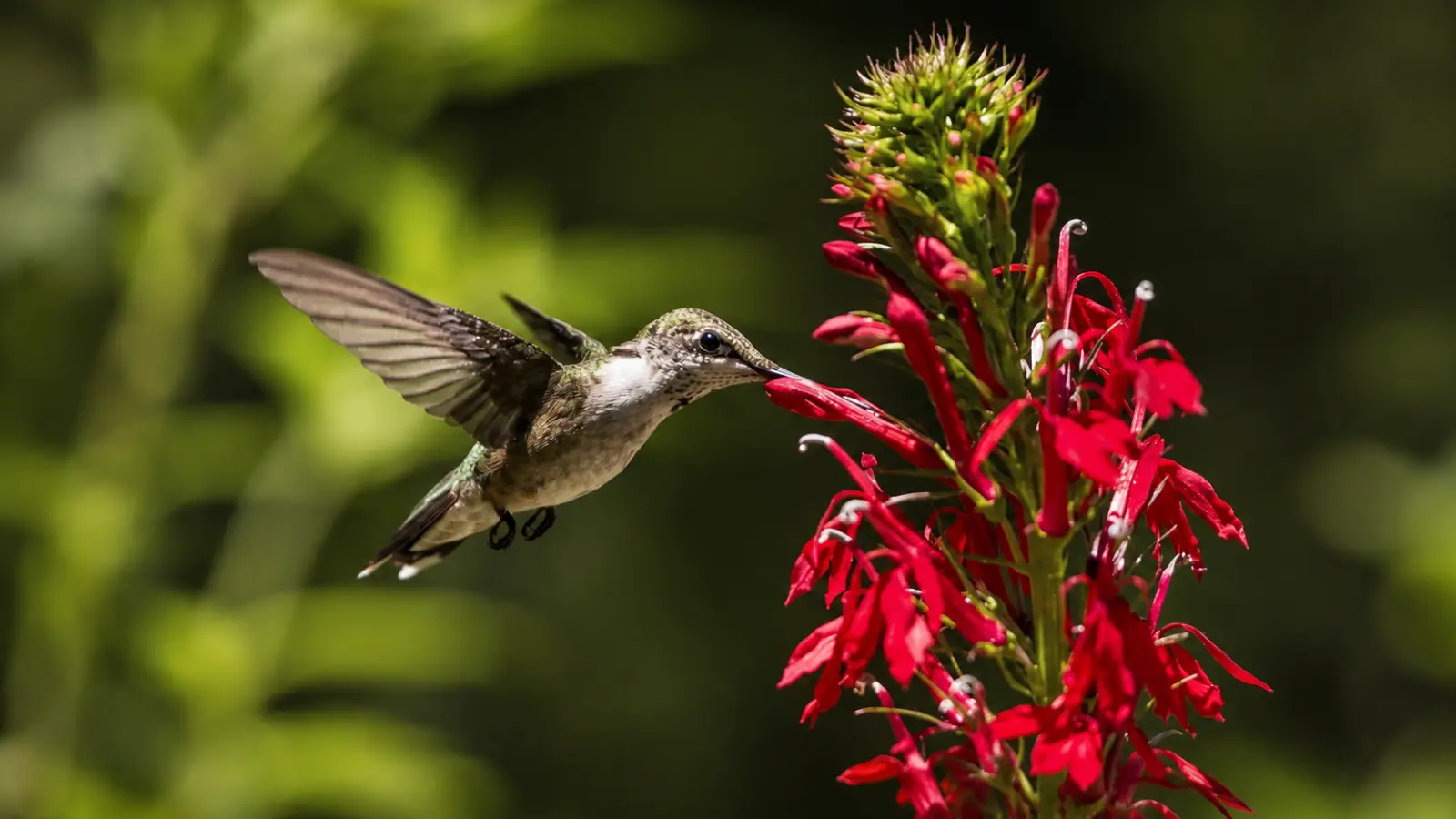
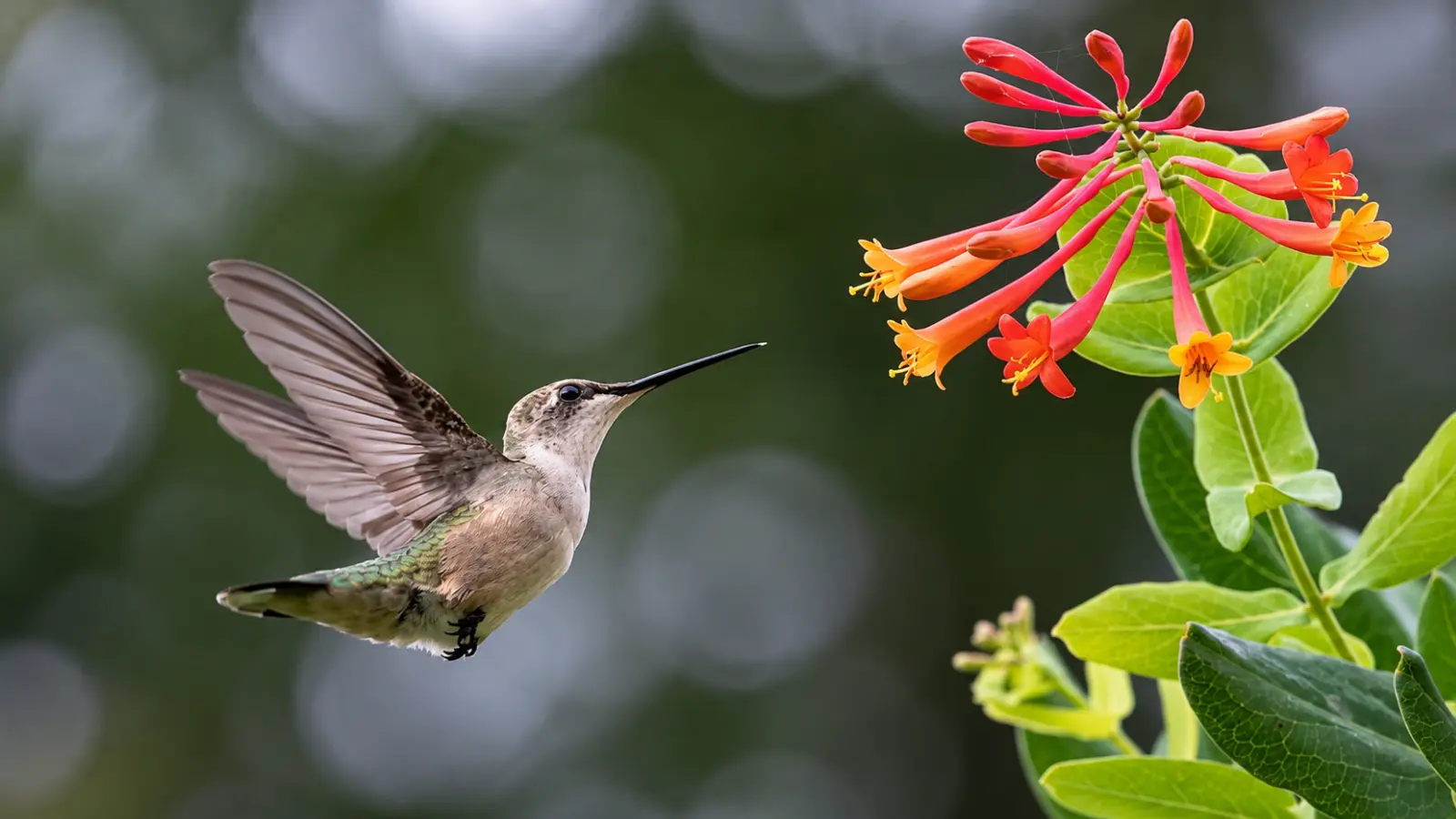
Tubular flowers are the natural starting point for a hummingbird garden. Their shape holds nectar at the base of the bloom where hummingbirds can reach it with their long bills and tongues—and their structure often makes it harder for short-tongued insects to access, so the nectar reward stays concentrated for the birds.
Useful examples include native penstemons, columbines, bee balm, cardinal flower, trumpet honeysuckle, coral bells, hummingbird sage, red buckeye and regional salvias. The best species for your garden vary by climate and by the hummingbirds that actually occur in your area.
Don’t choose a plant based only on the word “hummingbird” in its name. Check its mature size, hardiness zone, soil requirements, bloom time and ecological status in your region. A plant can be attractive to hummingbirds and still fail in a garden with heavy shade, poor drainage or winters it cannot survive.
Include flowers at different heights. Low perennials can line a path, taller plants form a middle layer and shrubs or vines provide vertical structure and additional shelter.
Use Color Without Relying Only on Red
Red, orange and pink flowers can help hummingbirds notice a new garden, especially in the first season before they have established feeding routes nearby. However, color alone does not create a useful habitat. Flower shape, nectar production, bloom timing and plant placement matter just as much—and in a well-established garden, hummingbirds will find reliable nectar sources regardless of color.
Include warm-colored tubular flowers, but also use purple, blue, white and other shades when they are provided by plants suited to the site. A garden full of red flowers that all bloom simultaneously and then fade leaves nothing for birds later in the season.
Hummingbirds readily learn to visit flowers that are not red when those plants offer dependable nectar. Repeated plant groups and a clear concentration of flowers make a garden easier to discover than scattered single blooms in mixed colors.
Choose Native Plants
Native plants are valuable in a hummingbird garden for two distinct reasons. First, they provide nectar in the right forms and at the right times for local hummingbirds. Second—and just as important—they support the insects that hummingbirds also depend on for food. Entomologist Doug Tallamy at the University of Delaware estimates that insects and spiders make up roughly 80 percent of a hummingbird’s diet. That protein and fat is essential for nesting, chick-rearing, molting and surviving migration. A yard with few native plants is a yard with few insects, and a yard with few insects is a genuinely poor hummingbird habitat regardless of how many feeders it has.
A native plant is not automatically right for every property. Choose species that belong to your local region and match the site’s sun, soil, moisture and drainage. A plant native to the Southeast may not be appropriate for a dry Western garden, and a plant from a mountain habitat may struggle in a hot coastal yard.
Use local Cooperative Extension recommendations, state native-plant societies, botanical gardens and organizations like the Xerces Society and the Lady Bird Johnson Wildflower Center to refine your plant list. When possible, choose plants grown from regional seed or from nurseries that can explain their origin.
Hummingbird-friendly plants can include perennials, annuals, shrubs, vines and small trees. Diversity creates a more stable and productive habitat than relying on one favorite flowering plant.
Plan a Sequence of Bloom
Bloom succession is one of the most important parts of a successful hummingbird garden. Hummingbirds may arrive before the garden reaches its summer peak and remain after early flowers have faded—so gaps in bloom sequence are gaps in food availability.
Early-Season Flowers
Early-blooming shrubs, native perennials, columbines, penstemons and other regionally appropriate plants can provide nectar when few flowers are open. In the East, native azaleas and red buckeye can bloom while migrating Ruby-throated Hummingbirds are still arriving. Select plants according to your local spring conditions rather than a general seasonal calendar.
Summer Flowers
Summer is typically the busiest period for hummingbird activity. Combine several tubular plants with different flowering windows so that a heat wave, an errant pruning cut or a short bloom cycle does not strip all nectar sources at once. Bee balm, cardinal flower, native salvias and long-blooming penstemons are useful summer anchors in many regions.
Late-Season Flowers
Late-blooming salvias, cardinal flower, native honeysuckle, and regionally appropriate late perennials can extend the garden’s value into late summer and fall. These flowers matter for birds preparing for migration and for year-round residents like Anna’s Hummingbirds along the Pacific Coast that need food through the winter months.
Keep a seasonal record of what blooms and when in your specific garden. Local weather, latitude, cultivar selection and microclimate can shift flowering by two weeks or more in either direction.
Add Shrubs and Trees
Flowers create feeding opportunities, but shrubs and trees give the garden structure and make it a place hummingbirds can actually live in rather than just pass through. They provide perches, shade, wind protection, nesting material and habitat for the insects hummingbirds need.
Small trees with sheltered branching structure can support nesting females. Hummingbird nests—roughly the size of a walnut, built from soft plant fibers and bound together with spider silk—are typically placed on small, stable horizontal branches with overhead leaf cover for protection from rain and predators. A garden with trees is far more likely to host nesting than one with only open flower beds.
Shrubs such as regionally appropriate viburnums, willows, serviceberries, spicebush and native flowering shrubs may provide cover and seasonal food. Vines like native trumpet honeysuckle (Lonicera sempervirens) can cover a trellis or fence and add vertical nectar—but they need strong support and regular observation. Avoid planting an aggressive vine simply because it grows fast.
Provide Perches and Shelter
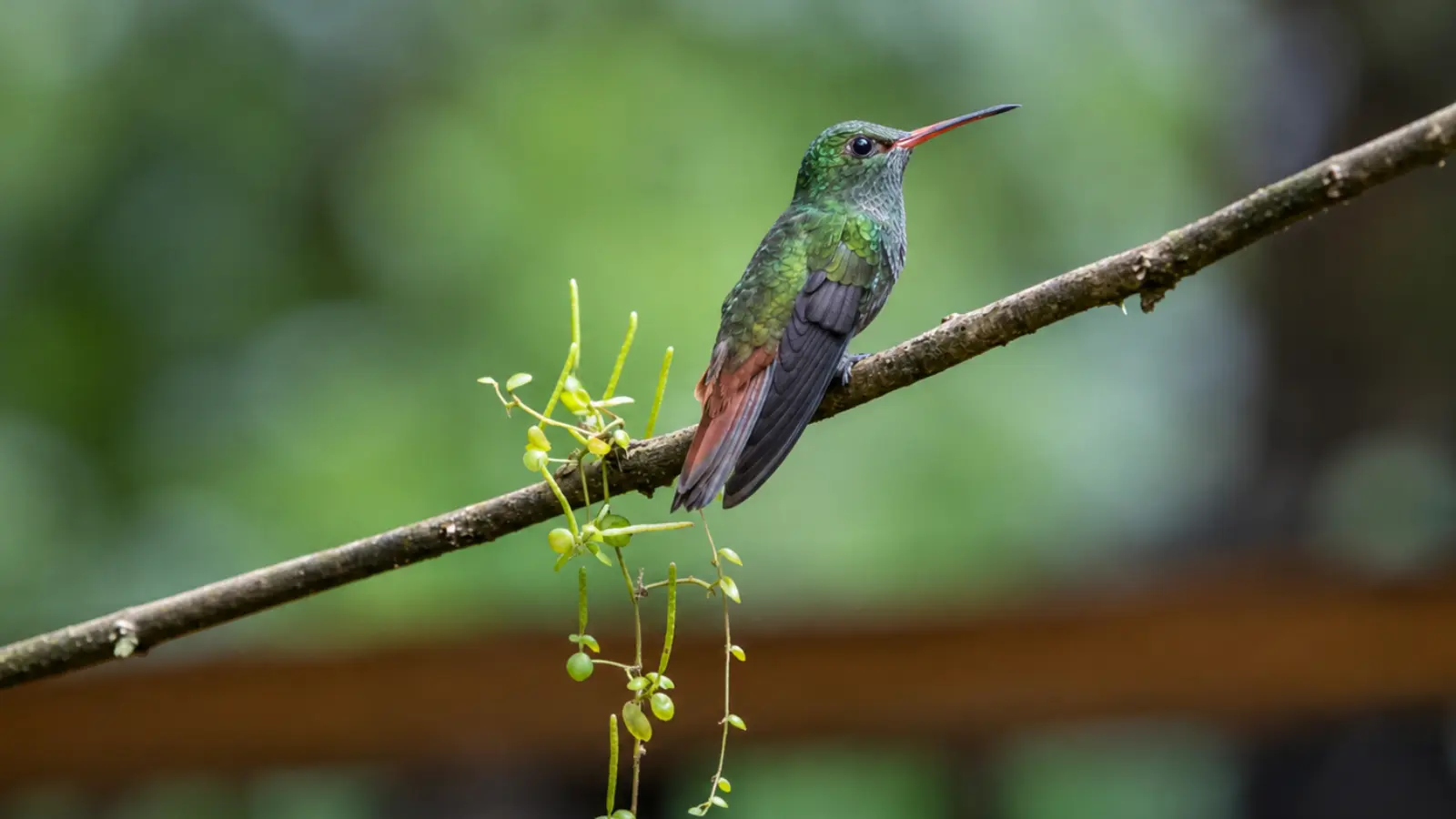
Hummingbirds spend more time perching than most people realize. Between feeding bouts they rest, digest, preen, survey their territory and watch for rivals. Thin exposed branches, twigs and small dead snags are preferred perch sites—they give a clear sightline in all directions and allow quick takeoff.
Place perches near flowers but not buried inside dense clusters. An open branch a few feet from the main feeding area lets a bird monitor the garden without being concealed. Nearby vegetation provides cover from wind and aerial predators.
Strong prevailing wind makes a garden difficult to use—hummingbirds can’t hover precisely in a stiff breeze, and their small bodies lose heat quickly. A hedge, fence, vine-covered trellis or grouped shrubs on the windward side can create a calmer feeding pocket without blocking the sun that nectar plants need.
Keep cats indoors or use deterrents to prevent them from reaching the garden. A habitat that attracts small, low-flying birds should not create easy ambush opportunities.
Water and Misters
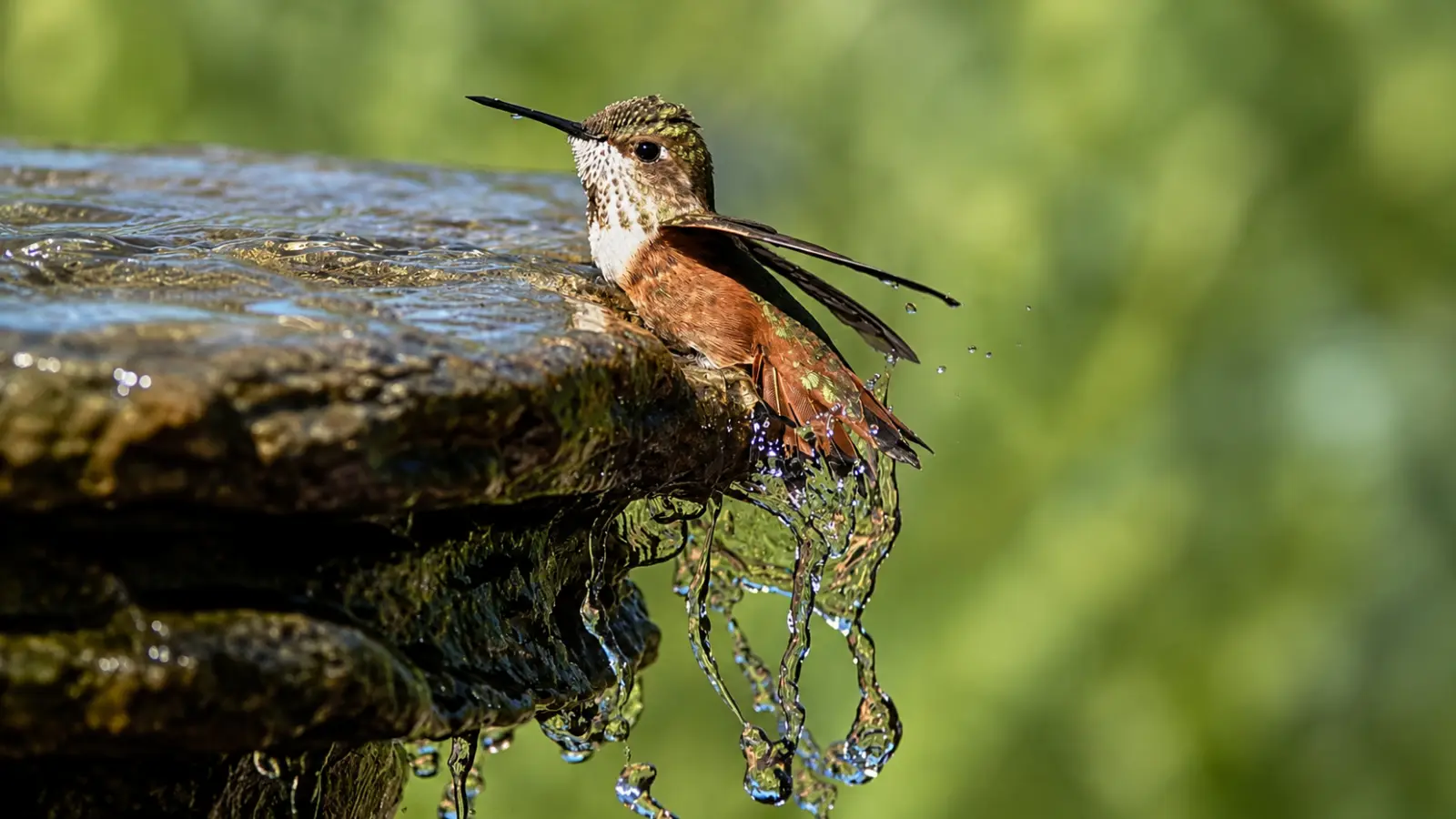
Hummingbirds bathe differently than most backyard birds. Rather than wading into a basin, they prefer to fly through fine mist or roll across water-beaded leaves. A shallow birdbath may see little use from hummingbirds specifically, while a gentle mister, dripper or recirculating fountain with nearby foliage can become a regularly visited spot.
Place the water source where it can be cleaned easily and where birds have a clear view of approaching predators. Avoid deep, slippery basins and any container where water can go stagnant. Refresh small water sources every few days, more often in hot weather.
A mister should produce a fine, gentle spray rather than a powerful jet. The goal is a light, safe zone where a hummingbird can pass through or hover near damp foliage—not a stream that disrupts hovering flight. Attach one to a drip line, stake it near broad-leafed plants and position it where the birds already forage.
Nesting Materials and Insects
Female hummingbirds build their nests alone, without any assistance from the male. The nest—roughly walnut-sized, about 1.5 inches in diameter—is constructed from soft plant fibers, seed down, moss and lichen, then bound and anchored to a branch with spider silk. The silk is not incidental; it is structural. Pound for pound stronger than steel, it holds the nest together and allows it to stretch as the chicks grow. A garden that supports spiders is a garden that supports hummingbird nesting.
Do not clear every spider web from the garden. Remove webs only where they create a genuine safety or access problem. The garden’s spiders also serve as direct food—hummingbirds actively raid webs for both the silk and any trapped insects.
Native plants support the small insects hummingbirds eat throughout the day: fruit flies, gnats, aphids, leafhoppers, tiny beetles and spiders of various sizes. A perfectly insect-free garden is not a hummingbird habitat. Leave some minor plant damage in place and observe whether natural predators are already managing the problem before reaching for a spray bottle.
Avoid Pesticides
Pesticides can harm hummingbirds in two ways: directly, through contact or ingestion, and indirectly, by eliminating the insects they depend on for protein. Systemic insecticides can move through plant tissues into nectar and pollen, potentially affecting any insect that visits the flower. The result—even when plants still look healthy and flowers still bloom—is a garden that offers energy but not sustenance.
Start with prevention, accurate identification and site-appropriate plants before considering any treatment. Many common “pest” situations resolve on their own or respond to physical removal. If a treatment becomes unavoidable, read the product label carefully, apply it only to plants that are not in bloom, avoid drift toward water sources, and account for children and pets. Never assume that a product is safe because it is labeled natural or organic—several commonly available organic insecticides, including pyrethrin and spinosad, can harm beneficial insects on contact.
The safest hummingbird garden is one managed through observation, physical controls and as little chemical intervention as practical.
Use Feeders as a Supplement
A hummingbird feeder can supplement flowers during migration, nesting or temporary gaps in bloom, but it cannot replace a living habitat. Plants provide insects, cover and structural habitat that sugar water cannot. A feeder in a pesticide-managed yard with few native plants is a convenience stop, not a functioning habitat.
The correct nectar recipe is simple and well established: four parts water to one part plain white granulated sugar. This ratio—confirmed by the Audubon Society, Cornell Lab of Ornithology and the Smithsonian’s National Zoo—closely matches the natural sucrose concentration in the flowers hummingbirds prefer. Do not add red dye (the red feeder parts are sufficient to attract birds), honey (which can support harmful bacteria and fungi), artificial sweeteners or any other additives.
Clean the feeder on a schedule, not just when it looks cloudy. Audubon recommends cleaning every one to two days in hot weather (when temperatures consistently exceed 80–90°F), every two to three days in mild conditions and at least twice a week in cool weather. Use hot water and a weak vinegar solution or hydrogen peroxide; avoid dish soap, which can leave residue in small crevices and ports. Replace nectar on the same schedule even if the feeder has not been emptied.
If one territorial bird monopolizes a feeder and prevents others from feeding, place additional feeders in different locations out of direct sightline of each other. Do not apply oil or sticky substances around feeding ports to deter ants—move the feeder or use an ant moat designed for that purpose.
Regional Timing and Migration
Hummingbird timing varies considerably across the United States. Ruby-throated Hummingbirds migrate through the East in spring and fall, with males typically arriving before females. Many western species—Black-chinned, Rufous, Calliope, Broad-tailed and others—migrate through the West and Mountain regions on seasonal schedules. Anna’s Hummingbirds are year-round residents along much of the Pacific Coast, from Baja California north to British Columbia, and do not follow a traditional migration pattern.
A note worth putting clearly: leaving feeders out in fall does not cause hummingbirds to delay migration. Migration is triggered by changes in day length and internal hormonal cycles, not by food availability. This has been confirmed by the Cornell Lab of Ornithology and the Audubon Society. Keeping a clean feeder available through late fall can actually help late-departing juveniles and out-of-range stragglers that would otherwise find no food stop.
Use eBird’s real-time sighting data, local Audubon chapter resources or hummingbird tracking sites to learn when specific species typically arrive and depart in your area. Plan important bloom periods around local activity rather than applying one nationwide calendar to your garden.
Why Hummingbirds May Not Visit
A new garden may take time to be discovered, and a quiet period in the first season does not always mean the design has failed. Look through the list below before making major changes.
- The flowers are not blooming during the local hummingbird season
- The site receives too little direct sun for nectar plants to thrive
- Strong prevailing wind makes hovering and feeding difficult
- Flowers are scattered instead of planted in concentrated, visible groups
- There is no shelter, cover or exposed perch nearby
- The plants selected are not suited to the local region or the hummingbird species present
- Nearby gardens temporarily offer a stronger or more established food source
- Pesticides have reduced insects or made the area unsafe
- The garden is too new for shrubs and perennials to reach productive size
- Unusually cool, hot, rainy or windy weather has temporarily reduced activity
Observe before making major changes. A hummingbird may visit briefly and disappear into nearby foliage, or activity may shift as a different plant begins to bloom. Hummingbirds also have strong spatial memory and return to reliable feeding sites year after year—so a garden that earns a visit this season is far more likely to be found again next spring.
Create a Habitat They Can Return To
The strongest hummingbird garden provides more than a temporary source of nectar. Flowers supply energy, native plants support the insects hummingbirds also eat, and shrubs, trees, perches and water make the space useful between feeding visits.
Build those resources around the hummingbirds and growing conditions in your region, then let the habitat mature over time. A garden that offers food, shelter and seasonal continuity gives hummingbirds more reasons to return than any single flower or feeder can provide on its own.
COMMON QUESTIONS
Before you begin.
What plants attract hummingbirds to a garden?
Hummingbirds are especially attracted to nectar-rich tubular flowers. Regionally appropriate penstemons, columbines, bee balm, cardinal flower, native salvias, trumpet honeysuckle and red buckeye are useful examples. The best plants depend on your climate, soil, sunlight and the hummingbird species found in your area, so choose several plants with overlapping bloom periods rather than relying on one favorite flower.
How do you attract hummingbirds without relying on feeders?
Create a habitat that provides nectar-producing flowers, insects, shelter, perches and water. Native plants are particularly valuable because they can supply both nectar and the small insects and spiders hummingbirds eat for protein and fat. Add shrubs or small trees for cover, provide a gentle mister or other clean water source and minimize pesticide use.
Do hummingbird gardens need red flowers?
No. Red, orange and pink flowers can make a garden easier for hummingbirds to notice, but color is only one factor. Nectar production, tubular flower shape, bloom timing and plant placement are more important. Once hummingbirds learn that a plant provides reliable nectar, they readily visit flowers in other colors as well.
What is the best water source for hummingbirds?
Hummingbirds often prefer fine mist, droplets on foliage or gently moving water rather than a traditional deep birdbath. A fine mister, dripper or shallow moving-water feature placed near plants can provide bathing opportunities. Keep the water source clean, avoid stagnant water and position it where birds can easily see approaching predators.
Should you use a hummingbird feeder in a hummingbird garden?
A feeder can supplement natural flowers during migration, nesting or temporary gaps in bloom, but it should not replace habitat. Use four parts water to one part plain white granulated sugar, without red dye, honey or artificial sweeteners. Feeders must be cleaned frequently and the nectar replaced regularly, especially during hot weather.
Why are hummingbirds not visiting my garden?
Possible reasons include flowers blooming outside the local hummingbird season, insufficient nectar, too little shelter, strong wind, scattered rather than grouped flowers or plants that are poorly suited to the region. Pesticide use can also reduce the insects hummingbirds need. New gardens may simply need time for plants to mature and for hummingbirds to discover the site.