A moon garden is designed to become more noticeable as daylight fades. White and pale flowers, silver foliage, evening fragrance and subtle movement can remain visible or become more pronounced after sunset, creating a garden that feels distinctly different at night.
The strongest designs rely on more than color. Location, daytime growing conditions, bloom succession, scent, nocturnal pollinators, safe nighttime access and restrained lighting all influence whether the garden actually works after dark.
This guide explains how to create a moon garden, including how to choose pale and silver plants, add night-blooming and fragrant flowers, support moths and other nighttime pollinators, plan seasonal interest, use artificial lighting carefully, adapt the planting to your region and create the same effect in containers or small spaces.
What Is a Moon Garden?
A moon garden is a planting designed to be appreciated in the evening and at night. Its plants may have white or light-colored flowers that remain visible in low light, silvery leaves that catch and scatter whatever moonlight is available, or blooms that open and release fragrance after sunset.
Some moon gardens are formal beds. Others are a narrow border near a patio, a fragrant planting below a bedroom window, or a group of containers around a seating area. The defining feature is the experience of the garden after daylight fades — not a fixed plant list or a particular landscape style.
This is different from gardening by the moon, which refers to planting calendars based on lunar phases. A moon garden is a design concept for nighttime enjoyment and habitat, not a cultivation practice.
Choose the Right Location
Place the garden where it can be experienced easily. A planting that is beautiful at midnight but difficult to reach will not become part of everyday life. Consider how the space looks from inside the house as well as how it feels when you are standing in it after dark.
- Near a window: A pale planting remains visible from a kitchen, bedroom, or living room after dark without requiring you to go outside.
- Along a path: Light flowers and silver foliage help define the route without depending on bright fixtures.
- Beside seating: Fragrant plants are most enjoyable where people pause and linger, but strong scents can feel overwhelming in a small, enclosed area.
- Near an entry: Plants with a clear shape and subtle lighting make nighttime arrivals more welcoming and easier to navigate.
During the day, check the amount of sun, soil drainage, wind exposure, and access to water. Moonlight doesn’t replace the daytime sun that plants need for healthy growth. A bed that receives only deep shade may still work for a foliage-focused planting, but most flowering plants in a moon garden need several hours of direct sun to bloom reliably.
Use White, Pale, and Silver Plants
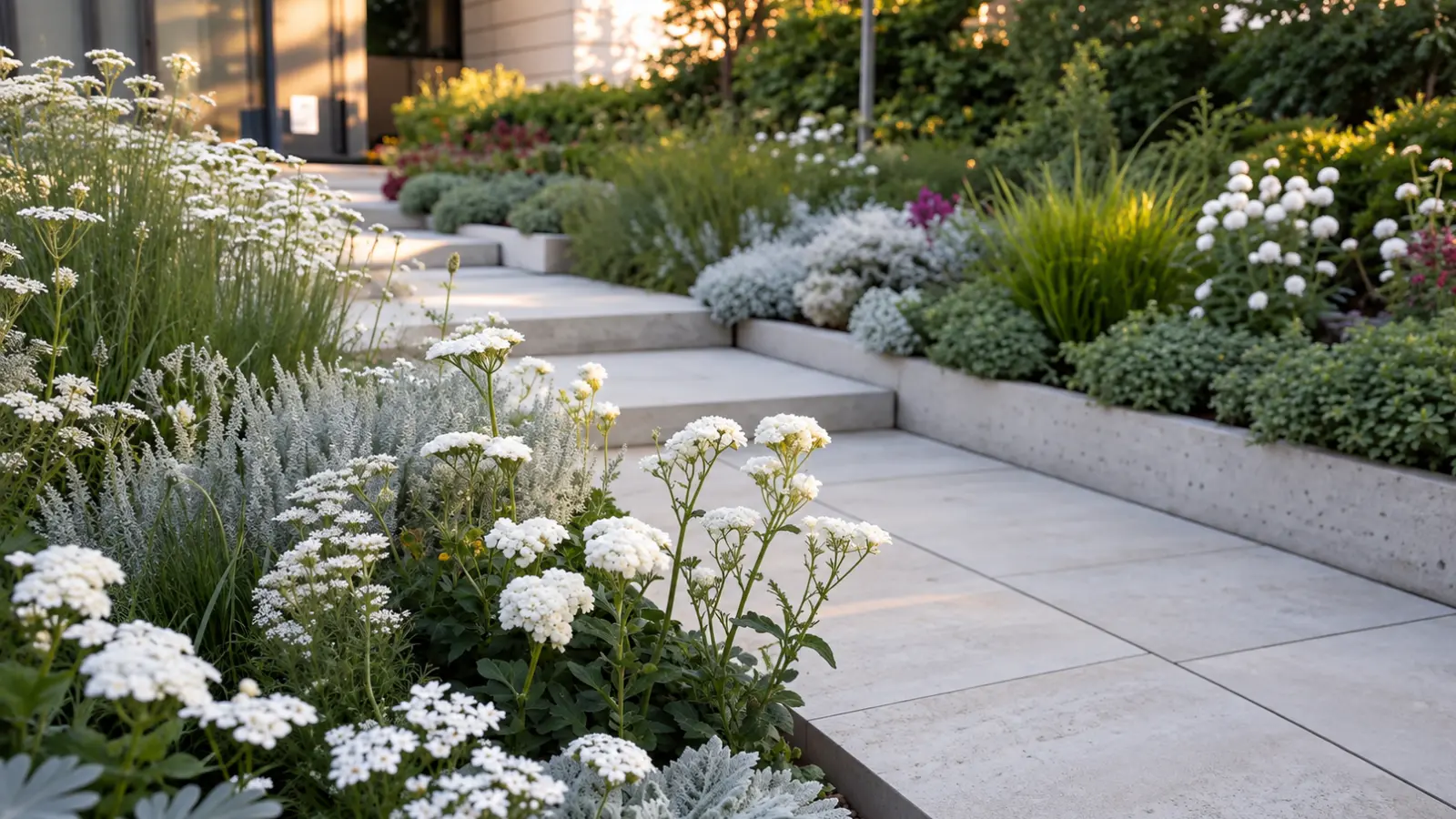
White flowers are the classic foundation of a moon garden because they remain the most visible as the light fades. Pale pink, soft yellow, lavender, and light blue can also contribute, especially during twilight when the eye still registers color. Once full dark falls, white and silver hold up best. Dark foliage behind white blooms intensifies the contrast and makes flowers appear to float.
Silver and gray foliage pulls its weight around the clock — it’s structural during the day and reflective at night. Lamb’s ear (*Stachys byzantina*, zones 4–9) is probably the most reliable foliage plant for a moon garden: thick, fuzzy, silver-white leaves that catch light even on a cloudy night and tolerate dry, sunny conditions well. Dusty miller (*Senecio cineraria*) works similarly — grown as an annual in most of the U.S. but perennial in zones 8 and above. Artemisia ‘Silver Mound’ (zones 3–7) forms a neat, mounded cushion of feathery silver foliage at the front of a border. These three are a practical starting point for any region with decent sun and reasonable drainage.
In humid climates, some silver-leaved plants that thrive in dry western gardens may struggle with fungal issues. In that case, look for variegated hostas (zones 3–9) with white margins or caladiums with white or pale pink markings — both handle shade and humidity and can carry the pale color story in a shadier planting.
Use contrast deliberately rather than grouping every pale plant together. Fine-textured foliage beside broad leaves, upright spikes beside mounding forms, and at least one section of deep green behind the white flowers — these combinations give the eye something to work with in low light.
Add Night-Blooming and Fragrant Plants
Night-blooming plants add the element of time — the anticipation of watching a bud open at dusk is one of the things that makes a moon garden genuinely different from any other garden style. Some flowers open at twilight and close the next morning; others remain open through the night and into the next day. Fragrance often becomes stronger after sunset in flowers adapted to moths and other nocturnal visitors, because the concentrated scent helps pollinators locate them in darkness.
Some of the most useful and widely available options:
- Moonflower vine (*Ipomoea alba*): Large, pure-white, trumpet-shaped flowers — up to 6 inches across — that unfurl at dusk and fill the air with sweet fragrance. Annual in most of the U.S.; perennial in zones 10–12. Grows 10–15 feet in a single season and needs a sturdy trellis or arbor. Invasive in Hawaii and some parts of the Deep South — check with your local extension office before planting in the ground in warm climates. Seeds are mildly toxic if ingested.
- Four o’clocks (*Mirabilis jalapa*): Open in late afternoon and stay fragrant through the night, drawing sphinx moths as pollinators. Choose white-flowered varieties for moon garden visibility — the multicolor seedlings often produce more magenta than white. Treated as an annual in cool climates, perennial in zones 9 and warmer. Seeds and roots are mildly toxic; plants can naturalize aggressively in Florida and other warm, humid regions.
- Night phlox (*Zaluzianskya capensis* ‘Midnight Candy’): A South African annual with small white pinwheel flowers that open at dusk and release a warm vanilla-honey fragrance. Modest in stature (about 12 inches tall) but remarkable up close, especially in containers near a seating area or below an open window. Best in full sun with well-drained soil.
- Flowering tobacco (*Nicotiana alata* or *N. sylvestris*): Tall, elegant annuals with white tubular flowers that release jasmine-like fragrance in the evening. *N. sylvestris* can reach 4–5 feet and is dramatic at the back of a border. Both attract sphinx moths.
- Evening primrose (*Oenothera* spp.): Native species like *O. biennis* open their yellow blooms at dusk and attract night-flying moths. Some Oenothera species can spread aggressively and have become invasive in parts of Europe, though most U.S. native species are less problematic. Verify the species before planting.
- Night-scented stock (*Matthiola longipetala*): Modest by day, extraordinary at night — the small pinkish-white flowers release one of the most intense and lovely fragrances of any annual. Sow directly in the garden; it prefers cool weather and tends to fade in summer heat.
- White lilies: Oriental lilies like ‘Casa Blanca’ are strongly fragrant and bloom in mid-to-late summer. Plant bulbs in fall for a reliable summer return. Most lily species are highly toxic to cats — keep them out of any garden where cats roam.
Gardenia, tuberose, star jasmine (*Trachelospermum jasminoides*), and night-blooming jasmine (*Cestrum nocturnum*) are worth knowing for warm-climate gardens. Angel’s trumpet (*Brugmansia* spp.) is frequently mentioned in moon garden plant lists, but the entire plant is severely toxic — roots, leaves, flowers, and seeds — and should be kept well away from children, pets, and any area where accidental contact is likely. If you grow it at all, treat it as a specimen in a thoughtfully placed container, not as a mixed-bed plant.
Whatever the appeal of a plant’s common name or reputation, start with the site conditions. Check mature size, USDA hardiness zone, moisture needs, soil requirements, and local invasive status before purchasing.
Support Nocturnal Pollinators
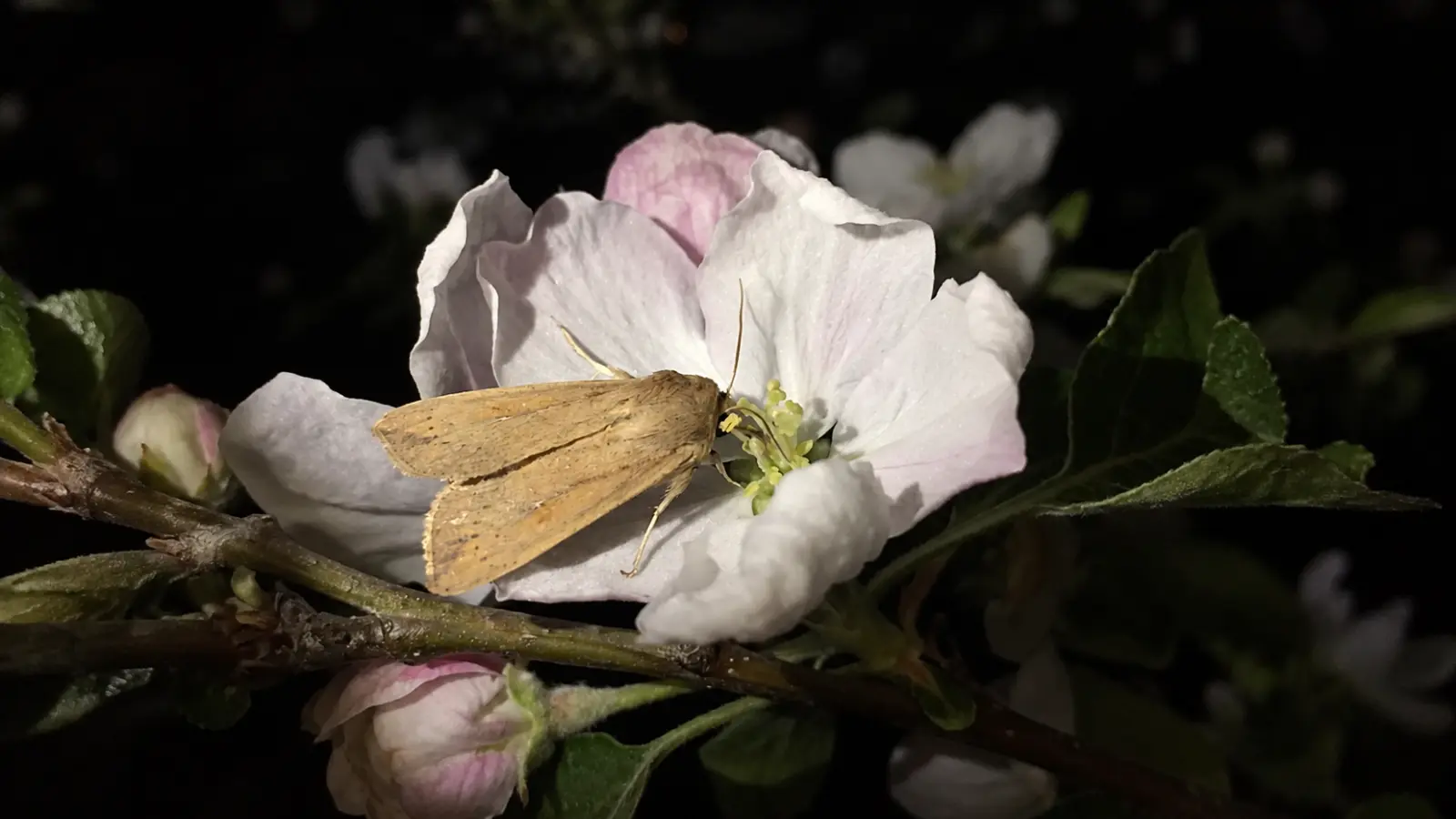
A moon garden can also function as habitat for moths and other nighttime pollinators, though one attractive border isn’t enough to create meaningful support on its own.
Sphinx moths — also called hawk moths or hummingbird moths — are the primary pollinators for many night-blooming plants, including moonflower vine and flowering tobacco. They need more than nectar sources: include native host plants for caterpillars, avoid routine pesticide use, and leave some areas of the garden undisturbed. Leaf litter, low vegetation, native grasses, and small sections of bare or lightly covered soil provide habitat that a clean, highly maintained border cannot.
Light pollution is worth taking seriously in a pollinator-focused moon garden. Excessive artificial light disrupts how moths and other nocturnal insects navigate, feed, and reproduce. Keeping fixtures shielded, dim, and directed downward protects the darker areas where wildlife activity concentrates — and preserves the contrast that makes a moon garden feel like something other than a floodlit parking lot.
Plan Bloom Succession
A moon garden shouldn’t depend on one spectacular week. Plan a sequence that carries interest from spring through fall, adjusted to your climate and hardiness zone.
- Spring: White tulips, narcissus, and sweet woodruff for cool-season fragrance. Woodland phlox (*Phlox divaricata*) in white selections works for shadier spots. Fragrant viburnum cultivars like ‘Shasta’ or ‘Cayuga’ can anchor a shrub layer.
- Summer: Moonflower vine, flowering tobacco, four o’clocks, night phlox, and white Oriental lilies. Silver foliage — lamb’s ear, artemisia, dusty miller — holds the composition together between bloom flushes. White-flowered coneflowers (*Echinacea purpurea* ‘White Swan’) bridge into late summer.
- Late summer: White garden phlox (*Phlox paniculata* ‘David’ or ‘Shortwood’) is fragrant and mildew-resistant. Night-scented stock can be sown for a second season in cooler fall weather. Annabelle hydrangeas and snowball viburnum hold their pale color into this period.
- Fall: White asters, ornamental grasses with light-catching seed plumes, white-berried shrubs like snowberry (*Symphoricarpos albus*), and dried seedheads from earlier plants. Evergreen structure from boxwood, yew, or white-variegated hollies keeps the bed legible through winter.
Bloom dates shift with latitude, elevation, and local weather — plan for overlap rather than a single date. Fragrance, foliage texture, bark color, and seedheads can carry the garden between flowering periods as reliably as any bloom.
Balance Moonlight and Artificial Lighting
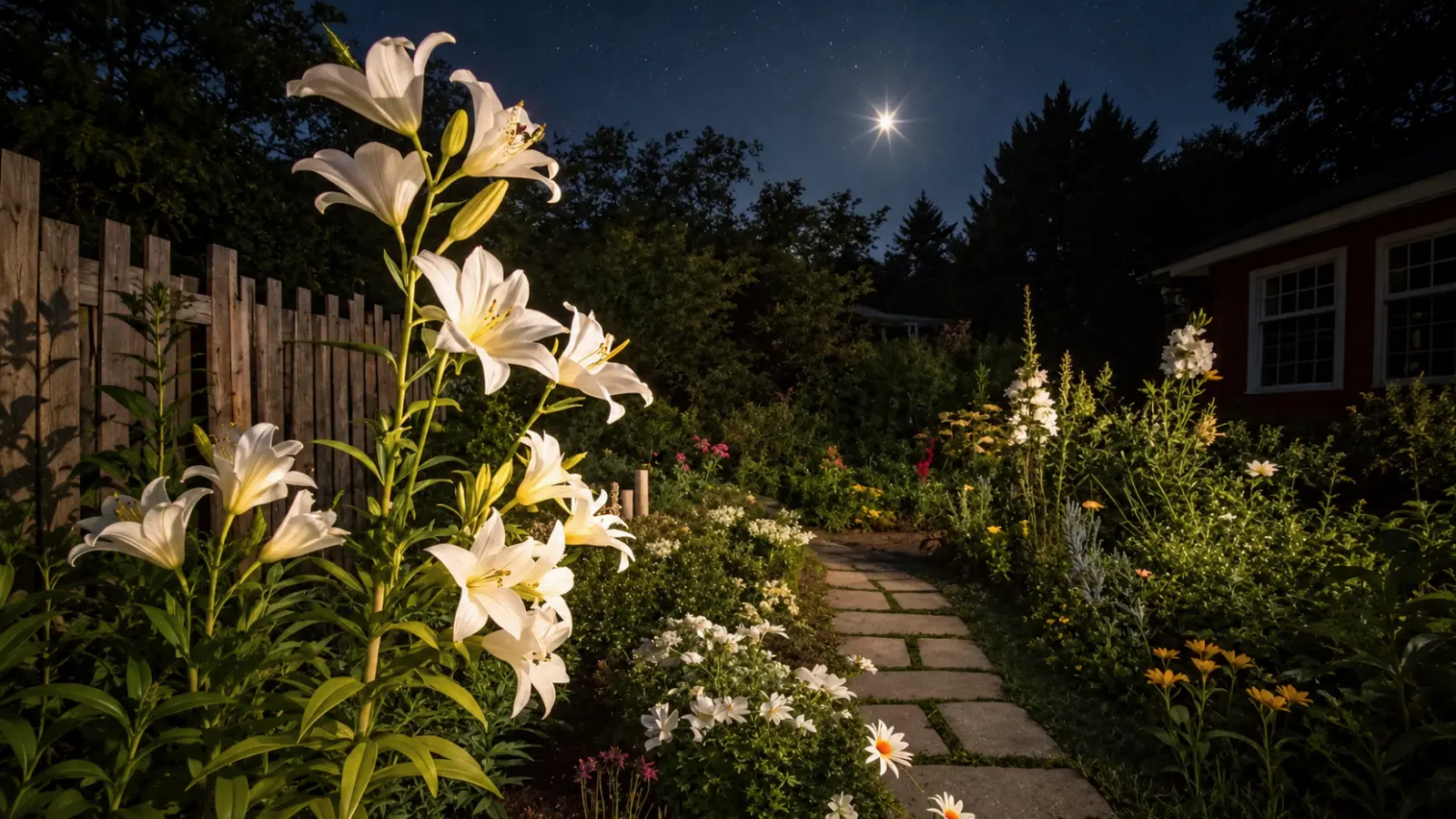
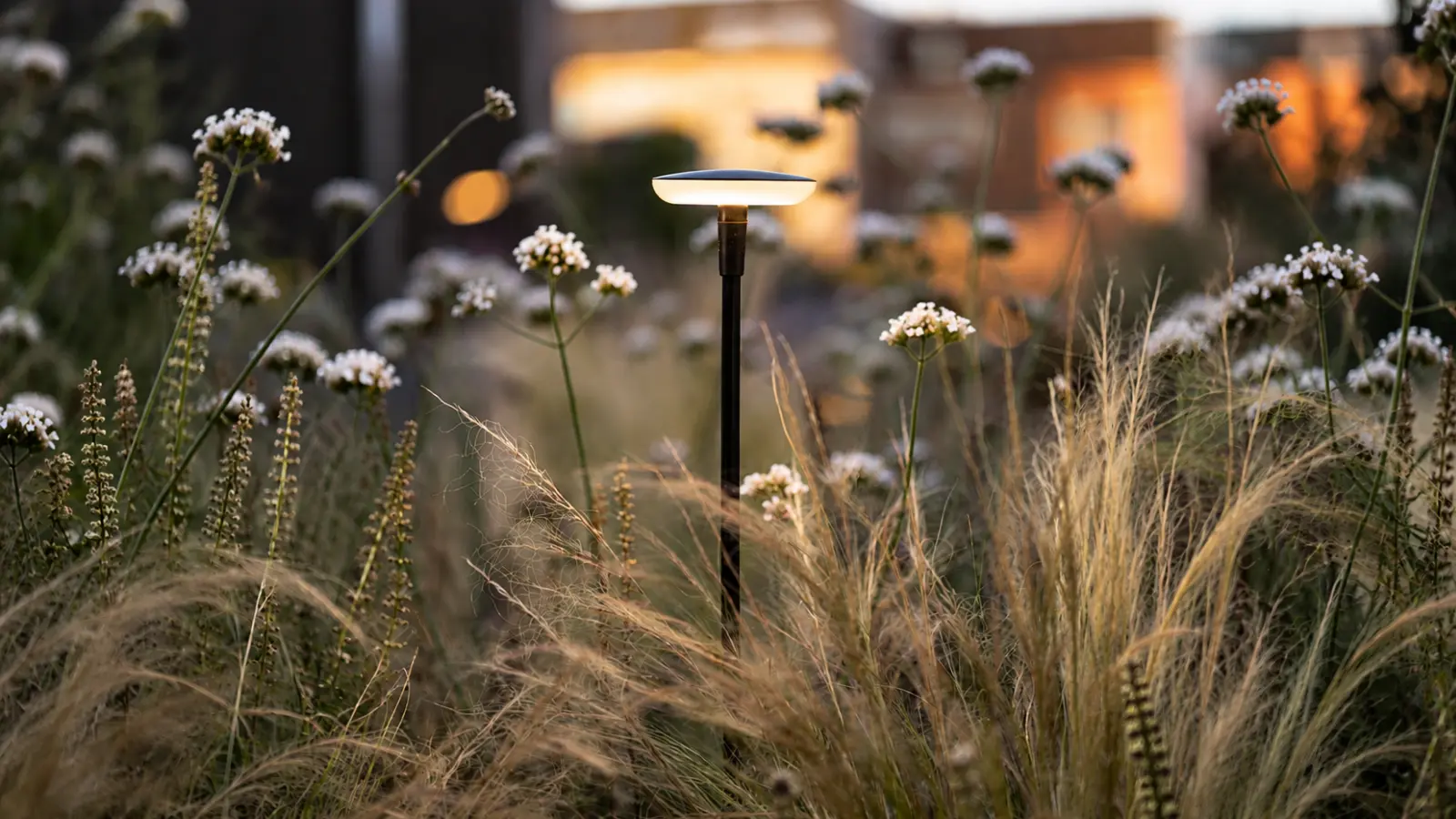
A moon garden doesn’t need to be brightly lit. Strong lighting flattens the contrast that makes pale flowers glow and reduces the garden’s value for nocturnal wildlife. Start by observing how much natural light the site already receives from the moon, neighboring buildings, and nearby streets before adding anything.
Where lighting is necessary for safe use, use fixtures that are fully shielded and aimed only at the walking surface, steps, or seating area. Choose the lowest brightness that provides useful visibility, and use timers, dimmers, or motion controls so lights aren’t running all night when no one is outside.
Color temperature matters. Warm-white LEDs in the 2700K–3000K range are the right choice for a moon garden: they enhance green foliage and pale flowers without the harsh blue-white quality of higher-Kelvin fixtures, and they align with DarkSky International guidance for residential outdoor lighting, which recommends 3000K or below to minimize disruption to nocturnal wildlife and reduce light pollution. Cool white or daylight fixtures (4000K and above) are appropriate for security and task lighting but are out of place in a garden designed around darkness and subtlety.
Keep fixtures away from foliage when possible, avoid pointing them toward windows or the sky, and preserve at least some genuinely dark areas. The goal is to make the garden safe to use, not to turn it into a display.
Add Water and Gentle Sound
Moving water can add a layer that no plant provides: sound that softens traffic noise and signals that something is alive in the dark. The right scale depends on the garden. A small recirculating bowl or birdbath with a simple pump can be enough for a compact patio planting. Larger ponds require attention to filtration, algae management, mosquito prevention, winter drainage, and child or pet safety — a significant commitment for any garden, and especially one built around low maintenance.
Ornamental grasses and certain trees — river birch, quaking aspen, bamboo in non-invasive varieties — create gentle rustling sounds in wind that add to the evening experience without any infrastructure at all. Choose sound elements that remain pleasant from the house and can be maintained as easily as the rest of the garden.
Choose Plants for Your Region
There is no universal moon garden plant list for the United States. The design goal may be the same coast to coast, but the plant choices differ considerably.
In the humid South (zones 7–9), gardenia, Confederate jasmine (*Trachelospermum jasminoides*), moonflower vine, four o’clocks, caladiums with white markings, and white crinum lilies are all well-suited. Summer nights are the most comfortable time to be outdoors, and the humidity actually intensifies fragrance. Watch invasive potential carefully — many plants naturalize aggressively in warm, wet conditions.
In the Northeast and Midwest (zones 5–7), rely on annuals like flowering tobacco, moonflower vine, and night phlox for summer interest, and perennials like white garden phlox, white coneflowers, and lamb’s ear for structure. White-flowered Annabelle hydrangeas are especially useful — they’re tough, widely adapted, and their large blooms hold pale color from midsummer into fall.
In the arid West and Southwest (zones 6–10, depending on elevation), lean on drought-tolerant plants: white desert penstemon, sacred datura (*Datura wrightii*, native to the region but toxic — see the safety section), white-flowered Apache plume (*Fallugia paradoxa*), and fragrant evening primrose species native to the region. Many Mediterranean herbs — white-flowered rosemary, sage, thyme — are silver-leaved and fragrant in the evening.
In the Pacific Northwest (zones 7–9 west of the Cascades), mild summers favor many moon garden plants, but rain and cool temperatures limit some heat-lovers. White-flowered astilbe, Japanese anemone in white selections, and fragrant mock orange (*Philadelphus coronarius*, zones 4–8) perform well here.
Use local extension services, native plant societies, and regional nurseries to verify hardiness, water needs, and invasive-plant concerns for any specific plant you’re considering. Native plants aren’t automatically the right choice for every exact microsite, but locally adapted species typically establish more easily and require fewer interventions once they’re settled in.
Check Toxicity and Nighttime Safety
Several plants commonly associated with moon gardens are toxic enough to warrant careful placement or avoidance in gardens used by children, pets, or anyone who might handle plant material without thinking.
Angel’s trumpet (*Brugmansia* spp.) is one of the most severely toxic plants in common garden use. Every part of the plant — roots, stems, leaves, flowers, and seeds — contains tropane alkaloids, the same class of compounds as belladonna and jimsonweed. It can cause serious poisoning in children, pets, and adults who ingest any part of it. It remains popular for its dramatic fragrance and flowers, but it requires careful siting and is not a good choice for any garden regularly used by young children or curious dogs.
White lilies (particularly Oriental, Asiatic, and Easter lilies) are highly toxic to cats — even small amounts of pollen or flower water can cause acute kidney failure. Keep them out of any garden that cats can access.
Four o’clocks (*Mirabilis jalapa*) have mildly toxic seeds and roots. The toxicity is lower than angel’s trumpet but worth knowing, particularly if you have young children who might handle the seeds.
Moonflower vine (*Ipomoea alba*) seeds contain indole alkaloids that can cause vomiting and hallucinations if ingested in quantity. The plant is not toxic to the touch, but the seeds should be kept away from children and pets.
The ASPCA’s online plant toxicity database is a reliable, free resource for checking specific plants against dogs, cats, and horses before purchasing.
Nighttime safety also means physical safety: stable paths with clear edges, steps marked with enough contrast to see them in low light, restrained branches over walkways, and seating that doesn’t become slippery when wet. A moon garden should be inviting after dark, but it still needs to function as a practical outdoor space.
Create a Container Moon Garden
Containers make it possible to create a small moon garden on a balcony, rental patio, or any space where permanent planting isn’t an option. A simple grouping of three pots can cover all the basics: one tall container with a moonflower vine or flowering tobacco for height and fragrance, one wide pot with white-flowered sweet alyssum (*Lobularia maritima*) or night phlox for ground-level scent, and one accent pot of lamb’s ear or dusty miller for silver foliage that holds the composition together on nights when nothing is in bloom.
Use containers with drainage holes and enough root volume for mature growth — a moonflower vine that runs 15 feet needs a large, heavy pot with a trellis attached. Light-colored or white containers reinforce the nighttime effect and stay cooler in summer sun than dark pots. Group containers rather than scattering them, both for visual impact and to make the fragrance detectable from a single seated position.
Containers also make tender plant management much easier: move angel’s trumpet or tuberose indoors before frost, rotate plants to sun as needed, and replace anything that fails without disturbing the rest of the planting. The tradeoff is that containers dry out faster than garden soil — a consistent watering routine is essential, especially for any plant producing heavy flowers in summer heat.
Design for What Happens After Sunset
A successful moon garden is not simply a collection of white flowers. It is a garden whose color, fragrance, movement and structure continue to offer something once daylight disappears, whether viewed from a window, experienced from a path or enjoyed from a nearby seat.
Start with plants suited to the site, build interest across the seasons and use artificial light only where it improves safety or access. When darkness remains part of the design rather than something to eliminate, even a small planting can develop an entirely different character at night.
COMMON QUESTIONS
Before you begin.
What is a moon garden?
A moon garden is a planting designed to be enjoyed in the evening and at night. It typically combines white or pale flowers, silver foliage, evening fragrance and other features that remain noticeable as daylight fades. The defining feature is the nighttime experience rather than a specific plant list or garden style.
How do you create a moon garden?
Choose a location you can easily see or visit after dark, such as beside a patio, path, window or entrance. Combine pale flowers, reflective silver foliage, fragrant plants and blooms that provide interest at different points in the season, while matching every plant to the site’s daytime sun, soil and moisture conditions. Add only as much artificial lighting as needed for safe movement and preserve darker areas where possible.
What are the best plants for a moon garden?
Useful moon garden plants include white-flowering varieties, plants with silver or gray foliage and species that bloom or become fragrant in the evening. Lamb’s ear, dusty miller and artemisia can provide reflective foliage, while moonflower vine, flowering tobacco, four o’clocks, night phlox and night-scented stock add evening flowers or fragrance. The final plant list should be selected for your climate, hardiness zone, site conditions and local invasive-species concerns.
Does a moon garden need full sun?
Not necessarily, but many flowering plants commonly used in moon gardens need several hours of direct sunlight to bloom well. Shadier sites can rely more heavily on pale or variegated foliage, including suitable hostas or caladiums, rather than sun-loving night bloomers. Choose plants according to the daylight conditions they require rather than assuming nighttime visibility means they can grow without adequate daytime light.
Do moon gardens need flowers that bloom only at night?
No. Night-blooming flowers can make the garden more distinctive, but they are only one part of the design. White flowers that remain open after sunset, silver foliage, evening fragrance, ornamental grasses and other light-catching plants can all contribute to the nighttime effect. Combining these elements usually creates a longer and more reliable season of interest than relying entirely on night-blooming species.
Can you use outdoor lighting in a moon garden?
Yes, but lighting should remain subtle so it does not overwhelm the pale flowers and darkness that create the moon-garden effect. Use fully shielded fixtures directed toward paths, steps or seating, keep brightness as low as practical and consider timers, dimmers or motion controls. Warm-white lighting in the 2700K–3000K range fits the design described in the article, while leaving some parts of the garden genuinely dark also helps reduce disturbance to nocturnal wildlife.