A cut flower garden is designed around flowers and foliage that will be harvested for bouquets and arrangements. Instead of preserving every bloom in the landscape, the goal is to produce strong, useful stems throughout the growing season while keeping plants easy to reach, support and cut.
The best cutting gardens combine more than showy flowers. Focal blooms, fillers, foliage, grasses, bulbs and returning perennials can work together, but each plant should earn its space through qualities such as stem length, productivity, harvest timing, vase life or usefulness in arrangements.
This guide explains how to plan and grow a cut flower garden, including how to choose flowers for cutting, arrange beds and paths, manage spacing and support, use succession planting, extend the harvest season, cut flowers at the right stage, condition stems for better vase life and keep simple records for future seasons.
What Is a Cut Flower Garden?
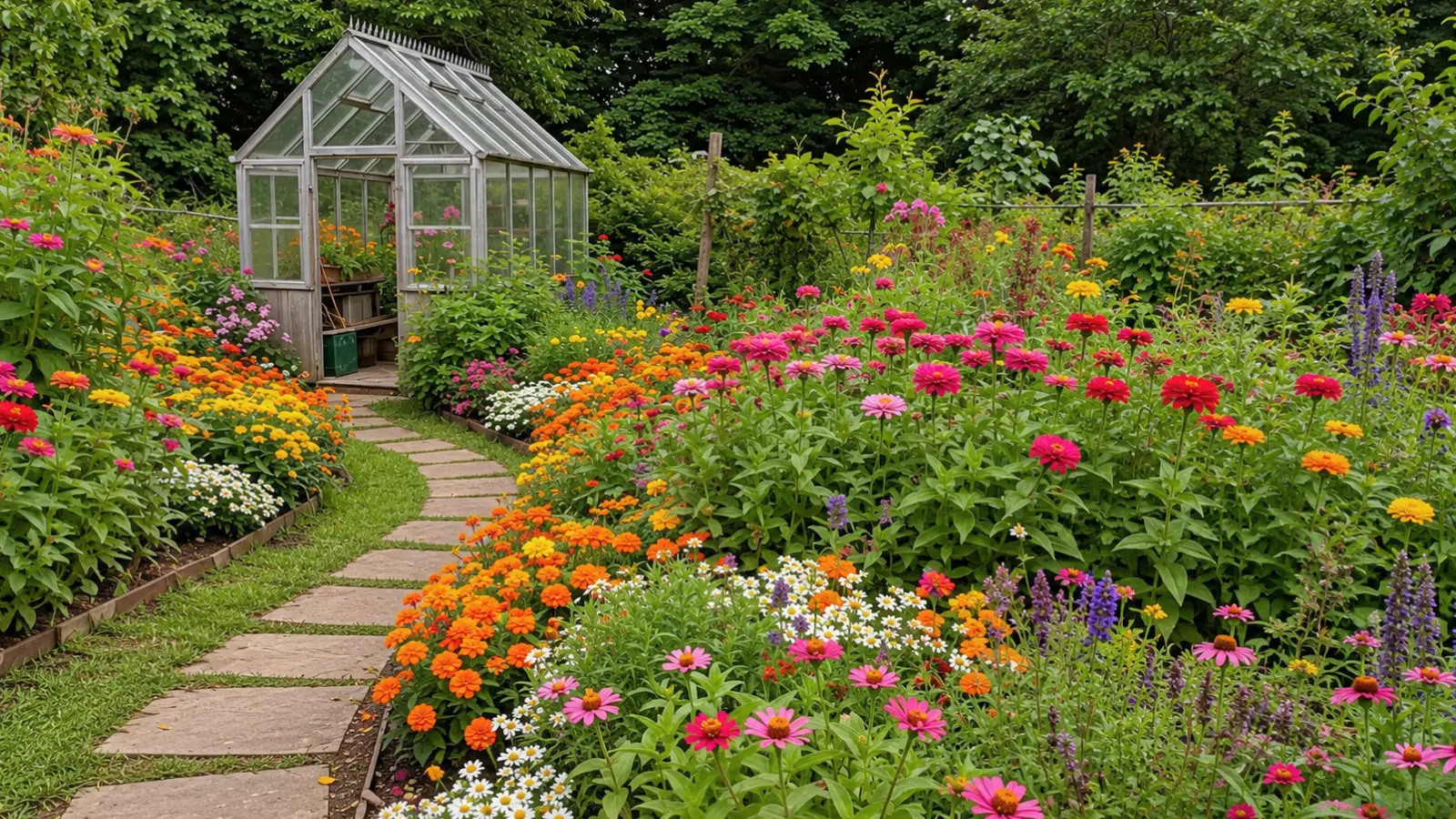
A cut flower garden works more like a vegetable garden than a traditional ornamental border: the harvest is the whole point. It may be tucked behind the house, folded into existing beds or laid out in straight rows for efficient cutting. What sets it apart from a display garden isn’t necessarily the plants — it’s the intent behind every decision.
Some plants that look excellent in the landscape make poor cutting subjects. Compact bedding varieties bred for mounded, season-long color often lack the stem length a vase requires. Varieties selected specifically for cutting, by contrast, tend to produce long stems and continue branching after the first harvest — which is exactly what a cutting garden needs.
A well-planned cutting garden includes more than showy focal blooms. Foliage, grasses, seedheads and airy filler flowers give arrangements shape and depth, making it possible to build bouquets that don’t depend entirely on one dramatic plant.
Choose the Right Site
Most cut flowers need full sun — a minimum of six hours of direct sunlight per day, and ideally more. Choose a location that’s easy to reach and close to a dependable water source. Flowers move through their stages quickly, and being nearby makes it easier to catch them at exactly the right harvest stage.
Good drainage is equally important. Saturated soil restricts root development and creates conditions where fungal diseases spread easily. Most cut flowers grow best in slightly acidic to neutral soil, generally in the pH range of 6.0 to 7.0, though this varies by plant. If you’re uncertain about fertility, pH or the history of the site, a basic soil test takes the guesswork out of any amendments you add.
Protect the garden from strong wind when you can. Bent or broken stems are difficult to use in arrangements, and constant wind speeds up water loss from both leaves and soil. A fence, hedge or a well-placed planting can provide real shelter without blocking the light your flowers need.
Choose Flowers for Cutting
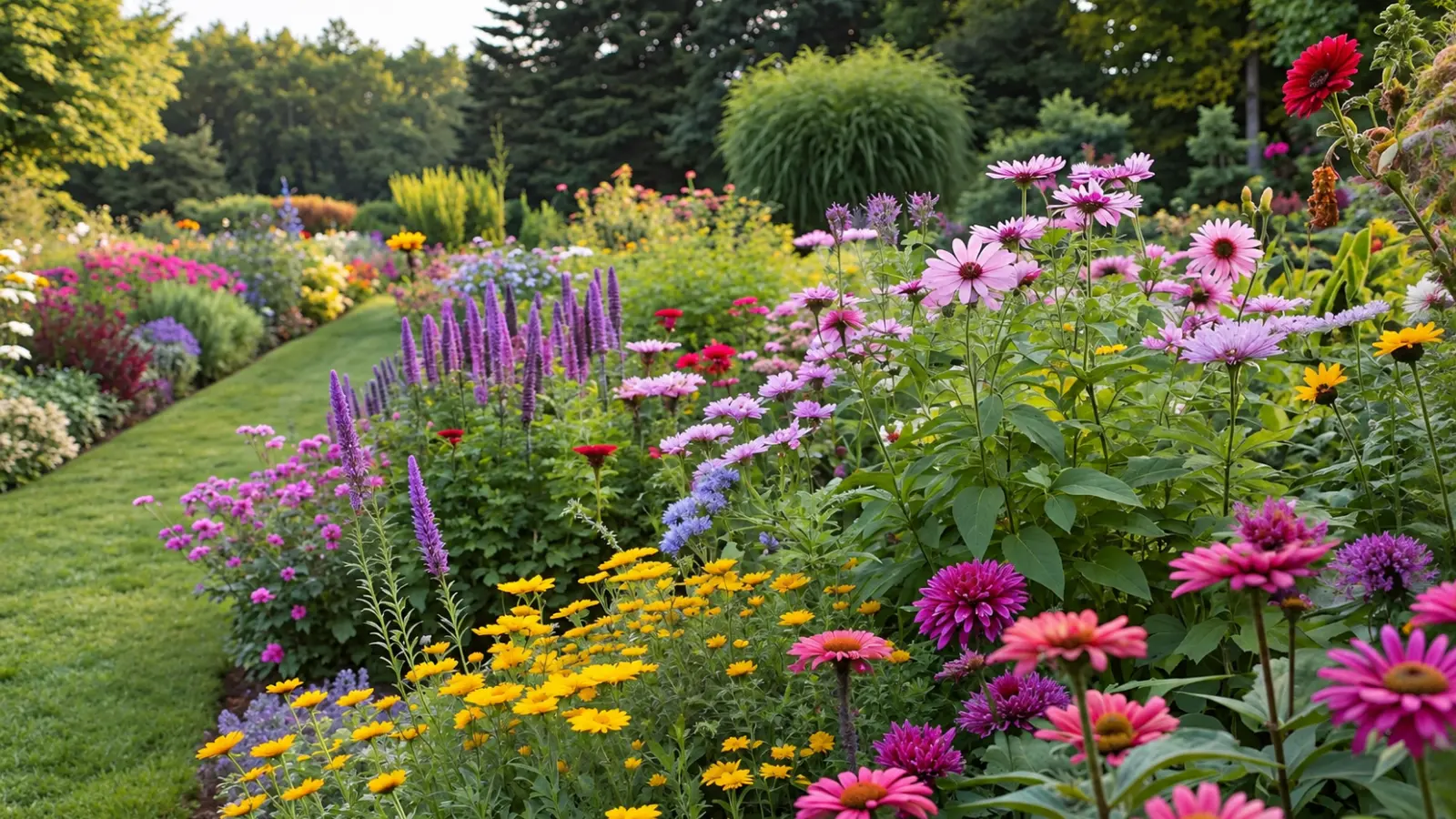
When selecting plants for a cutting garden, look for varieties described as productive, long-stemmed, repeat-blooming or bred specifically for cutting — rather than compact selections designed for landscape display. Beyond that, consider vase life, the best stage to harvest, color, fragrance, how the plant branches and whether it needs support to stay upright.
Focal Flowers
Focal flowers are the visual anchor of an arrangement — the forms a viewer’s eye settles on first. They tend to be large, bold or structurally distinct, and a cutting garden usually needs enough of them to harvest freely without leaving the bed bare. Zinnias, sunflowers, dahlias, cosmos and ranunculus are among the most productive focal flowers for home cutting gardens. Lisianthus (Eustoma) is worth including for its exceptional vase life; peonies and garden roses produce spectacular stems for a shorter seasonal window. Repeat a few varieties so your arrangements have a consistent identity from week to week.
Filler Flowers
Filler flowers occupy the space between focal stems and give arrangements lightness, texture and air. They’re often easier to grow than the showier focal flowers and are worth including in generous quantity. Ammi majus (sometimes called bishop’s flower or false Queen Anne’s lace), statice, baby’s breath, scabiosa and celosia are reliable choices that hold up well in fresh arrangements and, in several cases, dry beautifully too. Plants with many small blooms or naturally branching stems are especially useful fillers when harvested regularly.
Foliage and Grasses
Foliage pulls an arrangement together in ways flowers alone can’t. It adds volume, softens transitions between colors and gives bouquets a sense of natural structure. Dusty miller, mint, basil and fennel fronds are easy to grow and frequently useful; ornamental grasses and sedges contribute movement and fine-textured contrast to broader petals. Many foliage plants contribute useful material even when they’re not in bloom, which makes them worth the space year-round.
Harvest Stage and Vase Life
Not every flower should be cut when it’s fully open. Some hold longer when harvested in bud or at the first hint of color; others need to be fully open before cutting or they won’t continue to develop in water. Read the variety information and pay close attention to how each plant performs in a vase during your first season — that observation is worth more than any general guideline.
Annuals vs. Perennials
Annuals like zinnias, cosmos and lisianthus complete their life cycle in a single season and are ideal for filling a new bed quickly. They tend to give a long, generous harvest before they’re done, but they need to be sown or replanted each year. Perennials like peonies, yarrow and black-eyed Susan return from year to year and add dependable seasonal stems, distinctive foliage or structural interest — but few perennials bloom continuously for an entire growing season.
| Plant Group | Strength for Cutting | Planning Consideration |
|---|---|---|
| Annuals | Long harvest and many varieties | Need yearly sowing or replanting |
| Perennials | Repeat growth and established structure | Often have a shorter flowering window |
| Bulbs and corms | Early or seasonal specialty stems | Timing and winter care vary by plant |
| Foliage and grasses | Texture and volume for arrangements | Need space even when flowers are not present |
A cutting garden that mixes all four groups gives you something to harvest across a much longer season than any one of them could provide on its own.
Plan the Cut Flower Garden Layout
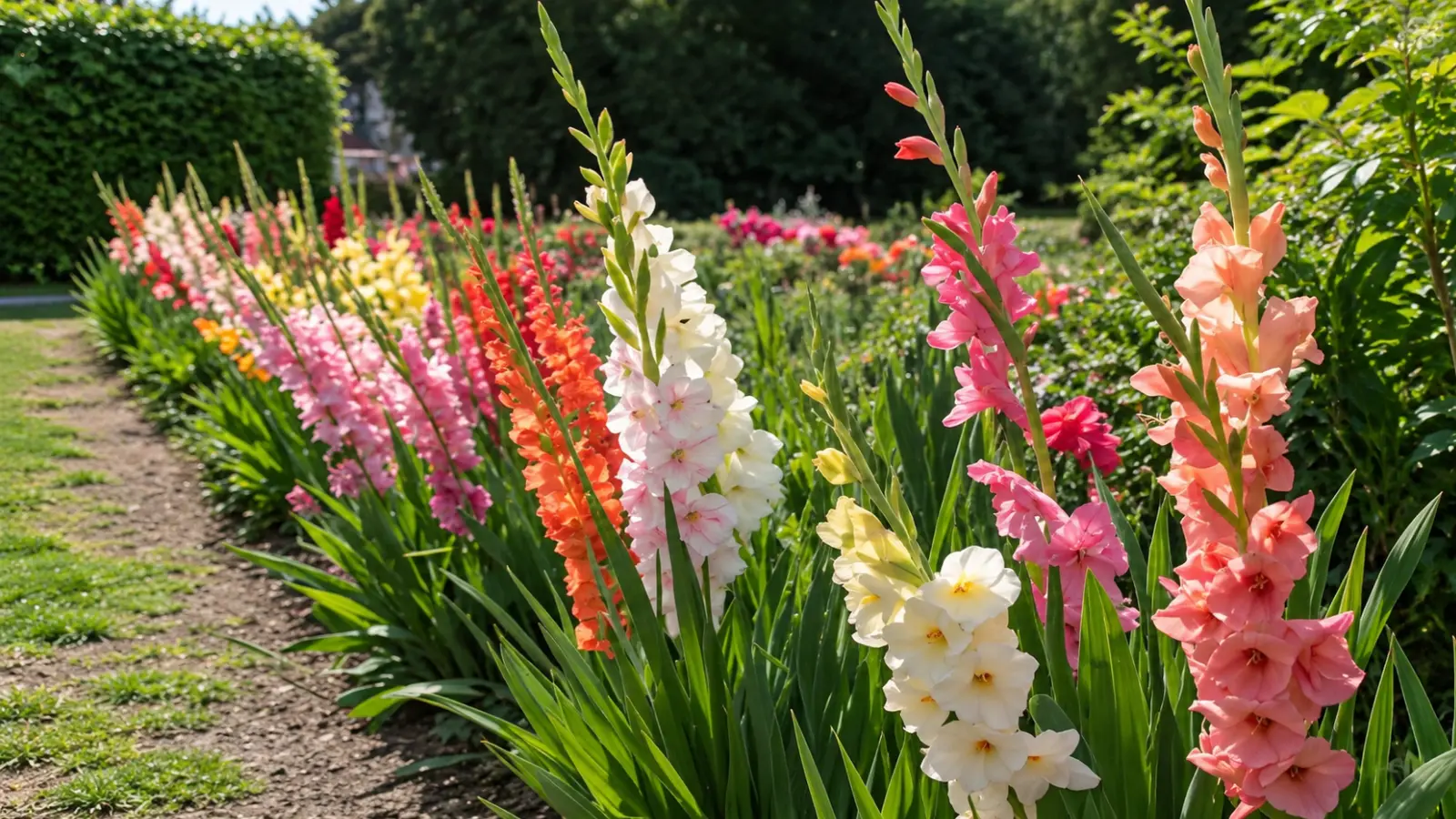
A productive cutting garden layout prioritizes access over appearance from the patio. Straight rows or narrow beds make it easier to sow, weed, support, harvest and track what’s growing — even when they’re less picturesque than a traditional border.
Place the tallest plants where they won’t shade shorter flowers. In a freestanding bed, that usually means putting the tall crops on the north side. Use trellises and support structures where you can reach them without stepping into the bed.
Group plants by harvest time, height and care needs. Keep the flowers you cut most frequently close to the main path, and place plants with less frequent harvests farther back. Leave enough room to work comfortably — you’ll want space for a bucket, pruners and somewhere to set stems while you cut.
A useful layout typically includes:
- Rows for the main annual cutting flowers
- A perennial section for returning stems and foliage
- A border or bed for filler flowers and grasses
- Space for trellises, netting or stakes
- A nearby harvest station with clean water and containers
- Paths wide enough for regular access and maintenance
The goal is a garden that’s as easy to work in as it is to harvest from. A thoughtful layout saves real time every week during the growing season.
Use Spacing and Support Strategically
Cut flower crops are often planted more closely than the same plants would be in a display bed — tighter spacing encourages longer stems and makes better use of limited ground. That said, the right distance still depends on the species, cultivar, airflow, soil and climate, so start with the plant’s recommended spacing and adjust carefully from there.
Don’t crowd plants to the point where foliage stays wet, stems grow weak or you can no longer reach in to harvest. Poor airflow is one of the most consistent contributors to fungal disease in cutting gardens, and it’s harder to correct once plants are established.
Install support before stems begin to lean — not after. Horizontal netting (sometimes called corral netting or grow-through netting) stretched a foot or two above the soil is one of the most practical systems for tall cutting flowers: plants grow up through the grid and support one another as a group. Stakes, rings and brushy supports work well for individual plants or smaller clumps. Whatever system you use, position it so you can still reach the stems and remove spent flowers without a struggle.
Use Succession Planting
Succession planting stretches the harvest by staggering when you sow or plant. Instead of growing one large group that blooms and finishes together, divide some crops into two or three smaller plantings set a few weeks apart. The exact interval depends on the variety and your climate, but the principle applies to most fast-maturing annuals and leafy filler plants.
Use open spaces productively as the season moves. When cool-season flowers like snapdragons and ranunculus finish in early summer, that ground can go to warm-season crops like zinnias or dahlias. Where the climate allows, those beds can then support late-season flowers — rudbeckia, ornamental grasses, seedheads — well into fall.
Leave some room in your plan for future plantings. A bed that’s completely full on day one leaves no flexibility when an early crop wraps up or when a variety performs so well you want to add another round.
Extend the Flowering Season
A longer harvest comes from layering bloom times and using more than one growing method. Spring bulbs and early perennials can open the season; annuals carry the productive middle; and late perennials, grasses and seedheads can extend it well into fall. In areas with mild winters, some cool-season annuals — snapdragons and sweet peas among them — can even bridge late winter into early spring.
In colder parts of the country, season extension often means starting seeds indoors weeks before the last frost, using row covers or low tunnels for protection and choosing varieties with staggered maturity dates. In warmer regions, the most productive cutting window may shift away from the hottest part of summer entirely, with spring and fall being the real seasons for many crops.
Lean on local frost dates and crop-specific timing rather than broad seasonal labels like “plant in spring.” Soil temperature and the individual plant’s requirements are more reliable guides than the calendar alone.
Harvest Flowers at the Right Time
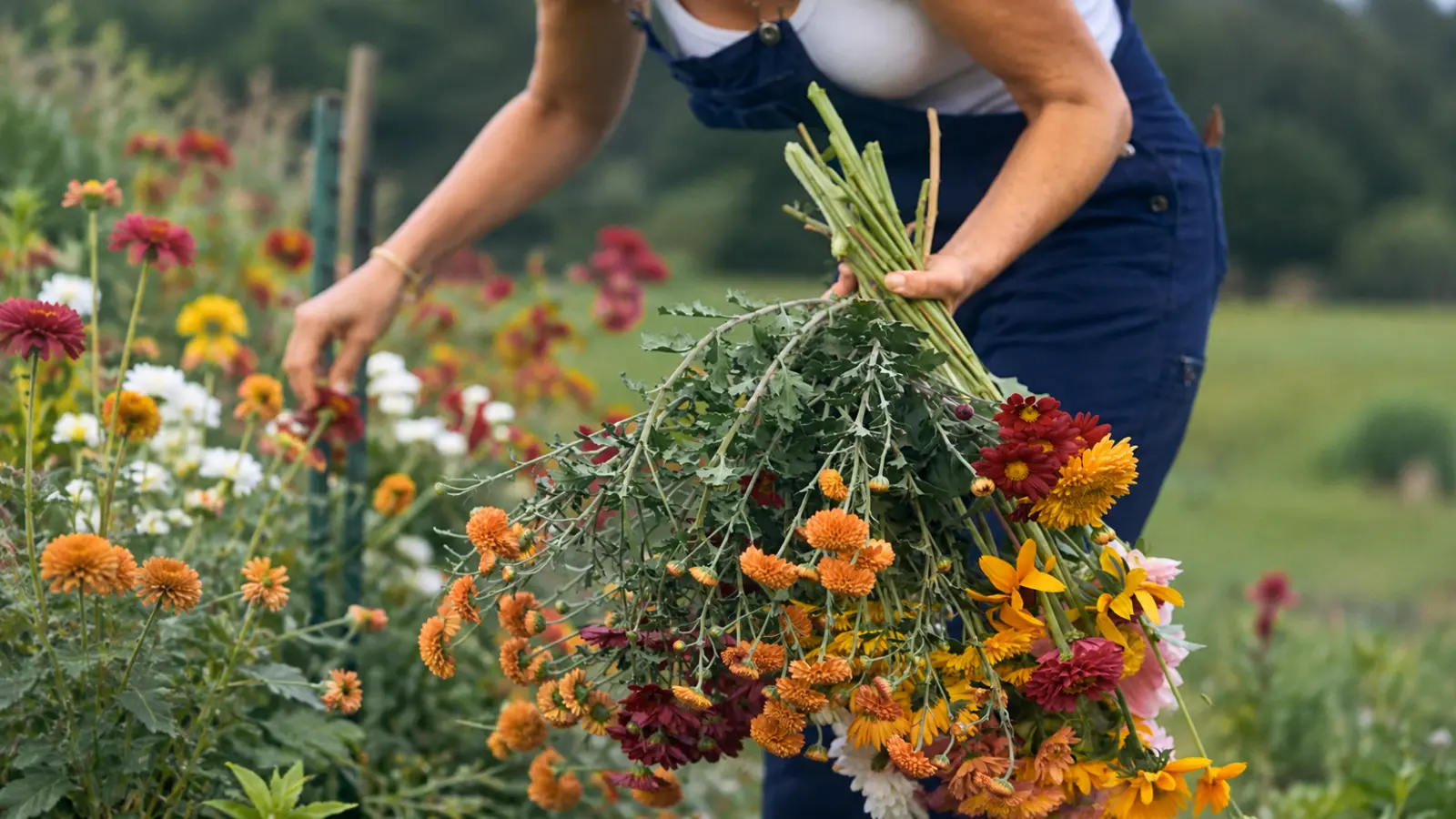
Harvest timing affects both vase life and how the plant responds afterward. For most flowers, early morning is the best time to cut: stems are well hydrated after the cooler night, and the plant hasn’t yet been stressed by afternoon heat. Early evening also works in summer, after peak heat has passed. Avoid cutting during the hottest part of the day.
Use clean, sharp pruners and cut stems longer than the final arrangement will require — it’s easy to trim them down later, but you can’t add length back. Strip any foliage that would fall below the water line and place stems in a clean bucket of water the moment they’re cut.
Aim just above a healthy side shoot, leaf node or developing bud when the plant responds well to that kind of harvest. For plants that branch naturally — zinnias, cosmos and dahlias are good examples — regular cutting actually encourages more stems. Other plants have a more limited seasonal supply, so it’s worth knowing which type you’re working with.
Condition Stems for Arrangements
Conditioning gives freshly cut stems time to fully hydrate before they go into an arrangement. Recut the stems at an angle with a clean tool (so the cut end doesn’t rest flat against the bucket bottom, blocking water uptake), remove any foliage that would be submerged and place the stems in a clean container with a few inches of cool water.
Keep the bucket in a cool spot away from direct sun and strong drafts while the stems hydrate. A few hours is the minimum; overnight in a cool room produces better results for most flowers. After conditioning, move the stems into a vase with fresh water and a commercial floral preservative, which lowers the water’s pH and slows bacterial growth — both of which help extend vase life.
Change vase water every couple of days and remove fading flowers or damaged foliage as you go. Vase life varies quite a bit by species: ranunculus and lisianthus often last ten days or more, while poppies and sweet peas may only give you three to five. Keeping notes on what holds up best under your conditions helps you plan a garden that suits how you actually use it.
Keep Simple Garden Records
Record keeping pays off in a cutting garden more than in almost any other type of garden, because you’re evaluating both garden performance and vase performance at once. Note the variety, sowing date, planting location, first bloom, best harvest stage, stem length, branching habit, vase life and whether the plant produced new stems after cutting.
These observations let you improve next year’s layout and avoid giving space to plants that don’t suit your arrangements or your working style. They can also reveal which flowers needed earlier support, more succession plantings or a different harvest stage than you’d initially assumed.
Take a quick photo of successful bouquets and label the plants that contributed to them. Over time, that becomes a personal reference for the combinations you actually enjoy making — which is more useful than any general guide.
How to Start a Cut Flower Garden
For a first season, choose a manageable bed with full sun and easy water access. Pick a small mix of annuals, one or two perennials, a foliage plant and a filler flower — a focused selection you can observe and support well — rather than buying more varieties than you can keep up with.
- Measure the site and observe its sunlight and drainage over a few days.
- Test the soil and amend it based on the results.
- Choose varieties with useful stem length and staggered bloom times.
- Sketch out the rows, paths, support structures and spaces for succession plantings.
- Plant according to local timing and water regularly until plants are established.
- Harvest often and record what performs well.
Begin with flowers you’d genuinely bring indoors or give away. The most useful cutting garden isn’t the one with the longest plant list — it’s the one that reliably produces stems you want to arrange.
Grow for the Bouquet, Not Just the Bed
A successful cut flower garden is planned around what happens after the stems leave the garden. Productive varieties, useful stem length, accessible beds, well-timed harvests and a balanced mix of focal flowers, fillers and foliage make it easier to create arrangements throughout the season.
Start with flowers you genuinely want to bring indoors, then pay attention to which varieties produce well, recover after cutting and last in a vase. With each season, those observations can turn even a modest growing space into a more reliable and personal source of flowers.
COMMON QUESTIONS
Before you begin.
What is a cut flower garden?
A cut flower garden is a growing space designed specifically to produce stems for bouquets and floral arrangements. Unlike a traditional flower bed, it prioritizes long stems, repeat blooming, vase life, easy harvesting and continuous production. Annuals, perennials, bulbs, foliage plants, grasses and filler flowers can all be part of the garden.
What are the best flowers for a cut flower garden?
Good cut flowers combine useful stem length, reliable production and acceptable vase life. Zinnias, cosmos, sunflowers, dahlias, ranunculus, lisianthus, snapdragons and peonies are popular choices, while plants such as statice, scabiosa and ammi provide useful filler stems. Choose varieties bred or recommended for cutting rather than compact bedding cultivars that may produce stems too short for arrangements.
How do you start a cut flower garden?
Choose a manageable site with good drainage, convenient water access and at least six hours of direct sunlight for most cutting flowers. Prepare the soil according to a soil test, select flowers with different bloom periods and plan narrow beds or rows that are easy to reach. Install supports early, leave room for succession plantings and begin with a focused selection of flowers you genuinely want to bring indoors.
How much sun does a cut flower garden need?
Most cut flowers perform best with at least six hours of direct sunlight per day, and many flower more heavily with additional sun. Insufficient light can reduce flowering and contribute to weaker or shorter stems. The exact requirement varies by species, so match each plant to the light conditions available in your garden.
When is the best time to cut flowers for bouquets?
Early morning is generally the best time because stems are well hydrated after the cooler night. Early evening can also work during hot weather, but avoid harvesting during the hottest part of the day when plants are under greater water stress. Use clean, sharp pruners and place stems into clean water immediately after cutting.
How do you keep a cut flower garden blooming all season?
Combine plants with different flowering periods and use succession planting for annuals that have a limited production window. Sow or transplant smaller batches several weeks apart rather than planting everything at once, and replace finished cool-season crops with warm-season flowers when appropriate. Regular harvesting also encourages additional branching and flower production in many cut-and-come-again plants such as zinnias, cosmos and dahlias.