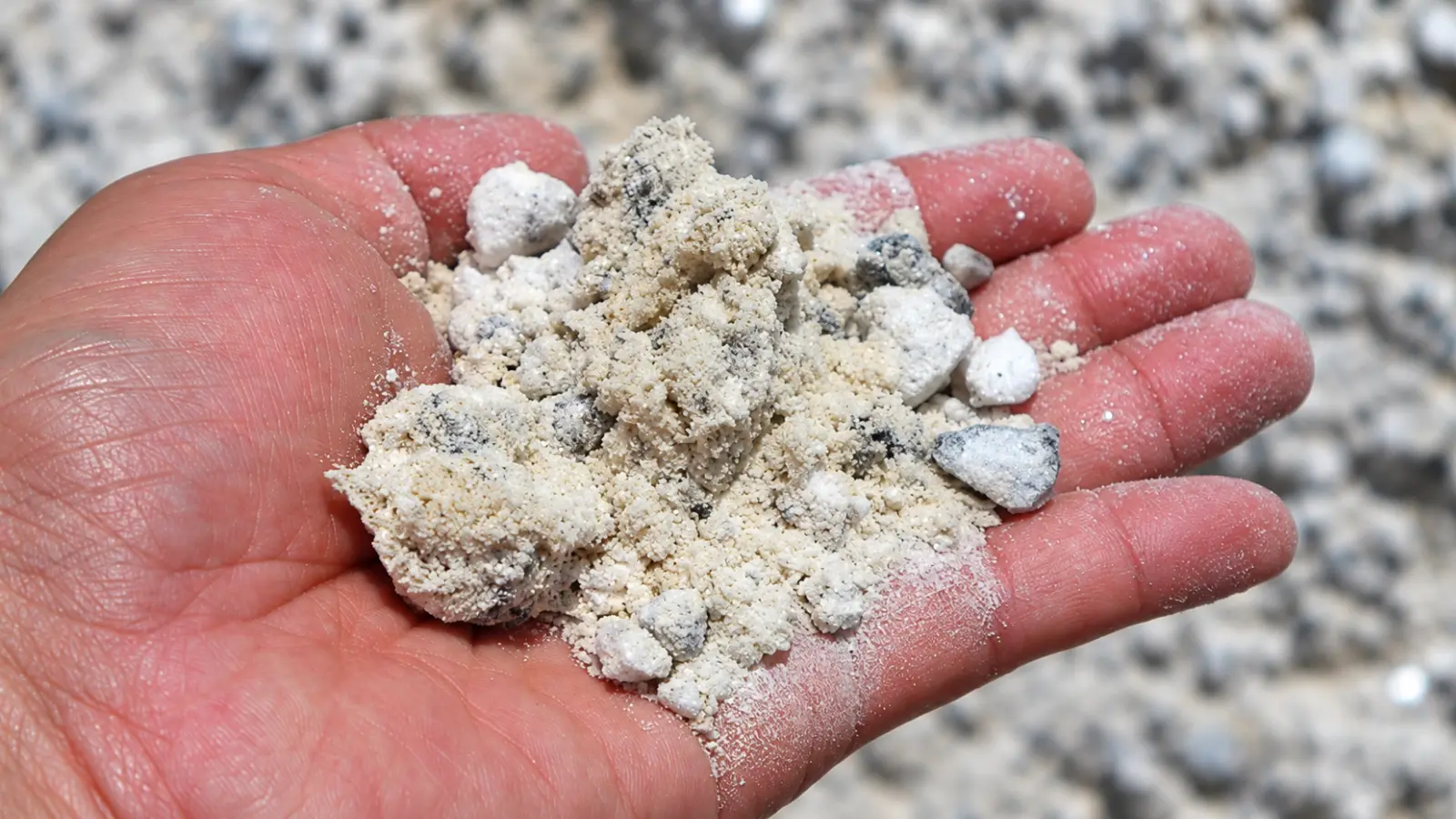
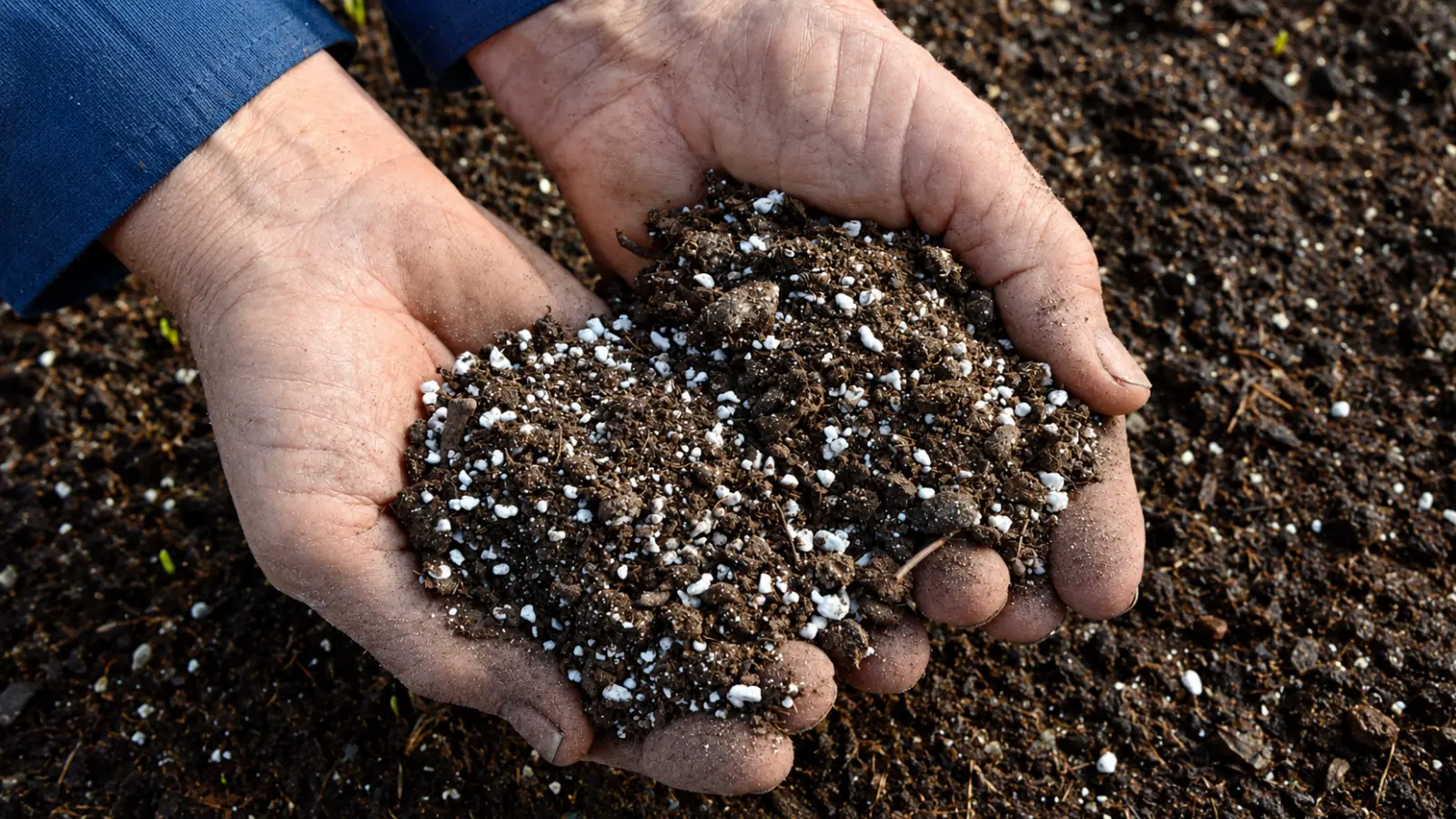
Perlite is the lightweight white material commonly found in potting mixes. Made from expanded volcanic glass, it creates pore space around roots, helping a growing medium stay lighter, better aerated and able to drain excess water more freely.
Its usefulness depends on where it is used. Perlite works especially well in containers, houseplant mixes, seed-starting media and propagation mixes where the entire growing medium can be controlled, but adding small amounts to native garden soil will not change clay texture, correct compaction or solve a poorly drained site.
This guide explains what perlite does for soil and potting mixes, where it works best, how much to use as a starting point, how to mix it correctly, how it compares with vermiculite and why some in-ground soil problems need a different solution.
What Is Perlite?
Horticultural perlite is made from volcanic glass that expands when heated, creating very light, porous white particles. It is generally added to a growing medium for its physical properties rather than as a meaningful source of plant nutrition. It’s also close to pH-neutral, so it won’t push a mix more acidic or alkaline, and the heat used to expand it leaves the material sterile — free of weed seeds, pests, and disease organisms.
The particles are not all the same size. Fine perlite blends more evenly into seed-starting media, while coarser grades create larger air spaces in chunkier houseplant and container mixes. Choose the grade that suits the mix instead of assuming every white particle in a bag behaves identically.
What Does Perlite Do for Soil?
Perlite acts mainly as a spacer. It interrupts fine particles and organic components so that the mix has more pore space. Those pores help roots access oxygen and allow excess water to drain after watering.
- Improves aeration: an airy mix is less likely to remain uniformly dense around roots.
- Supports drainage: water can move through the container medium more readily when drainage holes and watering practices also work.
- Reduces weight: this can make a large container easier to move than a mix based entirely on dense material.
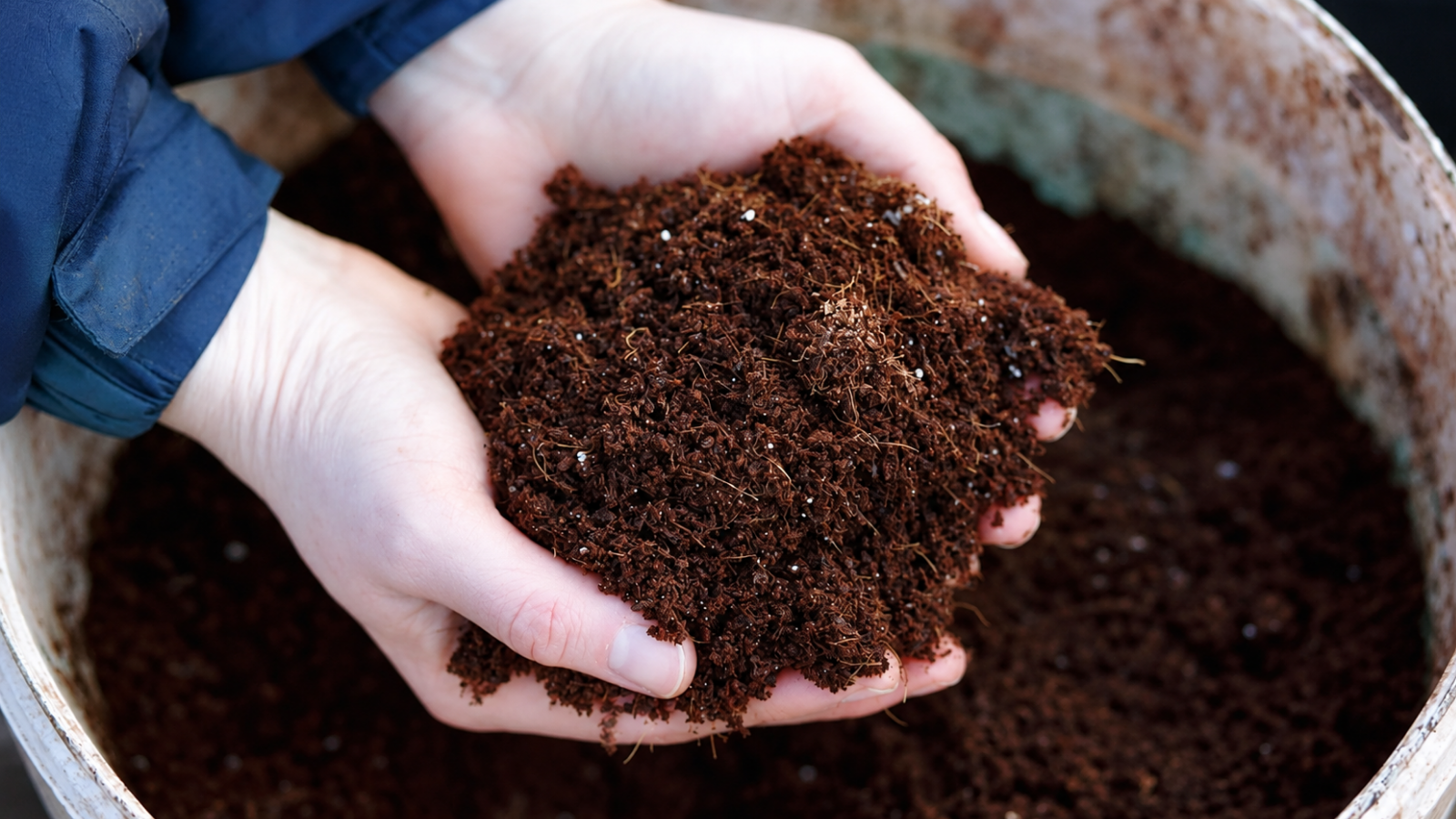
- Helps tailor a mix: perlite can balance ingredients that retain substantial moisture, such as peat, coir, compost, or fine potting mix.
Perlite does retain some water on its surface, but it is chosen chiefly for air space and drainage. It does not fertilize plants, meaningfully change pH, or replace a pot with an open drainage hole.
Where Perlite Works Best
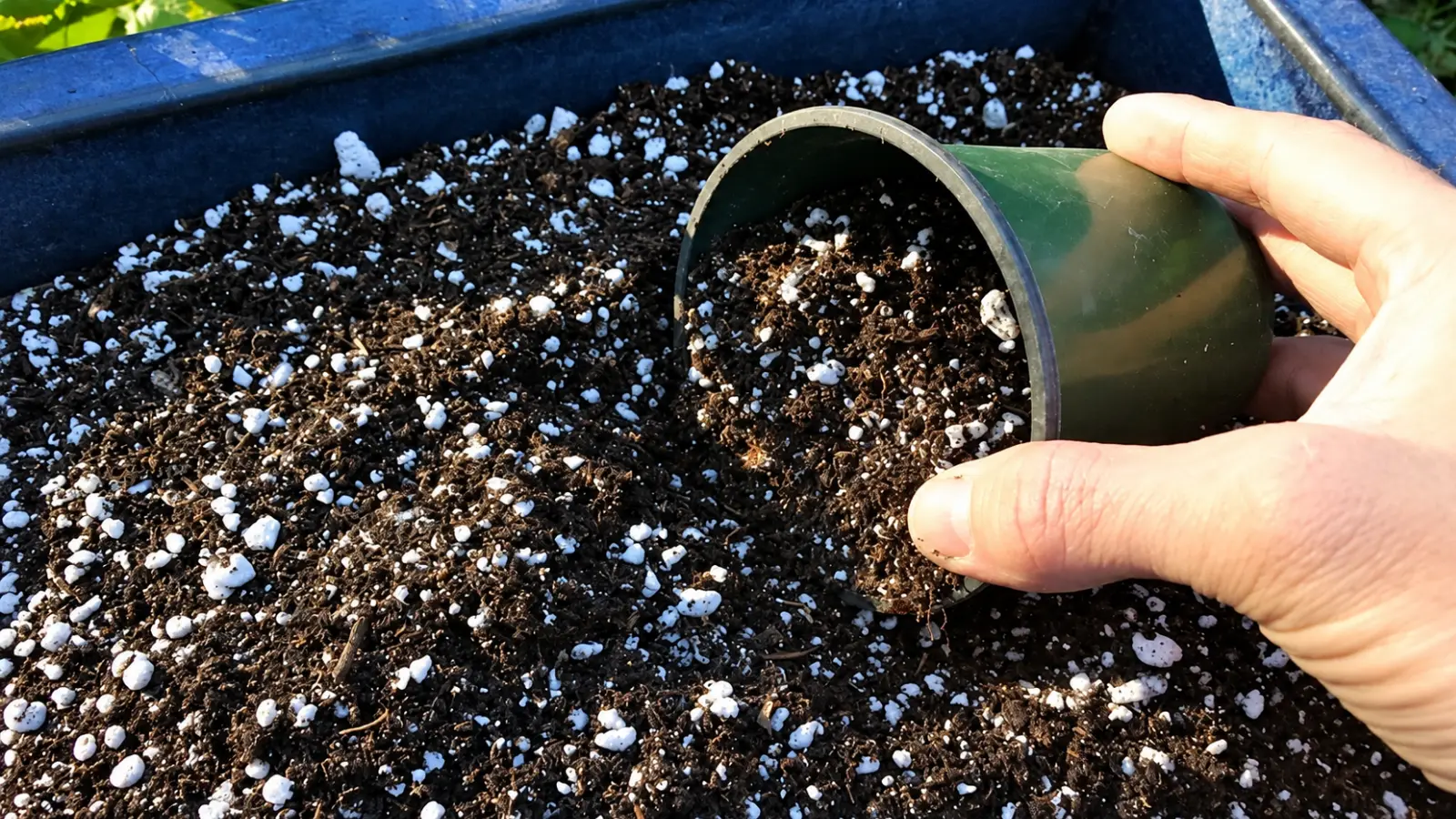
Perlite is most valuable where the gardener controls the entire growing medium. In a pot, roots live within a small volume and water cannot move indefinitely downward as it can in the ground, so the balance of water and air is particularly important.
- Houseplants and containers often benefit when a standard mix feels dense or stays wet too long.
- Seed-starting and propagation mixes may use finer perlite for a light, evenly moist medium.
- Succulents, cacti, and plants sensitive to wet roots commonly need a coarser, more freely draining blend, though the exact mix should still reflect the species and indoor conditions.
Commercial perlite potting soil already contains a planned proportion of perlite. Before adding more, notice how that mix behaves after watering; a product name is less informative than the actual drainage, root health, and drying rate in your home or garden.
How Much Perlite to Add to Soil
There is no one correct percentage for every plant. These ratios are useful starting points by volume for mixing perlite with potting soil, not fixed rules. A deep pot, low light, cool room, or plant with a small root system can stay wet longer than the same mix in a warm, bright setting.
| Use | Starting Mix | What to Watch |
|---|---|---|
| General houseplants | 1 part perlite to 3–4 parts potting mix | Water should drain freely without the mix drying immediately. |
| Plants needing extra drainage | 1 part perlite to 1–2 parts potting mix, often with bark or grit | Very porous mixes may need more frequent watering. |
| Seed-starting mix | About 1 part perlite to 2–3 parts fine base material | Use a fine grade and avoid large pieces around tiny seeds. |
| Rooting cuttings | Perlite alone or blended with a moisture-holding component | Maintain even moisture and clean tools; rooting needs vary by plant. |
Measure by volume, mix thoroughly before planting, and change only one variable at a time when refining a mix. A container that dries too fast may need less perlite or more water-holding material; one that stays wet may need a more open mix and a review of watering, pot size, and light.
Mixing Perlite With Potting Soil
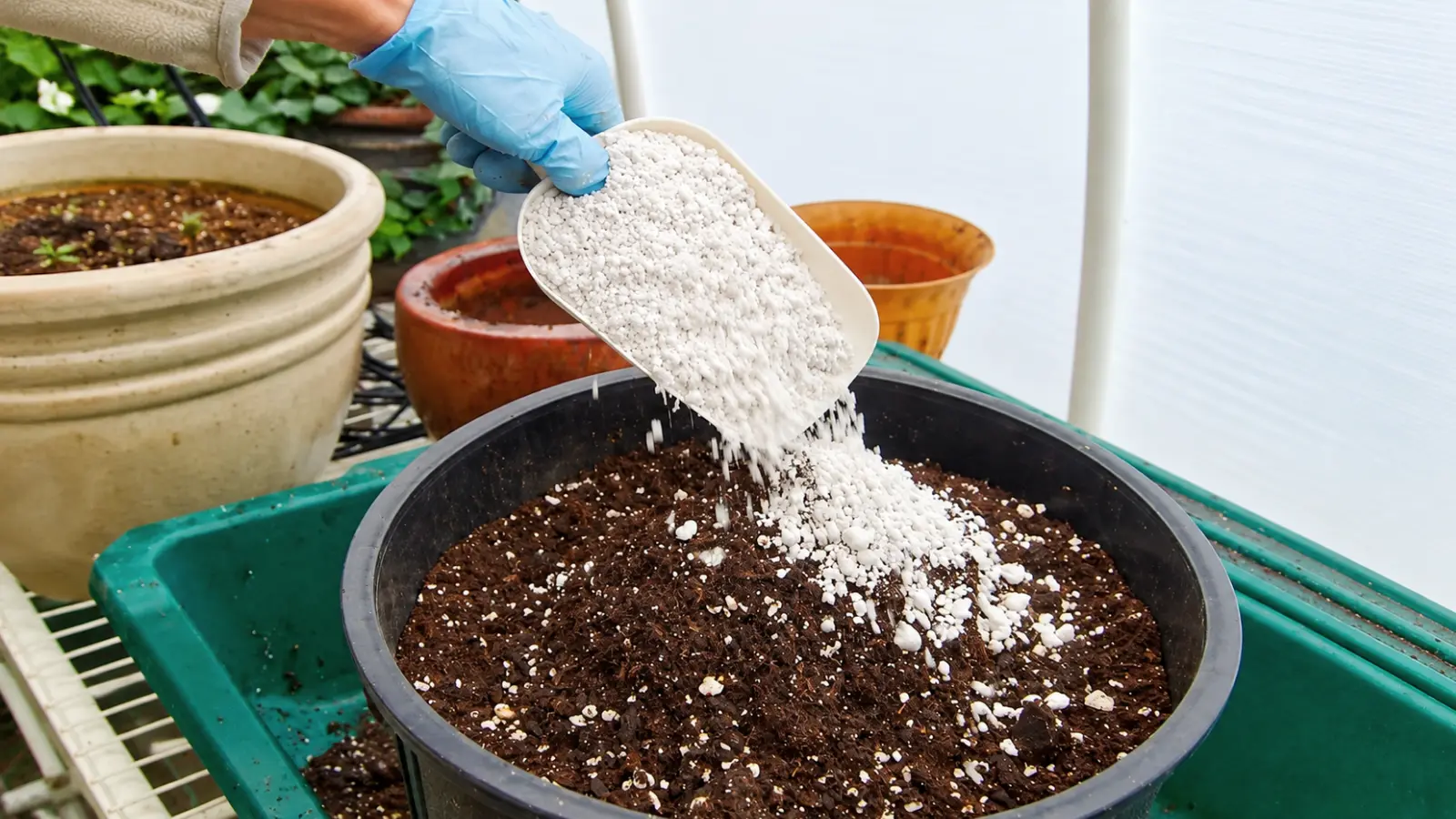
Mix perlite into slightly damp potting medium in a bucket or tub before filling the pot. Dampening first reduces dust and helps distribute the lightweight particles instead of letting them float or separate at the top.
- Choose a pot with drainage holes and a base mix appropriate for the plant.
- Lightly moisten the base mix and perlite so neither produces a cloud of dust.
- Measure the components by volume and mix until the white particles are evenly distributed.
- Plant at the same depth it was growing, water thoroughly, and let the container drain fully.
Do not put a layer of perlite only at the bottom of a pot. The goal is a uniformly structured root zone, not a false drainage layer below dense soil. It’s also normal for a few particles to work their way up to the surface after months of watering; that surface drift doesn’t mean the perlite lower in the pot has stopped doing its job.
Perlite in Garden Soil: Its Limits
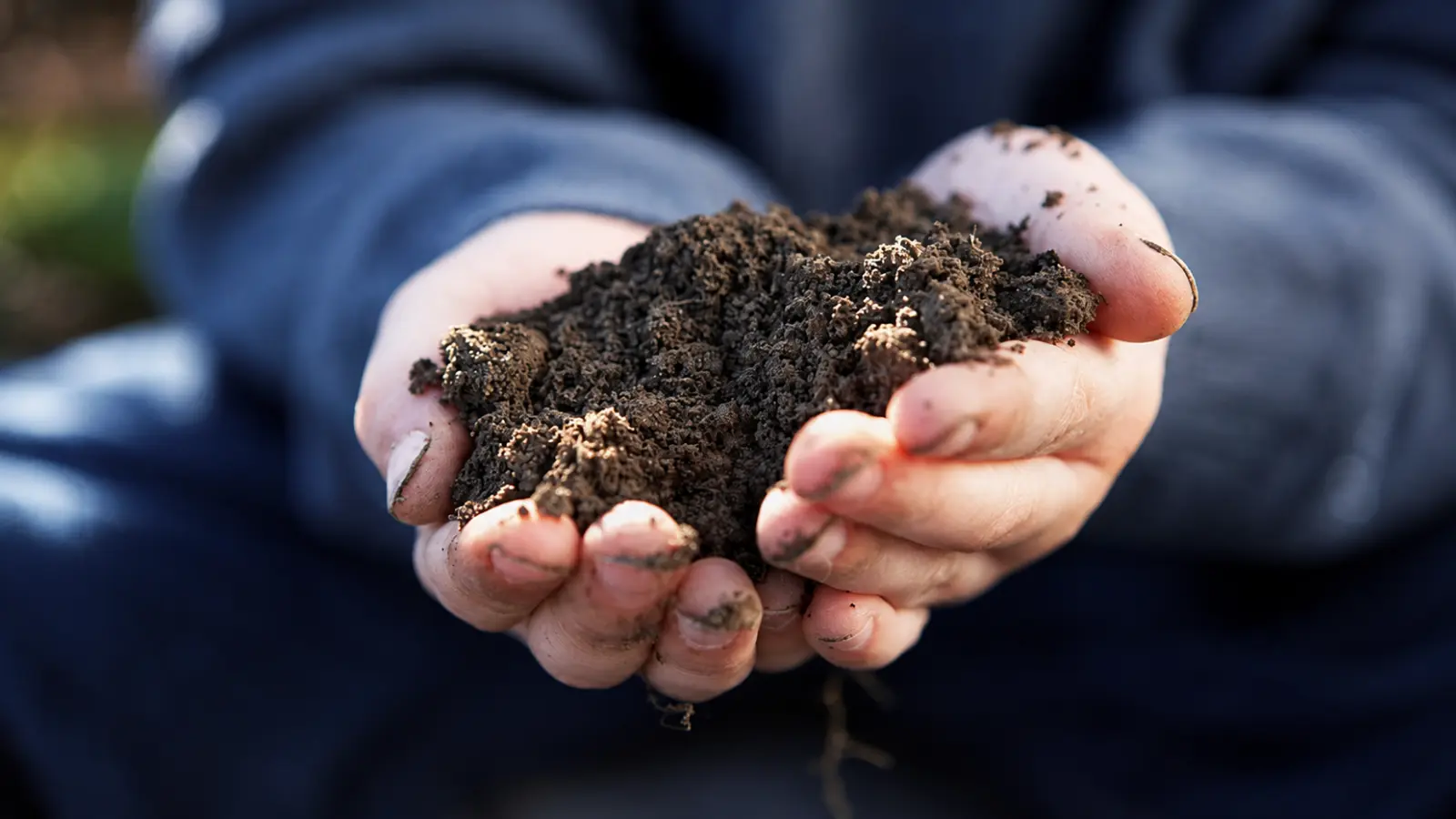
Perlite in soil can be useful in a small, purpose-built raised-bed blend or when mixing a large volume of media for containers. In established in-ground garden soil, however, it is usually an expensive and short-lived way to chase drainage. The volume needed to change the whole root zone is far greater than most gardeners expect.
For native clay or compacted soil, use organic matter, surface mulch, traffic control, drainage assessment, and appropriate plants as the first tools. Perlite does not change the proportion of sand, silt, and clay, and it cannot correct a hardpan layer or landscape grading problem.
For broader material choices, see Soil Amendments; for the permanent particle makeup of your soil, see Soil Texture.
Perlite vs. Vermiculite
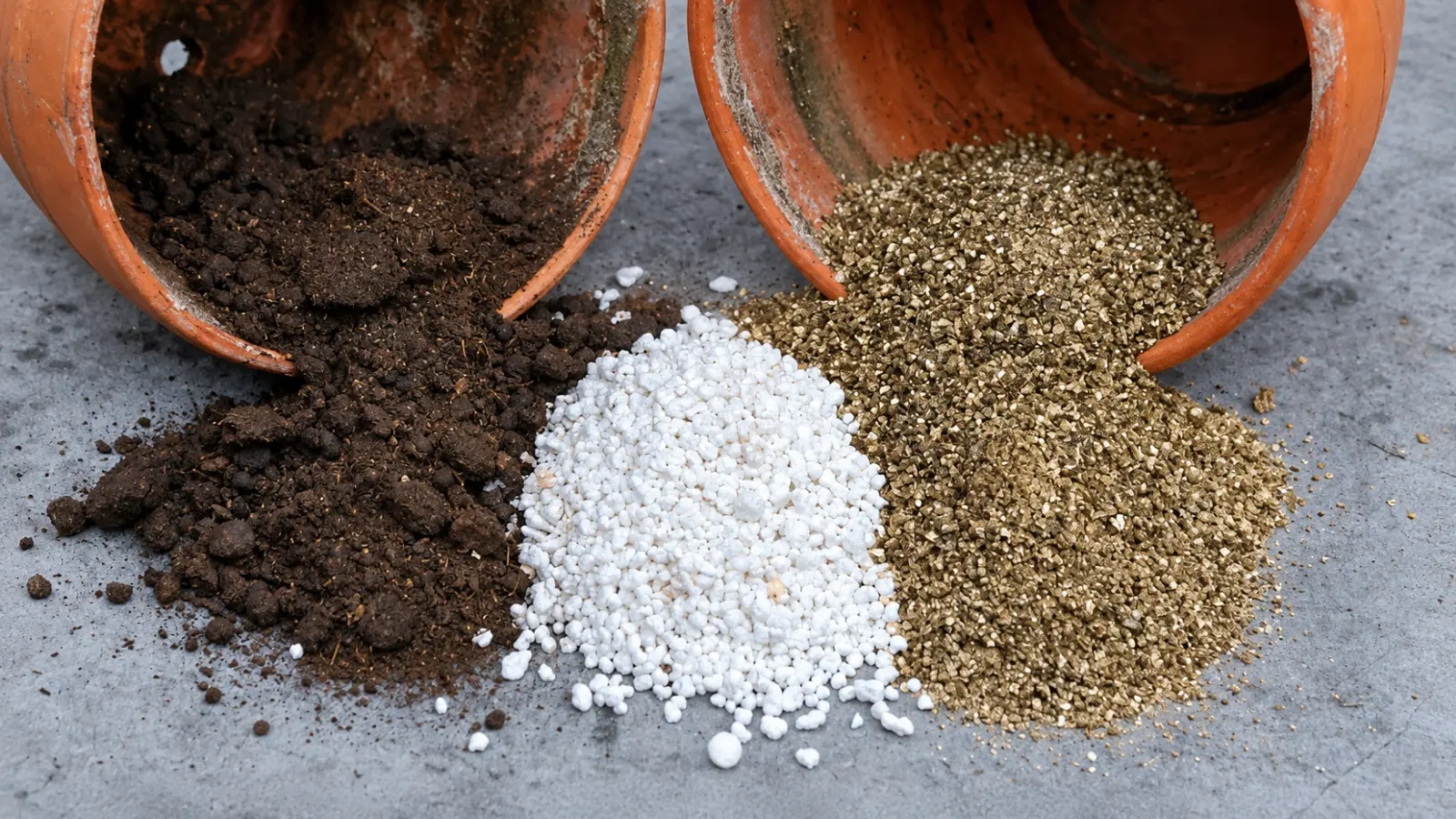
Perlite and vermiculite are often grouped together because both appear in potting mixes, but they push a mix in different directions. Perlite generally provides more air space and drainage. Vermiculite generally retains more water, making it useful where a finer mix needs help staying evenly moist.
Choose perlite when excess moisture is the bigger concern; consider vermiculite when a mix dries too quickly and the plant tolerates more moisture. Many mixes use neither alone: coir or peat supplies water-holding capacity, bark adds structure, and perlite provides the open spaces. If you’ve read about asbestos concerns tied to vermiculite, that history traces back to a single Montana mine that closed in 1990; vermiculite sold in the U.S. today comes from other sources and is tested for purity, but perlite was never part of that issue in the first place.
Dust and Handling Safety
Dry perlite can be dusty and lightweight particles can irritate eyes or airways. It’s made of amorphous (non-crystalline) volcanic glass rather than the crystalline silica linked to silicosis, and OSHA treats it as a nuisance dust rather than a hazardous material — but any fine dust is worth keeping out of your lungs as routine practice. Open bags outdoors or in a well-ventilated work area, dampen the material gently before mixing, and avoid creating airborne dust. Wear eye protection and a well-fitting dust mask if you are handling a large quantity or are sensitive to dust.
Keep the bag closed between uses and sweep up spilled particles rather than blowing them around. These small habits make an ordinary potting task more comfortable without turning it into a complicated project.
Use Perlite Where It Can Actually Change the Mix
Perlite is most useful when you control the entire growing medium and need more air space, lower density or faster drainage around roots. The right amount depends on the plant, container, base mix and how quickly the medium dries in your conditions.
Treat recommended ratios as starting points rather than fixed formulas, then watch how the mix behaves after watering. For native soil problems such as compaction, clay texture or poor site drainage, use solutions designed for those conditions instead of expecting perlite to do a job it cannot perform effectively.
COMMON QUESTIONS
Before you begin.
What is perlite and what does it do for soil?
Perlite is a lightweight, porous material made from expanded volcanic glass. When mixed into a growing medium, it creates pore space that improves aeration, helps excess water drain and reduces the overall density of the mix. It is most useful in potting mixes, containers, seed-starting media and other constructed growing systems rather than as a fertilizer or a cure for native-soil problems.
How much perlite should I add to potting soil?
For many houseplants, a practical starting point is about one part perlite to three or four parts potting mix by volume. Plants that need faster drainage may use roughly one part perlite to one or two parts potting mix, sometimes alongside bark or grit. Adjust the ratio according to the plant, container, light and how quickly the medium actually dries between waterings.
How do you mix perlite with potting soil?
Lightly dampen the perlite and potting mix first to reduce airborne dust, then measure the ingredients by volume and mix them thoroughly until the white particles are evenly distributed. Fill a container with drainage holes, plant at the appropriate depth and water thoroughly so excess water can drain away. Do not place perlite only at the bottom of the pot because it works best when distributed throughout the root zone.
Can you use perlite in garden or clay soil?
Perlite can be used in purpose-built raised-bed mixes, but adding small amounts to established in-ground soil is usually not an effective way to fix drainage or clay. It does not change the underlying proportion of sand, silt and clay or correct problems such as compaction, hardpan or poor grading. Native-soil problems are generally better addressed with appropriate organic matter, reduced compaction, drainage improvements and plants suited to the site.
What is the difference between perlite and vermiculite?
Perlite is generally used to increase air space and drainage, while vermiculite retains more moisture. Choose perlite when a growing mix stays too wet or needs more aeration, and consider vermiculite when the medium dries too quickly and the plant benefits from more consistent moisture. Many potting mixes combine several ingredients because no single material provides the ideal balance of water retention and aeration by itself.
Does perlite affect soil pH or provide nutrients?
Perlite is close to pH-neutral and does not meaningfully make a growing medium more acidic or alkaline. It is also used primarily for its physical properties rather than as a significant source of plant nutrients. If the goal is to change pH or correct a nutrient deficiency, a different amendment should be selected based on the actual problem.