The main types of soil gardeners encounter are clay, sandy soil, silt, and loam. These broad groups are based on soil texture—the relative proportions of sand, silt, and clay in the mineral portion of the soil—and those proportions influence drainage, water retention, nutrient holding, aeration, and how easily roots can grow.
Most garden soil does not fit neatly into a single category. It is usually a mixture, such as sandy loam, clay loam, or silt loam, and its behavior is also affected by compaction, organic matter, structure, slope, rainfall, and management. Identifying the dominant texture is therefore more useful than trying to force every garden bed into a perfect label.
This guide explains the four main soil types used as practical gardening categories, how clay, sand, silt, and loam behave, how to compare them, and how to estimate your own soil type with simple hand-feel and jar tests before making decisions about plants, watering, drainage, or amendments.
Soil Types at a Glance
Sandy soils drain quickly and usually need help holding moisture and nutrients. Clay soils hold water and nutrients well but can become dense and slow to drain. Silt feels smooth, tends to be naturally fertile, and can compact or erode easily. Loam is a balanced mix of roughly 40% sand, 40% silt, and 20% clay. Most garden soils are combinations, so the most useful first step is to identify the dominant behavior — not chase a perfect category.
What Creates Different Soil Types?
Soil texture is determined by the relative amount of sand, silt, and clay in the mineral portion of the soil. Sand particles are the largest, silt particles are intermediate, and clay particles are the smallest. Their size changes the spaces between particles, which is why a gritty sandy soil behaves so differently from a smooth, sticky clay soil.
Texture is not a measure of quality. A clay-rich garden can be productive, and a sandy site can support beautiful, healthy planting. Each comes with a different set of strengths and constraints. Organic matter, roots, mulches, and careful management can improve how soil functions, but they do not quickly change its underlying mineral texture.
The USDA texture system recognizes twelve official classes. For home gardening, the four broad groups below are a practical place to begin.
The Main Types of Soil for Gardening
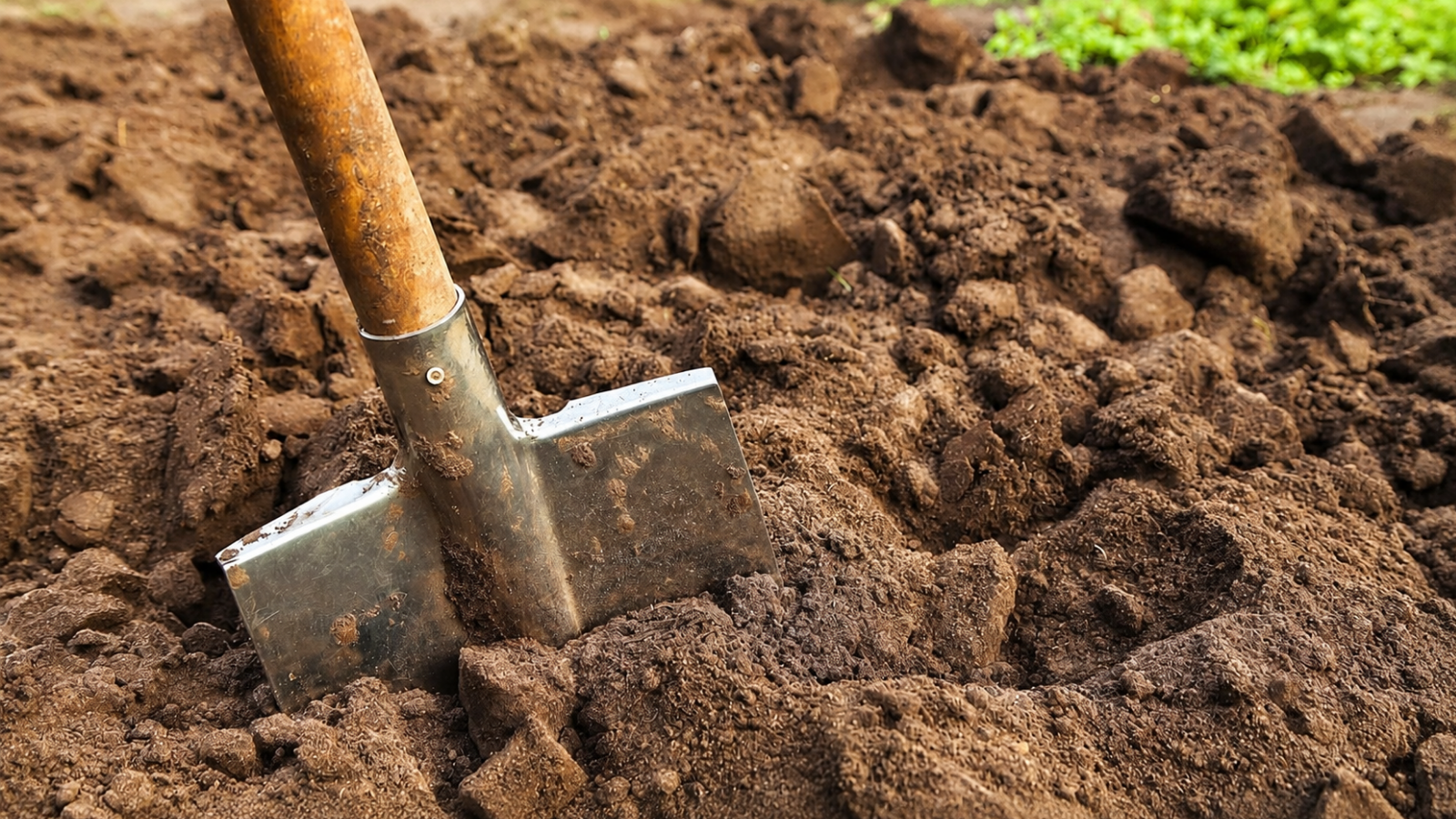
The four familiar soil types describe the way a soil generally feels and behaves in the garden. Use them as a starting point, then observe how your own beds respond to watering, rain, heat, and root growth.
Clay Soil
Clay has very fine particles. It holds water and nutrients effectively, but water moves through its small pores slowly. When wet, clay feels sticky and can smear; when dry, it may become hard, crack, or form large clods. Compacted clay is often difficult for roots to penetrate.
Clay soil is not a failure to be corrected. Its nutrient-holding ability — a result of the electrical charge on clay particles that binds plant-available minerals — is a real advantage. The priority is usually protecting structure, avoiding any work when the bed is wet, adding organic matter steadily over time, and choosing plants that suit the site. Read Clay Soil for the full improvement guide.
Sandy Soil
Sandy soil feels gritty because its particles are relatively large. Large pore spaces allow water and air to move through quickly, which makes sandy beds easy to dig but also means they can dry out fast and leach nutrients below the root zone.
A sandy garden usually benefits from steady additions of finished compost and mulch, along with closer attention to watering during hot or windy spells. It does not need to become clay-like to be productive — many plants actually prefer sharp drainage. See Sandy Soil for practical management.
Silt Soil
Silt particles are smaller than sand and larger than clay. Dry silt feels soft or floury rather than gritty; when wet, it feels smooth. Silt is naturally fertile — it holds more water and nutrients than sand, and many of the world’s most productive agricultural soils, from river deltas to floodplains, are silt-dominant. It also warms up faster in spring than clay, which gives vegetable gardeners an earlier start.
The trade-off is that silt compacts more easily than loam, can form a surface crust after heavy rain, and erodes more readily than a well-aggregated soil. Mulch, living plant roots, and limiting foot traffic are especially helpful because they protect the surface and build better long-term structure.
Loam Soil
Loam is a soil texture class containing a balanced range of sand, silt, and clay rather than one fixed recipe. A mixture around 40% sand, 40% silt, and 20% clay is often used as a simple example of loam, but soils with other proportions can also fall within the USDA loam classification. It is valued because it often combines workable drainage with useful moisture and nutrient holding. That said, not every loam is identical: sandy loam drains more freely, while clay loam holds more water.
“Loam” on a landscape product label may not match any laboratory texture class, so do not assume a bag or bulk delivery will automatically transform a bed. In an existing garden, the practical goal is loam-like function: stable structure, workable moisture, and healthy root growth. Learn more in Loam Soil.
How Soil Types Affect a Garden
Texture influences watering and fertility decisions, but it does not determine everything. Compaction, slope, organic matter, mulch, plant roots, and rainfall all affect how the same texture performs in different yards and climates.
| Soil Type | Feel | Water Behavior | Nutrient Holding | Common Gardening Focus |
|---|---|---|---|---|
| Clay | Sticky when wet; hard or cloddy when dry | Slow infiltration; can stay wet | Usually high | Prevent compaction, build structure, and match plants to the moisture level. |
| Sandy | Gritty and loose | Fast infiltration and drying | Usually low | Build organic matter, mulch consistently, and monitor soil moisture. |
| Silt | Smooth, soft, or floury | Moderate water holding; may crust or puddle | Moderate to good | Protect the surface, maintain roots, and reduce erosion risk. |
| Loam | Crumbly with some grit and smoothness | Balanced storage and drainage | Moderate to good | Maintain organic matter and avoid disrupting good structure. |
Think of this as a behavior guide, not a diagnosis. If a sandy bed stays wet or a clay bed dries out quickly, look beyond texture — compaction, grading, irrigation habits, and what lies below the surface can all shift a soil’s actual behavior.
How to Identify Your Soil Type
Start with a representative sample from the root zone — not a handful of mulch or the dusty top inch of a dry bed. If the garden has noticeably different areas, such as a low wet corner and a raised sunny border, test them separately. One yard can contain more than one soil type.
Two simple methods work well at home. The hand-feel test gives a quick, practical impression of texture. The jar test gives a visible estimate of the sand, silt, and clay layers after particles settle in water. Neither replaces a professional soil laboratory analysis, but together they can guide everyday garden decisions with more confidence than guesswork.
The Hand-Feel Test
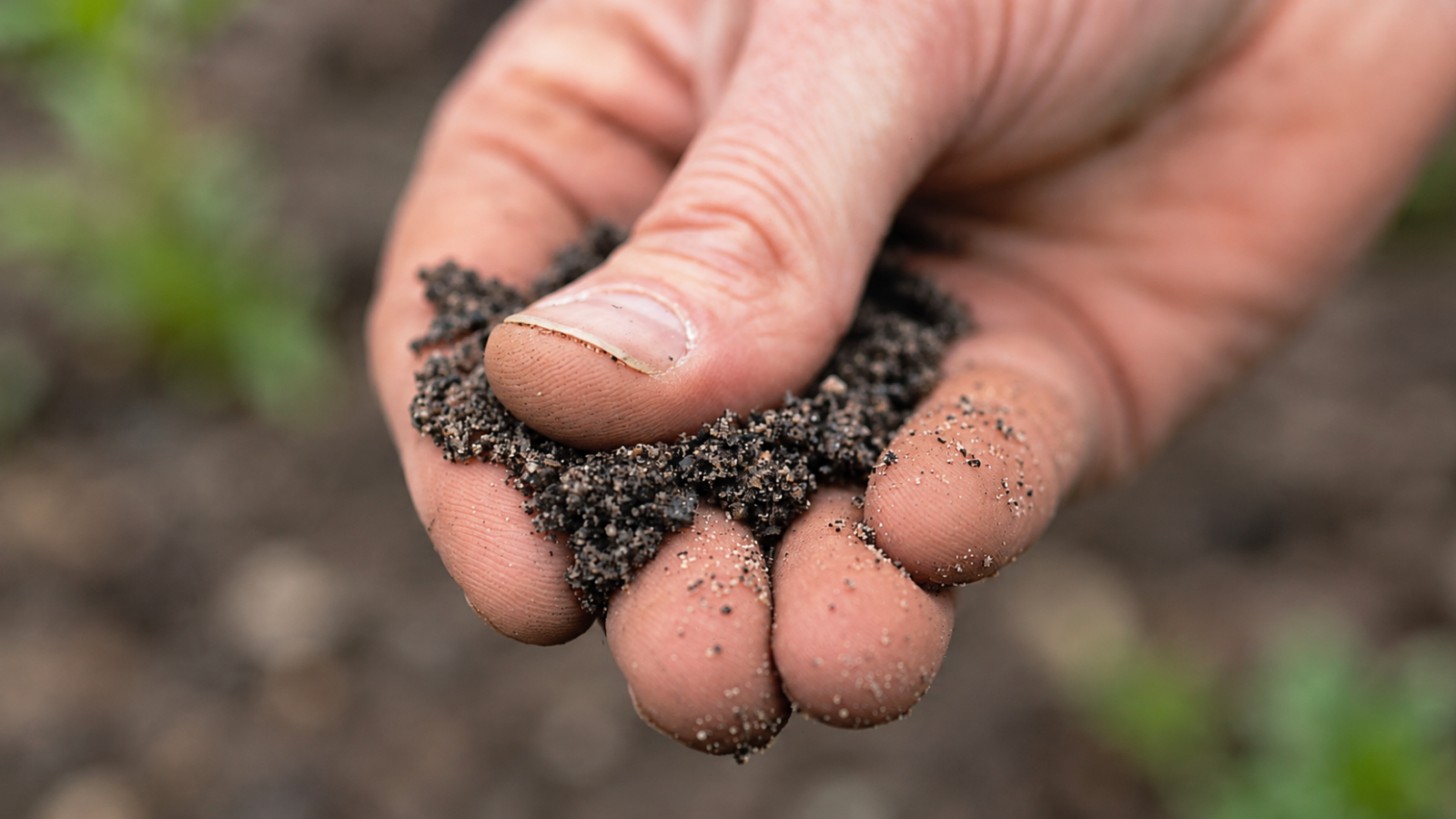
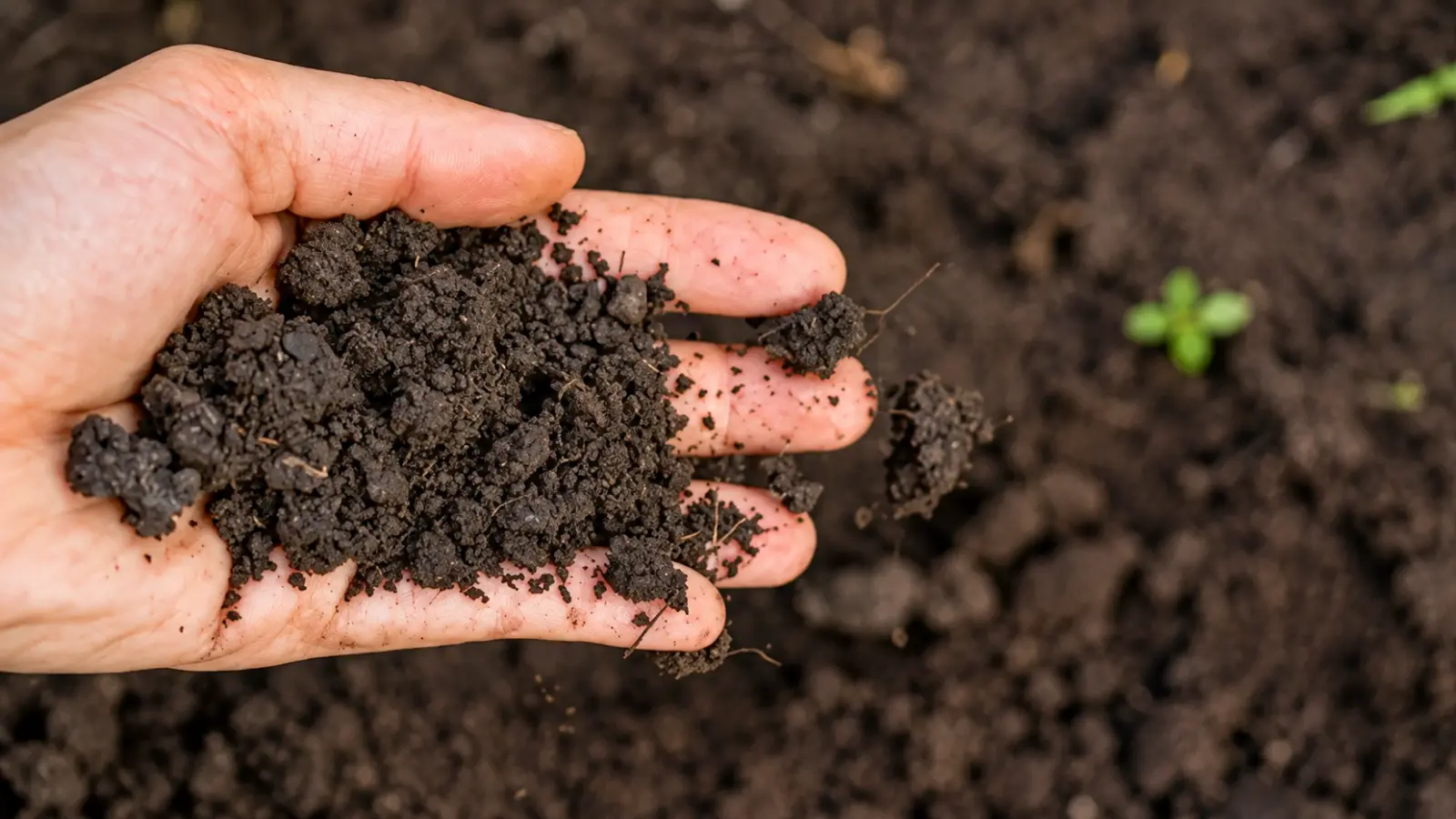
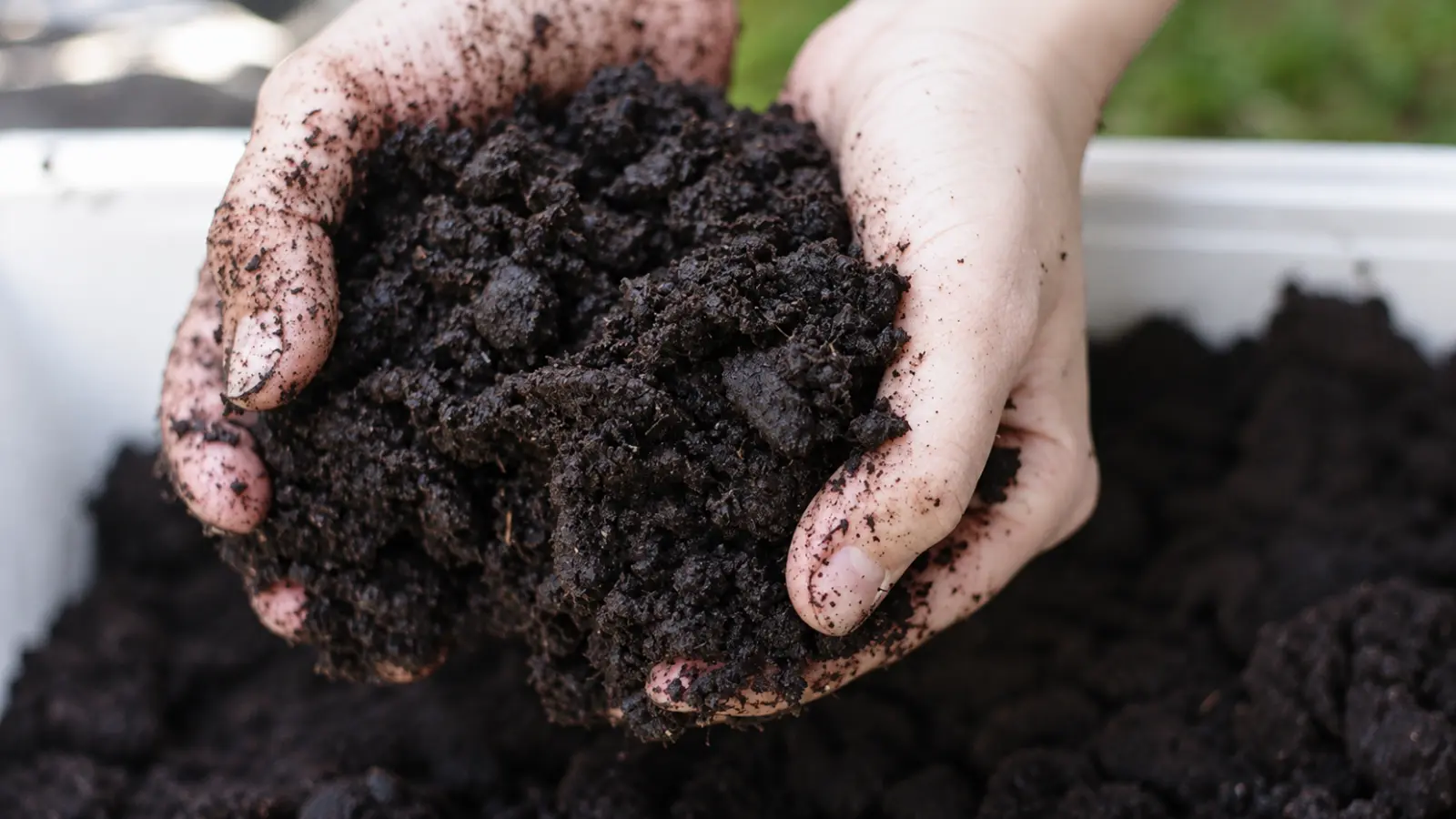
The hand-feel test is best for learning the dominant character of your soil. Moisten a small sample until it feels like putty — not mud. Remove stones and obvious roots, then rub the soil between your thumb and fingers.
- Notice the grit: a pronounced gritty feeling suggests significant sand content.
- Notice the smoothness: a silky or floury feel — without the grittiness — points toward silt.
- Try to form a ribbon: press moist soil between your thumb and forefinger and squeeze it outward. Little or no ribbon generally indicates low clay content, while progressively longer, stronger ribbons suggest increasing clay content. Use ribbon length together with the sample’s grittiness and smoothness to estimate the texture class, because ribbon length alone cannot distinguish among all sandy, silty, loamy, and clay-rich soils.
- Put it together: soil that feels partly gritty, partly smooth, and forms only a short ribbon is often a loam or loam-like combination.
This is an estimate, not a laboratory result. It becomes more useful when you repeat it in several parts of the garden and compare what your hands tell you with how water and roots actually behave in the bed over a season.
The Jar Test
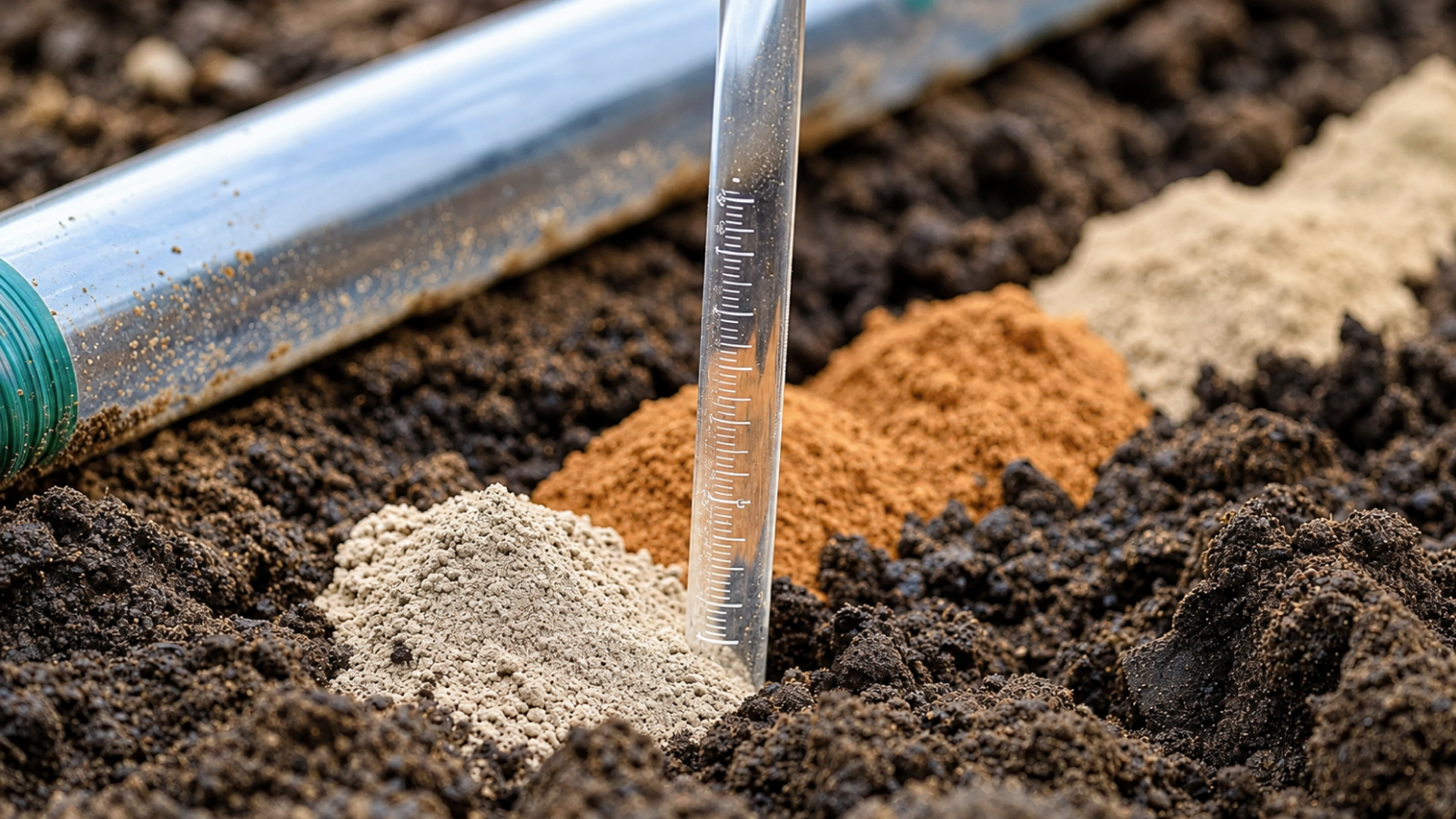
The jar test makes particle size visible: sand settles first, silt settles next, and clay settles last. It is a helpful home demonstration of the components that combine to create soil texture, though abundant organic matter or very stable aggregates can make layers harder to read.
- Fill a clear, straight-sided jar about one-third full with soil from the root zone, removing large stones and debris.
- Add water almost to the top, leaving a small air space. Adding a teaspoon of powdered dishwasher detergent helps particles separate more cleanly — most extensions recommend it for a cleaner result.
- Seal the jar and shake it vigorously until the sample is fully suspended.
- Set the jar on a level surface and do not disturb it. Sand settles within about a minute — mark that layer on the outside of the jar. Silt settles over the next couple of hours — mark again at the 2-hour point. Clay is the finest fraction and can take 24 to 48 hours to fully settle; mark the clay layer once the water has cleared.
- Compare the approximate thickness of each layer. Use the result as a rough guide, not as a reason to make a major pH or fertilizer decision.
If the layers are hard to read, the soil may have abundant organic material, stable aggregates, or a texture that does not separate cleanly at home. A lab analysis provides a more reliable estimate when precision matters — for example, before a significant lime or amendment program.
What to Do Once You Know Your Soil Type
Knowing your soil type should change your management — not make you fight the site. Start by matching plants to the conditions where possible, then use gradual changes to make the root zone more resilient over time.
- For clay-dominant soil: keep traffic off beds, never dig when wet, add finished compost or other appropriate organic matter over time, and investigate drainage before assuming any single amendment will solve it.
- For sandy soil: maintain mulch year-round, add organic matter gradually, check soil moisture below the surface rather than just at the top, and split fertilizer applications if a test indicates nutrients are needed — sandy soil leaches faster than clay.
- For silt-heavy soil: protect bare ground with mulch or cover plants, minimize erosion risk on any slope, and avoid frequent disturbance that breaks down surface structure.
- For loam: preserve what is already working. Avoid over-tilling, keep organic matter cycling, and use a soil test before adding anything that alters pH or fertility.
For any soil type, choose amendments by the problem they address, not by category. Soil Amendments can help with that decision, while Garden Soil connects texture with fertility, drainage, pH, and planting preparation.
Soil Texture Is Not Soil Structure
It is easy to label a dense, struggling bed as “clay soil” and stop there — but texture and structure answer different questions. Texture is the proportion of sand, silt, and clay particles in the mineral fraction. Structure is how those particles gather into aggregates and leave pore spaces for air, water, and roots.
Organic matter, living roots, soil organisms, mulch, and less compaction can all improve structure even when the underlying texture stays the same. That is why a well-managed clay loam can be far easier to garden in than neglected soil with a supposedly ideal texture. For a closer look at the texture triangle and how to classify combinations more precisely, the next step is Soil Texture.
Work With the Soil You Have
Understanding your soil type gives you a better starting point for managing a garden, but texture alone does not determine whether soil is good or bad. Clay, sandy, silty, and loamy soils can all support healthy plants when plant selection and management match the conditions of the site.
Once you understand the dominant texture, pay attention to how the soil actually behaves through rain, irrigation, heat, and different seasons. Improve structure and other manageable characteristics where needed rather than trying to completely replace the soil’s underlying mineral texture, then use more precise testing when a gardening decision requires it.
COMMON QUESTIONS
Before you begin.
What are the four main types of soil?
For home gardening, the four broad soil types most commonly discussed are clay, sandy soil, silt, and loam. They differ mainly in the proportions and sizes of their mineral particles, which affect drainage, moisture retention, nutrient holding, and how the soil feels and works. Most garden soils are mixtures rather than a single pure type.
Which type of soil is best for gardening?
Loam is often considered ideal because it generally provides a useful balance of drainage, moisture retention, aeration, and nutrient holding. However, there is no single best soil for every plant or garden. Sandy, silty, and clay-rich soils can all support healthy gardens when plants and management practices are matched to the site.
How can I tell what type of soil I have?
Start with a simple hand-feel test using slightly moist soil. Sandy soil feels gritty, silt feels smooth or floury, and clay feels sticky and can form a longer ribbon when pressed between your fingers. You can also use a jar test to estimate the relative amounts of sand, silt, and clay after the particles settle in water.
What is the difference between clay, sandy, silt, and loam soil?
Clay has very fine particles and tends to hold water and nutrients well but drain slowly. Sandy soil has larger particles, drains quickly, and usually holds less water and nutrients. Silt has intermediate particles and feels smooth, while loam combines sand, silt, and clay in proportions that often provide more balanced garden conditions.
Can you change your soil type?
Changing the underlying mineral texture of an in-ground soil is usually impractical. Instead, gardeners can improve how the soil functions by adding appropriate organic matter, maintaining mulch, protecting soil structure, reducing compaction, and addressing specific drainage or fertility problems. A clay soil remains clay-rich, for example, even when its structure and growing conditions improve substantially.
Why does soil type matter for plants?
Soil type influences how quickly water enters and drains from the root zone, how much moisture and nutrients the soil can retain, and how easily roots and air move through it. Understanding those characteristics helps gardeners choose suitable plants and make better decisions about watering, mulching, fertilizing, and soil improvement.