A bog garden is a specialized planting area designed to stay consistently wet while supporting plants adapted to saturated, often acidic and nutrient-poor growing conditions. Unlike an ordinary wet bed, it depends on controlling moisture, growing media and plant selection as one connected system.
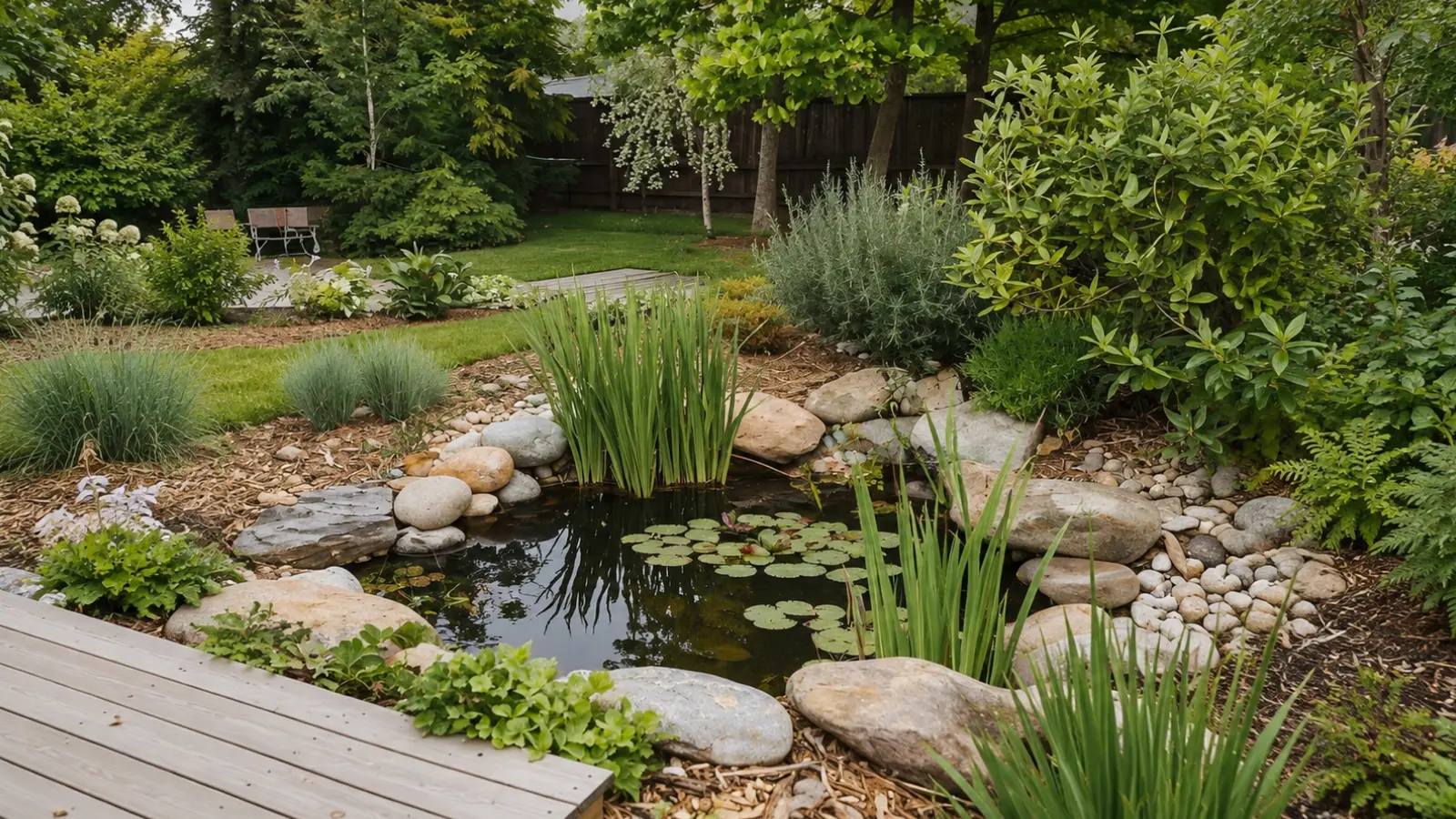
It is also different from a pond or rain garden. A pond is centered on permanent open water, while a rain garden is designed to collect stormwater temporarily and drain. A bog garden keeps moisture available around the roots without normally maintaining a layer of open water above the planting medium.
This guide explains how to create a bog garden, from choosing a safe location and deciding between a lined or naturally wet site to managing growing media, acidity, water level, plant selection, carnivorous plants, seasonal maintenance and winter care.
What Is a Bog Garden?
A bog garden is a moisture-loving planting area that stays consistently damp or saturated and uses a growing medium with low nutrient availability. Many natural bogs are acidic and formed from slowly decomposing plant material — particularly sphagnum moss, which can accumulate at about 1 millimeter per year, building up over centuries into the peat we recognize today.
Plants adapted to bog conditions are different from ordinary garden plants. They tolerate wet roots, reduced oxygen around their root zone, and acidic media — but they typically decline when exposed to rich fertilizer, alkaline water, or a planting bed that dries out between waterings. Most are accustomed to low-nutrient conditions and have evolved other strategies (including insect capture, in the case of carnivorous species) to compensate.
A bog garden can be built as a contained lined basin, a converted trough or stock tank, or a carefully selected naturally wet planting area. The design should control moisture deliberately rather than simply directing more water into an existing problem spot.
Bog Garden vs. Pond vs. Rain Garden
Bog Garden
A bog garden is centered on saturated growing media and moisture-loving plants. The surface may be planted and covered with living sphagnum, but it is not intended to hold a pool of open water above the planting medium.
Pond or Water Garden
A pond or water garden is centered on permanent open water. It may include floating, submerged, marginal, and emergent plants, with or without fish and water circulation depending on the design.
Rain Garden
A rain garden receives stormwater after rainfall and is designed to drain within 24 to 48 hours. Its plants must tolerate alternating wet and dry conditions rather than the constant saturation a bog garden provides.
Confusing these three systems leads to the wrong soil, wrong depth, and wrong plant choices. Deciding which one you actually need — hold water permanently, drain it after rain, or keep a medium consistently wet — is the most important decision before anything else.
Choose the Right Location
Many bog plants, particularly carnivorous species, need bright light. A location with full sun — at least 6 hours of direct sunlight per day — is often necessary, especially for pitcher plants and sundews. Morning sun with some afternoon protection can work in hot climates, particularly for a small contained bog that heats up quickly. Plants like marsh marigold and some sedges tolerate partial shade, but most carnivorous species do not perform well without consistent direct sun.
Choose a place where water can be managed without threatening a house, basement, septic system, well, walkway, or neighboring property. A bog garden should not be used to address a leaking pipe or chronic foundation drainage problem.
Observe the area through several weather conditions before committing. Note how long the soil stays wet, whether runoff enters from a roof or driveway, how much sun reaches the surface, and whether nearby trees drop large amounts of leaves — organic debris can alter the chemistry of a carefully balanced bog over time.
Keep the garden accessible for watering, weeding, and inspection. A small bog may look self-sufficient, but it still needs regular attention to stay consistently moist without becoming stagnant or weed-choked.
Lined vs. Naturally Wet Sites
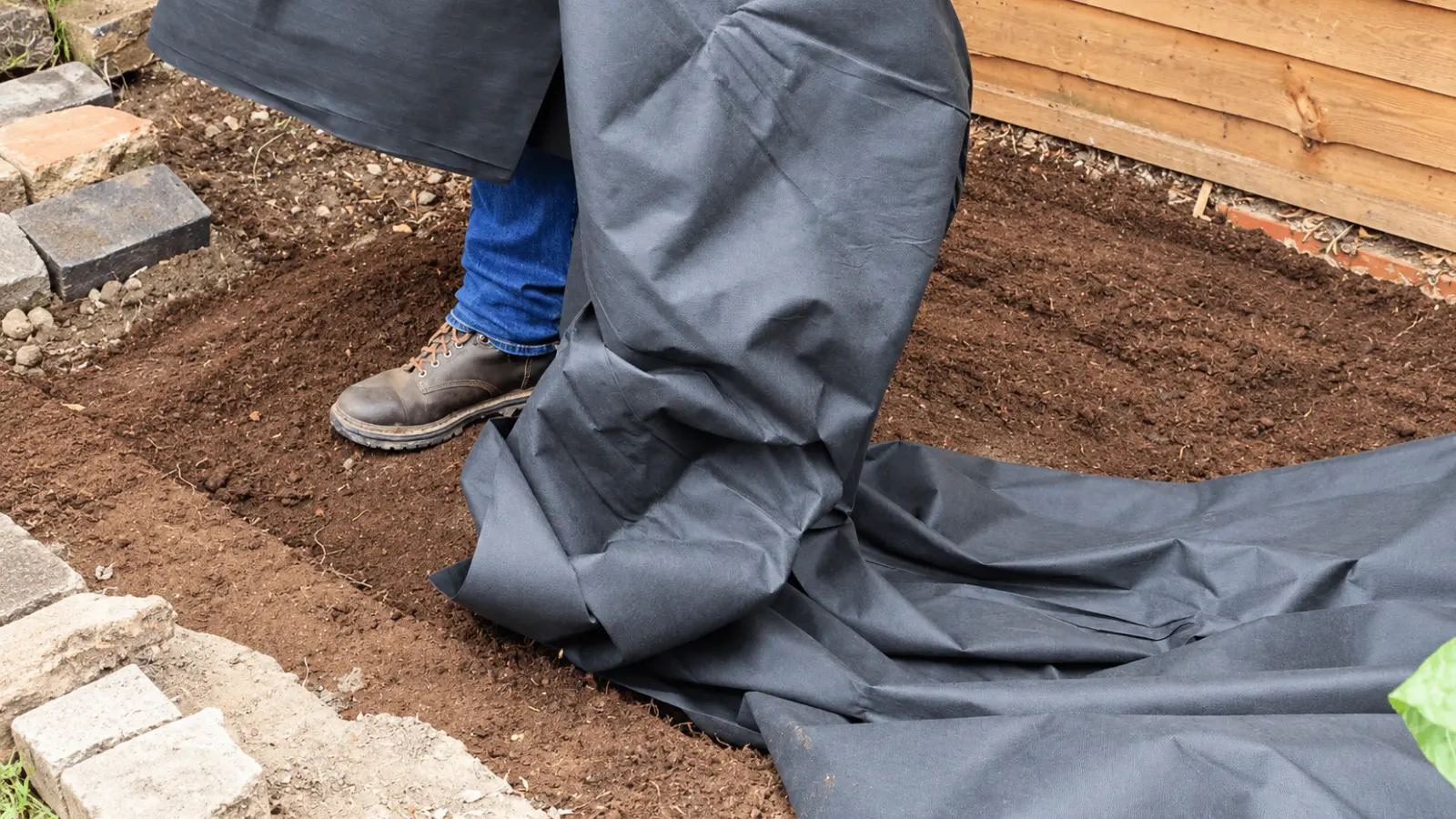
Lined Bog Garden
A lined bog garden uses a watertight basin or container to retain moisture. A pond liner, rubber sheeting, or even a rigid prefabricated form works for smaller installations. The liner gives you control over water level and makes it possible to create bog conditions in a yard that doesn’t naturally stay wet.
Most lined in-ground bogs are 12 to 18 inches deep — deep enough to buffer temperature swings and support a reasonable root zone without becoming difficult to manage. The liner should be appropriate for outdoor use and free from substances that could harm plants or wildlife. Unlike a pond liner, a bog liner often benefits from a few small drainage holes or slits along the lower sides — not the bottom — to allow very slow seepage rather than complete waterlogging, while still keeping the medium consistently moist.
The basin must have a plan for overflow, especially if rain can enter faster than the growing medium absorbs it. A simple spillway cut into the liner edge, positioned a few inches below the rim, handles most overflow without additional engineering.
Naturally Wet Site
A naturally wet site may already have the moisture conditions bog plants need. However, it may also be part of a functioning wetland ecosystem rather than a suitable place for excavation or significant alteration.
Do not dig, drain, fill, or introduce non-native plants into a natural wetland without checking state and federal rules and environmental guidance. Natural bogs are among the most carbon-dense and ecologically sensitive habitats on the continent. A natural bog is not an unfinished backyard garden.
Moisture Retention and Growing Media
Getting the growing medium right is probably the single most important step in building a successful bog garden, particularly if carnivorous plants are involved. The medium needs to retain moisture while still supporting roots — it should stay consistently damp without becoming an airless, anaerobic mass.
The widely recommended mix for carnivorous bog gardens is a roughly 50:50 blend of sphagnum peat moss and horticultural silica sand or perlite. Longwood Gardens recommends beds ranging from 12 to 30 inches deep with a 50:50 peat-to-sand ratio; some growers use a 3:1 or 4:1 peat-to-sand ratio for species that prefer wetter conditions. The Atlanta Botanical Garden’s pitcher-plant bog method uses a 3:1 ratio of peat to river sand. Common alternatives include replacing some of the peat with coarse perlite (for better drainage and aeration) or using a mix of 50% peat, 30% horticultural sand, and 20% long-fiber sphagnum.
Whatever the ratio, always use plain peat moss with no added fertilizers or pH buffers. Regular potting soil enriched with compost or slow-release fertilizer is unsuitable — those nutrients are exactly what most bog plants are adapted to avoid. Do not add lime, limestone, or basic rocks to or near the bog; calcium will raise the pH and harm acid-loving species.
Peat moss is hydrophobic when dry and difficult to rewet once it desiccates. Wet it thoroughly as you fill the bog, working water into the mix rather than waiting until the basin is full.
A note on peat: horticultural peat is mined from natural peatlands, which are slow-forming ecosystems and significant carbon stores. Coconut coir can sometimes reduce peat use, but it is not a direct substitute for every bog plant. Its pH and mineral content vary by source, and some products contain elevated salts or are buffered with calcium. For carnivorous plants, use only low-salt, unbuffered coir that has been thoroughly rinsed and confirm that it is suitable for the species you are growing. Some Sarracenia can perform well in appropriate coir-based media, while Dionaea and many Drosera may decline over time. For a general moisture-loving perennial bog without strict carnivorous-plant requirements, suitable coir-based mixes can be a practical option.
When Acidic Soil Matters
Many bog environments are naturally acidic — natural sphagnum bogs often have a pH between 4.0 and 5.5. But not every moisture-loving plant requires the same range, and target pH should be based on the plant community you intend to grow rather than on the word “bog” alone.
For carnivorous plants like pitcher plants (Sarracenia), sundews (Drosera), and Venus flytraps (Dionaea muscipula), low pH and low mineral content are not optional — they are fundamental to the plants’ survival. These species evolved in mineral-poor, acidic conditions and their roots lack the protective mechanisms to cope with rich, neutral, or alkaline media.
Test the growing medium before planting. If you need to lower pH, sulfur can be used, but changes should be made gradually and the results monitored before planting sensitive species. Do not add sulfur, peat, or other acidifying materials without first understanding the water chemistry and the specific needs of your plants.
Fertilizer is also a concern. Bog plants are adapted to low-nutrient conditions, and feeding them — even with a diluted fertilizer — can encourage aggressive weeds, algae, or simply burn species that have no defense against excess nutrients.
Planting Depth and Water Level
The goal is to keep the growing medium thoroughly moist without submerging plant crowns beyond their tolerance. In a lined bog, the water level is typically maintained a few inches below the soil surface for most species — the International Carnivorous Plant Society recommends keeping the water level 3 to 7 inches below the soil surface in a Sarracenia bog, rather than letting water pool above the medium.
Some species tolerate or prefer slightly wetter conditions at the crown level; others need the medium moist but relatively aerated at the surface. Mosses and sedges generally tolerate more saturation than carnivorous plants with delicate rhizomes. Always verify the specific requirements of the plant, not just the general zone.
Leave room for the water level to rise temporarily after rain. A visible overflow notch or spillway prevents the basin from filling deeper than intended and protects nearby structures from water intrusion.
Plants for a Bog Garden
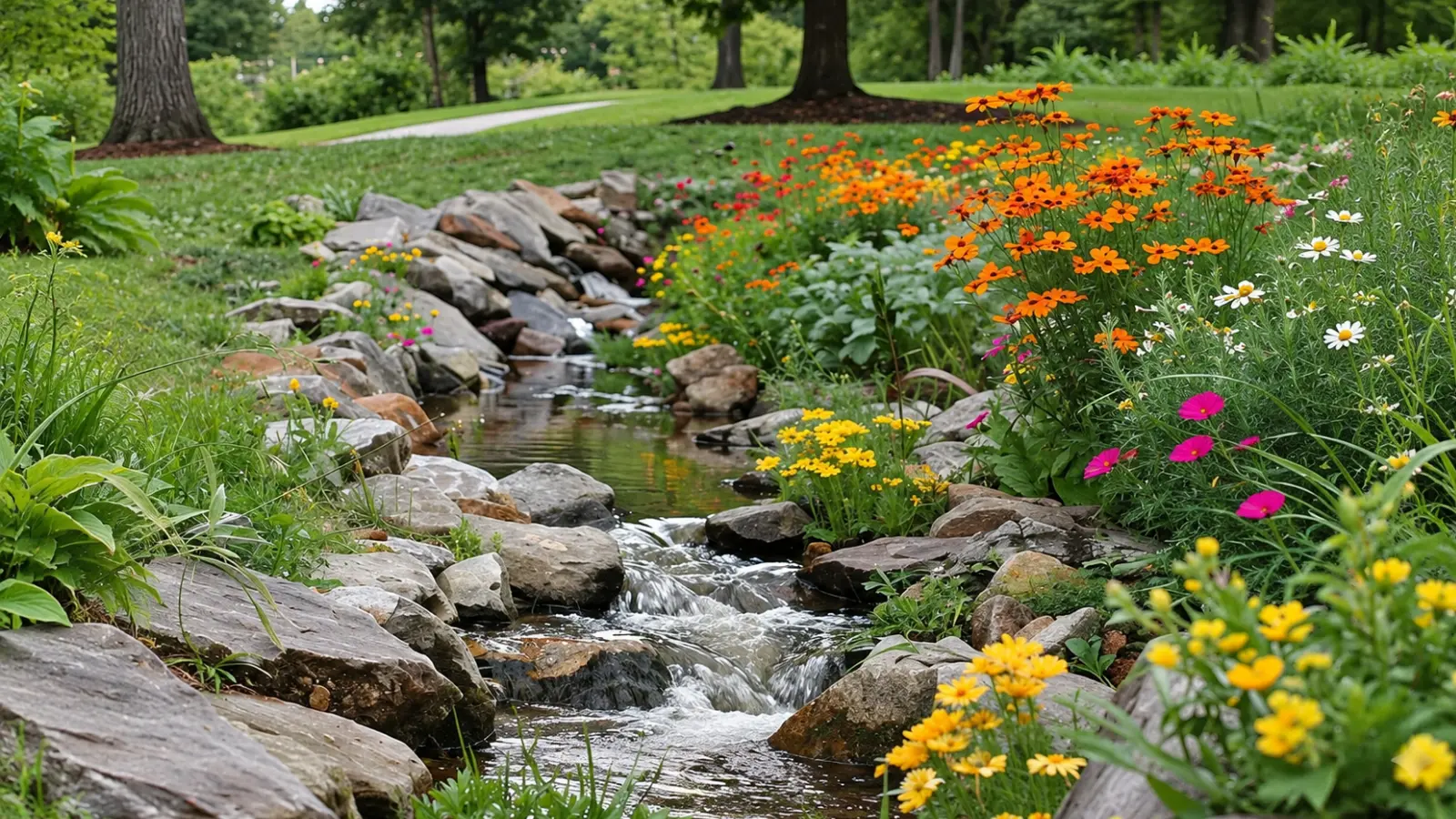
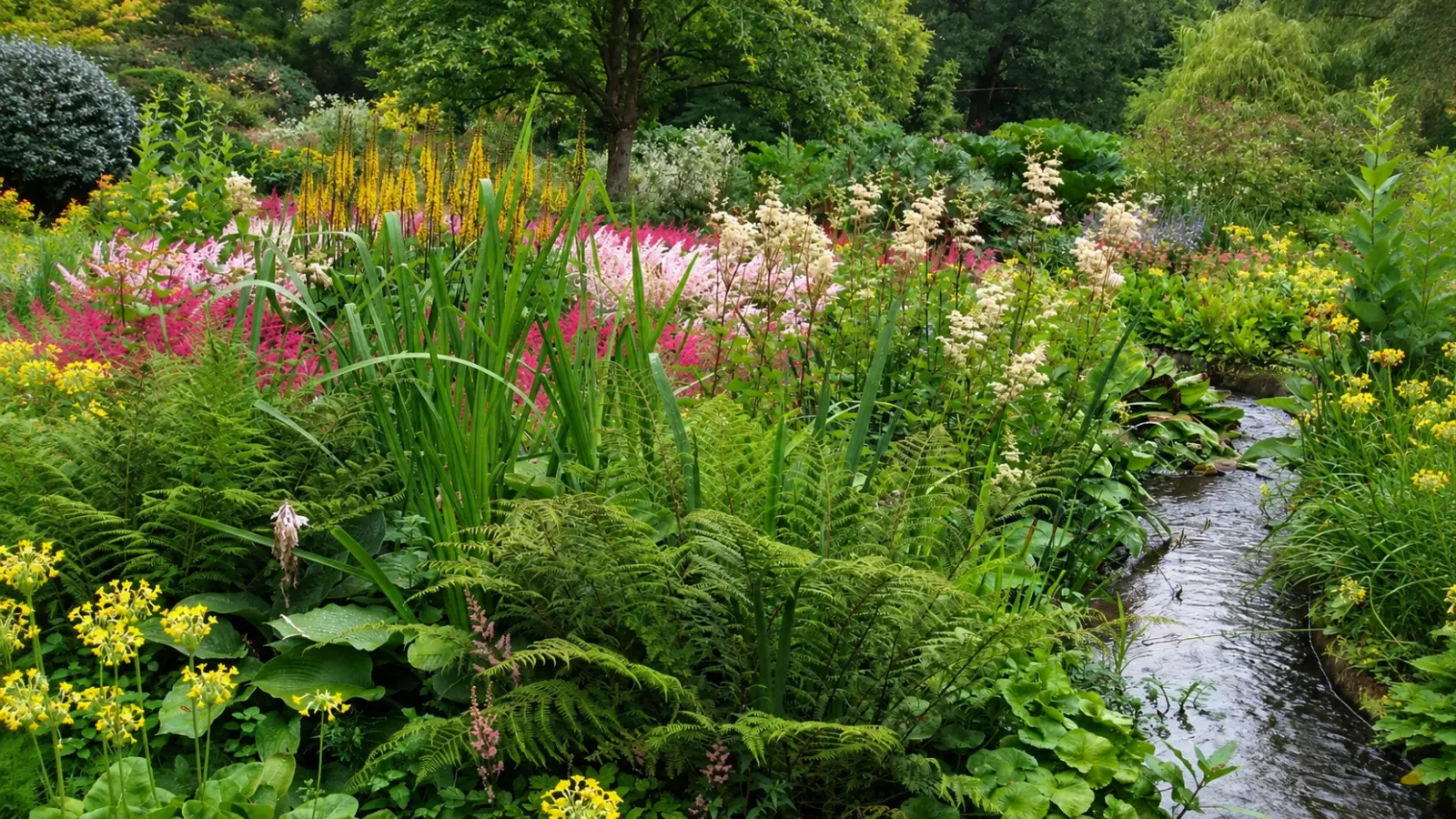
Plant selection should be regional and specific to the moisture level, light, and pH of your bog. Suitable choices may include sedges, rushes, wetland perennials, mosses, heath-family shrubs, cranberries, and carnivorous species in appropriate climates. Native plants are the strongest foundation in most cases.
Sedges and Rushes
Sedges in the genus Carex and certain rushes provide structure and stabilize the growing medium. Tussock sedge (Carex stricta) tolerates high saturation in the eastern US. Softer-textured species like cotton grass (Eriophorum spp.) are dramatic in their own right and genuinely bog-adapted. Soft rush (Juncus effusus) handles wet conditions in a variety of regions. Choose by species and regional habitat rather than assuming all sedges or rushes share the same requirements — they don’t.
Moisture-Loving Perennials
Cardinal flower (Lobelia cardinalis), marsh marigold (Caltha palustris), swamp milkweed (Asclepias incarnata), blue flag iris (Iris versicolor), and great blue lobelia (Lobelia siphilitica) can suit acidic, wet conditions in appropriate regions. Marsh marigold is one of the earliest spring bloomers for bog edges in the Northeast and upper Midwest, often blooming before most other perennials wake up. Some species prefer wet soil at the roots but not permanent submersion at the crown; always confirm the specific tolerance before placing a plant in the wettest part of the basin.
Mosses and Low Ground Covers
Sphagnum moss is the classic surface treatment for a carnivorous plant bog — it helps maintain humidity, buffers pH, and mimics the natural substrate. Living sphagnum can be mulched between plants and will spread slowly if conditions suit it. Do not collect sphagnum from natural bogs or protected areas; purchase it from reputable propagated sources. Other mosses may colonize a bog naturally if conditions are right, but forcing a species into the wrong moisture and light conditions will not succeed.
Heath Shrubs and Cranberries
Bog rosemary (Andromeda polifolia), leatherleaf (Chamaedaphne calyculata), and wild cranberry (Vaccinium macrocarpon or V. oxycoccos) are genuinely bog-adapted heath-family plants for gardeners in the appropriate regions, particularly the northern US and upper Midwest. Their mature size and cold hardiness must be confirmed before planting in a small basin. These are slow-growing, long-lived plants — a worthwhile choice if your conditions suit them, but not forgiving of poor placement.
Use native plants whenever possible, and do not assume that every wetland plant belongs in a backyard bog. A plant adapted to one region may behave aggressively or fail completely in another.
Carnivorous Plants
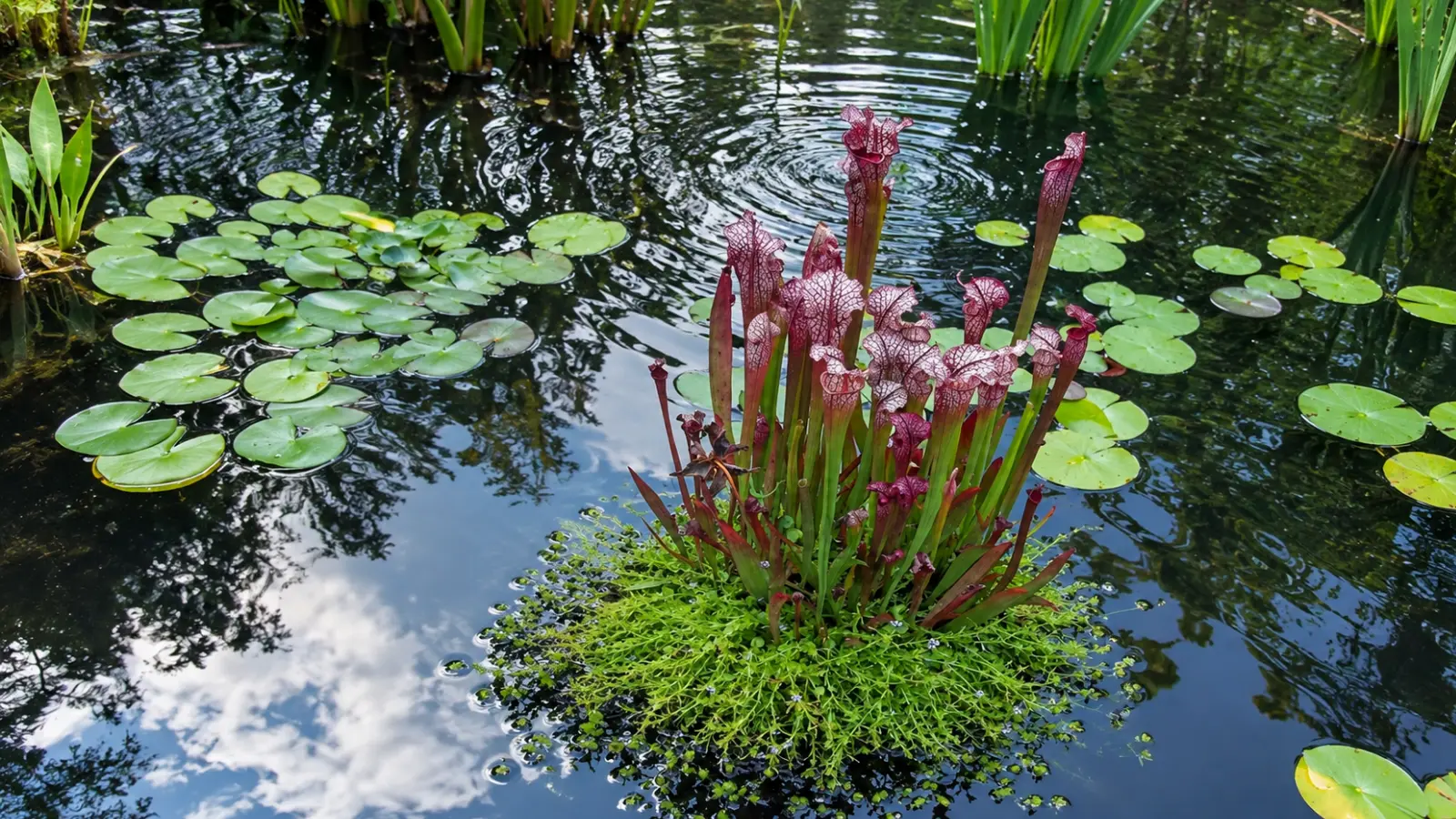
Carnivorous plants have become the signature draw of many home bog gardens, and for good reason — they’re genuinely fascinating, ecologically interesting, and well-suited to conditions most ornamental plants can’t tolerate. Understanding their actual requirements before you plant makes the difference between a thriving bog and a frustrating one.
The most practical carnivorous plants for an outdoor American bog garden are the native North American pitcher plants (Sarracenia spp.), sundews (Drosera spp.), and Venus flytraps (Dionaea muscipula). These temperate species share similar growing requirements: full sun, consistently wet acidic medium (peat-sand mix), low-mineral water, and a winter dormancy period.
Sarracenia hardiness varies by species. The purple pitcher plant (S. purpurea) is the most cold-tolerant, surviving outdoors in USDA Zones 3 through 9. Most other Sarracenia species are reliably hardy in Zones 6 through 9; some Gulf Coast species, like S. psittacina, are frost-sensitive and need protection below 32°F. Venus flytraps are native to a small range in North and South Carolina and are reliably outdoor perennials in Zones 7 through 10; in colder zones they require winter protection. Brooklyn Botanic Garden notes that in Zones 7 through 10, you can grow Venus flytraps, most Sarracenia, and most temperate sundews outdoors year-round. In Zone 6, focus on more cold-tolerant species and provide mulch protection in winter.
The single most common mistake with carnivorous plants is the water source. These species evolved in environments where mineral content is near zero. Tap water, well water, and bottled spring water typically contain dissolved minerals (calcium, magnesium, sodium) that accumulate in peat over time, raise pH, and gradually kill the plants. Use rainwater, distilled water, or reverse osmosis water with total dissolved solids under 50 ppm. If your tap water measures below 50 ppm TDS on a handheld meter, it may be acceptable — but test it rather than assuming.
Do not feed carnivorous plants fertilizer, rich compost, or meat. Their carnivorous habit supplements the nutrients available in their medium; adding external nutrients disrupts the system they’re adapted to and is more likely to harm them than help. Outdoors, they’ll catch their own insects without any assistance.
Never collect carnivorous plants from wild bogs. Many species are threatened or protected, and collection is often illegal. Purchase legally propagated plants from reputable specialist nurseries instead. A backyard bog built with propagated plants supports conservation more directly than one that depletes natural populations.
Carnivorous plants should not be treated as the only reason to build a bog garden. A diverse planting of sedges, perennials, mosses, and regionally appropriate shrubs creates a more stable, visually rewarding habitat — and one that functions well even in years when carnivores are dormant or not at their most dramatic.
Maintenance
Check moisture regularly, especially during hot or windy weather. A small lined bog can lose water faster than expected through evaporation, while heavy rain can raise the level quickly and displace a carefully built medium. Topping up a bog is usually straightforward, but consistency matters — don’t let the medium dry completely if the plants require constant moisture.
Remove invasive weeds before they become established. Weeding a bog can be more disruptive than in an ordinary garden because stirring the growing medium stresses plants with shallow root systems and can compact the mix. Hand-pull carefully and avoid unnecessary disturbance. Do not use herbicides or pesticides in or near a bog — the chemicals accumulate in the low-nutrient medium and can harm the very plants and insects you’re trying to support.
Thin plants when they crowd one another, clear blocked overflow routes, and remove leaves that accumulate heavily on the surface. A thin layer of organic material is natural and acceptable, but a thick mat of decomposing leaves can alter nutrient levels, introduce pathogens, and interfere with water flow through the medium.
Inspect the liner, container edges, and any water connections if the bog is built as a feature. Repair leaks before the moisture pattern changes and affects the plants — a bog that dries out unexpectedly during summer heat can lose sensitive species quickly.
Winter Care
Winter care depends on the hardiness of the specific plants and the local climate. Native perennials, cold-tolerant sedges, and species like Sarracenia purpurea may remain outdoors without protection in appropriate zones. Tender carnivorous species, tropical plants, or container bogs in climates colder than their hardiness zone will need seasonal management.
Most temperate carnivorous plants — including Sarracenia, Venus flytraps, and temperate sundews — require a winter dormancy period with reduced temperatures and shorter days. Do not try to keep temperate species actively growing year-round indoors under warm conditions; prolonged interruption of dormancy can weaken them over time. Winter protection should be based on the species and local climate rather than on one USDA Zone rule. In Zones 7 through 10, Venus flytraps, many Sarracenia, and many temperate sundews can overwinter outdoors when otherwise suited to the site. In Zone 6, choose cold-hardy species and provide protection according to their individual tolerance. In Zone 5 and colder, outdoor choices become more limited, and container-grown plants that are not hardy enough for local winter lows may need a protected cold location that keeps them dormant without exposing them to temperatures below their tolerance.
Do not drain a lined bog automatically before winter. Sudden drying can damage plants adapted to consistent moisture, and an abrupt change in water level can expose root zones to freezing more directly than a moist medium would. Instead, follow the requirements of the species and protect the basin from freeze-thaw damage to the liner itself by choosing materials rated for outdoor winter use.
In cold climates, avoid placing a small container bog where repeated freeze-thaw cycles could crack or deform it. Move portable features to a protected location or use a container designed for year-round outdoor exposure. Leave appropriate stems and natural cover in place through winter when they provide overwintering habitat for beneficial insects.
Do Bog Gardens Attract Mosquitoes?
A properly designed and maintained bog garden should not create a significant mosquito problem. Mosquitoes lay eggs in stagnant open water; a bog that is kept at the right moisture level — with the medium damp but no pooling water above the surface — does not offer the breeding habitat mosquitoes need. Mosquito larvae require several days of accessible, still, open water to complete early development.
The risk increases when a bog develops unintended pools of standing water above the growing medium — from a clogged overflow, a sunken section of the basin, or overfilling after rain. Check after storms, keep the overflow clear, and maintain the water level within the intended range. If open water persists, correct the cause rather than reaching for an insecticide.
Also inspect the surroundings, not just the bog itself. Containers, pot saucers, tarps, and other features near the bog are more likely mosquito breeding sites than the bog medium itself. A well-designed bog that stays moist without pooling is not the same problem as a stagnant bucket of water.
Protect Peatlands and Avoid Invasive Plants
Natural bogs and peatlands are among the most ecologically sensitive and carbon-rich environments on Earth. A peatland that took centuries to form can be damaged irreversibly in a single season of drainage or excavation. A backyard bog garden should imitate selected growing conditions without contributing to that damage.
Do not dig into a natural bog, remove sphagnum or carnivorous plants from the wild, drain a wetland, or collect peat from sensitive habitats. Estimates suggest that 97.5% of Sarracenia habitat in the southeastern US has already been destroyed through development and drainage. Supporting specialist nurseries that propagate plants legally — rather than collecting from the wild — directly supports the remaining populations.
When purchasing horticultural peat, be aware of its environmental cost. Peat accumulates at roughly 1 millimeter per year; a foot of harvested peat represents more than 300 years of growth. Some gardeners are moving toward peat-reduced or peat-free mixes, using coir or sustainably sourced sphagnum where possible — though the strict requirements of carnivorous plants make these substitutions more complex than in ordinary gardening. Use what you need, avoid waste, and source from responsible suppliers.
Check state invasive-species lists before purchasing aquatic or wetland plants. Do not release extra plants, water, soil, or animals into streams, ponds, wetlands, or storm drains. Clean tools and containers before moving them between water features — the same biosecurity rules that apply to water gardens apply here.
Build the Bog Around Its Growing Conditions
A successful bog garden depends on maintaining the conditions its plants are adapted to rather than treating it like an ordinary garden bed that happens to stay wet. Moisture, growing media, acidity, water quality, light and plant selection all need to work together.
Start small if the system is new to you, especially with a container or controlled lined bog. Once the moisture level and growing medium are stable, you can choose plants that genuinely suit the site and build a distinctive planting without disturbing natural wetlands or forcing unsuitable species into the wrong conditions.
COMMON QUESTIONS
Before you begin.
What is a bog garden?
A bog garden is a planting area designed to stay consistently moist or saturated, usually with acidic, low-nutrient growing media. Unlike a pond, it is not centered on permanent open water, and unlike a rain garden, it is not intended to drain and become dry between storms. It is designed for plants adapted to persistently wet root conditions.
How do you create a bog garden?
Choose a suitable location, decide whether to use a lined basin or container, and create a growing medium that retains moisture without leaving permanent open water above the surface. Provide a controlled overflow, keep the medium consistently moist and select plants suited to the site’s sunlight, acidity and climate. Avoid placing a bog where constant moisture could threaten foundations, utilities or other structures.
What soil or growing medium is best for a bog garden?
The ideal medium depends on the plants you intend to grow. Carnivorous bog plants generally need an acidic, nutrient-poor mixture such as sphagnum peat combined with horticultural silica sand or perlite, without fertilizer or lime. General moisture-loving bog plantings may allow other low-nutrient moisture-retentive mixes, but ordinary rich potting soil is usually inappropriate for specialized bog species.
What plants are best for a bog garden?
Suitable plants may include regionally appropriate sedges, rushes, mosses, moisture-loving perennials, heath-family shrubs and carnivorous plants. Examples can include cardinal flower, marsh marigold, blue flag iris, swamp milkweed, native sedges and rushes, pitcher plants and sundews where climate and soil conditions are appropriate. Choose each species according to regional nativity, sunlight, moisture, pH and winter hardiness.
Can you grow carnivorous plants in a bog garden?
Yes. North American pitcher plants, temperate sundews and Venus flytraps can thrive in a properly designed bog when they receive strong sunlight, acidic low-nutrient media and consistently moist conditions. They are also sensitive to dissolved minerals, so rainwater, distilled water or reverse-osmosis water is generally preferable to untreated tap or well water. Never fertilize them or collect plants from wild bogs.
Do bog gardens attract mosquitoes?
A properly maintained bog garden should not create a significant mosquito problem because the growing medium remains wet without normally holding pools of open stagnant water. Mosquito risk increases when water ponds above the surface because of overfilling, poor grading or a blocked overflow. Correct persistent standing water rather than treating the bog with insecticides.