A kitchen garden is an edible garden designed around the foods and herbs you use most often. More than a particular bed style, its defining feature is convenience: the garden should be easy to reach, maintain and harvest so fresh ingredients can become part of everyday cooking.
It can include herbs, salad greens, vegetables and edible flowers grown in raised beds, in-ground beds, containers or a combination of formats. The best setup depends on the sunlight, available space, soil conditions and how frequently each crop needs attention.
This guide explains how to plan a kitchen garden, from choosing a convenient location and deciding what to grow to arranging beds and paths, using succession planting, designing for easy harvesting and keeping even a small space productive throughout the growing season.
What Is a Kitchen Garden?
A kitchen garden is an edible garden designed for regular household use. It may be formal or informal, ornamental or highly practical, but its plants are chosen with the kitchen in mind.
Unlike a large production garden planned around quantity, a kitchen garden often prioritizes convenience and freshness. A few basil plants, salad greens, parsley, chives, peppers or cherry tomatoes can be more valuable than a large crop that is harvested all at once.
The term can overlap with potager, edible landscaping and home vegetable gardening, but each emphasizes something different. A kitchen garden is defined by its culinary purpose and proximity to use. Detailed crop production belongs in Vegetable Gardening, while plant-specific herb selection and care belong in Herb Gardening.
Choose a Convenient Location
Proximity matters more than most kitchen garden planners expect. A garden close to the house is easier to check, water, weed and harvest, and it’s far more likely to become part of a daily routine. Moving the garden 50 feet farther from the back door may not seem significant on a site plan, but it adds up when you’re making ten trips a week.
Place the garden where it receives enough light for the crops you want to grow. Most vegetables and many herbs need at least six hours of direct sun, while some leafy greens and herbs tolerate partial shade. Morning sun helps dry foliage and reduces disease pressure, while a hot western exposure may increase water needs significantly.
Also consider:
- Convenient access from the kitchen or back door
- A nearby water source or hose connection
- Drainage after rain and irrigation
- Protection from strong wind and animal browsing
- Enough room to carry soil, compost and harvested food
- Distance from areas treated with unknown chemicals
Do not place an edible garden where roof runoff may carry contaminants into the soil, or where tree roots make digging and watering difficult. If soil safety is uncertain — particularly in older urban or suburban properties near buildings, former orchards or busy roads — test the soil before growing food in the ground. Standard soil tests cover pH and nutrients but typically do not include heavy metals such as lead; for those, contact a certified environmental testing lab or your local Cooperative Extension office for guidance.
What to Grow in a Kitchen Garden
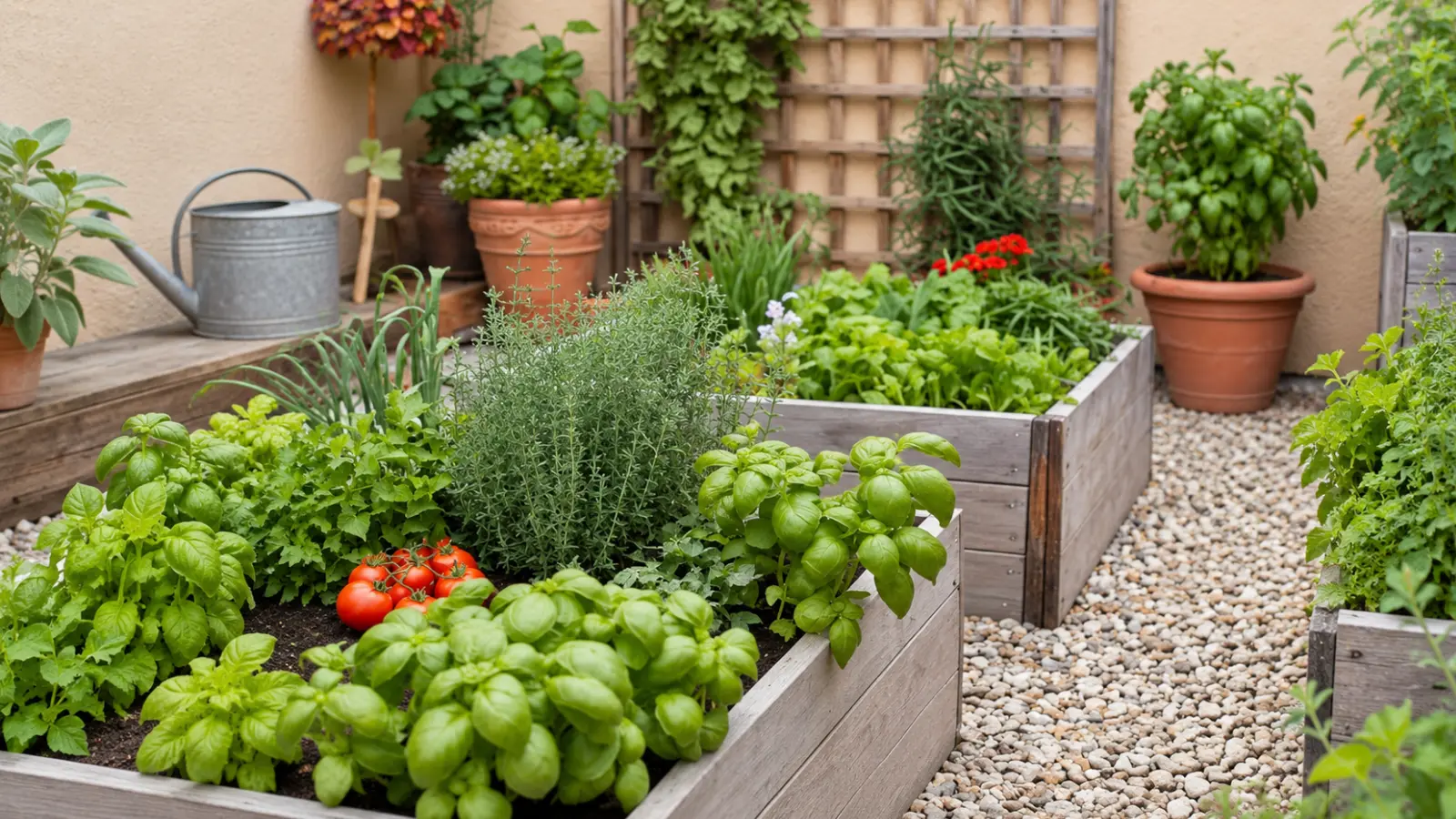
Start with a short list based on how you cook. The most useful plants are usually the ones you reach for often and can harvest in small amounts.
Herbs
Herbs are natural kitchen garden plants because they can be harvested repeatedly and used immediately. Consider a combination of perennial and annual herbs suited to your climate, such as chives, parsley, basil, thyme, oregano, sage, rosemary or cilantro.
Give spreading herbs enough room or contain them intentionally. Mint, for example, spreads aggressively through underground runners and is usually best grown in a buried container or a pot on its own. Large perennial herbs like sage or rosemary can outgrow a narrow bed within a few seasons if their mature spread isn’t planned for.
Greens
Lettuce, spinach, arugula, kale, chard and other greens can produce useful harvests in relatively small areas. Many are especially suited to cool seasons and can be replanted in succession as earlier plantings are harvested. Cut-and-come-again varieties — where you harvest outer leaves and the plant continues producing — stretch a single planting over several weeks.
Vegetables
Choose vegetables that match the available space and your household’s habits. Compact tomatoes, peppers, bush beans, radishes, carrots, cucumbers, onions and summer squash can all fit into different kitchen garden layouts, but their mature size and support needs vary considerably. A single zucchini plant, for example, can take up far more room than most beginners expect.
Edible Flowers
Edible flowers can add color and attract beneficial insects, but grow only species that are correctly identified and specifically intended for culinary use. Avoid consuming flowers treated with ornamental pesticides, and verify that the specific plant or cultivar — not just the species — is safe to eat.
Choose In-Ground Beds, Raised Beds or Containers
The garden format should make the space easier to use, not simply add construction. In-ground beds can be economical when the soil drains well and is suitable for food production. They are also easy to expand or adjust over time.
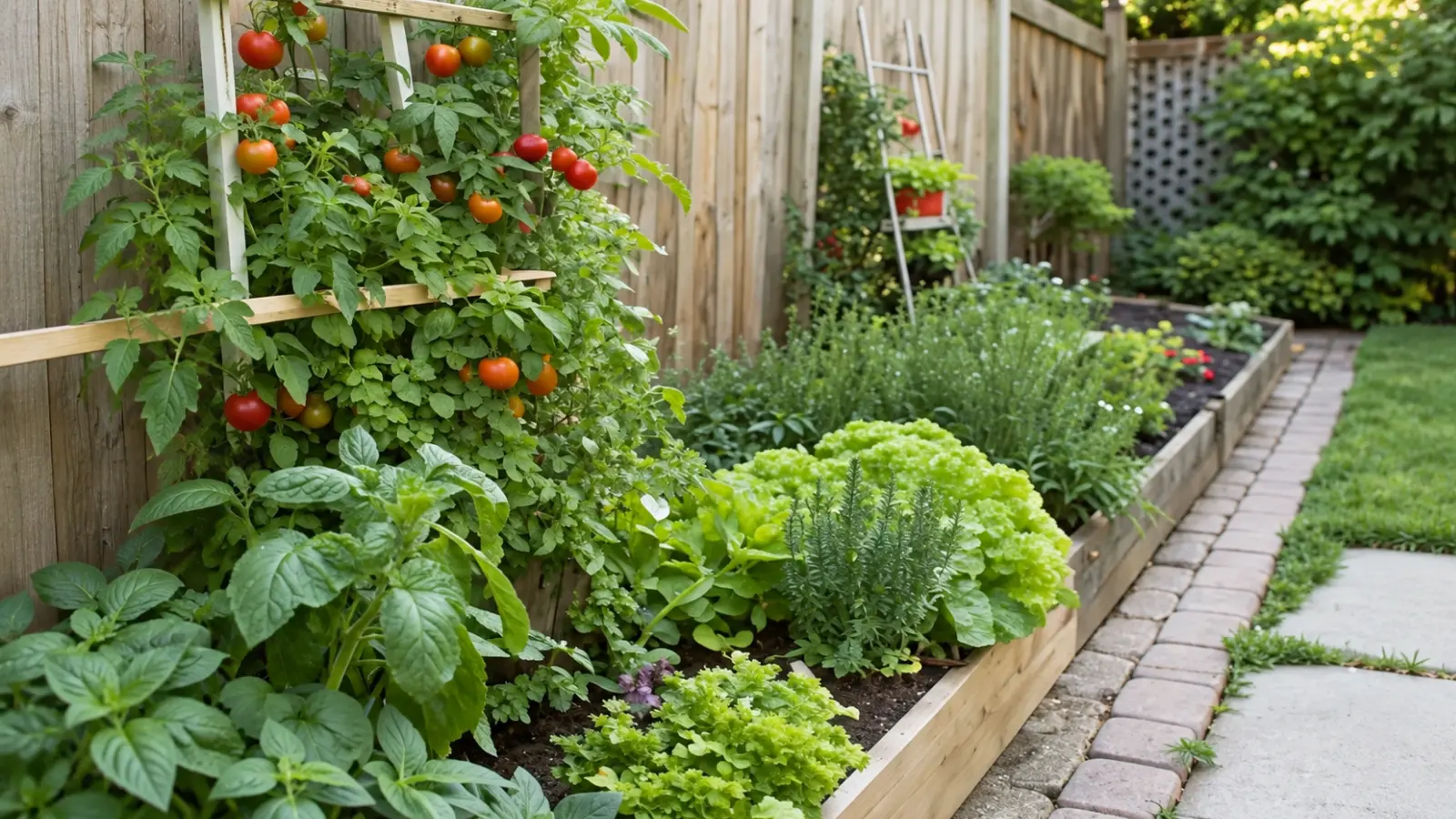
Raised beds create defined growing areas and can improve access, drainage and soil control. They are particularly useful where existing soil is compacted, contaminated or difficult to work. Keep in mind that they cost more to build and may dry out faster than in-ground planting, especially during hot weather. If you’re building raised beds for food production, choose materials that are safe for edible gardens: untreated cedar and redwood are the most commonly recommended wood options because they resist rot naturally without chemical treatment. Avoid using old railroad ties or lumber treated before 2003, which may contain arsenic-based preservatives. For more detail on building and filling raised beds, see Raised Beds.
Containers work well for herbs, greens, compact vegetables and small spaces. They give you control over the growing medium and allow you to move plants as light or conditions change, but they need closer attention to watering and fertilization than either bed type.
| Format | Best Advantage | What to Watch | Good Fit |
|---|---|---|---|
| In-ground beds | Lower initial cost and flexible expansion | Soil quality, compaction, drainage and contamination history | Suitable open ground with safe, workable soil |
| Raised beds | Defined space and greater soil control | Construction cost, material safety and faster drying | Small gardens, difficult native soil or contamination concerns |
| Containers | Flexibility and easy access | Frequent watering and limited root volume | Balconies, patios and entry areas |
Combining formats often works better than committing to one: herbs in containers by the door, greens in a raised bed and larger vegetables in an in-ground section farther back.
Plan a Practical Kitchen Garden Layout
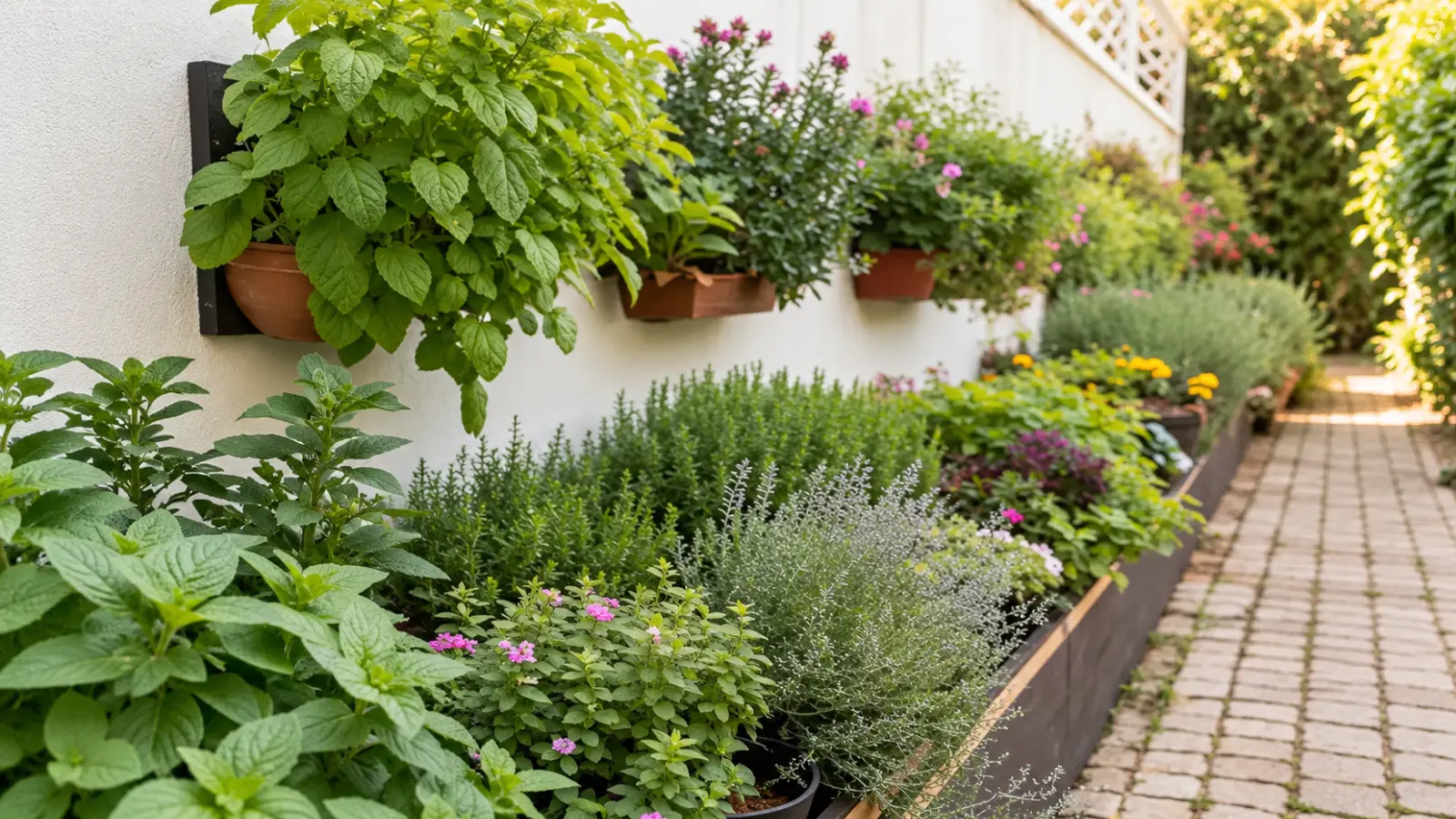
Draw the kitchen garden layout before preparing the soil or buying materials. Mark the bed dimensions, paths, water access, mature plant height and the areas you’ll visit most often.
Place tall crops on the north side of the garden when possible so they don’t shade shorter, sun-loving plants behind them. Use trellises for climbing beans, cucumbers and other vines to save ground space, but position them where they won’t block paths or cast unwanted shade.
Keep beds narrow enough to reach the center without stepping on the soil. A bed accessible from both sides should be no wider than 4 feet for most adults; beds against a wall or fence should stay at 2 to 2.5 feet so you can reach across the full width from one side. Wider beds look efficient on paper but become frustrating to plant, weed and harvest once crops fill in.
Group plants by season and care needs. Cool-season greens can occupy a bed early in the year, followed by warm-season crops once they’re harvested. Herbs that need frequent clipping can stay together near the kitchen, while crops that need less attention can occupy the outer beds.
A practical layout often includes:
- A small, highly accessible herb area close to the door
- One or more beds for greens and quick-turnover crops
- Support structures for climbing plants, positioned before those plants need them
- Space for compost, tools and harvest containers
- Clear access to every bed without stepping on the soil
- A transition between the edible garden and the surrounding landscape
Keep the layout simple enough to remember. A garden map should help you decide what to plant next, not become a second project that’s harder to manage than the garden itself.
Add Paths and Working Space
Paths are part of the growing system, not wasted space. They allow you to harvest without compacting the soil, carry watering equipment and reach the center of every bed without stepping where roots are actively growing.
Use a path width that suits the way you move through the garden. A narrow hand-access path may work between small herb beds, while a main route needs more room for a garden cart or wheelbarrow. Keep slippery surfaces, standing water and sharp edges away from the most frequently used routes.
Leave enough space around raised beds to repair boards, manage drip lines and harvest plants that extend over the edge. A beautiful layout that can’t be reached from both sides becomes frustrating quickly once crops are fully grown.
Use Succession Planting
Succession planting keeps a kitchen garden productive by replacing finished crops with new ones throughout the season. It can mean sowing the same crop at intervals, planting a different crop after the first is harvested or switching between cool- and warm-season plantings as temperatures change.
Leafy greens and radishes are especially well suited to succession because they mature relatively quickly. For greens and other fast crops, sowing every two to three weeks is a practical starting interval — enough spacing to spread out the harvest without leaving gaps in production. A single bed may hold one planting in early spring, another after the first harvest and a cool-season crop again later in the year.
Plan succession around actual household use. Several small plantings may be more convenient than one large harvest that needs to be eaten, preserved or composted quickly. Keep notes on sowing dates, harvest timing and which crops your household used most, and let that record shape the following year’s plan.
Design Around Harvesting Convenience
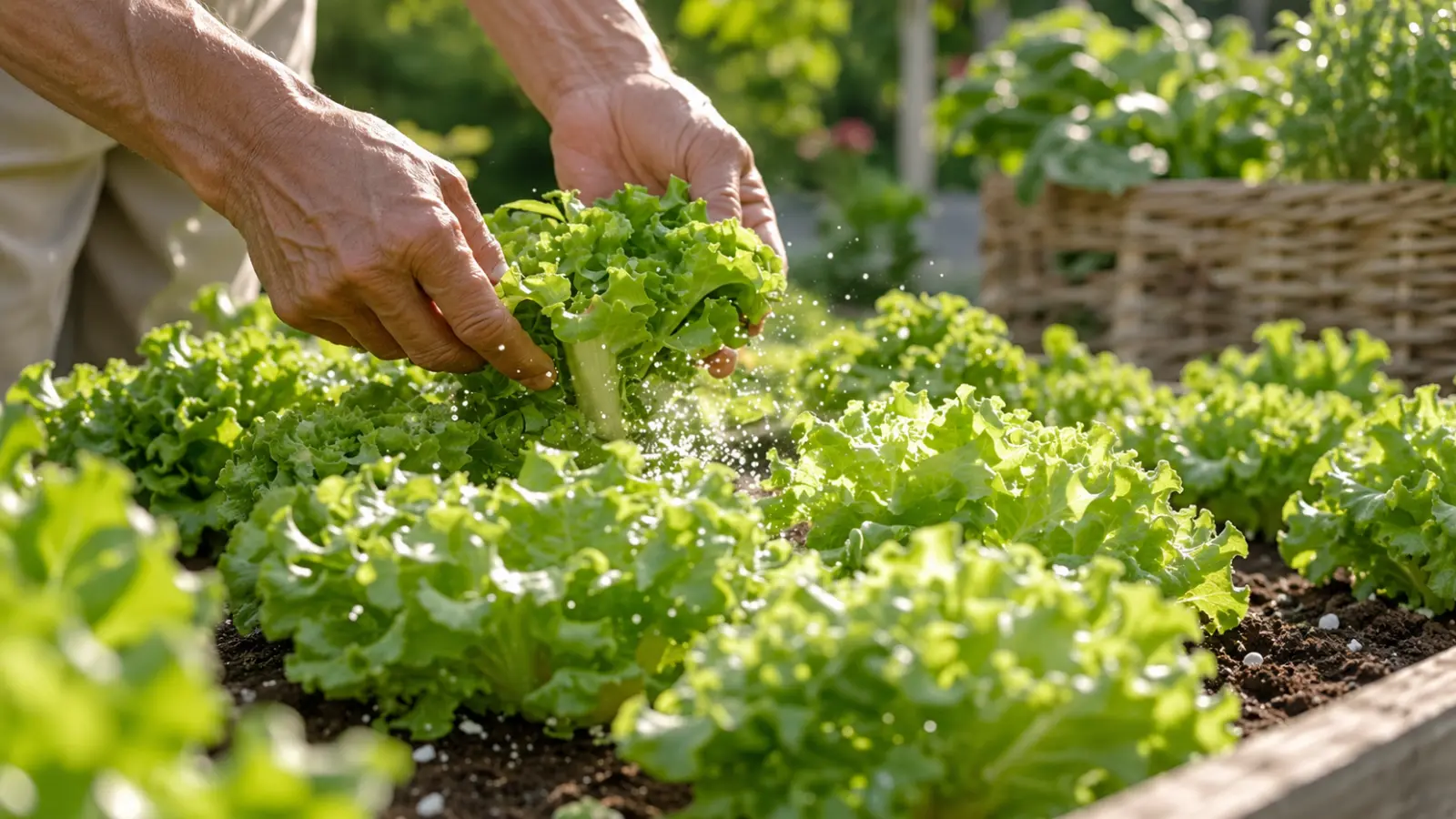
A kitchen garden earns its place through use. Put frequently harvested plants closest to the door, along an accessible path or in containers at a comfortable height. Crops that need regular picking should always be within easy reach.
Use containers or narrow raised beds for herbs that are clipped in small amounts. Place salad greens where you can harvest outer leaves without disturbing the rest of the planting. Provide support before climbing crops need it, and leave enough room to reach fruit without stepping into the bed.
Keep a basket, snips and clean harvest containers nearby if that makes the task easier. Small practical details — a hook for scissors, a shelf for a harvest bowl — can determine whether a kitchen garden becomes part of daily cooking or is visited only when something needs urgent attention.
Kitchen Gardens for Small Spaces
A small kitchen garden can be productive when every plant has a clear purpose. Vertical supports, window boxes, containers, narrow beds and compact crop varieties all increase usable growing space without creating crowding or making maintenance harder.
Balconies and patios may support herbs, salad greens, bush beans, compact peppers, strawberries and selected tomato varieties bred for container growing. Before placing large containers overhead or on a balcony, check the weight load, wind exposure, drainage and water access — a fully watered large pot is considerably heavier than it looks empty.
For a very small area, begin with a few herbs and greens that can be harvested repeatedly. Add one or two seasonal vegetables after you understand the light and watering pattern. A smaller planting that’s tended consistently can still function as a complete kitchen garden.
Keep the Garden Productive
Regular observation is easier when the garden is close to the house. Checking moisture levels, weeds, pests, supports and harvest readiness as part of ordinary movement through the day catches small problems before they become significant ones.
Water deeply enough to reach the root zone, then adjust frequency according to crop, soil, weather and container size. Containers and raised beds often dry out faster than in-ground soil and may need more frequent checks, especially during hot or windy weather.
Harvest regularly when crops are ready. Picking herbs, greens, beans and many fruiting vegetables encourages continued production. Leaving mature crops too long often reduces quality, triggers bolting in greens and can attract pests or disease.
Keep paths clear, remove diseased plant material promptly and replenish organic matter according to the needs of the soil and crops. Rotate plant families when practical, especially in larger beds, and avoid replanting the same crop family in soil where a specific pest or disease has become a recurring problem.
Design the Garden Around How You Cook
A useful kitchen garden does not need to produce the largest possible harvest. Its value comes from keeping the herbs, greens and vegetables you actually use within easy reach and making planting, watering and harvesting simple enough to become part of everyday life.
Start with a manageable space close to the house, grow what your household regularly eats and refine the layout as you learn which crops earn their space. Even a few well-placed beds or containers can become a productive kitchen garden when convenience guides the design.
COMMON QUESTIONS
Before you begin.
What is a kitchen garden?
A kitchen garden is an edible garden designed around the foods and herbs a household uses regularly. It usually prioritizes convenience, frequent harvesting and freshness rather than maximum crop production. Herbs, salad greens, vegetables and edible flowers can all be grown in raised beds, in-ground beds, containers or a combination of these formats.
Where is the best place for a kitchen garden?
Choose a location that is easy to reach from the kitchen or another frequently used entrance while still providing adequate sunlight, drainage and access to water. Keeping the garden close makes everyday harvesting, watering and pest checks much easier. Avoid locations with unsafe soil, problematic roof runoff, heavy tree-root competition or other conditions that could affect edible crops.
What should you grow in a kitchen garden?
Start with crops you actually use in everyday cooking and can harvest repeatedly or in small amounts. Herbs such as basil, parsley, chives and thyme, leafy greens, radishes, peppers, cherry tomatoes, beans and other compact vegetables are useful choices for many gardens. Final selections should match your climate, season, available sunlight and growing space.
How much sun does a kitchen garden need?
Most vegetables and many culinary herbs perform best with at least six hours of direct sunlight per day. Leafy greens and some herbs can tolerate partial shade, while fruiting crops such as tomatoes and peppers generally benefit from stronger light. Observe the site through the growing season because buildings, fences and trees can change how much sun reaches the garden.
How do you plan a kitchen garden layout?
Keep beds narrow enough that you can reach every plant without stepping on the growing soil, and position frequently harvested crops closest to the main access point. Put tall crops and trellises where they will not shade shorter sun-loving plants, provide clear paths and group crops according to season and care needs. A simple layout that makes watering, planting and harvesting convenient is usually more useful than a complicated design.
How do you keep a small kitchen garden productive?
Prioritize high-use crops, harvest regularly and replant space as soon as earlier crops finish. Succession planting—such as sowing fast-growing greens or radishes every two to three weeks—can spread harvests across the season, while trellises and compact varieties make better use of limited space. Containers, narrow beds and vertical supports can make even a patio or small yard productive.