The best butterfly garden plants do more than add color to the landscape. Nectar flowers provide energy for adult butterflies, while host plants feed caterpillars and allow the garden to support the butterfly life cycle rather than simply attract occasional visitors.
A strong planting plan combines both roles with plants suited to your region, sunlight, soil and moisture. Native perennials, annual flowers, shrubs, trees and herbs can all contribute, but the most useful combination is one that provides reliable resources from early spring through fall.
This guide explains how to choose butterfly garden plants, including the best nectar and host plants, why native species matter, how to plan bloom succession, when to use annuals or perennials, which shrubs, trees and herbs can add habitat value, and how to avoid invasive or poorly suited plants.
Nectar Plants vs. Host Plants
One of the most important decisions in choosing butterfly garden plants is understanding the difference between nectar plants and host plants.
Nectar plants feed adult butterflies. Their flowers provide the energy butterflies need for movement, mating, and migration. Many adult butterflies can use nectar from a range of flowers, especially when the plants offer accessible blooms and are available during the right season.
Host plants feed caterpillars. Female butterflies typically lay eggs only on particular plant species or plant families, and the caterpillars eat those leaves after they hatch. Host plants are essential if the garden is meant to support the butterfly life cycle rather than simply attract passing adults.
A garden with only nectar flowers may look beautiful and receive occasional visitors, but it won’t provide the food caterpillars need to develop. Plan for both roles whenever space allows.
Best Nectar Plants for Butterflies
Butterflies are often drawn to flowers in shades of purple, pink, red, orange, and yellow, but color alone doesn’t determine whether a plant is useful. Flower shape, nectar accessibility, bloom time, plant placement, and regional adaptation all matter.
Common nectar choices include:
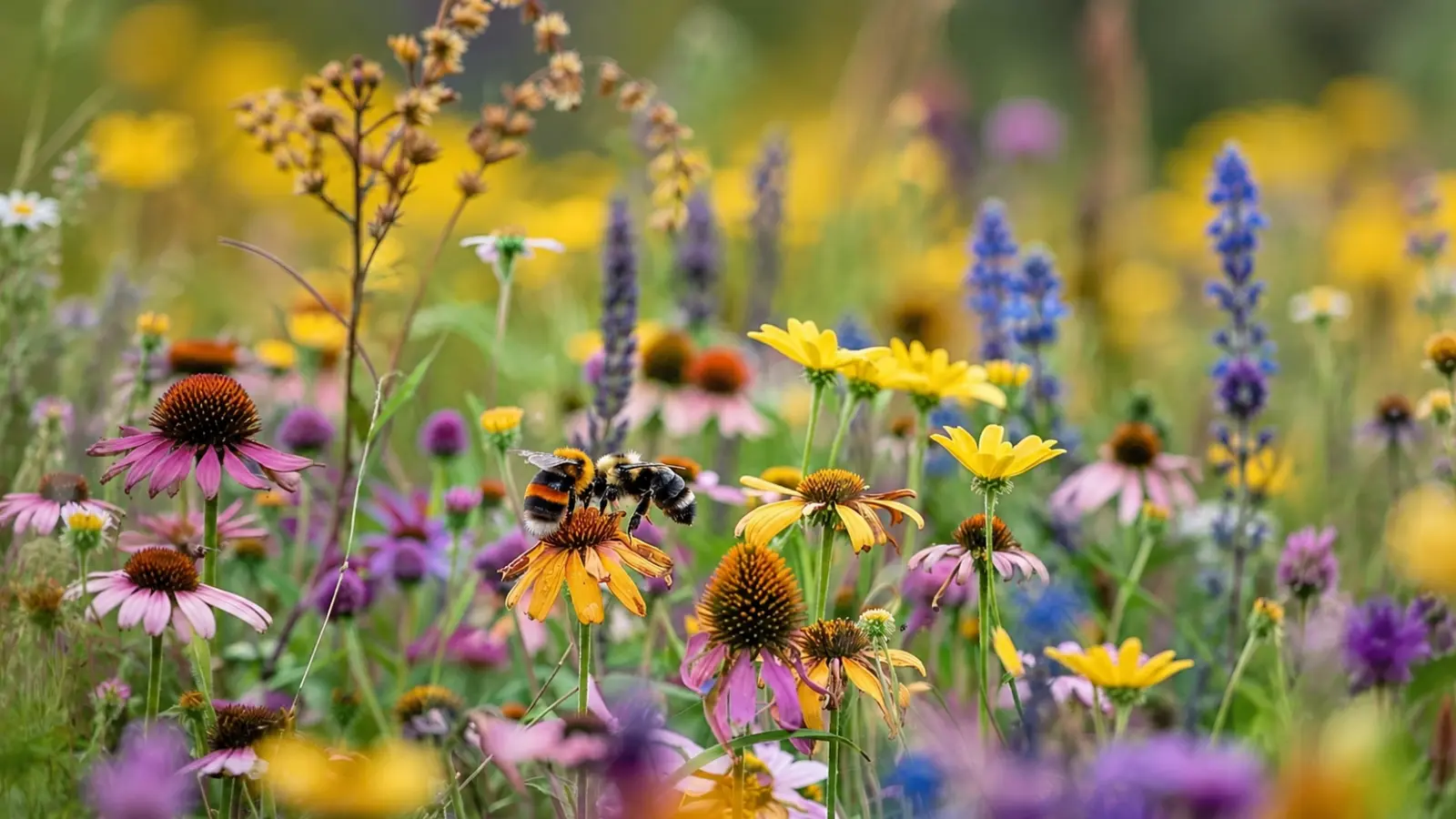
- Purple coneflower (Echinacea purpurea): one of the most widely recommended native nectar plants in the US, attracting monarchs, swallowtails, painted ladies, fritillaries, and skippers. Long blooming, easy to establish, and valuable for birds after the flowers fade.
- Bee balm (Monarda): tubular flowers that attract swallowtails and hummingbirds; performs best in full sun with good air circulation to reduce powdery mildew. Native species are generally preferable to cultivars with highly modified flowers.
- Butterfly weed (Asclepias tuberosa): a native milkweed with bright orange flowers that provides nectar and also serves as a host plant for monarch caterpillars. Drought-tolerant once established; prefers well-drained soil.
- Joe-Pye weed (Eutrochium): tall, late-season flower clusters that work well in larger borders and tolerate moist to average soils. Excellent for extending the garden’s usefulness into late summer.
- Blazing star (Liatris): upright flower spikes that add height and provide late-summer nectar. A native prairie plant that performs well in well-drained, sunny sites.
- Black-eyed Susan (Rudbeckia): long-blooming, daisy-like flowers that work in many sunny planting designs and are widely adaptable across the US.
- Coreopsis (Coreopsis): cheerful yellow flowers with a long bloom season; species and performance vary significantly, so choose one suited to your region and conditions.
- Goldenrod (Solidago): an important late-season nectar source for many butterfly species. Despite its undeserved reputation as an allergen (the real culprit is ragweed), goldenrod is a valuable native plant — choose a species suited to your region and site, as some spread aggressively.
- Asters (Symphyotrichum and related genera): native asters are among the most important late-season nectar sources in the eastern and central US, supporting butterflies heading into fall.
- Phlox (Phlox): fragrant flower clusters; species vary widely, from ground-cover types to tall garden phlox. Choose one suited to your site conditions.
- Mountain mint (Pycnanthemum): aromatic foliage and clusters of small flowers that attract an unusually wide range of pollinators, including many butterfly species. Spreads by rhizomes — site accordingly.
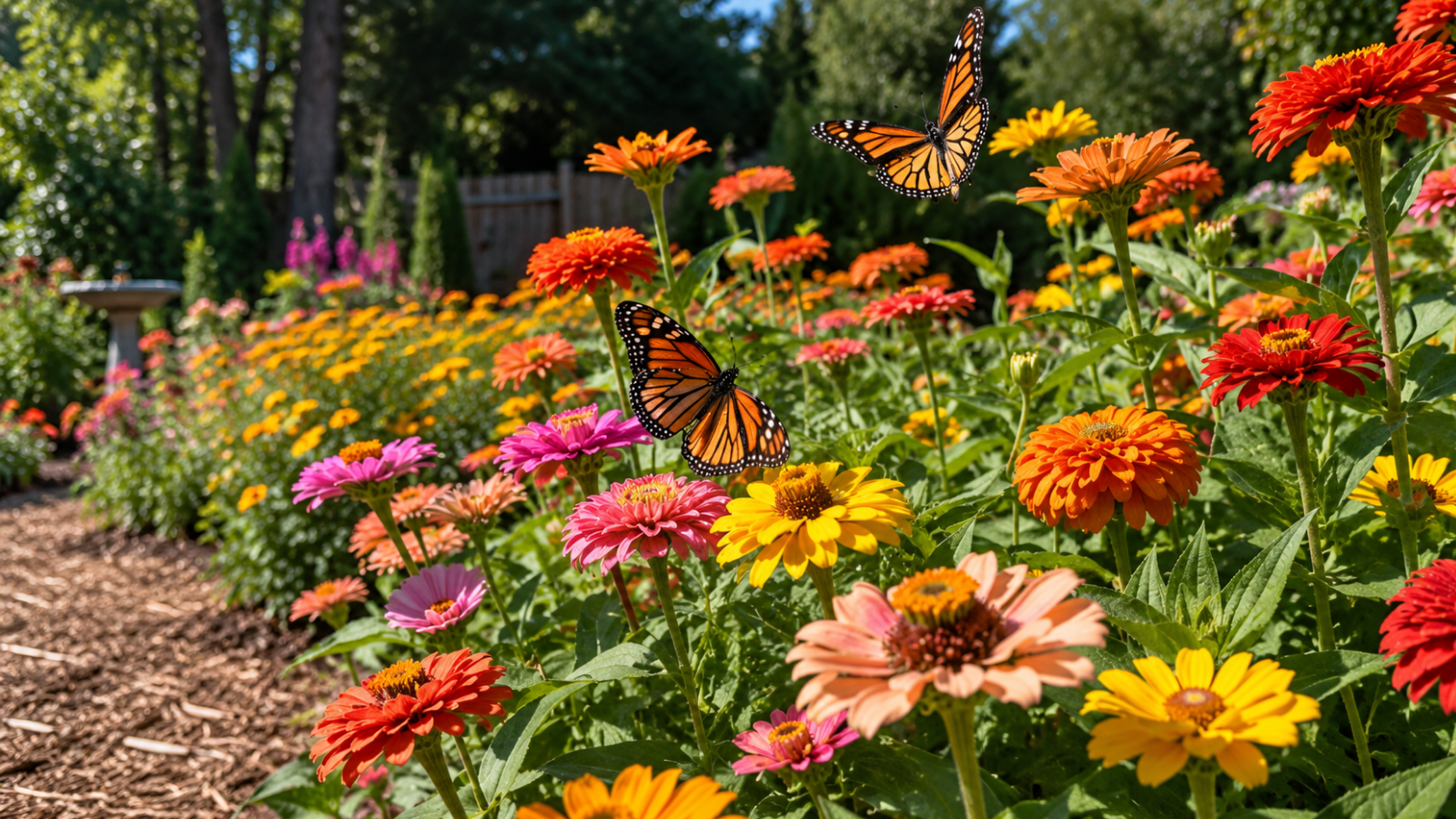
- Zinnias (Zinnia elegans): reliable annual that blooms heavily from summer to frost, consistently draws monarchs, swallowtails, and skippers, and is easy to grow from seed. A practical filler while perennials establish.
- Lavender, catmint, oregano, and thyme: useful herb choices where climate, drainage, and winter temperatures suit them.
These examples are not a universal shopping list. Some species or cultivars may be unsuitable in particular regions, and availability varies across the country. Select plants from regional recommendations — your state’s Cooperative Extension Service or a local native plant society is a reliable starting point.
Best Host Plants for Caterpillars
Host plant selection should begin with the butterfly species you actually want to support. Unlike adult butterflies, caterpillars generally have narrow feeding preferences tied to specific plant families or species.
Milkweed for Monarchs
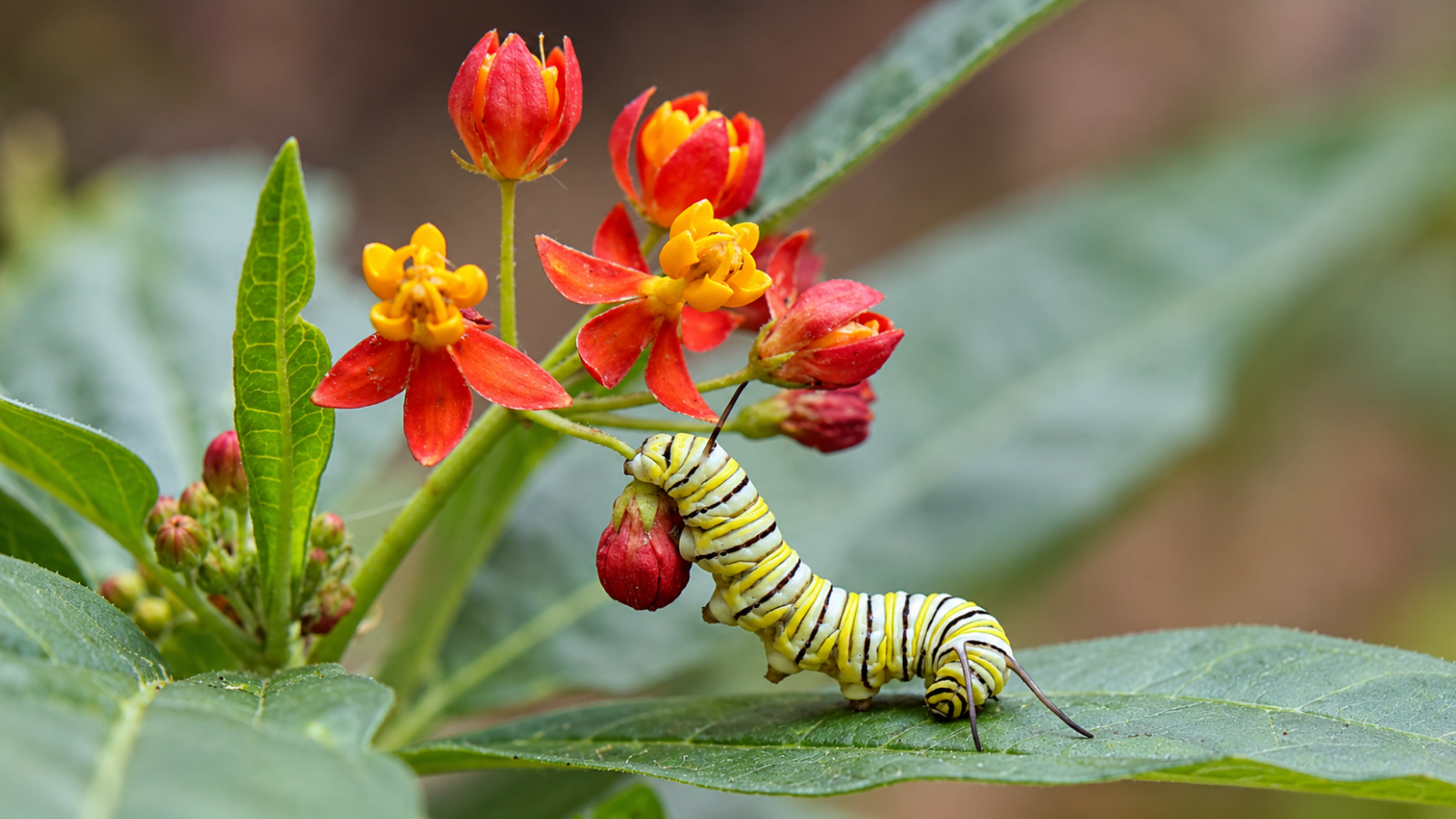
Milkweeds in the genus Asclepias are the host plants for monarch caterpillars — no milkweed, no monarchs. Different milkweed species are adapted to very different regions and conditions, so choosing the right one matters. Native milkweeds such as Asclepias syriaca (common milkweed) in the East and Midwest, Asclepias incarnata (swamp milkweed) in wetter sites, and Asclepias speciosa in the West are generally preferable to treating every milkweed as interchangeable.
One important caution: tropical milkweed (Asclepias curassavica) is widely sold at garden centers because it’s easy to grow and reliably attractive. However, because it doesn’t die back seasonally like native milkweeds, it can accumulate a protozoan parasite called OE (Ophryocystis elektroscirrha) on its leaves, which infects monarch caterpillars and can shorten their lifespans and impair flight. In mild climates where tropical milkweed stays green year-round — particularly in coastal California, Florida, and the Gulf Coast states — it poses a meaningful risk to monarch health and can also disrupt normal migration. If you grow it in those regions, cut it back hard in fall (to within about six inches of the ground) to remove accumulated spores. Better still, replace it gradually with native milkweed species as they become available locally.
Dill, Parsley, and Fennel for Swallowtails
Plants in the carrot family serve as host plants for black swallowtails throughout most of the US and for anise swallowtails in the West. Dill (an annual), parsley (a biennial usually grown as an annual), and fennel (a perennial in mild climates) are all practical choices that can do double duty in a kitchen garden. The catch is that caterpillars may consume them quickly — planting extra, or letting fennel establish as a larger plant, makes it easier to share.
Violets for Fritillaries
Native violets provide host-plant value for fritillary butterflies. They’re especially useful in areas where a naturalistic ground layer is welcome, and they tolerate partially shaded conditions that would be too dim for most sun-loving nectar plants. Great spangled fritillaries and several other fritillary species lay their eggs on or near violets in late summer, and the tiny caterpillars overwinter in the leaf litter before feeding in spring.
Native Trees and Shrubs
Trees and shrubs are often the most overlooked part of a butterfly planting, even though they can support the largest numbers of caterpillars. Oaks, willows, birches, wild cherries, dogwoods, spicebush, and sassafras may serve different butterfly species depending on the region. Spicebush (Lindera benzoin), for example, is the primary host plant for the spicebush swallowtail — a butterfly that won’t complete its life cycle without it.
A small native tree or shrub can offer host-plant value, shelter, and structure all at once. Confirm mature size and site compatibility before planting, especially near foundations, overhead wires, or small garden paths where a large oak or willow would eventually become a problem.
Why Native Plants Matter
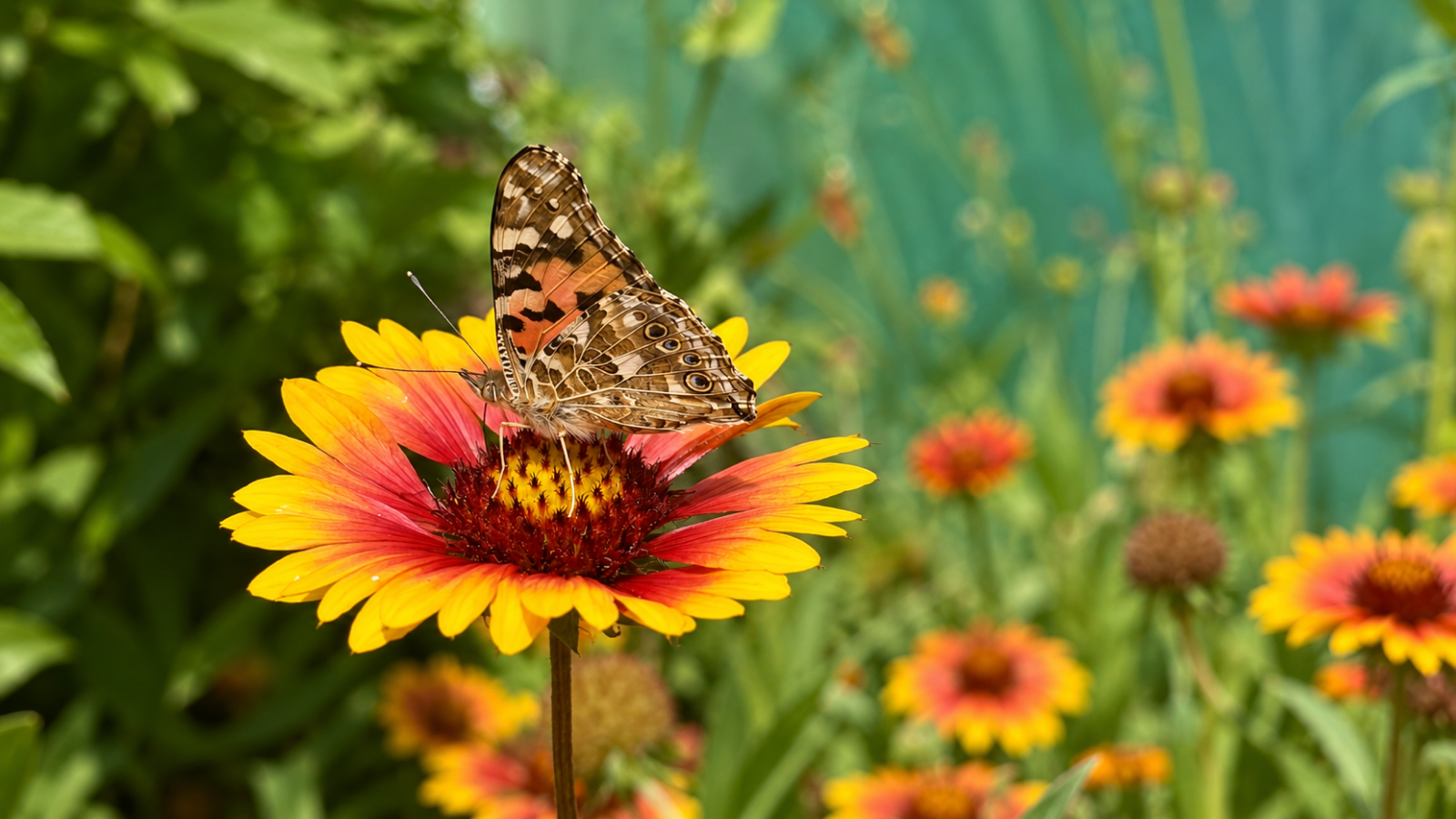
Native plants are adapted to the climate, soils, and seasons of a particular region. Many also have long-standing relationships with local butterflies and the plants their caterpillars use — relationships that can take centuries to develop and can’t simply be replicated by swapping in a non-native species with similar flowers.
“Native” doesn’t mean a plant will succeed in every part of the United States. A species native to one state may struggle in a different climate, and local ecotypes can differ meaningfully from nursery selections grown far away. Use state or regional plant lists from universities, Cooperative Extension Services, botanical institutions, or organizations like the Xerces Society and the North American Native Plant Society to narrow your choices.
Non-native plants can still provide nectar, especially when they bloom at a time when few other flowers are available. They should complement rather than replace regionally appropriate host plants, and their invasive potential should always be checked before purchase.
Sun and Soil Requirements
Many butterfly flowers perform best in full sun — generally defined as at least six hours of direct sunlight daily. A sunny site also creates warm surfaces where butterflies can bask and become active, which matters as much as the flowers themselves.
Some host plants prefer partial shade, and a butterfly garden can include more than one light condition. Observe the site through the day before planting, rather than assuming the entire area gets the same exposure. Nearby trees may create dry shade in summer that didn’t exist in spring; a south-facing wall may reflect significantly more heat than open ground nearby.
Match plants to soil moisture and drainage. Lavender and butterfly weed prefer sharply drained, lean soil, while swamp milkweed and Joe-Pye weed tolerate consistently moist ground. Amending a site can improve conditions but can’t fully compensate for choosing plants that require a fundamentally different environment. A plant struggling against its site conditions will grow poorly, attract fewer butterflies, and need more maintenance than one that’s well matched from the start.
Planning Bloom Succession
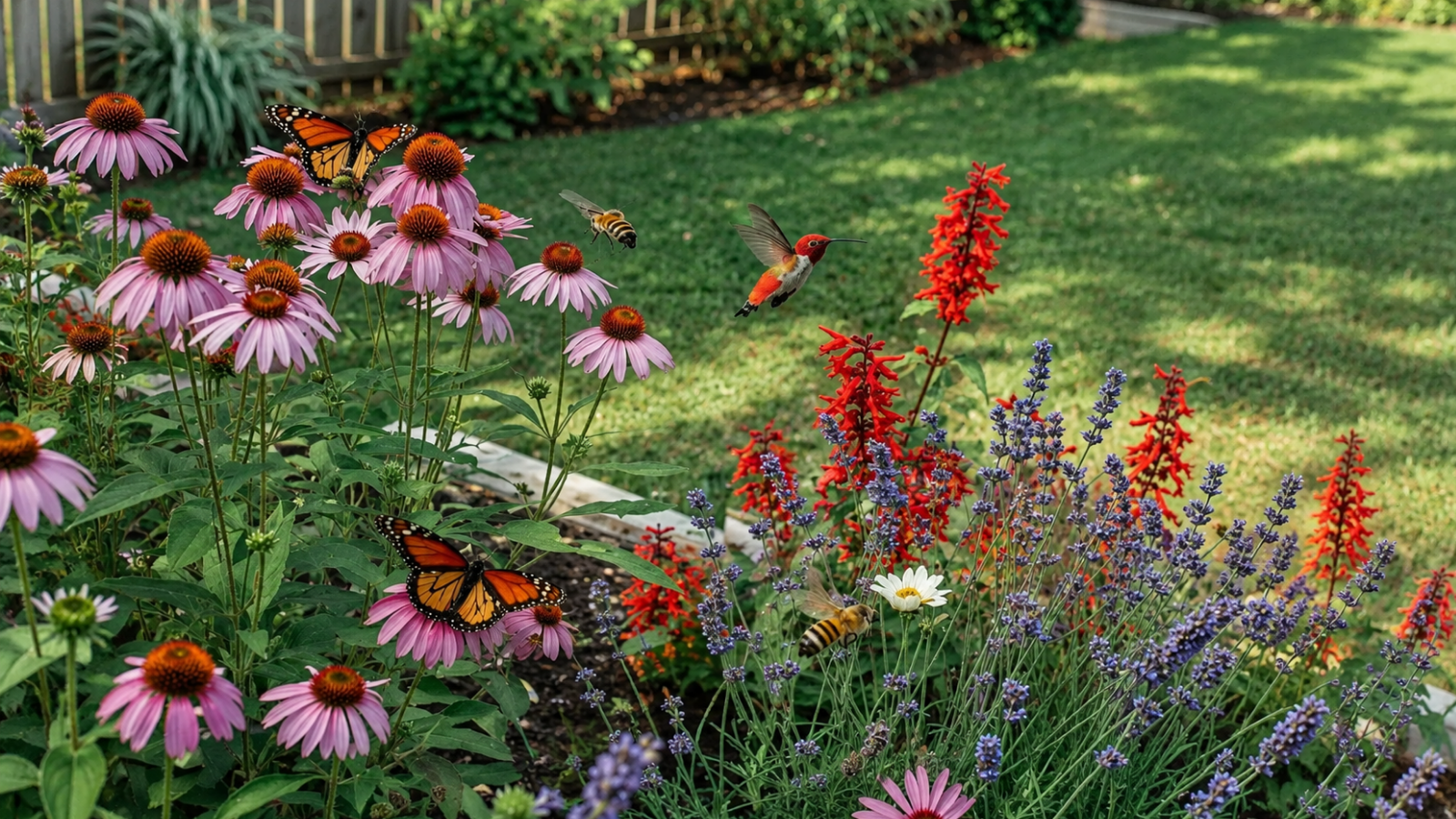
A butterfly garden should offer nectar across a sequence of seasons rather than producing one short display. Bloom succession means choosing plants that flower at different times so food remains available as spring turns to summer and summer moves into fall.
Early Season
Early-blooming shrubs, spring perennials, and bulbs provide the first nectar sources after winter and are especially important for butterflies that overwinter locally and emerge early in the year. Choose plants that are hardy in your area and avoid filling the entire plan with species that bloom during the same few weeks.
Midseason
Midsummer is usually the easiest period for finding butterfly flowers, but even a well-stocked summer list can have gaps. Combine plants with different flower forms and heights, and include both long-blooming species — like zinnias and black-eyed Susans — and plants that deliver a strong seasonal flush of bloom, like Joe-Pye weed and tall phlox.
Late Season
Native asters, goldenrods, late-blooming perennials, and some shrubs are essential for extending nectar availability into late summer and fall. This period is particularly important for monarchs fueling up for migration and for local species completing a final generation before winter.
Track bloom times in your own garden, because local weather can shift flowering by several weeks from what a plant label or regional chart suggests. A simple notebook record of what’s blooming when is more useful than any generalized calendar.
Annuals vs. Perennials
Annuals complete their life cycle in one growing season, while perennials return for several years when they’re suited to the climate and cared for reasonably well.
Perennials and native shrubs provide the long-term structure of a butterfly garden. Once established, they reduce the need for yearly replanting and create more consistent habitat. The main tradeoff is that some take a full season or two to reach mature size and flower reliably.
Annuals can fill seasonal gaps, provide quick color, and offer nectar while slower perennials establish. Zinnias, cosmos, and other butterfly-friendly annuals can be useful additions when they’re grown without harmful pesticide treatments and are suited to the site. Many big-box garden centers sell annuals pre-treated with systemic insecticides — check before buying, or grow them from untreated seed.
The most resilient plan uses perennials and shrubs as its foundation, with annuals added for flexibility and seasonal coverage rather than relying on annual flowers alone.
Shrubs, Trees and Herbs
A layered planting plan gives butterflies more resources than a flat row of low flowers, and it creates a garden that looks intentional and holds up through the seasons.
Shrubs can provide shelter, structure, nectar, or host-plant value. Spicebush and willows support caterpillars; native viburnums provide nectar and late-season berries; sweet pepperbush (Clethra alnifolia) is a fragrant late-summer bloomer that butterflies visit reliably in the eastern US. Shrub choices depend heavily on your region, so check regional native plant lists before buying.
Trees require more room but can support a surprisingly broad range of caterpillars. Oaks alone are documented hosts for hundreds of caterpillar species. Wild cherries, birches, and willows should be selected with mature size, root growth, and moisture needs in mind — some willows, for example, have aggressive surface roots that make them poor choices near pavement or buildings.
Herbs are practical additions in small gardens and containers. Dill, parsley, and fennel can serve swallowtail caterpillars, while oregano, thyme, lavender, and catmint provide nectar when in bloom. Herbs work well near a kitchen garden or in containers, provided they get enough sun and drainage to thrive.
Avoiding Invasive Plants
A plant can attract butterflies and still cause ecological problems if it spreads aggressively outside the garden. Before buying, check state invasive-plant lists, local Extension recommendations, and regional conservation resources.
Two common examples are worth naming directly because they’re widely sold and widely planted in butterfly gardens. Buddleja davidii (butterfly bush) is listed as invasive or noxious in Oregon, Washington, Pennsylvania, New Jersey, and Virginia, among other states, where it escapes into roadsides and stream banks and crowds out native vegetation. If you grow it in a region where it’s invasive or regulated, choose a sterile or low-seed cultivar specifically bred to address the problem — several are now available and approved for sale even where the straight species is banned. Tropical milkweed (Asclepias curassavica) is the other frequent offender, discussed in detail in the milkweed host plant section above.
Be cautious with any plant described as “naturalizing,” “vigorous,” or “easy to spread.” Those terms may sound appealing but can signal a plant that escapes into natural areas. Choose a suitable alternative when a species is known to displace native plants or behave invasively in your region.
Also avoid relying on heavily modified cultivars with double flowers. When stamens are converted to petals, the flower may produce little to no accessible nectar or pollen — making it essentially useless to butterflies regardless of how attractive it looks. If you can’t clearly see the flower’s center, butterflies likely can’t reach it either. This applies even to otherwise good garden plants: a double-flowered coneflower may look beautiful but won’t function like the open-faced species it came from.
Butterfly Garden Plants at a Glance
The following table shows the role and general conditions of several useful plant groups. Bloom season varies by species, climate, and cultivar — treat these as starting points, not fixed schedules.
| Plant | Nectar/Host | Sun | Bloom Season | Perennial/Annual | Notes |
|---|---|---|---|---|---|
| Purple Coneflower | Nectar | Full sun to partial shade | Summer to fall | Perennial | Widely adaptable native; attracts many butterfly species. |
| Bee Balm | Nectar | Full sun to partial shade | Summer | Perennial | Needs good airflow; native species preferable to highly modified cultivars. |
| Milkweed | Nectar and host | Usually full sun | Summer | Perennial | Choose a native species for your region; avoid tropical milkweed in mild-winter climates. |
| Black-Eyed Susan | Nectar | Full sun | Summer to fall | Perennial | Adaptable and long-blooming in sunny, well-drained sites. |
| Blazing Star | Nectar | Full sun | Late summer | Perennial | Native prairie plant; adds upright height to borders. |
| Joe-Pye Weed | Nectar | Full sun to partial shade | Late summer | Perennial | Excellent for large borders; tolerates moist soil. |
| Coreopsis | Nectar | Full sun | Summer | Perennial or annual | Species vary; threadleaf coreopsis is reliably perennial in most zones. |
| Asters | Nectar | Sun to partial shade | Late summer to fall | Perennial | Critical for extending late-season bloom; choose native Symphyotrichum species. |
| Goldenrod | Nectar | Full sun to partial shade | Late summer to fall | Perennial | Important native nectar source; some species spread aggressively, so choose carefully. |
| Zinnias | Nectar | Full sun | Summer to fall | Annual | Heavy bloomers and reliable butterfly draws; grow from untreated seed when possible. |
| Dill | Host | Full sun | Summer | Annual | Host for black swallowtail (East/Midwest) and anise swallowtail (West). Self-seeds readily. |
| Parsley | Host | Sun to partial shade | Summer | Biennial (grown as annual) | Plant extra; caterpillars may consume it quickly. |
| Fennel | Host | Full sun | Summer | Perennial in mild climates | Bronze fennel is especially useful; can spread — divide to manage. |
| Violets | Host | Partial shade to sun | Spring | Perennial | Host for fritillary caterpillars; useful in naturalistic plantings. |
| Spicebush | Host and shelter | Partial shade | Spring (insignificant) | Deciduous shrub | Primary host for spicebush swallowtail; needs room to mature. |
| Oak | Host and shelter | Usually full sun | Not grown for bloom | Tree | Supports many caterpillar species; choose only where mature size fits. |
| Lavender | Nectar | Full sun | Summer | Perennial or tender perennial | Requires excellent drainage and mild winters; hardiness varies by species and cultivar. English lavender is generally hardy in USDA Zones 5–8. |
Use the table to understand the roles plants can play in the habitat, not as a fixed planting recipe. Regional suitability should always come before a specific flower color or a familiar plant name.
Build a Planting Plan That Supports the Whole Life Cycle
The strongest butterfly garden is not the one with the longest flower list. It combines nectar plants for adults with host plants for caterpillars, spreads bloom across the growing season and uses species that genuinely fit the light, soil, moisture and climate of the site.
Start with a dependable foundation of regionally appropriate plants, then add annuals, herbs, shrubs or trees where they fill a real habitat need. When each plant has a purpose, the garden becomes both easier to manage and more useful to the butterflies that actually live in your area.
COMMON QUESTIONS
Before you begin.
What are the best plants for a butterfly garden?
The best butterfly garden plants combine nectar sources for adult butterflies with host plants for caterpillars. Native perennials, shrubs and trees often provide the strongest long-term foundation, while annuals such as zinnias can extend seasonal bloom. Choose every plant according to your region, sunlight, soil, moisture and the butterfly species found locally.
What flowers attract butterflies the most?
Butterflies commonly visit nectar-rich flowers such as purple coneflower, native asters, goldenrod, milkweed, black-eyed Susan, Joe-Pye weed, blazing star and zinnias. The most effective choices vary by region, and a garden with flowers blooming from spring through fall generally provides more reliable food than one that peaks during a single season.
What is the difference between nectar plants and host plants?
Nectar plants provide food for adult butterflies, while host plants provide food for caterpillars and places where female butterflies can lay eggs. Many caterpillars depend on specific plants or plant families, so a garden with both nectar and appropriate host plants supports more of the butterfly life cycle than nectar flowers alone.
What host plants should I grow for butterflies?
Choose host plants according to the butterfly species in your region. Monarch caterpillars depend on milkweeds, black swallowtails commonly use plants such as dill and parsley, fritillaries use violets, and spicebush swallowtails use spicebush or sassafras. Regional native plant and Extension resources can help identify the best host plants for local species.
Should butterfly garden plants be native?
Native plants are often especially valuable because local butterflies may have long-established relationships with them, particularly as caterpillar host plants. However, a plant being native somewhere in the United States does not automatically make it appropriate for your location. Choose species native or well suited to your specific region and check local invasive-plant guidance before planting.
How do I keep flowers blooming for butterflies throughout the season?
Choose plants with overlapping bloom periods so nectar is available from early season through fall. Combine early-, mid- and late-blooming perennials, shrubs and annuals rather than selecting everything for the same peak period. Track flowering times in your own garden and adjust the plant mix if you notice seasonal gaps in nectar availability.