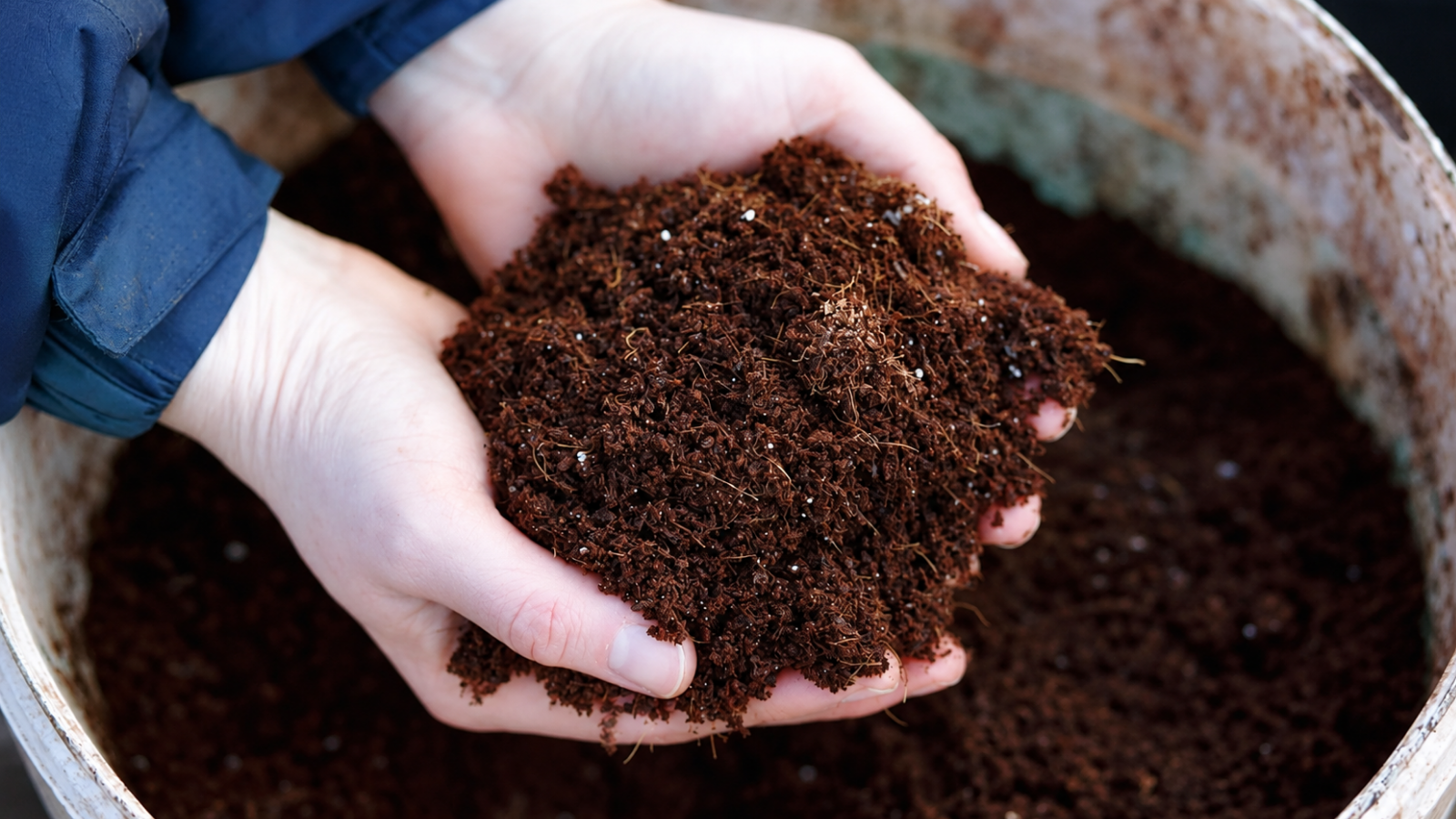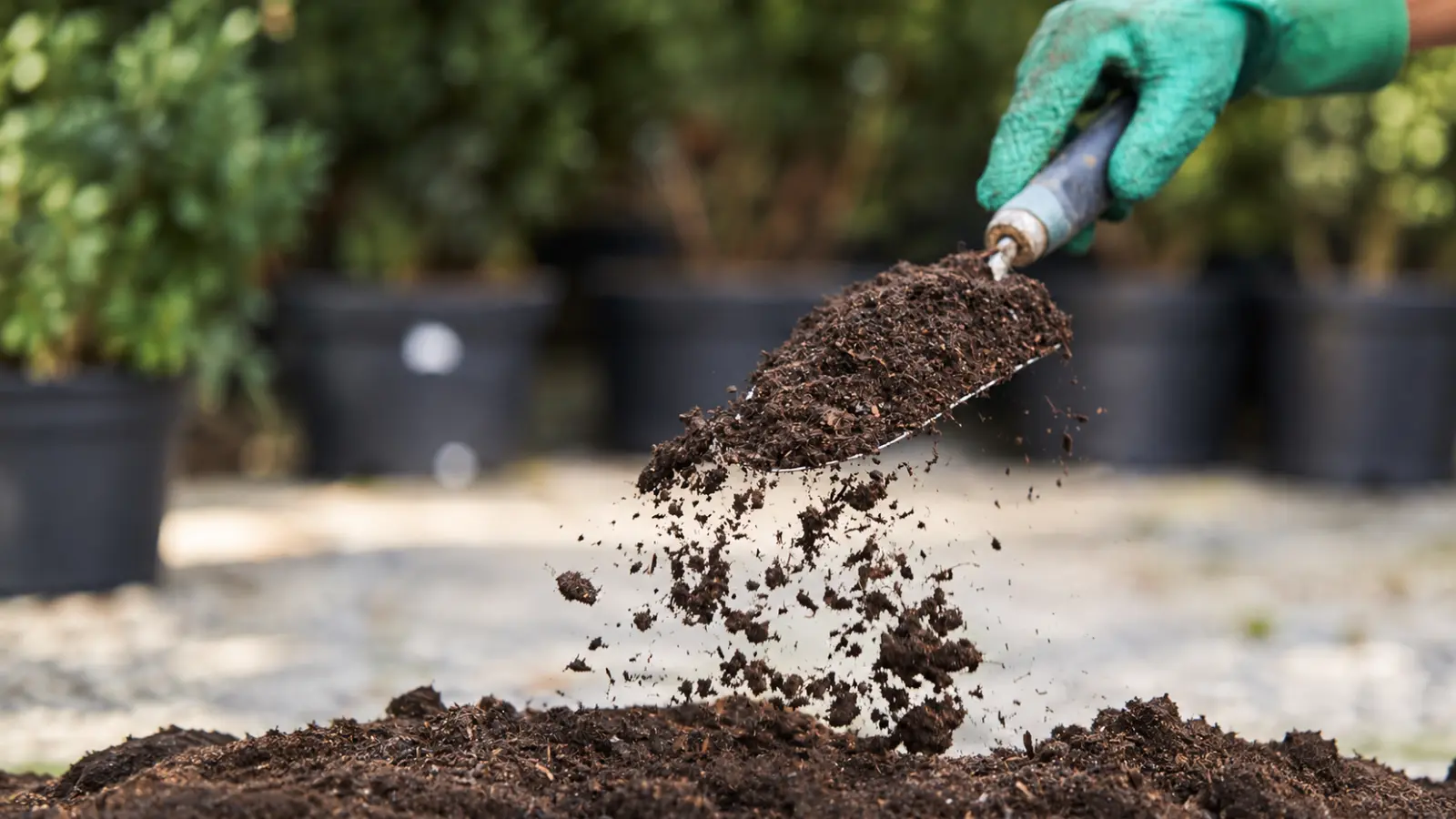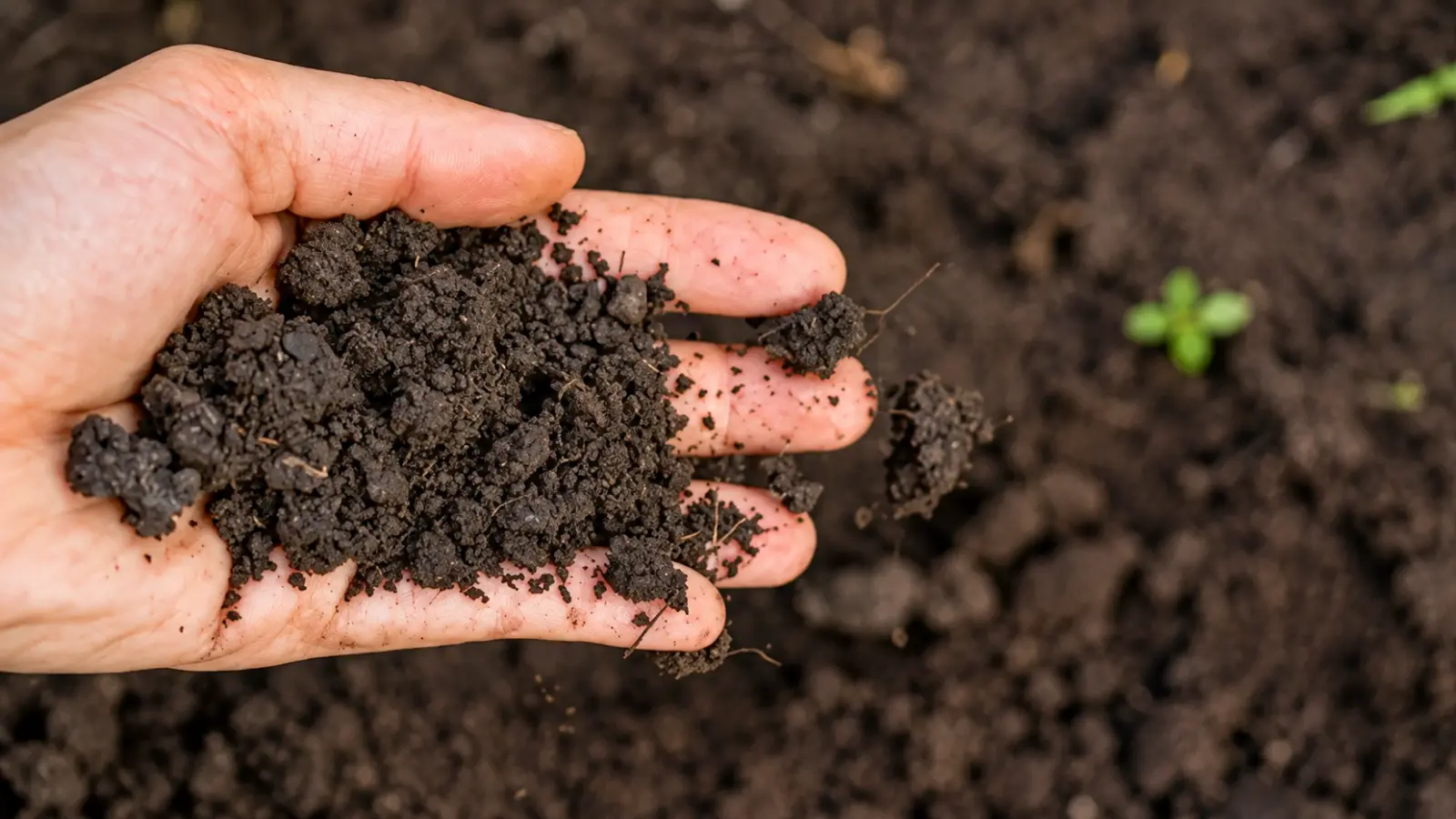
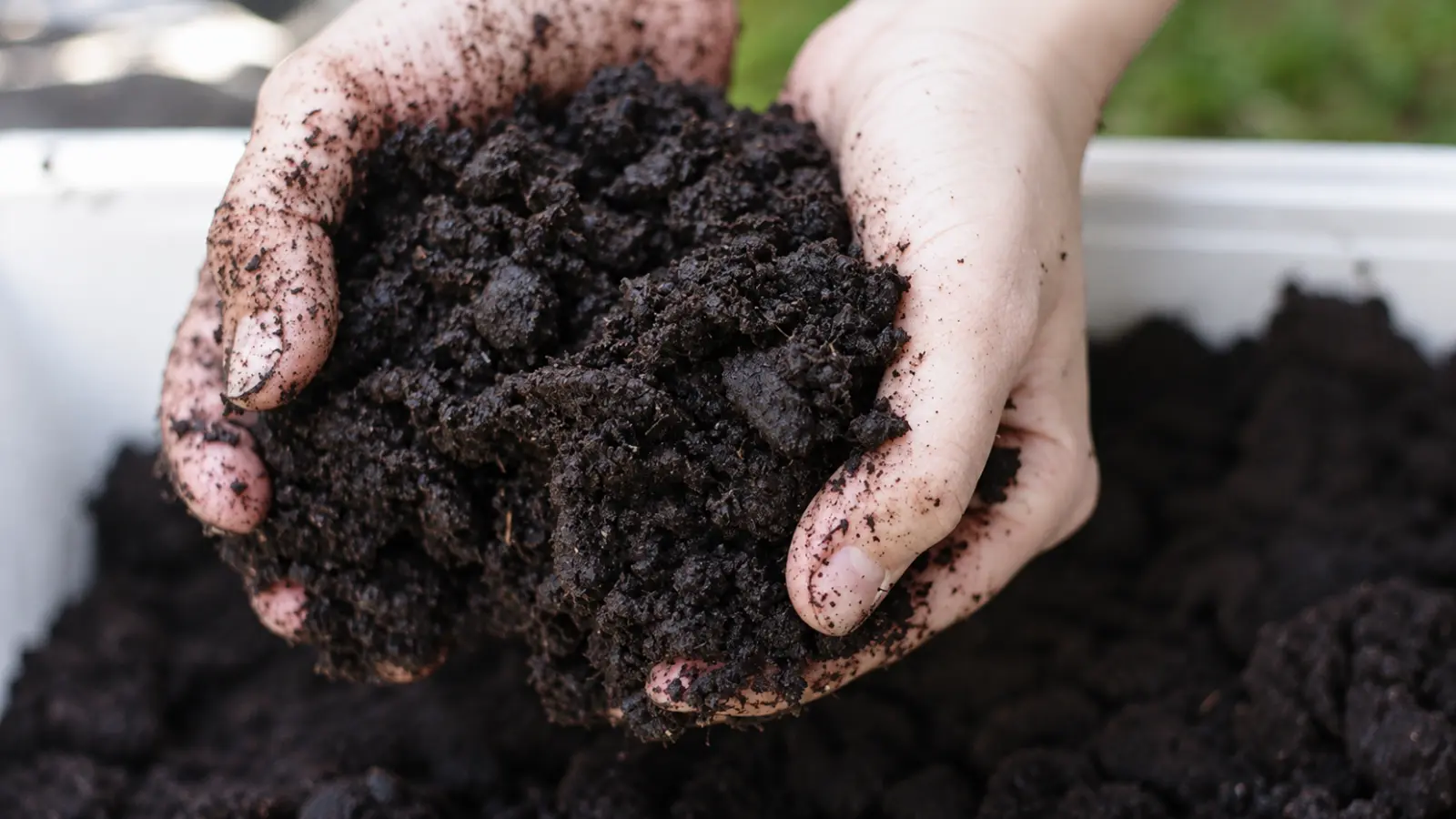
Clay soil has a high proportion of very fine mineral particles that can hold water and nutrients effectively but also create challenging growing conditions when drainage, aeration, or structure is poor. It may feel sticky and easily compacted when wet, then become hard, cloddy, or cracked as it dries, making timing and soil management especially important.
Improving heavy clay does not mean trying to eliminate the clay or quickly turn it into loam. The more realistic goal is to improve how the root zone functions by protecting soil structure, reducing compaction, adding appropriate organic matter gradually, managing surface cover and drainage, and choosing plants suited to the site’s actual moisture conditions. Problems that look like “bad clay” can also come from grading, runoff, construction compaction, or a dense layer beneath the bed.
This guide explains how to identify clay soil, distinguish texture from drainage and compaction problems, improve heavy clay with compost and mulch, decide when raised planting makes sense, understand why sand and gypsum are not universal fixes, and choose plants that can perform well in clay-dominant garden soil.
How to Improve Clay Soil
Start by figuring out whether you’re dealing with a clay-texture issue, compaction, poor grading, or a drainage problem underneath the bed. Add finished compost and other suitable organic matter gradually, keep the soil covered with mulch, avoid stepping on or digging it while it’s wet, and choose plants that suit its moisture pattern. Don’t expect a small addition of sand or gypsum to turn heavy clay into loam; save those materials for cases where a soil test or a specific, documented problem calls for them.
What Is Clay Soil?
Clay soil has a high proportion of the smallest mineral particles in the soil. Those particles have a lot of surface area for their size, which is exactly why clay holds onto water and nutrients more strongly than sand does. Depending on how much sand and silt are mixed in, it may be classed as clay, clay loam, silty clay, or another clay-influenced texture.
When the moisture level is right, clay can be rich and productive to garden in. When it’s too wet, it smears and compresses underfoot; when it dries out, it can form hard clods or open cracks. The goal isn’t to remove the clay from your garden. It’s to build and protect enough aggregates and pore space for water, air, and roots to move through it.
For the bigger picture on soil texture, see Types of Soil. This guide focuses on the practical work of gardening successfully in a clay-dominant bed.
How to Tell if You Have Clay Soil
Clay soil usually feels smooth rather than gritty. Moisten a small handful, and it tends to feel sticky and form a firm ball. Pressed between your thumb and finger, it can stretch into a ribbon instead of falling apart the way sandier soil would. A jar test or a lab texture analysis gives you a more reliable answer when you need precision.
Garden behavior offers more clues, too. Water may puddle or soak in slowly after rain, the surface may crust over as it dries, and roots may stay shallow or turn sideways when they hit a dense layer. None of these signs prove that texture alone is the problem, though. Compacted urban soil, a low spot that collects runoff, or an impermeable layer under the topsoil can all produce very similar symptoms.
Figure out the actual pattern before you start amending anything. That distinction determines whether your next move should be organic matter, traffic control, a drainage assessment, raised planting, or simply a different plant choice.
Clay Soil, Drainage, and Root Aeration
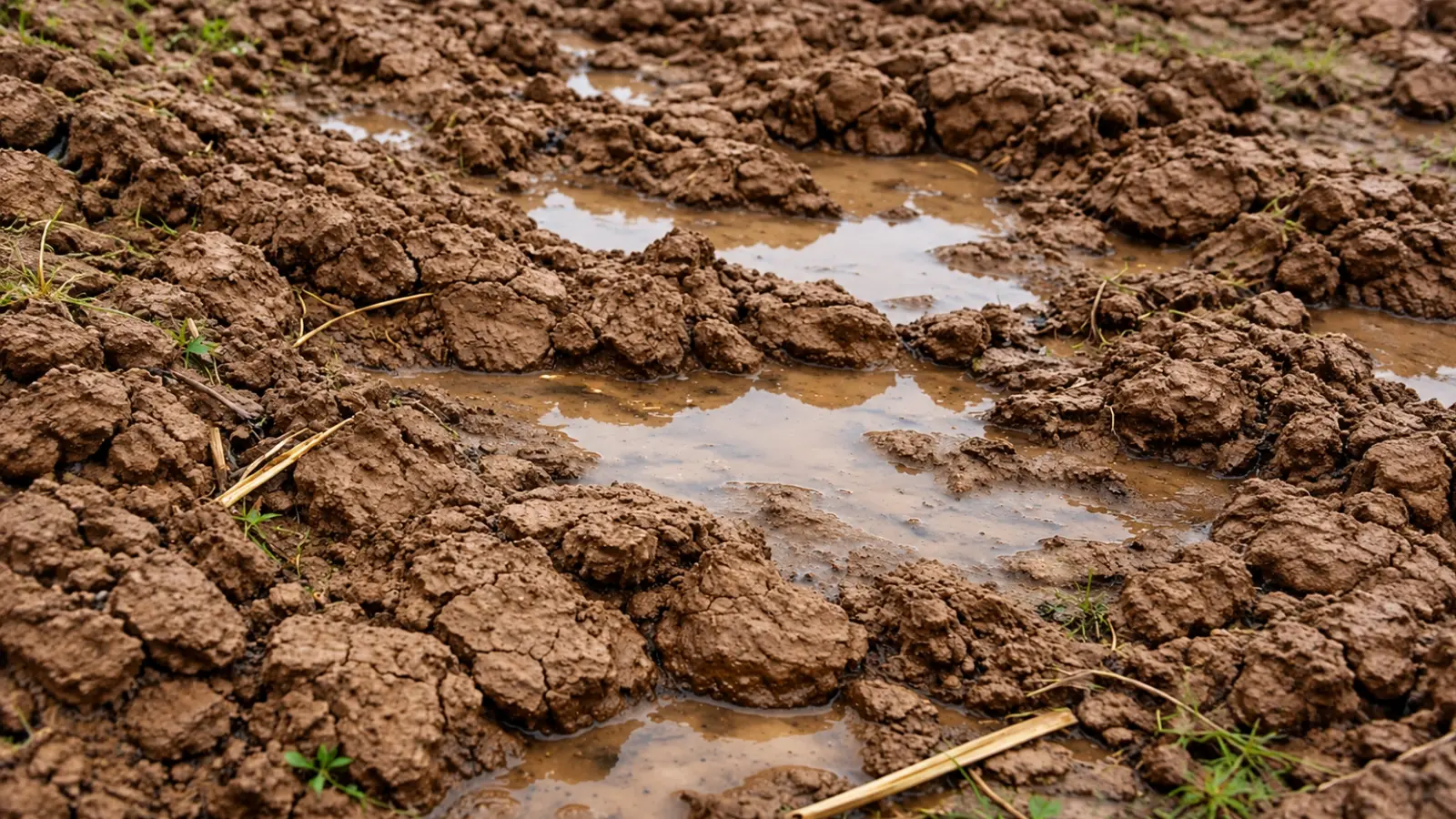
Heavy clay doesn’t just “hold too much water.” It holds water in very small pores, and those pores can be slow to drain. After extended rain or overwatering, the root zone may stay saturated long enough to cut off oxygen, which weakens roots and can invite root rot and other root diseases in plants that need better drainage.
Check where the water is coming from and where it’s going. If the whole bed sits low, catches roof runoff, or lies above a dense subsoil layer, compost alone won’t redirect that water. Watch the area after a hard rain, look for pooling that lingers for more than a few hours, and consider whether the grading or a drainage system needs attention. Soil Drainage covers that diagnosis in more depth.
At the same time, don’t assume every clay bed is wet. Clay soil can bake extremely dry and hard during a hot, rainless stretch. Let the root zone and the plant’s actual needs guide watering, not a fixed assumption about texture.
Compaction Makes Clay Soil Harder to Garden In
Compaction squeezes out the larger pores that normally let water and air move through soil. Clay-rich soil is especially easy to damage when it’s worked or walked on while wet. New construction, repeated foot traffic, heavy equipment, and routine tilling under poor conditions can all leave behind a dense layer that roots struggle to push through.
Keep paths and work areas separate from planting beds. Hold off on digging until the soil is moist and crumbly rather than glossy or sticky. Where compaction is limited to the upper few inches, a garden fork or broadfork used carefully can help loosen soil without repeatedly turning over the whole bed. Organic matter, mulch, and living roots then help hold those newly opened pore spaces open.
Don’t assume deep tilling is the fix. It can make the surface look loose for a season while breaking up aggregates and dragging up less suitable subsoil. Use Soil Compaction if a hard layer is your main problem.
How to Amend Clay Soil
Amending clay soil means addressing a specific limitation, not following a one-size-fits-all recipe. Organic matter is the most broadly useful tool because it supports aggregation, opens up pore space, and feeds the soil food web as it breaks down. It changes how clay behaves without pretending to change the actual proportion of clay particles.
For a new bed, a moderate layer of finished compost can be incorporated into the upper soil to improve organic matter and support better structure, but there is no single application rate that fits every clay soil or compost product. In established beds, smaller surface applications can maintain organic matter with less disturbance. Base repeated or substantial applications on the existing soil, the compost’s nutrient and salt content, what you are growing, and soil-test results rather than assuming that more compost is always better.
Beyond that starting point, how much compost makes sense depends on your existing soil, the compost’s own nutrient content, and what you’re growing. Repeated heavy applications can push nutrient levels or salts higher than the garden actually needs. The practical rule is to use good compost for a clear purpose, then test and observe rather than adding more out of habit.
Using Compost and Mulch in Clay Soil
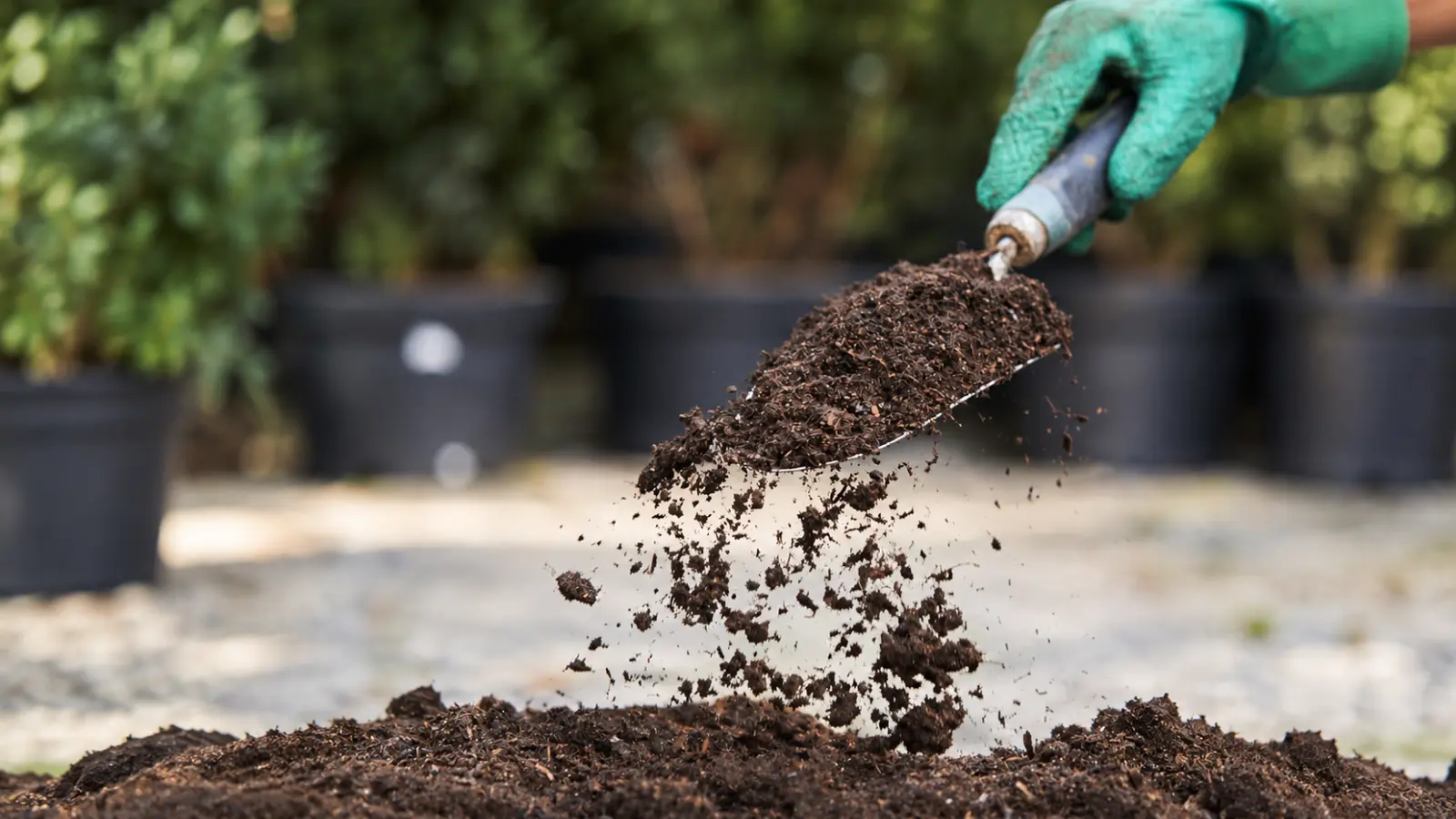
Compost is one of the most useful things you can add to clay soil, because finished compost helps tiny clay particles bind into larger, more stable aggregates. Those aggregates open up a looser root environment, improving aeration and making the surface easier to work over time. Compost also feeds nutrient cycling, but it shouldn’t be treated as an unlimited source of fertilizer.
Mulch works alongside compost rather than replacing it. A layer of shredded leaves, arborist wood chips, fine bark, straw, or another suitable mulch protects bare soil from pounding rain and hot sun. It cuts down on crusting and evaporation, moderates soil temperature, and lets biological activity keep going near the surface. Keep mulch a couple of inches away from stems and trunks, and top it off as it breaks down.
When you’re deciding whether to mix compost in, topdress with it, or use it as mulch, let the planting system guide you rather than a one-line rule of thumb. How to Use Compost in the Garden walks through those application choices in more detail.
When Raised Planting Makes Sense
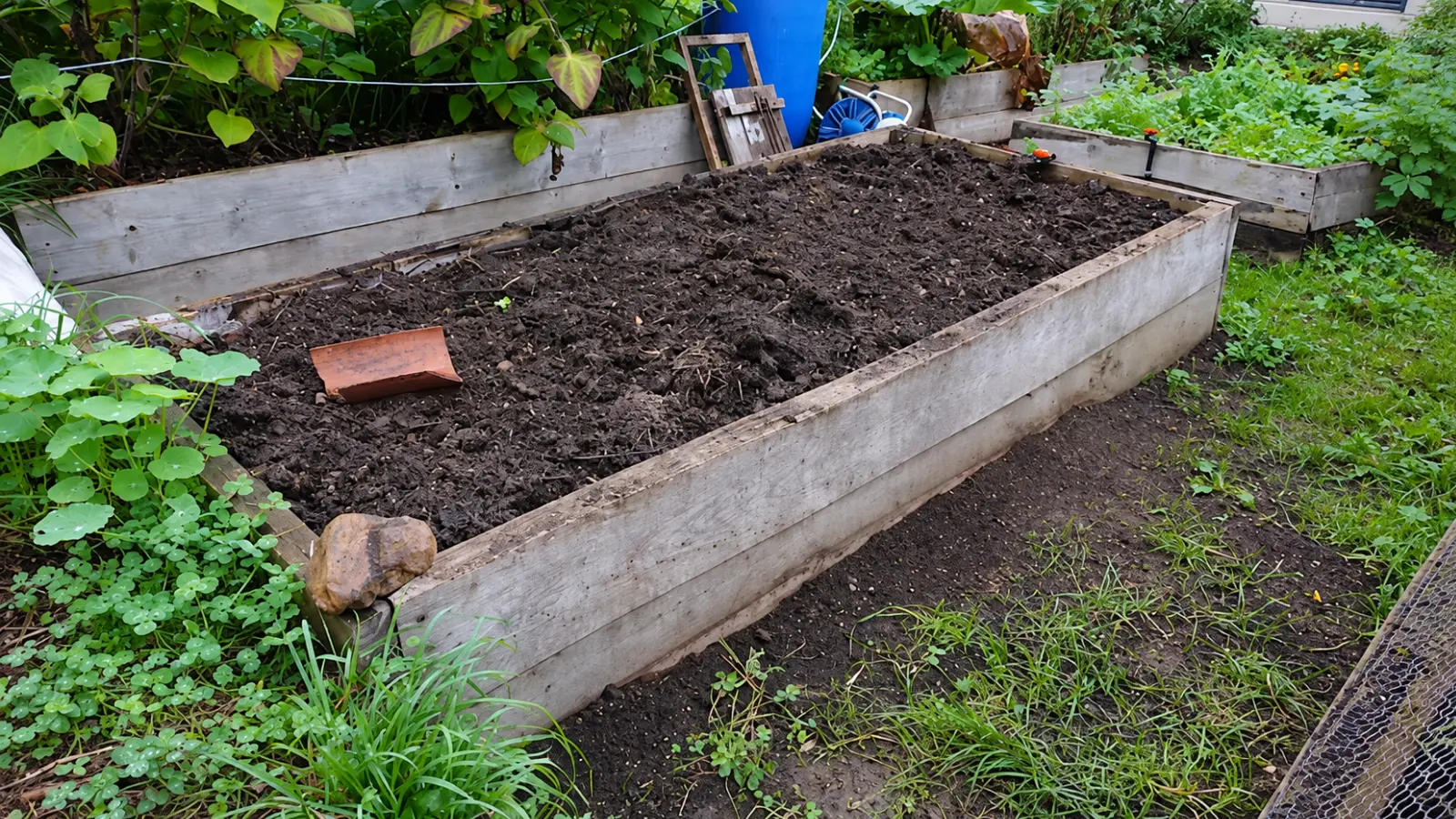
Raised planting can be the practical answer when native clay stays wet for long stretches, the garden was compacted during construction, or you need a well-drained root zone for plants that can’t tolerate wet winters. A raised bed gives you more control over the growing medium and keeps roots above the slowest-draining part of the site.
A frame is optional. A gently mounded planting area can work for some ornamental beds, while a framed raised bed is more useful for vegetables, easier access, or a clearly contained fill. Ideally the bed should still stay open to the ground beneath it, and the soil mix inside it should be chosen for the plants you’re growing rather than filled with straight compost.
Raised planting doesn’t erase a site-wide drainage problem, though. The water still needs somewhere safe to go, and very low or consistently saturated sites may need a larger landscape solution. Think of it as a way to build a better root zone, not as a drainage system on its own.
What Not to Add to Clay Soil
The most common mistake is working a small amount of sand into clay soil, hoping it will start draining like sandy loam. A small addition doesn’t shift the texture enough to do that, and the mix can end up denser and more concrete-like than the clay was to begin with. Changing texture at any real scale would take an impractical volume of coarse material blended with real uniformity, which isn’t realistic for most home gardens.
Gypsum is another frequent shortcut. It supplies calcium and sulfur, and it can help rebuild structure in sodic soils, where excess sodium is the documented problem. It isn’t a universal fix for ordinary heavy clay that simply feels sticky. Use it only when a soil test or your local Cooperative Extension office gives you a specific reason to.
Also steer clear of fresh manure, unfinished compost, and repeated, untested fertilizer applications. They can introduce salts, excess nutrients, weed seeds, or herbicide residues, and unfinished material can tie up nitrogen as it decomposes. The slower approach costs more patience, but it leaves you with soil that keeps improving instead of a new problem to undo.
Plants That Tolerate Clay Soil
The best plants for a clay garden are ones that can handle its moisture swings and root resistance, not necessarily plants that tolerate standing water. Beyond that, the right choice still depends on sunlight, winter cold, summer heat, soil pH, and whether your clay runs dry on a slope or wet in a low spot.
Many daylilies, coneflowers, bee balm, asters, switchgrass, and some viburnums tolerate clay well once the rest of the site suits them. Treat this as a starting point rather than a guaranteed list: even a clay-tolerant plant can fail in a bed that stays waterlogged, has poor air circulation, or falls outside its USDA Hardiness Zone.
Use plant tags and regional Extension recommendations to narrow the choices for your exact conditions. Picking a plant that already accepts the soil you have is often the simplest, most sustainable improvement available.
Improve How Clay Soil Functions
Clay soil does not need to become loam to support a healthy garden. Its ability to retain water and nutrients can be useful, while many of its practical difficulties can be reduced by protecting structure, avoiding work when the soil is wet, maintaining suitable organic matter and mulch, and addressing drainage or compaction when those are the real problems.
Make changes according to what the site actually needs rather than relying on a universal amendment or quick fix. With gradual improvement and plants matched to the site’s moisture, light, climate, and soil conditions, clay-dominant ground can become a productive and manageable growing environment.
COMMON QUESTIONS
Before you begin.
How do you improve clay soil for gardening?
Improve clay soil gradually by adding finished organic matter, keeping the surface covered with mulch, minimizing compaction, and avoiding digging or walking on the soil when it is wet. The goal is to improve structure, pore space, and root conditions rather than trying to eliminate the clay itself. If the site stays waterlogged, investigate drainage or consider raised planting rather than relying on amendments alone.
What is the best amendment for clay soil?
Finished compost is one of the most broadly useful amendments for clay soil because it supports aggregation, improves the root environment, and contributes organic matter over time. Other amendments should address a specific diagnosed problem rather than be added automatically. Soil testing is especially useful before applying materials that alter fertility, pH, or soil chemistry.
How much compost should you add to clay soil?
For a new bed, many Extension recommendations suggest incorporating roughly 2 to 4 inches of finished compost into the upper 6 to 8 inches of soil. Established beds generally need much less disturbance and can often be maintained with a thinner surface application. Avoid repeated heavy applications without testing because nutrients and salts can accumulate over time.
Should you add sand to clay soil?
Adding a small amount of sand to heavy clay is generally not an effective way to improve it. There usually is not enough sand to meaningfully change the soil texture, and an unsuitable mixture can become denser and harder to work. Improving structure with organic matter, mulch, reduced compaction, and living roots is usually a more practical approach.
Should you add gypsum to clay soil?
Not automatically. Gypsum can be useful in specific situations, particularly when excess sodium is contributing to poor soil structure, but it is not a universal treatment for ordinary clay soil. Use it when soil testing or appropriate local guidance indicates that your soil conditions are likely to benefit from it.
Can vegetables grow in clay soil?
Yes. Many vegetables can grow successfully in clay soil when drainage, structure, fertility, and moisture are managed appropriately. Where heavy clay remains wet for long periods, raised or mounded planting can provide a more suitable root zone, particularly for crops that are sensitive to poorly drained conditions.