The best pollinator garden plants do more than produce attractive flowers. A useful planting provides nectar and pollen, supports different kinds of pollinators, contributes shelter or host-plant value, and continues offering resources as the growing season changes.
A native-first approach creates a strong foundation, but the right plants still depend on your region, sunlight, soil, moisture and available space. Combining flowering perennials with grasses, shrubs, trees, herbs and carefully chosen annuals can create a more complete planting than relying on one group of popular flowers.
This guide explains how to choose pollinator garden plants, including native species, nectar and pollen sources, different flower forms, bloom succession, regional selection, planting in clusters, the roles of grasses, shrubs and trees, and how to avoid invasive or poorly suited plants.
Why Start With Native Plants?
Native plants developed alongside the climate, soils and ecological relationships of a particular region over thousands of years. That shared history matters: many native bees are specialists, meaning they can only collect and digest pollen from specific native plant genera. Replace those plants with non-native ornamentals and some specialists simply disappear from the garden entirely, regardless of how many flowers you grow.
Native plants also tend to be better adapted to local weather patterns once established, though no plant is maintenance-free and every species still needs the right site conditions. A plant native to a wet bottomland may not thrive in a dry, compacted urban bed, even if both locations are in the same state. Regional adaptation matters for siting, not just sourcing.
Use regional sources to choose the most appropriate species. University Cooperative Extension Services, state native-plant societies, botanical gardens and organizations like the Xerces Society can help identify plants that belong in your area and match your soil, moisture and sun exposure. The Lady Bird Johnson Wildflower Center’s Native Plant Database is another reliable starting point for any U.S. region.
A native-first approach does not require pulling every non-native ornamental plant. Suitable non-native flowers can provide nectar during a seasonal gap, and some—like zinnias or annual salvias—are genuinely useful gap-fillers while slower perennials get established. But they should complement a foundation of regionally appropriate plants rather than replace it.
Nectar vs. Pollen
Nectar and pollen serve different functions, so a useful pollinator garden needs to offer both—and the balance matters more than most gardeners realize.
Nectar is a sugary liquid used primarily by adult butterflies, moths, hummingbirds and many bees to fuel daily movement, reproduction and seasonal activity. It is the resource most gardeners think of first when selecting pollinator plants.
Pollen provides protein, fats and other nutrients that are especially critical for bees, which collect it to feed developing larvae. A garden heavy on nectar but light on accessible pollen is a good refueling stop but a poor nursery. Some ornamental cultivars, particularly those with densely double flowers, can offer abundant color while making pollen genuinely difficult or impossible for bees to reach.
Some plants excel at one resource but offer limited value for the other. Mountain mint, for instance, is exceptional for both nectar and pollen diversity. Certain milkweed species are better known as host plants and nectar sources than as pollen plants for specialist bees. Plant diversity reduces the risk that the garden will become too dependent on any single type of resource—or fail an entire group of pollinators when one plant has an off year.
Build Diversity Into the Planting
Plant diversity means more than choosing flowers in several colors. A resilient pollinator garden includes different plant families, heights, textures, bloom periods and growth habits working together as a system rather than a collection.
Combine low-growing plants with upright perennials, grasses, shrubs and small trees where space permits. Include plants that bloom in spring, summer and fall, along with some species that retain stems or seed heads after flowering—standing stems and seedheads provide overwintering habitat for cavity-nesting native bees and winter food for birds.
Diversity also protects the garden from over-reliance on any one plant. If disease, an unusual weather event or a difficult season affects one species, other plants continue providing food and structure. A garden built around three or four dominant species is more fragile than one with ten plants covering overlapping roles.
Match plant communities to the conditions already present whenever possible. A garden where every plant requires constant moisture will be difficult to manage on a site that naturally dries out in summer. Working with the site rather than against it produces a more durable planting—and usually a lower-maintenance one.
Choose Several Flower Forms
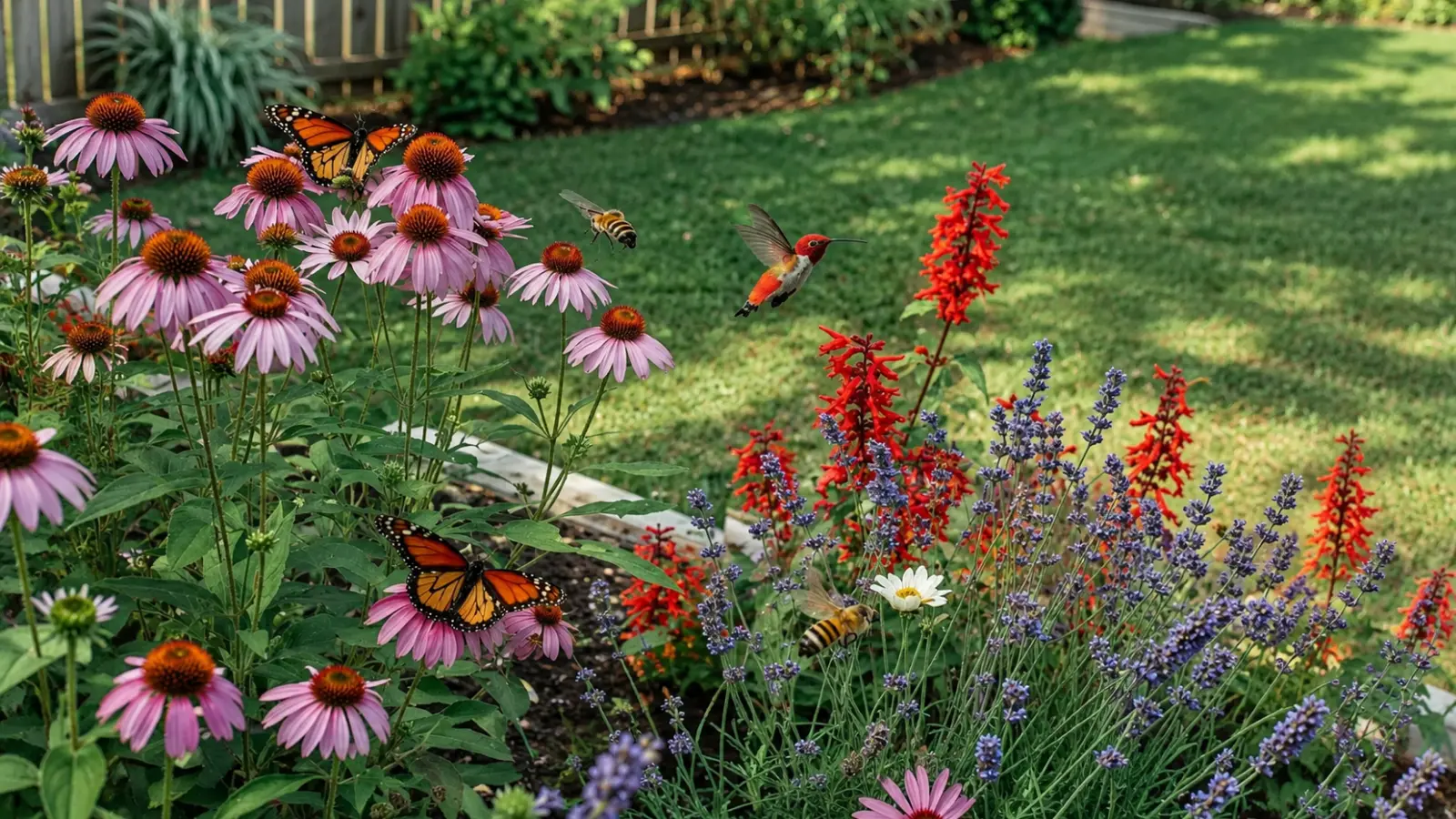
Different pollinators can access different flower shapes, so including several forms makes the garden useful to a broader range of visitors. This is one of the simplest ways to expand the variety of insects your planting supports without dramatically increasing its size.
Open, Flat Flowers
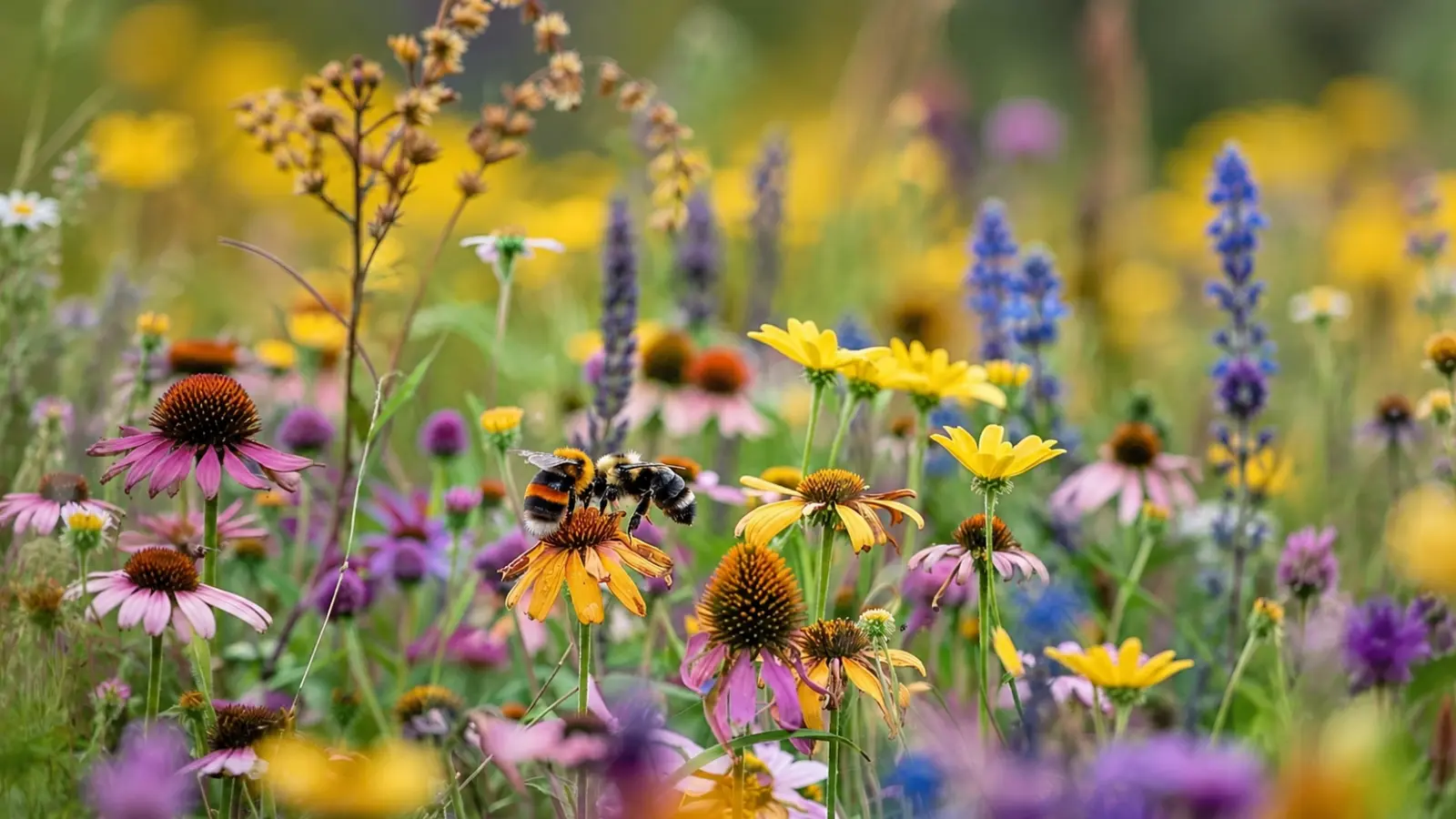
Flat-topped clusters and open, daisy-form flowers provide easy landing platforms for butterflies, flower flies, beetles and small short-tongued bees. Many plants in the aster family—including coneflowers, black-eyed Susans and asters themselves—have this structure, as do plants in the carrot family like golden Alexanders and native Queen Anne’s lace relatives.
Tubular Flowers
Tubular blooms suit hummingbirds, butterflies with longer mouthparts, and some larger long-tongued bees. Bee balm, native salvias, cardinal flower and penstemon are examples. The length and opening of the flower influence which visitors can feed successfully, so including a range of tube depths extends the list of pollinators you can support.
Small Clustered Flowers
Clusters of small flowers attract a remarkably wide range of insects and create a stronger visual signal than isolated blooms. Mountain mint is the standout example: a Penn State Extension study of 86 native plant species found that clustered mountain mint (Pycnanthemum muticum) ranked number one for diversity of pollinator visitors. Plants in the mint and carrot families are especially productive in this category.
Evening and Fragrant Flowers
Fragrant flowers that open in the evening or remain noticeable after dark support moths and other nighttime visitors that are often overlooked in pollinator garden planning. Native evening primrose, wild bergamot and certain native phlox species can extend the garden’s value into the hours most gardeners aren’t watching. Place them where outdoor lighting is minimal and where their fragrance can be appreciated near a path or seating area.
When choosing ornamental cultivars, be cautious with densely double flowers. Extra petals can block or eliminate access to pollen and nectar, though the degree of impact varies by plant and how the cultivar was developed. When in doubt, choose species plants or cultivars that have been evaluated for pollinator value by institutions like the Mt. Cuba Center or Chicago Botanic Garden.
Plan a Bloom Sequence
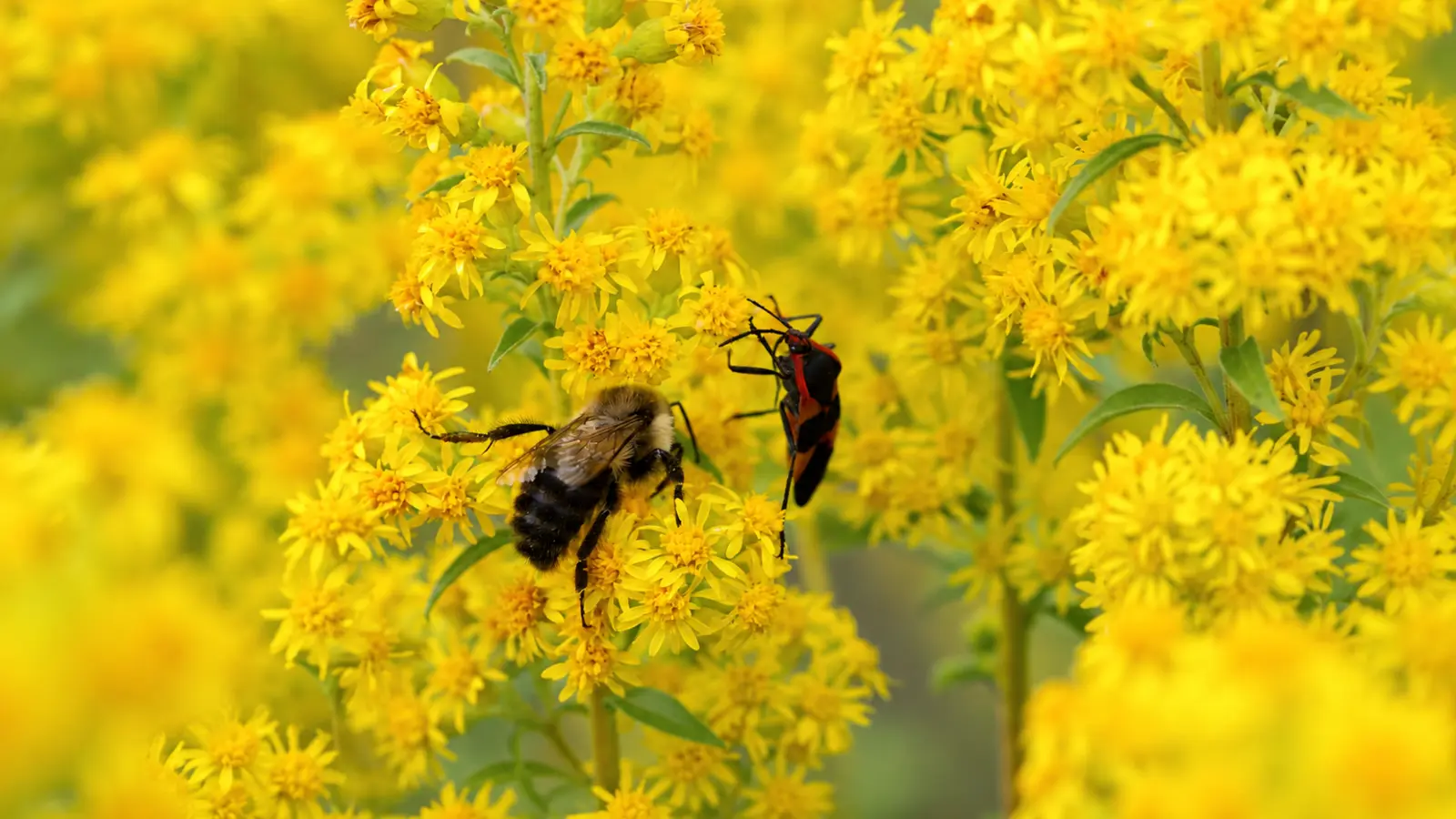
A pollinator garden earns its place by providing flowers across the growing season rather than concentrating every bloom in a single month. Bloom sequence is the practice of choosing plants that flower at different times and overlap enough to prevent long gaps in food availability.
Spring
Early-blooming native shrubs, trees, bulbs and perennials can offer some of the first pollen and nectar available after winter. Spring resources are especially important because few other flowers are open and early-emerging bees—including queen bumblebees starting new colonies—depend on whatever is available. Native willows, redbuds, wild columbine (Aquilegia canadensis) and Virginia bluebells are examples of early-season contributors worth planning around.
Summer
Summer is typically the most abundant season, but a garden can still have frustrating lulls between major bloom cycles. Combine long-blooming plants like coneflowers and black-eyed Susans with species that flower in shorter, distinct periods. Mountain mint is a summer workhorse, blooming for roughly six to eight weeks and drawing pollinators continuously throughout that window.
Fall
Late-blooming asters and goldenrods are among the most ecologically important plants you can include. Together, they provide a critical burst of nectar and pollen as pollinators prepare for winter or migration. Goldenrod deserves a special note here: it has long been unfairly blamed for fall allergies, but goldenrod pollen is heavy and insect-carried, not airborne. The real culprit is ragweed, which blooms at the same time and is wind-pollinated. Goldenrod belongs in almost any American pollinator garden.
Keep notes about when plants actually bloom in your garden. Weather, latitude, cultivar selection and microclimate can all shift the timing shown on a nursery tag by two to three weeks in either direction.
Select Plants for Your Region
Choosing plants for a pollinator garden begins with geography and site conditions, not with a national list of popular flowers. A plant beloved by gardeners in the Mid-Atlantic may be a poor fit in the desert Southwest, and vice versa.
Check your USDA Hardiness Zone, but don’t stop there. Also consider first and last frost dates, summer heat intensity, annual rainfall, humidity, soil texture, drainage, wind exposure and the number of hours of direct sunlight the site receives daily. A plant’s winter hardiness does not guarantee that it will tolerate wet roots, reflected heat from a south-facing wall, or summer drought.
Regional adaptation also matters for the pollinators you’re trying to support. A native plant list prepared for the Pacific Northwest has little overlap with what belongs in Florida, the Great Plains or New England. Even within a single state, local ecoregions can have very different plant communities and different pollinator communities that depend on them.
When possible, purchase plants grown from regional or local seed. A common milkweed grown from Midwestern seed may perform differently in a Mid-Atlantic garden than one grown from seed collected nearby. Avoid collecting wild plants without landowner permission, and never transplant plants from natural areas or introduce garden plants into them—even natives.
Plant in Groups and Clusters
Groups of the same plant are almost always more useful than isolated specimens scattered across a yard. A cluster creates a concentrated food source, reduces the energy pollinators spend searching between flowers and makes the planting more visually legible—both to insects and to the people who tend the garden.
A general recommendation from pollinator researchers is to plant at least three to five individuals of the same species together. Three plants of one kind create a far clearer visual patch than one plant surrounded by unrelated neighbors. The ideal number varies by the habit and mature size of the species, but the principle holds across most plants.
Clusters also simplify maintenance. Plants with similar water and light needs can be managed together, and taller species can be positioned without shading smaller neighbors unexpectedly as they mature. It’s easier to observe and identify what’s visiting specific plants when they’re grouped rather than distributed.
Don’t make every group identical. Repeat a few key plants across the garden for continuity—asters and goldenrod at the back, mountain mint in the mid-border, for example—then add complementary species that extend bloom time, provide different flower shapes or support other life stages such as caterpillar host plants.
Flowers, Grasses, Shrubs and Trees
Native Flowering Perennials
Native perennials form the core of most pollinator gardens and provide the most continuous resource for the widest range of visitors. Examples depend heavily on region, but commonly recommended species across much of the eastern and central United States include bee balm (Monarda spp.), milkweed (Asclepias spp.), purple coneflower (Echinacea purpurea), black-eyed Susan (Rudbeckia hirta), blazing star (Liatris spp.), coreopsis, mountain mint (Pycnanthemum spp.), native phlox, asters and goldenrod.
A few practical notes worth knowing before you plant: Bee balm is susceptible to powdery mildew, particularly in humid summers or sites with poor air circulation—choose mildew-resistant cultivars and give plants adequate spacing. For milkweed, always choose a species native to your region; tropical milkweed (Asclepias curassavica), widely sold in garden centers, can harbor a protozoan parasite called OE and may disrupt monarch migration in areas where it doesn’t die back in winter.
Verify each plant’s local status and site needs before buying. A species can be native to the United States but unsuitable or ecologically mismatched in a particular state or ecoregion.
Native Grasses
Grasses are underused in most pollinator plantings, which is a missed opportunity. Beyond providing structure and texture through the winter months, native grasses offer cover, nesting material and overwintering habitat for ground-nesting and stem-nesting bees. Little bluestem, switchgrass and sideoats grama are widely adaptable examples across much of the country; the right choice for your garden depends on your region, soil type and moisture level.
Shrubs
Shrubs extend the garden vertically and provide resources—flowers, fruit, shelter and host-plant value—that perennials simply cannot. Spicebush (Lindera benzoin) blooms very early in spring when few other plants are open and serves as the host plant for the spicebush swallowtail. Native willows are among the most ecologically valuable shrubs or small trees in the country, supporting hundreds of bee and Lepidoptera species. Buttonbush, native viburnums and dogwoods all contribute meaningfully depending on your region.
Trees
Trees require more space and a longer planning horizon, but their ecological contribution can be enormous. Oaks alone support more than 500 species of native Lepidoptera caterpillars in much of the eastern United States—more than any other genus. Cherries, birches, willows and serviceberries also provide important host-plant resources and early-season flowers. Select trees only where their mature size, root spread and moisture needs genuinely suit the property and conditions. A tree planted in the wrong spot causes problems that take decades to resolve.
Herbs and Annuals
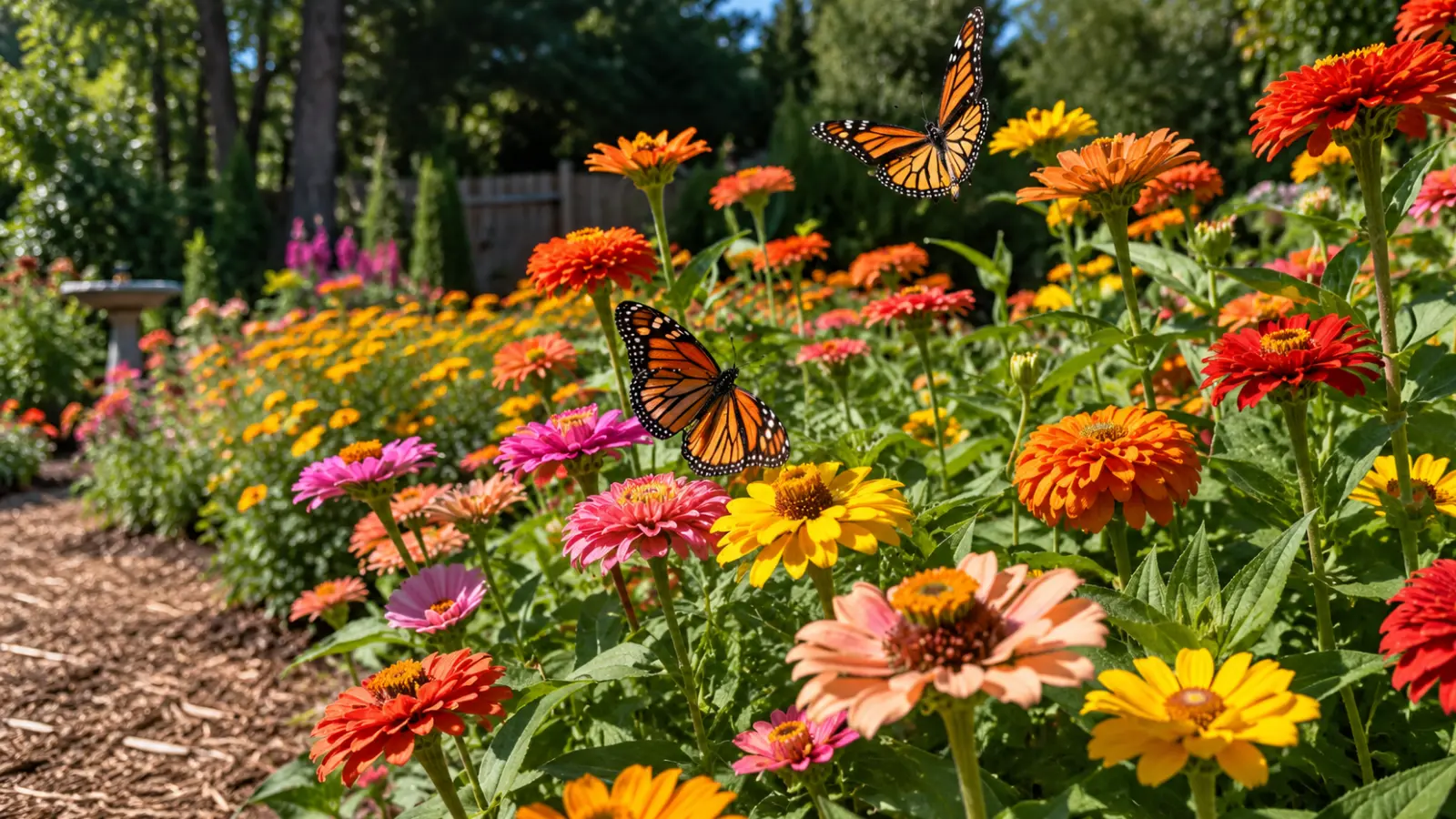
Flowering herbs and annuals fill real gaps in a native planting, particularly in the first few years while perennials establish. Dill, parsley and fennel serve as host plants for black swallowtail caterpillars—plant extra if you also want to harvest from them. Annual zinnias, native sunflowers and cosmos provide consistent mid-to-late summer nectar and pollen for a wide range of visitors. Think of annuals as seasonal reinforcements, not replacements for a native foundation.
Avoid Invasive Plants
A plant can attract pollinators and still cause serious ecological damage if it spreads aggressively into natural areas. Before buying any plant described as “vigorous,” “spreads readily” or “naturalizes,” check your state’s invasive-plant resources and local recommendations from your Extension Service or state native plant society.
Some plants commonly sold for pollinators have invasive potential in parts of the United States. Purple loosestrife, Japanese barberry, burning bush and certain ornamental grasses are well-known examples, but the list varies significantly by state and region. What causes problems near a wetland in the mid-Atlantic may be well-behaved in a dry inland garden—or vice versa.
Do not assume a cultivar behaves exactly like the species it was developed from. Some cultivars produce less viable seed; others are indistinguishable from the species in terms of spread. Regional guidance from local Extension or native plant organizations is more reliable than a general label claim. When a genuinely non-invasive alternative exists and performs similarly, choose it.
Pollinator Garden Plants at a Glance
The plants below represent useful categories and examples across much of the United States. Bloom time, regional suitability and performance vary by species, cultivar, climate and site conditions. Use this as a starting framework, not a universal planting list.
| Plant | Primary Role | Sun | Typical Bloom Season | Growth Habit | Notes |
|---|---|---|---|---|---|
| Bee Balm (Monarda spp.) | Nectar and pollen | Full sun to partial shade | Summer | Perennial | Choose mildew-resistant cultivars; needs good air circulation. M. fistulosa is more drought-tolerant than M. didyma. |
| Milkweed (Asclepias spp.) | Nectar and monarch host plant | Usually full sun | Summer | Perennial | Select a native milkweed suited to your region. Avoid tropical milkweed (A. curassavica) where it doesn’t die back in winter. |
| Black-Eyed Susan (Rudbeckia hirta) | Nectar and pollen | Full sun | Summer to fall | Perennial (often biennial) | Self-seeds reliably; allow some seedheads to remain for birds and garden renewal. |
| Blazing Star (Liatris spp.) | Nectar | Full sun | Summer | Perennial | Blooms top to bottom, extending the display window. Excellent for monarchs and bumblebees. |
| Mountain Mint (Pycnanthemum spp.) | Nectar and pollen | Full sun to partial shade | Mid to late summer | Perennial | Ranked #1 for pollinator diversity in Penn State research. Spreads by rhizomes; give it room or site it where spreading is welcome. |
| Asters (Symphyotrichum spp.) | Nectar and pollen | Sun to partial shade | Late summer to fall | Perennial | Critical late-season resource. Choose native species appropriate to your region; many are widely adaptable. |
| Goldenrod (Solidago spp.) | Nectar and pollen | Sun to partial shade | Late summer to fall | Perennial | Does not cause hay fever—that’s ragweed. Choose a well-behaved species; stiff goldenrod (S. rigida) and showy goldenrod (S. speciosa) are good garden options. |
| Native Grasses | Shelter and nesting habitat | Varies by species | Grown for structure, not flowers | Perennial | Little bluestem, switchgrass and sideoats grama are widely adaptable. Leave standing through winter for overwintering insects. |
| Dill (Anethum graveolens) | Host plant, nectar | Full sun | Summer | Annual | Host plant for black swallowtail caterpillars. Plant extra if you also want to harvest. |
| Parsley (Petroselinum crispum) | Host plant | Sun to partial shade | Summer | Biennial | Same caterpillar host value as dill. Allow it to overwinter and flower in year two—the flowers attract beneficial insects. |
| Spicebush (Lindera benzoin) | Host plant, early nectar, shelter | Partial shade | Early spring | Deciduous shrub | One of the earliest-blooming native shrubs; host plant for spicebush swallowtail. Needs room to reach its mature size of 6–12 feet. |
| Oak (Quercus spp.) | Host plant and habitat | Usually full sun to partial shade | Not primarily grown for bloom | Tree | Supports more native Lepidoptera species than any other genus in the eastern U.S. Plant only where mature size suits the site. |
| Zinnias (Zinnia elegans) | Nectar | Full sun | Summer to frost | Annual | Excellent gap-filler and long bloomer; single and semi-double forms are more accessible to bees than fully double types. |
This list reflects commonly available plants rather than an exhaustive regional guide. Your local Cooperative Extension Service and state native plant society can point you toward species that fit your specific soil, climate and ecoregion—and flag any regional invasive concerns before you buy.
Build a Plant Community, Not Just a Flower List
The strongest pollinator planting combines different functions rather than depending on one perfect flower. Nectar and pollen plants provide food, host plants support developing insects, grasses and stems add habitat, and shrubs and trees bring structure and resources that flowering perennials alone cannot provide.
Start with plants suited to your region and site, then build diversity through bloom time, flower form, height and ecological role. When those resources overlap from spring through fall, the garden becomes more resilient, more useful to pollinators and more interesting through every stage of the season.
COMMON QUESTIONS
Before you begin.
What are the best plants for a pollinator garden?
The best pollinator garden plants are those that provide nectar, pollen, host-plant value or shelter while thriving in your local conditions. Regionally appropriate native perennials, grasses, shrubs and trees usually provide the strongest foundation, with plants such as milkweed, native asters, goldenrod, mountain mint, bee balm and other locally suitable species filling different ecological roles.
Should pollinator garden plants be native?
Native plants should usually form the foundation of a pollinator garden because many local pollinators have evolved alongside them, and some specialist bees depend on pollen from particular native plant groups. Suitable non-native flowers can still provide useful nectar or fill seasonal gaps, but they should complement native plants rather than replace them and should not be invasive in your region.
How many different plants should a pollinator garden have?
There is no required number. A smaller garden with several well-chosen species providing different bloom periods and ecological functions can be more useful than a larger planting containing many isolated specimens. Prioritize diversity in bloom time, flower shape and plant type, then repeat key species in meaningful groups rather than trying to maximize the species count.
Should pollinator plants be planted in groups?
Yes. Planting several individuals of the same species together creates a concentrated patch of nectar or pollen that is easier for pollinators to locate and forage efficiently. Groups of roughly three to five plants can be a practical starting point, but the ideal number depends on each plant’s mature size, spreading habit and the available space.
Do pollinator plants need full sun?
Many high-performing pollinator flowers grow best in full sun, but not every pollinator plant requires it. Some native shrubs, woodland plants and host plants perform well in partial shade. Observe the actual light conditions in your garden and choose species suited to each area rather than trying to make every plant grow under the same exposure.
How do I keep a pollinator garden blooming from spring through fall?
Choose plants with overlapping flowering periods so there is always another food source beginning as one finishes. Combine early-blooming trees, shrubs or perennials with summer flowers and important late-season plants such as native asters and goldenrods. Recording actual bloom times in your garden will help you identify and fill seasonal gaps over time.